By Emily Parker
Updated November 2026
Solar powered emergency backup energy storage pairs a battery, a charge controller and a solar panel array so your home keeps running when the grid goes down. This guide walks you through estimating the energy you need, choosing the right storage capacity, matching solar input to your battery, and setting up a system that will hold up during a multi-day outage. By the end, you will have a rough watt-hour target and a clear sense of what to buy.
How Solar Powered Emergency Backup Energy Storage Works
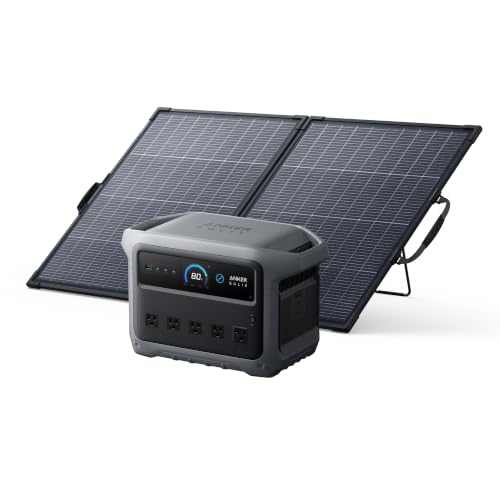
A typical system has four parts. Solar panels convert sunlight into direct current electricity. A charge controller regulates that current so the battery charges safely. The battery stores energy in watt-hours (Wh). An inverter converts stored DC power into the 120-volt AC your appliances use. Many portable units combine the battery, controller and inverter into one box, with solar inputs on the side or top.
Shopping for one? See our guide: 7 Best Solar Powered Emergency Generator Picks for Home Backup (2026).
During normal operation, the panels charge the battery whenever the sun is up. When the grid fails, the system switches to battery power automatically or with a manual transfer step, depending on your setup. Solar keeps refilling the battery during daylight, which is what separates this from a battery-only backup.
Step 1: Estimate Your Essential Loads
Start by deciding what you actually need to power. Most households split loads into essentials (refrigerator, medical devices, sump pump, router, a few lights, phone charging) and nice-to-haves (microwave, electric range, central air). Backup systems are usually sized around the essentials. Trying to run the whole house on a portable unit leads to disappointment.
For each appliance, find the running wattage on its label or in the manual, then estimate daily hours of use. Multiply watts by hours to get watt-hours per day. Motors and compressors also have a startup surge, often two to three times their running wattage, so note that for the inverter sizing step. A related read: Top 7 DIY Solar Powered Phone Charger Options Compared for Camping and Backup.
Typical Watt-Hour Estimates
Figures vary by model, age and climate, so treat these as rough starting points and replace them with your own measurements or nameplate data where possible.
| Appliance | Typical Running Watts | Typical Daily Use | Approx. Daily Wh |
|---|---|---|---|
| Refrigerator (modern, efficient) | 100 to 150 W average | 24 hours (cycling) | 1,000 to 1,500 Wh |
| CPAP machine | 30 to 60 W | 8 hours | 240 to 480 Wh |
| Sump pump (1/3 HP) | 600 to 800 W while running | 0.5 to 1 hour | 300 to 800 Wh |
| Wi-Fi router and modem | 10 to 25 W | 24 hours | 240 to 600 Wh |
| LED lights (6 fixtures) | 40 to 60 W total | 5 hours | 200 to 300 Wh |
| Phone and laptop charging | varies | daily | 100 to 200 Wh |
Step 2: Calculate the Battery Capacity You Need
Add your daily watt-hours for every essential load. Then decide how many days of backup you want. Many planners aim for one to three days, though longer outages happen. Multiply the daily total by the number of days, then account for real-world losses.
Batteries rarely deliver 100 percent of their rated capacity. Inverter conversion, wiring and temperature all cost some energy. A common planning practice is to add roughly 15 to 25 percent to your total as a buffer. You should also avoid draining lithium batteries to zero every day, since keeping a reserve extends lifespan.
Worked Example
Suppose a household needs a refrigerator (1,200 Wh per day), a CPAP (400 Wh per night), a router (400 Wh per day), LED lights (250 Wh per day) and phone charging (150 Wh per day). That totals about 2,400 Wh per day. For two days of backup with a 20 percent buffer, the target is roughly 2,400 × 2 × 1.2 = 5,760 Wh. A battery in that range or a bit larger would fit the plan.
Step 3: Size the Solar Input
Batteries store energy, but panels replenish it. Solar input should be enough to recharge a meaningful share of daily use on a typical sunny day. A useful rule is to estimate peak sun hours for your location. Many parts of the United States average roughly four to six peak sun hours per day, though winter and cloudy regions run lower.
Divide your daily energy need by peak sun hours, then add a margin for system losses. For example, 2,400 Wh per day divided by 4 peak sun hours is 600 W of panels, and adding roughly 25 percent for losses brings you near 750 W. Panels rated in the hundreds of watts each are common, so a few panels may be enough for a portable setup. Check the maximum input rating of your battery or charge controller, since exceeding it can damage the unit.
Step 4: Match the Inverter to Your Peak Loads
The inverter must handle the combined running wattage of everything running at once, plus surge when a motor starts. If your sump pump draws 800 W and the refrigerator and router add another 250 W, the inverter should comfortably exceed roughly 1,000 W, with headroom for startup surge. Many manufacturers list surge ratings separately, so read the specification sheet rather than relying on the headline wattage alone.
Pure sine wave output is generally recommended for sensitive electronics, medical devices and modern refrigerators with variable-speed compressors. Modified sine wave inverters may work for simple loads but can cause problems with some equipment.
Step 5: Plan for Wiring, Transfer and Safety
If you want the system to power circuits directly rather than through extension cords, you will need a transfer switch or a professionally installed interlock. Connecting a generator or backup source to household wiring without isolation can energize utility lines and injure line workers. Do not backfeed a home circuit from a portable unit through an outlet. Consult a licensed electrician for any permanent connection, and check local code requirements before installing.
For portable use, plug individual essential appliances directly into the unit. Keep cords short and rated for the load, and place the unit outdoors or in a well-ventilated area. Batteries should not be stored in enclosed spaces where heat builds up.
Step 6: Test the System Before You Need It
Run a test before storm season. Disconnect from the grid if your setup allows it, power your essential loads for several hours, and watch how fast the battery state of charge drops. Compare the result with your estimate. If the battery drains much faster than planned, your loads or losses were underestimated, and you should adjust capacity or reduce usage.
Recommended gear
Most of the core equipment is sold as complete portable power stations or modular kits, so you can often start with a single box and add panels later. The items below are useful building blocks for this type of system.
- EcoFlow DELTA Pro: a large-capacity portable power station that pairs with solar input, suited to running essential loads over longer outages. View on Amazon
- Jackery Explorer 1000 v2: a mid-size power station that works well for refrigerator, router and device charging needs with solar recharge support. View on Amazon
- Bluetti AC200MAX: an expandable power station that can add battery modules as your backup needs grow. View on Amazon
- Anker SOLIX F2000: a portable unit with built-in inverter and solar input, aimed at lighter essential loads. View on Amazon
Common Mistakes
- Sizing for the whole house instead of essential circuits, which leads to undersized battery and frustration.
- Ignoring startup surge from pumps and compressors, which can trip an inverter that otherwise has enough running capacity.
- Forgetting that cloudy days and short winter days cut solar recharge sharply.
- Relying on rated capacity without a buffer for conversion losses.
- Skipping a test run, so the first real use is during an emergency.
- Connecting to household wiring without a proper transfer switch or licensed installation.
Tips for Better Results
- Label your essential loads and keep a written list with wattage numbers near the unit.
- Use a power meter plug to measure real consumption of your refrigerator and CPAP over 24 hours.
- Keep the battery in a moderate temperature range; extreme heat or cold reduces output and lifespan.
- Recharge the battery from the grid when power is available, so solar only has to top off rather than start from empty.
- Check firmware and manufacturer manuals for maximum input and output ratings.
FAQ
How many watt-hours do I need to run a refrigerator overnight?
A modern efficient refrigerator often uses roughly 1,000 to 1,500 Wh over 24 hours, though older or larger units use more. Check the yellow EnergyGuide label for annual kilowatt-hour figures and divide by 365 for a daily estimate.
Can solar alone run my home during an outage?
Solar alone is generally not enough to run a whole home continuously without a sizable battery and array. Most backup systems use solar to recharge stored energy and power essentials on a schedule.
How long will a solar backup battery last in an outage?
It depends on capacity and load. A 5,000 Wh battery supplying 1,000 Wh per day would last roughly four to five days before accounting for losses, and longer if solar recharges it during the day.
Is a CPAP safe to run on a battery backup?
Many CPAP users rely on battery backup, but you should confirm your device’s power draw and talk with your sleep provider or medical equipment supplier about backup planning. Consult a medical professional for guidance specific to your condition.
What is the difference between pure sine wave and modified sine wave output?
Pure sine wave output closely matches grid power and is safer for sensitive electronics and motor-driven appliances. Modified sine wave is cheaper to produce but can cause heating or malfunction in some devices.
How much solar panel wattage do I need?
Divide your daily watt-hour need by the peak sun hours in your area, then add roughly 25 percent for system losses. Check the charge controller’s maximum input voltage and wattage before connecting panels.
Do I need a transfer switch?
If you want to power circuits in your home directly, a transfer switch or interlock is needed to isolate from the utility. Consult a licensed electrician before any permanent connection.
Conclusion
Solar powered emergency backup energy storage is most effective when it is sized around your essential loads, not the whole house. Estimate daily watt-hours, add a buffer, match solar input and inverter capacity, then test the system before you need it. A simple worksheet and a short test run will tell you more than any headline capacity number.
Related reading
- 6 Best Solar Powered Generators for Home Backup Compared (2026)
- 4 Best Ecoflow Solar Powered Generator Picks for Home Backup (2026)
- Top 7 Solar Powered Generators with Solar Panels for Home Backup (2026)
- Top 6 Solar Powered Electricity Generator Picks for Home Backup (2026)
- Top 6 Solar Energy Power Generator Picks for Home Backup
Ready to choose one?
About Emily Parker
Emily Parker is part of our editorial team and reviews and edits our solar generators for home backup & emergencies guides, checking product details against manufacturer specifications and owner feedback.