By Emily Parker
Updated November 2026
Choosing the best solar powered generator for home backup comes down to matching capacity and output to what you actually need to keep running during an outage. A refrigerator, a CPAP machine, a sump pump and a few lights have very different power demands, and the right unit depends on how long you want to run them and whether you plan to recharge from the sun. The six models below were selected by reviewing manufacturer specifications, brand reputation for battery and inverter reliability, and the patterns owners commonly report about charging speed, expandability and real-world runtime. None of these were personally tested for this guide.
Our top picks at a glance
- 1
 TOP CHOICEBest overallEF ECOFLOW Portable Power Station DELTA 2 Max 2048Wh, 2400W LiFePO4 BatteryView on Amazon
- 2
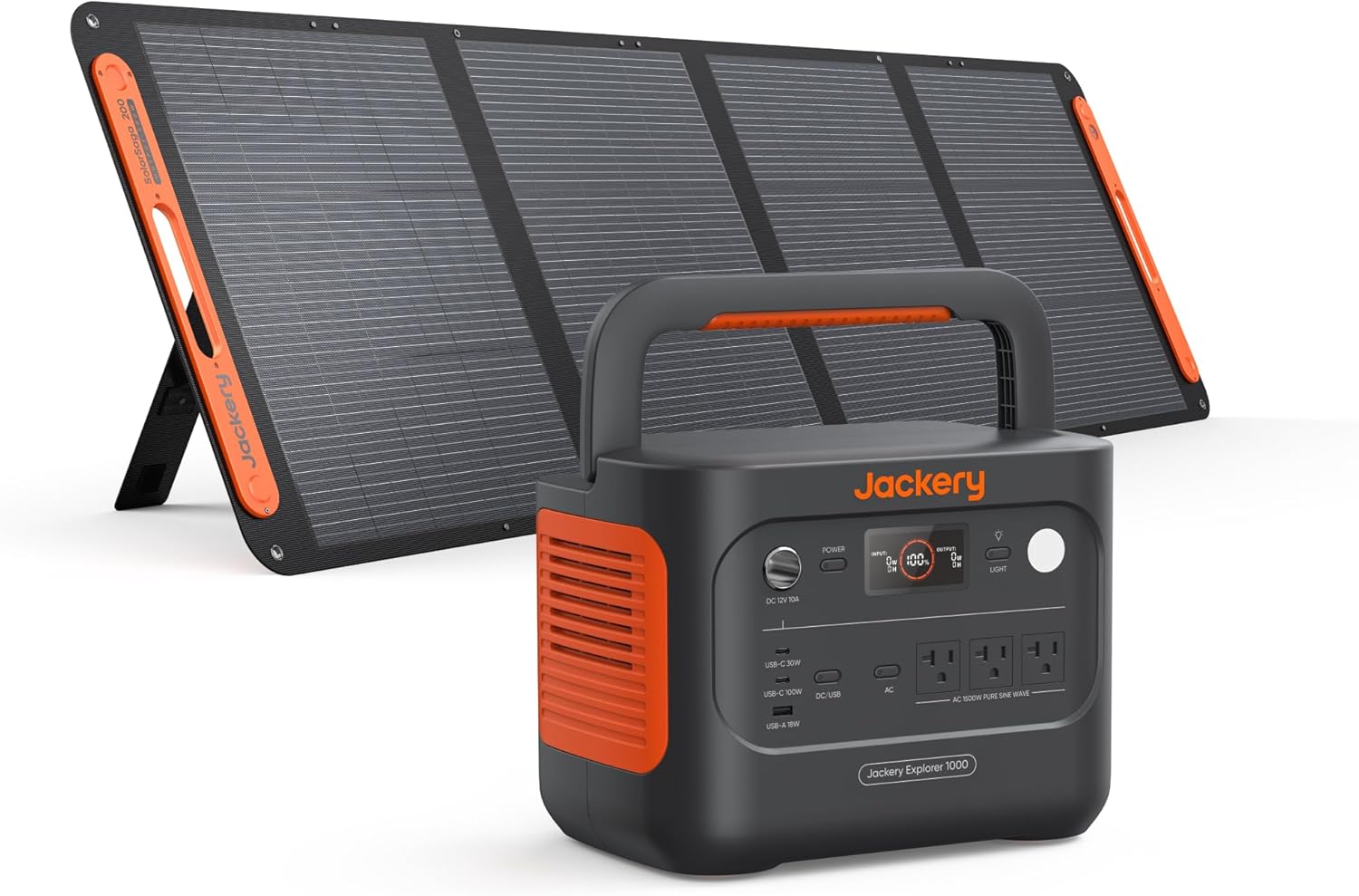
 TOP CHOICEBest for whole-kitchen backupJackery Solar Generator 1000 v2 and 200W Solar Panel, 1024Wh LiFePO4 BatteryView on Amazon
- 3
 TOP CHOICEBest budget pickJackery Explorer 300 Portable Power Station, 292Wh Backup LiFePO4 BatteryView on Amazon
- 4
 Best for expandable whole-home useJackery HomePower 3600 Plus & 2x200W Solar Panels, 3584Wh LFP BatteryView on Amazon
- 5
 Best for built-in panel convenienceBROWEY 1600W (3200W Peak) Portable Power Station with Built-in Solar PView on Amazon
- 6
 Best for fast UPS-style switchoverEF ECOFLOW Solar Generator Delta 3 Classic with 220W Solar Panel, 1024Wh LiFePO4 BatteryView on Amazon
Our Top Picks
Quick Comparison
| Product | Best for | Key feature |
|---|---|---|
| EF ECOFLOW Portable Power Station DELTA 2 Max 2048Wh | Best overall | 2048Wh LiFePO4 battery with 2400W output |
| Jackery Solar Generator 1000 v2 and 200W Solar Panel | Whole-kitchen backup | Bundled 200W panel and 10ms UPS switchover |
| Jackery Explorer 300 Portable Power Station | Budget pick | Compact 292Wh LiFePO4 battery |
| Jackery HomePower 3600 Plus & 2x200W Solar Panels | Expandable whole-home use | 3584Wh battery expandable to 21kWh |
| BROWEY 1600W Portable Power Station with Built-in Solar Panel | Built-in panel convenience | 1024Wh battery with built-in solar panel |
| EF ECOFLOW Solar Generator Delta 3 Classic with 220W Solar Panel | Fast UPS-style switchover | 1024Wh battery with 10ms UPS and 1-hour fast charge |
EF ECOFLOW Portable Power Station DELTA 2 Max 2048Wh, 2400W LiFePO4 Battery
EF ECOFLOW Portable Power Station DELTA 2 Max 2048Wh, 2400W LiFePO4 Battery | 2400W LFP Solar Generator, Full Charge in 1 Hr, Solar Powered Generator for Home Backup Camping RV, Solar Panel Optional
Best for: Best overall
This is a good fit for households that want substantial capacity for a refrigerator, lights, phone charging and a CPAP machine over a multi-day outage. Its 2048Wh capacity is large enough to cover overnight loads for several devices, and its solar input makes it suitable for extended recharging.
Key specs:
- Capacity: 2048Wh
- AC output: 2400W
- Battery chemistry: LiFePO4
- Solar panel: optional
Pros:
- Large capacity for multi-device overnight loads
- LiFePO4 chemistry is known for long cycle life
- Solar charging is optional, so you can buy panels as needed
Cons:
- Heavier than smaller portable units, so it is less convenient to move
- Full solar recharge takes longer without a large panel array
Bottom line: A strong first choice for most homeowners who want serious capacity without moving to a whole-home system.
View on AmazonJackery Solar Generator 1000 v2 and 200W Solar Panel, 1024Wh LiFePO4 Battery
Jackery Solar Generator 1000 v2 and 200W Solar Panel,1024Wh LiFePO4 Battery | 1500W (3000W Peak), 50-Min Fast Charge, 10ms UPS Solar Generator for Home Emergency, Camping & RV
Best for: Best for whole-kitchen backup
This bundle suits people who want a ready-to-use kit that already includes a solar panel. The 1500W continuous output is enough to run a microwave or a small window air conditioner in some setups, while the 10ms UPS rating helps protect sensitive electronics.
Key specs:
- Capacity: 1024Wh
- AC output: 1500W continuous (3000W peak)
- Included panel: 200W
Pros:
- Solar panel included in the bundle
- Fast-charge rating shortens recharge time
- Output is adequate for small kitchen appliances
Cons:
- Capacity is modest for running a refrigerator for more than a day or two
- Higher-draw appliances will drain it quickly
Bottom line: Best for households that want a complete solar kit and mainly need short-term backup for lights, electronics and a few appliances.
View on AmazonJackery Explorer 300 Portable Power Station, 292Wh Backup LiFePO4 Battery
Jackery Explorer 300 Portable Power Station,292Wh | Backup LiFePO4 Battery, Solar Generator for Outdoors, Camping, Travel, Hunting, Blackout (Solar Panel Optional)
Best for: Best budget pick
This is a practical choice for small loads such as phone and laptop charging, a CPAP machine for part of a night, or LED lighting. Its compact size makes it easy to store in a closet and bring along during a power outage.
Key specs:
- Capacity: 292Wh
- Battery chemistry: LiFePO4
- Solar panel: optional
Pros:
- Compact and lightweight for its class
- Works well for personal devices and small medical equipment
- Solar panel is optional, so entry cost stays low
Cons:
- Limited capacity means it cannot run a refrigerator for long
- Not suitable for sump pumps or electric heaters
Bottom line: Suits apartment dwellers or anyone who only needs to keep phones, lights and a CPAP running for a night or two.
View on AmazonJackery HomePower 3600 Plus & 2x200W Solar Panels, 3584Wh LFP Battery
Jackery HomePower 3600 Plus & 2x200W Solar Panels, 3584Wh, 3600W AC Output | LFP Battery, Expandable to 21kWh, Solar Generator, Essential Home Backup for Home Use, Emergencies, RV
Best for: Best for expandable whole-home use
This model is aimed at homeowners who want to power a larger share of the house during an extended outage. Its 3584Wh battery and 3600W AC output give it room to handle a refrigerator, a sump pump and several circuits at once, and it can be expanded as needs grow.
Key specs:
- Capacity: 3584Wh
- AC output: 3600W
- Expandability: up to 21kWh (per manufacturer)
- Included panels: 2x200W
Pros:
- Capacity is well suited to refrigerator plus pump loads
- Expandable battery design supports future growth
- Two panels included for faster solar recharging
Cons:
- Significantly heavier and bulkier than portable units
- Installation and circuit planning may require an electrician
Bottom line: A good match for homeowners planning real whole-home or essential-circuit backup who want room to expand later.
View on AmazonBROWEY 1600W (3200W Peak) Portable Power Station with Built-in Solar Panel, 1024Wh LiFePO4 Battery
BROWEY 1600W (3200W Peak) Portable Power Station with Built-in Solar Panel | 1024Wh LiFePO4 Battery, USB-C 100W Fast Charging, Solar Generator for Camping, RV, Home Backup, Emergency and power outages
Best for: Best for built-in panel convenience
This unit appeals to people who want a single device with a panel already built in, reducing setup steps. The 1024Wh battery and 1600W output cover typical short outage needs, and the USB-C fast charging is useful for modern devices.
Key specs:
- Capacity: 1024Wh
- AC output: 1600W (3200W peak)
- Battery chemistry: LiFePO4
- USB-C: 100W fast charging
Pros:
- Built-in solar panel simplifies setup
- USB-C 100W charging is convenient for laptops
- Output suits small appliances and tools
Cons:
- A built-in panel limits solar input compared with separate larger panels
- Brand reputation is less established than the EcoFlow and Jackery lines
Bottom line: Best for renters or light users who value a simple, all-in-one setup over maximum expandability.
View on AmazonEF ECOFLOW Solar Generator Delta 3 Classic with 220W Solar Panel, 1024Wh LiFePO4 Battery
EF ECOFLOW Solar Generator Delta 3 Classic with 220W Solar Panel, 1024Wh | 1800W AC (3600W Surge)/100W USB-C Output, LiFePO4 Battery Portable Power Station, 10ms UPS, 1 Hr Fast Charge for Home,Camping
Best for: Best for fast UPS-style switchover
This kit is a sensible choice for anyone whose main concern is keeping electronics and small equipment running without interruption. The 10ms UPS rating and one-hour fast charge make it useful for computers, networking gear and medical devices that cannot tolerate a gap.
Key specs:
- Capacity: 1024Wh
- AC output: 1800W (3600W surge)
- USB-C output: 100W
- Included panel: 220W
- Switchover: 10ms UPS
Pros:
- Fast switchover protects sensitive electronics
- Panel included with the kit
- One-hour fast charge reduces downtime between uses
Cons:
- Capacity is limited for long refrigerator runtimes
- Higher-draw loads will reduce runtime quickly
Bottom line: Ideal for home offices and households that prioritize uninterrupted power to electronics over long-duration backup.
View on AmazonBuying Guide
Battery Capacity (Watt-Hours)
Watt-hours tell you how much energy a unit stores. To estimate runtime, divide the battery’s watt-hour rating by the average wattage of the device you plan to run, then reduce the result by about 15 percent to allow for inverter losses. A refrigerator averaging around 150 watts on a 1000Wh battery would run for roughly five to six hours before accounting for cycling. Keep in mind that a refrigerator cycles on and off, so its real average draw is often lower than its nameplate rating, but confirm figures with your appliance’s label or manual.
Good picks for this: EF ECOFLOW Portable Power Station DELTA 2 Max, Jackery HomePower 3600 Plus
Continuous and Surge Output
Continuous output is the wattage the unit can supply indefinitely. Surge or peak output covers the brief spike motors need on startup. A sump pump or well pump can draw several times its running wattage for a moment when it starts, so check the surge rating against the pump’s starting requirement, not just its running power.
Good picks for this: Jackery HomePower 3600 Plus, EF ECOFLOW Solar Generator Delta 3 Classic
Switchover Speed and UPS Function
Some units switch over to battery power almost instantly, which matters for computers, routers and certain medical equipment. Manufacturers often list a switchover time in milliseconds. A 10ms rating is generally considered fast enough for most electronics, though anything that must never lose power should be on a dedicated UPS and checked with its manufacturer.
Good picks for this: EF ECOFLOW Solar Generator Delta 3 Classic, Jackery Solar Generator 1000 v2
Solar Input and Recharge Time
The solar input rating and panel wattage determine how quickly you can recharge from the sun. Recharge time depends on panel output, weather and sun angle, so the listed figure is a best-case estimate. For a multi-day outage, plan on at least one full recharge per day of backup needed, and check whether the panel size you buy matches the unit’s maximum solar input.
Good picks for this: Jackery HomePower 3600 Plus, Jackery Solar Generator 1000 v2
Expandability and Future Needs
If you may want more backup later, look at whether the battery can be expanded with additional modules. Expansion adds capacity without replacing the whole unit, but it also adds cost and weight, so consider your likely loads for the next few years before committing.
Good picks for this: Jackery HomePower 3600 Plus, EF ECOFLOW Portable Power Station DELTA 2 Max
Size, Weight and Placement
Large LiFePO4 units can weigh well over 20 pounds, and whole-home systems are heavier still. Decide whether the unit will stay in one spot, such as a garage or utility room, or whether you need to move it. Ventilation matters too: keep units out of enclosed spaces and away from direct heat, and never run them in a closed vehicle or inside a sealed room.
Good picks for this: Jackery Explorer 300 Portable Power Station, BROWEY 1600W Portable Power Station with Built-in Solar Panel
Battery Chemistry and Durability
Many current portable units use LiFePO4 batteries, which manufacturers generally rate for a higher number of charge cycles than older lithium-ion designs. Cycle life is usually stated at a specific depth of discharge, so compare figures carefully. Store the unit at moderate temperatures and avoid leaving it fully discharged for long periods to preserve capacity.
Good picks for this: EF ECOFLOW Portable Power Station DELTA 2 Max, Jackery Explorer 300 Portable Power Station
FAQ
Can a solar generator run a whole house during an outage?
Most portable units cannot run a whole house for long. Whole-home backup usually requires a larger system with a higher-capacity battery, a high-output inverter and a professional installation. Many homeowners instead choose to power essential circuits, such as the refrigerator, lights and medical equipment.
How long will a solar generator run a refrigerator?
It depends on the battery capacity and the refrigerator’s average draw, which is often far below its peak. A rough estimate is watt-hours divided by average watts, reduced for inverter losses. Check your refrigerator’s energy label or manual for its typical daily consumption, and confirm the figure with the generator manufacturer.
Can a solar generator power a CPAP machine overnight?
Many CPAP machines draw a modest amount of power, so a mid-size battery can often cover a full night. Confirm your machine’s wattage with its manufacturer or label, and consider a larger battery if you also plan to run other devices. Consult your sleep physician or equipment supplier about backup power for medical devices.
Is a sump pump compatible with portable solar generators?
Some portable units can run a sump pump, but the pump’s starting surge is the key factor. Check the pump’s rated starting wattage and confirm that the generator’s surge output exceeds it. For critical flood protection, consult a qualified electrician or the pump manufacturer before relying on a portable unit.
How long does it take to recharge from solar?
Recharge time depends on panel wattage, sunlight, weather and the battery’s current state of charge. Listed times are usually best-case figures. Plan for longer recharges on cloudy days and in winter, and consider adding panels if you need faster recovery.
Do I need an electrician to connect a solar generator to my home?
Plugging appliances directly into a portable unit typically does not require an electrician. Connecting a generator to your home’s wiring, such as through a transfer switch, usually does require a licensed electrician and may need a permit. Always follow local electrical codes and the manufacturer’s instructions.
How long do LiFePO4 batteries last?
Manufacturers commonly rate LiFePO4 batteries for thousands of charge cycles at a stated depth of discharge. Actual lifespan depends on temperature, usage pattern and maintenance. Storing the unit moderately charged and in a cool, dry place generally helps preserve capacity.
Should I buy the solar panel with the generator or separately?
Bundled kits are convenient and ensure compatibility, while separate panels allow you to choose wattage and brand. Check the generator’s maximum solar input before buying panels, and confirm connector compatibility. Owners often report that adding a second panel noticeably shortens recharge time.
Conclusion
For most households, the best solar powered generator for home backup is the one that matches your critical loads and outage length. The EF ECOFLOW DELTA 2 Max suits buyers who want large capacity for overnight multi-device use. The Jackery HomePower 3600 Plus fits those planning expandable, near whole-home backup. The Jackery Explorer 300 works for light personal needs and budget-conscious buyers. The bundled Jackery 1000 v2, the BROWEY with built-in panel, and the EF ECOFLOW Delta 3 Classic each address specific priorities such as convenience, panel simplicity and fast switchover. Start by totaling the wattage and daily runtime of the devices you need, then compare against the capacity and output figures above. For electrical connections to your home, consult a licensed electrician.
Sources
- Guidance on home energy storage, backup power planning and safe generator use (energy.gov)
- Safety recalls, portable generator carbon monoxide warnings and product safety information (cpsc.gov)
- Electrical and fire safety standards relevant to battery storage and home power systems (nfpa.org)
Related reading
- 7 Best Ecoflow Solar Powered Generator Options for Home Backup (2026)
- Best Solar Generators for Home Backup
- Large Solar Generators (5000W and Up): Whole-Home Backup Basics
About Emily Parker
Emily Parker is part of our editorial team and reviews and edits our solar generators for home backup & emergencies guides, checking product details against manufacturer specifications and owner feedback.