 By Emily Parker
Updated November 2026
The components of an emergency backup solar power system are the solar panels, the battery bank, the charge controller, the inverter, the wiring and protection, and the transfer method that connects everything to your home. When you know what each part does and how the pieces fit together, you can size a system that keeps your refrigerator, CPAP machine, sump pump, or Wi-Fi router running during an outage. This guide walks through each component in the order power actually flows, with the numbers you need to match them.
How a Solar Backup System Works, in Brief
Sunlight hits the panels and produces direct current (DC) electricity. A charge controller regulates that current and sends it into a battery bank, which stores energy for later. When the grid goes down, an inverter converts the stored DC power into the alternating current (AC) your household appliances use, and a transfer switch or power station isolates your home from the utility so the system can run on its own. Every component exists to move energy from the sun to your outlets safely and efficiently.
Component 1: Solar Panels
Panels are the energy source. Their rated output is measured in watts, and real-world production is always lower because of heat, dust, shading, and the angle of the sun. A common planning assumption is that a panel delivers roughly 4 to 5 peak sun hours per day in much of the United States, though your location and season will change that number. To estimate daily production, multiply the panel wattage by your peak sun hours and by about 0.75 to account for system losses.
Example: a 400-watt panel with 4.5 peak sun hours produces about 400 × 4.5 × 0.75 ≈ 1,350 watt-hours per day.
Two points matter most for emergency use. First, panels only produce during daylight, so the battery must carry you through the night. Second, a single panel rarely provides enough energy for a whole day of heavy loads, so most backup setups use several panels wired in series or parallel.
Component 2: The Battery Bank
The battery bank is the heart of the system. Its capacity is measured in watt-hours (Wh) or kilowatt-hours (kWh), and it determines how long your critical loads can run after sunset or during cloudy days. Lithium iron phosphate (LiFePO4) is the chemistry most commonly specified for home backup because it tolerates many charge cycles and handles deep discharge better than older lead-acid designs. Manufacturers typically list cycle life in the thousands of cycles, but actual lifespan depends on temperature, depth of discharge, and charging habits.
How to Size the Battery
- List every device you want to run during an outage.
- Find each device’s wattage (on the label or manual) and its hours of use per day.
- Multiply watts by hours to get watt-hours for each device, then add them together.
- Add 10 to 20 percent for inverter losses and battery efficiency.
- Divide by the usable depth of discharge (often around 80 to 90 percent for LiFePO4) to get the required nominal capacity.
Refrigerators are a good example of why this step matters. Many run a compressor cycle, so their average consumption is well below their peak draw, but startup surges can be significantly higher than the running wattage. Check the nameplate and plan for the surge, not just the average.
Component 3: The Charge Controller
The charge controller sits between the panels and the battery. Its job is to manage voltage and current so the battery charges efficiently and is not overcharged or damaged. Two main types exist. PWM (pulse-width modulation) controllers are simpler and less expensive, while MPPT (maximum power point tracking) controllers extract more energy from the panels, especially in cool weather or when panel voltage is higher than battery voltage. For systems above a few hundred watts of panels, MPPT is generally the more efficient choice.
Check that the controller’s voltage rating matches your battery bank (12V, 24V, or 48V) and that its maximum input voltage and current exceed what your panels can produce.
Component 4: The Inverter
An inverter converts DC battery power into AC power for standard household outlets. Its continuous (running) wattage must cover your simultaneous loads, and its surge rating must cover motor startups. A sump pump or a refrigerator compressor may briefly draw two to three times its running wattage when starting.
Pure sine wave inverters produce a clean waveform that suits sensitive electronics, medical devices such as CPAP machines, and most motors. Modified sine wave inverters are cheaper but can cause problems with some electronics and motors, so they are a poor fit for medical equipment. Many all-in-one portable power stations include a pure sine wave inverter built in.
Component 5: Wiring, Fuses, and Protection
Wiring must be sized for the current it carries, and every DC circuit should include an appropriately rated fuse or breaker close to the battery. Undersized wire overheats, and undersized protection fails to stop a fault. Use wire gauge charts from the manufacturer or a licensed electrician, and keep runs as short as practical to reduce voltage drop. A disconnect switch lets you shut the system down for maintenance.
Grounding and surge protection also matter, especially for an installation that connects to your home wiring. Solar and battery systems involve high current and, in larger setups, high voltage. Consult a licensed electrician before connecting any system to your home’s electrical panel.
Component 6: The Transfer Method
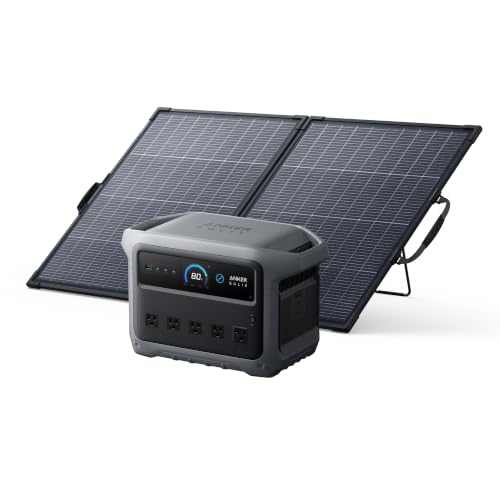
This is how power reaches your house. The simplest option is a portable power station with dedicated outlets, which you plug appliances into directly. This approach requires no permanent wiring and suits a small set of critical loads. A whole-home or partial-home setup instead uses a transfer switch, which disconnects your home from the utility during an outage and connects the solar system to selected circuits. Transfer switches protect utility workers, because they prevent backfeed onto power lines that may still be energized from another source.
Many installations must meet local electrical code and utility interconnection rules. A licensed electrician or qualified installer should handle any permanent connection to your panel.
Component 7: Monitoring and Controls
A battery monitor or the display on your power station shows state of charge, input and output watts, and remaining runtime. Watching these numbers during a test run helps you confirm your sizing before an outage occurs. Some systems offer app connectivity for remote monitoring.
Checklist: Parts to Confirm Before You Buy
- Panel wattage and total array size in watts
- Battery capacity in watt-hours and chemistry (LiFePO4 is common)
- Charge controller type (MPPT or PWM) and voltage match
- Inverter continuous and surge ratings, plus waveform type
- Wire gauge, fuses, breakers, and a disconnect switch
- Transfer method: portable outlets or a transfer switch
- Mounting hardware and cable management for panels
- Monitoring display or app
Common Mistakes
- Ignoring surge loads. A pump or fridge can trip an inverter that handled its running watts easily.
- Using modified sine wave for medical gear. Use pure sine wave for CPAP and similar devices, and confirm with the equipment manufacturer.
- Forgetting cloudy days. Plan battery capacity for at least one or two days of low solar input, not just one sunny day.
- Mismatched voltages. A 24V controller paired with a 12V battery will not work safely.
- Skipping fuses. Unprotected DC circuits can cause fires.
- Connecting to home wiring without a transfer switch. This creates backfeed risk and can violate code.
Recommended Gear
- EcoFlow DELTA Pro – A large portable power station with expandable battery capacity and a built-in inverter, useful when you want a single integrated unit. View on Amazon
- Jackery Explorer 1000 Plus – A mid-size power station that pairs with solar input and suits a focused set of critical loads. View on Amazon
- Victron Energy SmartSolar MPPT charge controller – A widely used MPPT controller that helps extract more energy from panels in variable light. View on Amazon
Tips for Planning Your System
Start with your must-run list, not with the biggest system you can fit on your roof. Sizing from your actual loads keeps costs focused where they matter. Test the system with a planned outage, such as unplugging from a power strip for an evening, to confirm runtime. Keep manuals, wire charts, and your installer’s contact information in one place. Review battery state of charge monthly, and check connections and fuses at least once a year.
For a deeper walkthrough of sizing math, see Solar Power Backup System for Home: A Step-by-Step Sizing Guide (2026). If you prefer to start with a ready-made unit, 6 Best Solar Power Emergency Generator Picks for Home Backup (2026) compares several options. Those planning to power large loads may find Whole Home Power Backup System: How to Size One for Outages (2026) helpful, and Home Backup With a Solar Generator: What It Can Power and How to Connect Safely explains connection options in more detail. Readers interested in building a system from parts can review DIY Solar Panel Generator: Build Your Own Backup Power System Step by Step, and Solar Backup Power Supply for Home: How to Size It for Outages (2026) covers how to match capacity to outage length.
FAQ
What is the most important component in a solar backup system?
The battery bank is usually the most important because it determines how long your loads can run. Panels recharge it, but without enough storage, the system cannot carry you through the night.
Do I need a transfer switch?
If you plan to connect the system to your home’s circuits, yes. A transfer switch safely isolates your home from the grid and prevents backfeed. A portable power station that you plug appliances into directly does not require one.
Can a solar backup system run a refrigerator?
Yes, if the inverter’s surge rating and the battery capacity match the fridge’s startup and average consumption. Check the nameplate, and plan for several hours of runtime if you want to keep food cold through a long outage.
What is the difference between PWM and MPPT controllers?
MPPT controllers track the optimal voltage of the panels and generally harvest more energy, especially in cool or low-light conditions. PWM controllers are simpler and suit smaller, lower-voltage systems.
Is a pure sine wave inverter necessary?
For sensitive electronics and medical devices like CPAP machines, pure sine wave is strongly recommended. Confirm requirements with the device manufacturer.
How long do the batteries last?
Lifespan depends on chemistry, temperature, depth of discharge, and charging habits. Manufacturers typically specify cycle life, and LiFePO4 batteries are often rated for thousands of cycles under defined conditions.
Should a licensed electrician install my system?
For any permanent connection to your home’s electrical system, yes. Local codes and utility interconnection rules often require it, and improper installation creates fire and shock risks. Consult a licensed professional before making permanent changes.
Conclusion
An emergency backup solar power system works only when its components are matched: panels that produce enough daily energy, a battery bank sized to your loads, a controller and inverter that handle the current and surge, and a transfer method that keeps everything safe. Start by listing your critical devices and their daily watt-hours, then work backward through each component. Test the system before you need it, and have a qualified electrician review any permanent connection.
Related reading
- Top 5 EcoFlow Power Stations with Solar Panel Options for Home Backup (2026)
- Whole Home Solar Generator: 7 Best Picks for Backup Power in 2026
Ready to choose one?
About Emily Parker
Emily Parker is part of our editorial team and reviews and edits our solar generators for home backup & emergencies guides, checking product details against manufacturer specifications and owner feedback.