
 By Graham Fisher
Updated November 2026
A solar generator for freezer and refrigerator use has one job that matters more than most: keeping food cold for as long as the power is out. Refrigerators and chest freezers cycle on and off, and their compressors draw a large startup surge before settling into a steady load. That means the right unit has to cover both the average daily energy use and the short burst of power needed to start the motor. In this guide we compare five power stations and portable solar generator systems on the criteria that matter most for this job: usable battery capacity in watt-hours, continuous and surge output, charging speed, solar input, and how well each one suits a home backup role.
Our top picks at a glance
- 1
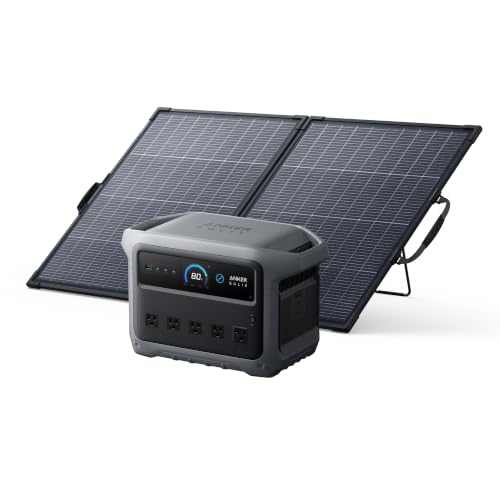 TOP CHOICEBest overallAnker SOLIX C1000 Gen 2 Solar Powered Generator with 200W Solar PanelView on Amazon
- 2
 TOP CHOICEBest for whole-day freezer coverageJackery HomePower 3000 Portable Power Station, 3072Wh, 3600W AC OutputView on Amazon
- 3
 TOP CHOICEBest for high-capacity multi-day outagesABOK Ark3600 Portable Power Station with 400W Solar PanelView on Amazon
- 4
 Best for small kitchensJackery Solar Generator 1000 v2 and 200W Solar PanelView on Amazon
- 5
 Best budget pickJackery Explorer 1000 v2 Portable Power Station, 1024Wh LiFePO4 BatteryView on Amazon
Our Top Picks
The five models below are listed in order of how well they fit a freezer-and-refrigerator backup role, starting with the broadest capability. Every spec mentioned comes from the product listing name or from what manufacturers specify for the model. Confirm current figures on the product page before buying.
Anker SOLIX C1000 Gen 2 Solar Powered Generator with 200W Solar Panel
Anker SOLIX C1000 Gen 2 Solar Powered Generator with 200W Solar Panel | 2,000W Portable Power Station with 1,024Wh LiFePO4 Battery, Up to 3,000W Output, for UPS, Home, Outdoor
Best for: Best overall for refrigerator and chest freezer backup in a typical home
This kit suits households that want a balanced setup: enough battery to carry a refrigerator and freezer through a night or more, a solar panel included for recharging after the grid returns, and enough output for a full kitchen circuit of small appliances.
Key specs
- Battery: 1,024 Wh LiFePO4
- Output: 2,000W portable power station rating, up to 3,000W output as listed
- Solar panel: 200W included
Pros
- LiFePO4 chemistry is widely valued for long cycle life in home backup use
- Included 200W panel makes it a complete solar generator kit out of the box
- Output rating leaves headroom for compressor startup surges
Cons
- 1,024 Wh is modest for a freezer plus refrigerator running for more than about a day
- Solar recharge time depends heavily on sun exposure and panel placement
Bottom line: A strong first choice for most homeowners who want a complete kit that covers a refrigerator for a day or so and a freezer for shorter stretches.
View on AmazonJackery HomePower 3000 Portable Power Station, 3072Wh, 3600W AC Output
Jackery HomePower 3000 Portable Power Station, 3072Wh, 3600W AC Output | 7200W Surge, LFP Battery, Solar Generator, Essential Home Backup for Home Use, Power Outage (Solar Panel Optional)
Best for: Best for whole-day freezer coverage and larger households
This larger station fits homes with a full-size chest freezer or a second refrigerator, or anyone who wants several days of buffer without leaning heavily on daily sun.
Key specs
- Battery: 3,072 Wh LFP
- AC output: 3,600W with 7,200W surge, as listed
- Solar panel: optional, sold separately
Pros
- 3,072 Wh gives a large energy reserve for a refrigerator and freezer over one or more days
- 7,200W surge rating handles demanding compressor starts comfortably
- LFP battery chemistry supports a long service life
Cons
- Solar panel is optional, so a full solar setup adds separate purchase and setup
- Heavier and bulkier than the 1,000 Wh class, which matters for storage and moving
Bottom line: Best suited to households that run a chest freezer continuously or want the most runtime per dollar of capacity in this lineup.
View on AmazonABOK Ark3600 Portable Power Station with 400W Solar Panel
ABOK Ark3600 Portable Power Station with 400W Solar Panel,2000W Solar Input | 3840Wh LiFePO4 Battery, Expandable to 11520Wh,15 Outlets, 3600W Solar Generator for Home Backup, Hurricane, Camping, RV
Best for: Best for high-capacity multi-day outages
This model targets users who expect extended outages, such as storm-prone areas, and want a large battery with fast solar input and room to expand.
Key specs
- Battery: 3,840 Wh LiFePO4, expandable to 11,520 Wh as listed
- Solar input: 2,000W maximum, with a 400W panel included
- Outputs: 15 outlets, 3,600W rating
Pros
- 3,840 Wh base capacity covers a refrigerator and freezer for several days in many cases
- Expansion option suits users who want to grow runtime over time
- High solar input rating can shorten recharge time when sun is strong
Cons
- Large and heavy, so it is best kept in one location rather than moved often
- Owners who expand capacity will need to budget for additional battery units
Bottom line: A good match for households in outage-prone regions that need the most energy reserve and plan to keep the unit stationary.
View on AmazonJackery Solar Generator 1000 v2 and 200W Solar Panel
Jackery Solar Generator 1000 v2 and 200W Solar Panel,1024Wh LiFePO4 Battery | 1500W (3000W Peak), 50-Min Fast Charge, 10ms UPS Solar Generator for Home Emergency, Camping & RV
Best for: Best for small kitchens
This kit is sized for apartments or small homes with a single compact refrigerator, where the goal is covering the fridge overnight and keeping a few essentials running.
Key specs
- Battery: 1,024 Wh LiFePO4
- Output: 1,500W continuous, 3,000W peak
- Solar panel: 200W included
Pros
- Complete kit with panel included, simple to set up
- Compact enough for smaller spaces and balconies
- Listed UPS switchover of 10ms helps electronics stay on through brief interruptions
Cons
- Limited capacity for a full-size freezer over long outages
- Output is adequate for one refrigerator but leaves little room for additional large loads
Bottom line: Suited to a small kitchen with one refrigerator and a modest backup goal rather than running a freezer for days.
View on AmazonJackery Explorer 1000 v2 Portable Power Station, 1024Wh LiFePO4 Battery
Jackery Explorer 1000 v2 Portable Power Station, 1024Wh LiFePO4 Battery | 1500W (3000W Peak), 50-Min Fast Charge, 10ms UPS Solar Generator for Home Emergency, Camping & RV.
Best for: Best budget pick
This is the same core power station as the solar kit above, sold without the bundled panel. It suits users who already own panels or plan to recharge mainly from the wall or a car.
Key specs
- Battery: 1,024 Wh LiFePO4
- Output: 1,500W continuous, 3,000W peak
- Fast charge: about 50 minutes to a high state of charge as listed
Pros
- Fast charging option reduces time to refill between outages
- Lower entry point for users with existing solar panels
- Same 1,024 Wh capacity as the solar kit, so runtime math is identical
Cons
- No panel included, so a complete solar setup requires a separate purchase
- Same modest capacity limits freezer runtime on extended outages
Bottom line: A sensible choice for someone adding battery backup to an existing solar array or planning mostly grid-based recharging.
View on AmazonQuick Comparison
| Product | Best for | Key feature |
|---|---|---|
| Anker SOLIX C1000 Gen 2 Solar Powered Generator | Best overall | Included 200W panel with 1,024 Wh LiFePO4 |
| Jackery HomePower 3000 Portable Power Station | Whole-day freezer coverage | 3,072 Wh capacity with 7,200W surge |
| ABOK Ark3600 Portable Power Station | Multi-day outages | 3,840 Wh base, expandable |
| Jackery Solar Generator 1000 v2 and 200W Solar Panel | Small kitchens | Compact kit with 10ms UPS switchover |
| Jackery Explorer 1000 v2 Portable Power Station | Budget pick | Fast charging, panel sold separately |
Buying Guide
Choosing a solar generator for freezer and refrigerator backup comes down to a few measurable factors. Work through them in order, and the right size usually becomes obvious. For a deeper walkthrough of the math, see What Size Solar Generator to Run Refrigerator and Freezer? Sizing Guide.
Battery capacity in watt-hours
Capacity sets how long your appliances can run. A typical full-size refrigerator often uses somewhere around one to two kilowatt-hours per day, depending on age, efficiency and room temperature, while a chest freezer can be similar or somewhat lower. Multiply your appliance’s daily kWh by the number of outage days you want to cover, then add losses for inverter efficiency. Check the appliance nameplate or energy label for a starting figure. For more on runtime, see Can a Solar Generator Run a Refrigerator? How to Estimate Runtime.
Good picks for this: Jackery HomePower 3000 Portable Power Station, ABOK Ark3600 Portable Power Station
Surge and continuous output
Compressors draw a startup surge several times their running wattage. A station with too little surge capacity will trip even if its watt-hour rating looks adequate. Look for a continuous rating comfortably above the appliance’s running draw and a peak rating that covers the startup spike.
Good picks for this: Jackery HomePower 3000 Portable Power Station, Anker SOLIX C1000 Gen 2 Solar Powered Generator
Battery chemistry
Most current home backup stations use lithium iron phosphate (LiFePO4 or LFP). Manufacturers commonly specify longer cycle life for this chemistry than for older lithium-ion designs, which matters for a unit that sits charged and cycles occasionally over years. Confirm the chemistry in the listing before buying.
Good picks for this: Anker SOLIX C1000 Gen 2 Solar Powered Generator, Jackery Explorer 1000 v2 Portable Power Station
Solar input and recharge time
A generator is only as useful as its ability to refill. Check the maximum solar input in watts and the panel wattage included. A 200W panel in direct sun may return only a fraction of a large battery in a single day, especially in winter or under cloud cover. Plan for longer recharge times than the listing headline suggests, and consider adding panels if you need faster refills.
Good picks for this: ABOK Ark3600 Portable Power Station, Jackery Solar Generator 1000 v2 and 200W Solar Panel
Outlets and ports
Count the outlets you need for a refrigerator, freezer, a lamp and phone charging. Confirm AC outlet count and whether a 120V output is standard for US appliances. Some stations include USB and car ports, which are useful for small devices but do not power compressors.
Good picks for this: ABOK Ark3600 Portable Power Station, Jackery HomePower 3000 Portable Power Station
Portability and storage
Weight and footprint matter if you plan to move the unit between a garage, basement and car. Larger capacity stations are heavier, and the expandable models are best kept stationary. Choose the smallest unit that still meets your runtime target.
Good picks for this: Jackery Explorer 1000 v2 Portable Power Station, Jackery Solar Generator 1000 v2 and 200W Solar Panel
Warranty and care
Check the warranty length and the manufacturer’s storage guidance. Lithium batteries generally last longer when kept at moderate state of charge in a cool, dry place rather than fully charged or drained for long periods. Follow the maker’s charging and storage instructions, and consult a qualified electrician before connecting any unit to home wiring.
Good picks for this: Anker SOLIX C1000 Gen 2 Solar Powered Generator, Jackery HomePower 3000 Portable Power Station
FAQ
Can a solar generator run a refrigerator and freezer at the same time?
Yes, if the battery capacity and output rating are large enough. Running both needs more energy per day than either alone, so most homeowners size the battery for the combined daily use. Check the continuous and surge ratings for both appliances together, not separately.
How many hours will a solar generator run a refrigerator?
It depends on the refrigerator’s daily energy use and the battery’s usable watt-hours. A quick estimate is battery watt-hours divided by the appliance’s average watts, then adjusted for inverter losses. The sizing guide linked above walks through the calculation step by step.
Is a solar panel required for a freezer backup system?
No. A station can run from the wall or a car charger during a grid outage only if power returns. Solar matters when the outage lasts longer than the battery can cover, because it lets you refill the battery without fuel or grid power.
Will a solar generator keep food safe during a long outage?
Food safety depends on keeping the freezer at or below 0°F and the refrigerator at or below 40°F, and on how well the appliances are kept closed. Keep doors shut, use a thermometer, and follow USDA guidance on discarding perishable food after prolonged temperature rise. Consult local food safety authorities for specific advice.
What is LiFePO4 and why does it matter here?
LiFePO4 is a lithium iron phosphate battery chemistry. Manufacturers often specify it for longer cycle life and stable performance compared with older lithium designs, which is useful for a backup unit that cycles intermittently over years.
Do I need an electrician to connect a solar generator to my home?
Plugging appliances directly into the station’s outlets usually does not require an electrician. Connecting a unit to your home’s wiring through a transfer switch or interlock does, and should be done by a licensed electrician to meet local electrical code.
How long does it take to recharge a solar generator?
Recharge time depends on the battery size, panel wattage, sunlight and weather. Fast AC charging can refill some models in under an hour, while solar recharging on a cloudy day may take much longer. Plan around the slower method if you rely on solar alone.
Conclusion
For most homes, the Anker SOLIX C1000 Gen 2 Solar Powered Generator is a sensible starting point, since it pairs a 1,024 Wh LiFePO4 battery with an included 200W panel. Households with a chest freezer or longer outage expectations should look at the Jackery HomePower 3000 Portable Power Station for more runtime per setup, or the ABOK Ark3600 Portable Power Station for the largest energy reserve and expansion path. The Jackery Solar Generator 1000 v2 and 200W Solar Panel fits small kitchens with a single refrigerator, and the Jackery Explorer 1000 v2 Portable Power Station works best for people who already own solar panels. Match capacity to your daily energy use, confirm surge rating for compressor starts, and plan for realistic solar recharge times before you buy.
Sources
- Guidance on home energy use, appliance efficiency and backup power planning (energy.gov)
- Food safety guidance on keeping frozen and refrigerated food safe during power outages (usda.gov)
- Consumer safety information on portable generators and battery-powered equipment (cpsc.gov)
Related reading
- Solar Power Generator for Refrigerator: 6 Best Picks for Outage Backup (2026)
- 6 Best Solar Powered Generators for Refrigerator Picks for Home Backup (2026)
- 6 Best Solar Generators for Refrigerator Picks for Home Backup (2026)
- Using a Solar Generator or Power Station for a CPAP Machine
- Solar Generator Expansion Batteries: How They Work and What to Check
About Graham Fisher
Graham Fisher is part of our editorial team and reviews and edits our solar generators for home backup & emergencies guides, checking product details against manufacturer specifications and owner feedback.




