 By Graham Fisher
Updated November 2026
Shoppers searching for a solar backup generator for home cost usually want to know two things: which units can keep the essentials running during an outage, and how much capacity they really need before committing to one. This guide narrows the field to five solar generator models sold on Amazon US, from small portable power stations to a large expandable system. Each pick was compared on specifications, brand track record, the size of the battery and output, the ability to add solar panels, and the patterns owners tend to describe in their feedback. Nothing here comes from our own lab testing; the comparisons rely on manufacturer specifications and published owner experiences.
Our top picks at a glance
- 1
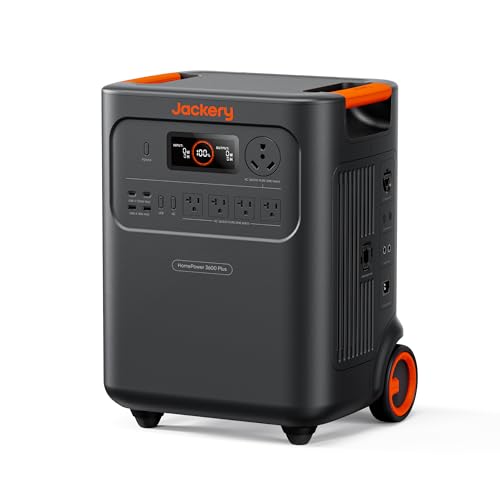
 TOP CHOICEBest overallJackery HomePower 3600 Plus & 2x200W Solar PanelsView on Amazon
- 2
 TOP CHOICEBest for whole-home expansionEF EcoFlow TITAN 5000 Classic Power StationView on Amazon
- 3
 TOP CHOICEBest for fast rechargingEF ECOFLOW DELTA 3 Max Portable Power StationView on Amazon
- 4
 Best budget pickJackery Solar Generator 1000 v2 and 200W Solar PanelView on Amazon
- 5
 Best for small loadsJackery Explorer 300 Portable Power StationView on Amazon
Our Top Picks
Quick Comparison
| Product | Best for | Key feature |
|---|---|---|
| Jackery HomePower 3600 Plus & 2x200W Solar Panels | Balanced whole-essentials backup | 3584Wh LFP battery, expandable with a 3600W AC output |
| EF ECOFLOW DELTA 3 Max Portable Power Station | Fast recharging and quick setup | 2048Wh battery with a 0-80% charge in about 1.13 hours |
| EF EcoFlow TITAN 5000 Classic Power Station | Large homes and long outages | 5017Wh battery expandable to 30kWh |
| Jackery Solar Generator 1000 v2 and 200W Solar Panel | Budget-minded households | 1024Wh LiFePO4 battery with 10ms UPS switchover |
| Jackery Explorer 300 Portable Power Station | Small loads like phones, lights and a CPAP | 292Wh LiFePO4 battery in a lightweight body |
Jackery HomePower 3600 Plus & 2x200W Solar Panels
LFP Battery, Expandable to 21kWh, Solar Generator, Essential Home Backup for Home Use, Emergencies, RV Jackery HomePower 3600 Plus & 2x200W Solar Panels, 3584Wh, 3600W AC Output
Best for: Balanced whole-essentials backup with solar recharging included.
This is a good fit for households that want a complete kit rather than assembling a battery and panels separately. It suits homes that need to run a refrigerator, lights, internet gear and a sump pump for a day or two, and that want room to add capacity later.
Key specs
- 3584Wh LFP battery capacity
- 3600W AC output
- Expandable battery capacity
- Two 200W solar panels included
Pros
- Large battery relative to its size for an all-in-one kit
- Expandable, so capacity can grow with household needs
- Included solar panels reduce the number of separate purchases
Cons
- Heavier than small portable units, so it is less convenient to move
- Solar recharge speed depends heavily on sunlight and panel placement
Bottom line: The most sensible starting point for most homeowners who want one system that handles typical outage loads and can grow over time.
View on AmazonEF ECOFLOW DELTA 3 Max Portable Power Station
EF ECOFLOW DELTA 3 Max Portable Power Station, 2048Wh LFP Battery, 2400W | 3400W X-Boost Output, Ultra-Fast 0-80% Charging in 1.13 Hr, Home Backup & RV Camping, Solar Generator (Solar Panel Optional)
Best for: Fast recharging and quick setup during short to medium outages.
Households that expect frequent but relatively short power interruptions, or that want to recharge between uses from a wall outlet, will appreciate how fast this unit refills. It also works well for people who need a generator that can be set up in minutes.
Key specs
- 2048Wh LFP battery capacity
- 2400W rated output, with 3400W X-Boost peak
- Ultra-fast 0-80% charging in about 1.13 hours
- Solar panel optional
Pros
- Very fast charging compared with most units in its capacity class
- X-Boost helps start motor-driven appliances
- Good balance of capacity and portability
Cons
- Solar panels are sold separately, which adds to the total setup
- Capacity is smaller than the larger expandable systems in this list
Bottom line: A strong choice for owners who value rapid recharging and want a capable mid-size unit for the core appliances.
View on AmazonEF EcoFlow TITAN 5000 Classic Power Station
EF EcoFlow TITAN 5000 Classic Power Station, 5017Wh, 4000W AC Output | LiFePO4 Battery, 5–30kWh Expandable Capacity, <30 dB, <20 ms Switchover with SHP10, Solar Generator for Home Backup,Emergency
Best for: Whole-home backup and long outages.
This is aimed at larger households and those who want to run more of the house during extended grid failures. Its expandable design suits people planning a larger solar array and battery bank over time.
Key specs
- 5017Wh LiFePO4 battery capacity
- 4000W AC output
- Expandable capacity from 5 to 30kWh
- Quiet operation rated below 30 dB
Pros
- Expandable capacity supports whole-home planning
- Very quiet operation, useful for bedrooms and overnight use
- Fast switchover when paired with the compatible smart home panel
Cons
- High cost of entry for a single unit and additional modules
- Heavy and best kept in a fixed location
Bottom line: The right pick for homeowners planning a serious backup system who may expand it over time.
View on AmazonJackery Solar Generator 1000 v2 and 200W Solar Panel
Jackery Solar Generator 1000 v2 and 200W Solar Panel,1024Wh LiFePO4 Battery | 1500W (3000W Peak), 50-Min Fast Charge, 10ms UPS Solar Generator for Home Emergency, Camping & RV
Best for: Budget-minded households that want a complete solar kit.
This bundle suits people covering a few critical loads, such as a refrigerator, router, lights and phone charging, who want a solar kit without stepping up to larger capacity. It is also a practical option for a first solar backup setup.
Key specs
- 1024Wh LiFePO4 battery capacity
- 1500W rated output, 3000W peak
- 10ms UPS switchover
- 200W solar panel included
Pros
- Solar panel included in the bundle
- UPS-style switchover helps keep electronics running
- Straightforward setup for a first system
Cons
- Capacity is limited for high-draw appliances or multi-day outages
- Solar charging is slow with only one 200W panel
Bottom line: A sensible entry point for households with modest loads who want to start with solar backup and expand later.
View on AmazonJackery Explorer 300 Portable Power Station
Jackery Explorer 300 Portable Power Station,292Wh | Backup LiFePO4 Battery, Solar Generator for Outdoors, Camping, Travel, Hunting, Blackout (Solar Panel Optional)
Best for: Small loads like phones, lights, a router or a CPAP during short outages.
This smaller unit is appropriate for apartment dwellers or anyone who only needs to keep a few devices powered. It is light enough to carry to another room or store in a closet.
Key specs
- 292Wh LiFePO4 battery capacity
- Solar panel optional
Pros
- Lightweight and easy to move
- Simple setup with few components
- Useful for keeping small medical or communication devices charged
Cons
- Too small to run a refrigerator for more than a short period
- Solar panels are sold separately
Bottom line: Best for light backup needs. Households that rely on a refrigerator, sump pump or medical equipment should step up to a larger unit.
View on AmazonBuying Guide
Estimate your watt-hour needs before comparing prices
Add up the wattage of each device you plan to run and multiply by its hours of use to get watt-hours. A refrigerator often uses roughly 1 to 2 kWh per day, while a CPAP may use a few hundred watt-hours overnight. Compare the total to the battery capacity, and leave a margin for inverter losses.
Good picks for this: Jackery HomePower 3600 Plus & 2x200W Solar Panels, EF EcoFlow TITAN 5000 Classic Power Station
Check continuous output and surge rating
Motors in refrigerators, well pumps and sump pumps draw a startup surge several times their running wattage. Confirm that the unit’s continuous output and surge (peak) rating both exceed the startup demand of your largest appliance.
Good picks for this: EF ECOFLOW DELTA 3 Max Portable Power Station, Jackery Solar Generator 1000 v2 and 200W Solar Panel
Battery chemistry and cycle life
Lithium iron phosphate (LFP or LiFePO4) batteries are commonly specified with higher cycle counts than standard lithium-ion, which matters if you plan to use the unit regularly. Manufacturers typically list cycle life, and it is worth comparing these figures.
Good picks for this: Jackery HomePower 3600 Plus & 2x200W Solar Panels, Jackery Explorer 300 Portable Power Station
Solar input and recharge time
Check the maximum solar input wattage and how many panels the unit accepts. More panel wattage shortens recharge time, but actual output depends on sun exposure, season and angle. Plan for fewer effective hours than the rated figure.
Good picks for this: EF ECOFLOW DELTA 3 Max Portable Power Station, EF EcoFlow TITAN 5000 Classic Power Station
Expandability and future needs
If you may want to back up more circuits later, look for units that accept additional battery modules or larger solar arrays. Expandable systems cost more upfront but avoid replacing the whole unit when your needs grow.
Good picks for this: EF EcoFlow TITAN 5000 Classic Power Station, Jackery HomePower 3600 Plus & 2x200W Solar Panels
Portability and where it will live
A unit kept in a garage or basement can be heavy, while one used for camping or apartment living needs to be carried easily. Weigh the unit and check its handles and wheels before buying.
Good picks for this: Jackery Explorer 300 Portable Power Station, EF ECOFLOW DELTA 3 Max Portable Power Station
Safe installation and ventilation
Keep the unit indoors in a dry, ventilated area away from direct heat, never in a sealed closet, and do not connect it to your home wiring without a licensed electrician and a transfer switch. Check the manufacturer’s operating temperature range and follow its guidance.
Good picks for this: EF EcoFlow TITAN 5000 Classic Power Station, Jackery Solar Generator 1000 v2 and 200W Solar Panel
FAQ
How much does a solar backup generator for home cost to run for a day?
Running cost is effectively zero once the unit is charged, since the energy comes from the battery and solar panels. The real question is how much capacity you need to cover a day of loads, which you can estimate with the watt-hour method in the buying guide.
Can a portable solar generator power a whole house?
Smaller portable units generally cannot run a whole house for long. Larger expandable systems can cover essential circuits, and whole-home backup usually requires a dedicated battery system with professional installation.
How long will a refrigerator run on a solar generator?
It depends on the refrigerator’s energy use and the battery size. A modern refrigerator often uses about 1 to 2 kWh per day, so a battery of roughly 1 kWh or more could cover a day, though real results vary with temperature and how often the door opens.
Is a CPAP machine safe to run on a power station?
Many CPAP machines can run on portable power stations, but confirm the unit’s output is clean and that the battery can cover your overnight usage. Consult your sleep specialist or equipment supplier before relying on backup power for medical equipment.
Do solar panels recharge the unit during a storm?
Heavy cloud cover and storms reduce solar output significantly, so panels may recharge slowly or not at all. Plan for a charge reserve or a backup charging source for extended bad weather.
How long does a solar generator battery last?
Manufacturers typically specify cycle life for their batteries, and LFP chemistry is generally rated for more cycles than standard lithium-ion. Actual lifespan depends on depth of discharge, temperature and storage habits.
Conclusion
For most homeowners, the Jackery HomePower 3600 Plus is the most balanced starting point, combining a large battery, expandability and included panels. Those who prioritize fast recharging should look at the EF ECOFLOW DELTA 3 Max, while households planning whole-home backup will find the EF EcoFlow TITAN 5000 Classic the most room to grow. The Jackery Solar Generator 1000 v2 suits modest budgets with essential loads, and the Jackery Explorer 300 is best for small devices. Match capacity to your daily watt-hour needs first, then choose the unit that fits your expansion plans and setup space.
For more on sizing and alternatives, see Solar Generator How Much You Need: A Sizing Guide for Home Backup and Whole Home Solar Generator: 7 Best Picks for Backup Power in 2026. If you are weighing other technologies, Wind Generator vs Solar Panels: Which Fits Your Home Backup Needs? compares the options.
Sources
- Guidance on home energy use, backup power planning and battery storage basics (energy.gov)
- Consumer safety recalls and product safety guidance for portable power equipment (cpsc.gov)
- Fire safety standards and guidance for electrical equipment and battery storage (nfpa.org)
Related reading
- Cost of Solar Generator for Home: 5 Best Picks for Backup Power (2026)
- Large Solar Generators (5000W and Up): Whole-Home Backup Basics
- Home Backup With a Solar Generator: What It Can Power and How to Connect Safely
- Best Solar Generators for Home Backup
About Graham Fisher
Graham Fisher is part of our editorial team and reviews and edits our solar generators for home backup & emergencies guides, checking product details against manufacturer specifications and owner feedback.