
 By Graham Fisher
Updated November 2026
Choosing a solar Honda generator for home backup means balancing runtime, noise, fuel flexibility and how much power your essentials actually draw during an outage. Most households need to keep a refrigerator, a CPAP machine, a sump pump, a router and a few lights running. This guide compares seven options against four criteria: continuous output in watts, battery or fuel runtime, noise level for use near living spaces, and how easily each unit connects to a home circuit or transfer switch. The list is based on manufacturer specifications, brand reputation and patterns owners commonly report, not on hands-on testing.
Our top picks at a glance
- 1
 TOP CHOICEBest overallPowerSmart 3800 Watt Portable Inverter Generator for Home Use | SuperView on Amazon
- 2
 TOP CHOICEBest for solar-only chargingJackery Solar Generator 1000 v2 and 200W Solar Panel,1024Wh LiFePO4 BaView on Amazon
- 3
 TOP CHOICEBest for expandable solar backupJackery HomePower 3600 Plus Power Station, 3584Wh, 3600W AC Output | LView on Amazon
- 4
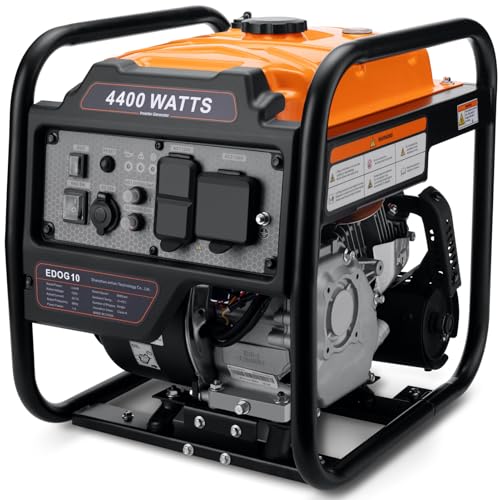 Best budget pickOxseryn Power Equipment 4400 Watts Inverter Generator Gas Powered, PorView on Amazon
- 5
 Best for quiet operationHonda EU2200i 2200 Watt Inverter Generator (EU2200ITAN) | Super QuietView on Amazon
- 6
 Best for whole-home loadsDuroMax XP13000EH 13,000-Watt Dual Fuel Portable Generator – Gas & ProView on Amazon
- 7
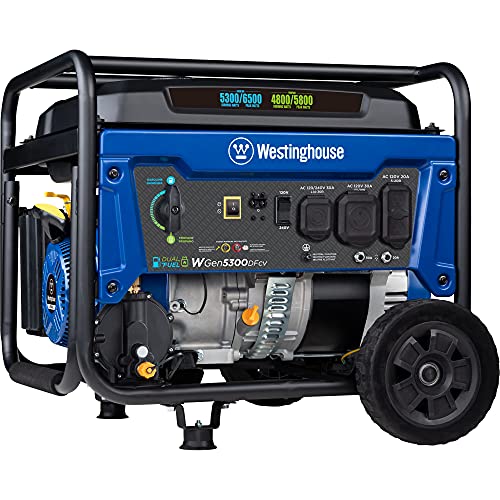 Best for transfer switch setupsWestinghouse 6500 Watt Dual Fuel Home Backup Portable Generator, TransView on Amazon
Our Top Picks
Quick Comparison
| Product | Best for | Key feature |
|---|---|---|
| PowerSmart 3800 Watt Portable Inverter Generator for Home Use | Overall home backup | Under 59 dBA with eco mode |
| Jackery Solar Generator 1000 v2 and 200W Solar Panel | Solar-only charging | 1024Wh LiFePO4 battery with 10ms UPS switching |
| Jackery HomePower 3600 Plus Power Station | Expandable solar backup | 3600W AC output, expandable to 21kWh |
| Oxseryn Power Equipment 4400 Watts Inverter Generator | Budget-minded buyers | 4400W gas inverter with ECO mode |
| Honda EU2200i 2200 Watt Inverter Generator | Quiet operation | Super quiet 120V inverter design |
| DuroMax XP13000EH 13,000-Watt Dual Fuel Portable Generator | Whole-home loads | 13,000W dual fuel with electric start |
| Westinghouse 6500 Watt Dual Fuel Home Backup Portable Generator | Transfer switch installs | 30A outlet and CO sensor |
PowerSmart 3800 Watt Portable Inverter Generator for Home Use | Super Quiet <59dBA, Long Runtime, Eco Mode, <3% THD Clean Power
PowerSmart 3800 Watt Portable Inverter Generator for Home Use | Super Quiet <59dBA, Long Runtime, Eco Mode, <3% THD Clean Power
Best for: Overall home backup with a balance of noise, runtime and clean power
This inverter generator suits homeowners who want a gas-powered unit that runs quietly enough for use near a home and produces clean power suitable for sensitive electronics such as CPAP machines and routers.
Key specs
- Rated at 3800 watts
- Noise level listed under 59 dBA
- Total harmonic distortion listed under 3%
- Eco mode for reduced fuel use at partial loads
Pros
- Quiet operation for overnight use
- Clean sine wave output for medical and electronic devices
- Long runtime on a tank at moderate loads
Cons
- Gas-only, so it needs a fuel supply during extended outages
- Limited capacity for simultaneous high-draw appliances
Bottom line: A strong first choice for households that want quiet, clean gas backup for essentials like a fridge, CPAP and sump pump.
View on AmazonJackery Solar Generator 1000 v2 and 200W Solar Panel,1024Wh LiFePO4 Battery | 1500W (3000W Peak), 50-Min Fast Charge, 10ms UPS Solar Generator for Home Emergency, Camping & RV
Jackery Solar Generator 1000 v2 and 200W Solar Panel,1024Wh LiFePO4 Battery | 1500W (3000W Peak), 50-Min Fast Charge, 10ms UPS Solar Generator for Home Emergency, Camping & RV
Best for: Solar-only charging with no fuel requirement
This kit fits households that want silent, fuel-free backup and can accept a smaller runtime window. It works well for a fridge, a CPAP and phone or laptop charging during a short outage.
Key specs
- 1024Wh LiFePO4 battery capacity
- 1500W continuous output, 3000W peak
- Includes a 200W solar panel
- 10ms UPS switching for sensitive electronics
Pros
- Silent operation with no fuel or fumes
- Fast recharging from the included panel
- Built-in UPS switching protects computers and medical devices
Cons
- Runtime is limited for high-draw appliances like sump pumps under load
- Solar recharge depends on sunlight and panel placement
Bottom line: Best for buyers who want quiet, fuel-free backup for essential small loads and are willing to size around the battery capacity.
View on AmazonJackery HomePower 3600 Plus Power Station, 3584Wh, 3600W AC Output | LFP Battery, Expandable to 21kWh, Solar Generator, Essential Home Backup for Home Use, Emergencies, RV (Solar Panel Optional)
Jackery HomePower 3600 Plus Power Station, 3584Wh, 3600W AC Output | LFP Battery, Expandable to 21kWh, Solar Generator, Essential Home Backup for Home Use, Emergencies, RV (Solar Panel Optional)
Best for: Expandable solar backup for essential household circuits
This larger power station suits homeowners who want more stored energy and the option to add capacity over time. It is a practical match for a fridge, CPAP, sump pump and lighting over a multi-hour outage.
Key specs
- 3584Wh LFP battery capacity
- 3600W AC output
- Expandable to 21kWh with additional batteries
- Solar panel sold separately
Pros
- Substantially more stored energy than entry-level units
- Expansion path for longer outages
- LFP chemistry is generally associated with long cycle life
Cons
- Solar panels are an additional purchase for solar charging
- Heavier and less portable than small units
Bottom line: A good fit for households that want a scalable solar-based system for essential loads and plan to add panels.
View on AmazonOxseryn Power Equipment 4400 Watts Inverter Generator Gas Powered, Portable Open Frame Generator, Low Noise with ECO Mode, RV Ready, Emergency Home Backup
Oxseryn Power Equipment 4400 Watts Inverter Generator Gas Powered, Portable Open Frame Generator, Low Noise with ECO Mode, RV Ready, Emergency Home Backup
Best for: Budget-minded buyers who need gas backup for essentials
This open-frame inverter generator suits buyers who want a lower-cost gas option for short outages. It is a reasonable match for a refrigerator, lights and a sump pump when run on a suitable extension arrangement.
Key specs
- Rated at 4400 watts
- Inverter design with ECO mode
- Open-frame portable construction
Pros
- Accessible option for budget-focused buyers
- Eco mode helps reduce fuel consumption at light loads
- Compact enough for simple storage
Cons
- Less brand history than established names, so owner feedback is more limited
- Open-frame design can be louder than enclosed models
Bottom line: Suited to buyers who want gas backup for a short list of essentials and are comfortable with a less established brand.
View on AmazonHonda EU2200i 2200 Watt Inverter Generator (EU2200ITAN) | Super Quiet 120V Gas Powered Portable Generator for Camping or Home Backup Power Supply, Up to 8.1 Hour Run Time
Honda EU2200i 2200 Watt Inverter Generator (EU2200ITAN) | Super Quiet 120V Gas Powered Portable Generator for Camping or Home Backup Power Supply, Up to 8.1 Hour Run Time
Best for: Quiet operation for noise-sensitive households
This smaller Honda inverter is aimed at people who need only a few circuits and value quiet running near bedrooms. It suits CPAP use, a router and a refrigerator, though it will not handle a large whole-home load.
Key specs
- 2200 watts rated output
- 120V output
- Listed run time up to 8.1 hours at light load
Pros
- Strong reputation for quiet, low-emission operation
- Clean inverter output suitable for sensitive electronics
- Long listed run time at light loads
Cons
- Limited wattage for sump pumps plus other appliances at once
- Gas-only, with a smaller fuel tank than larger units
Bottom line: The right pick when quiet running matters most and your essential load stays within 2200 watts.
View on AmazonDuroMax XP13000EH 13,000-Watt Dual Fuel Portable Generator – Gas & Propane, Electric Start, Whole Home Backup Power, Transfer Switch Ready, RV & Emergency Ready
DuroMax XP13000EH 13,000-Watt Dual Fuel Portable Generator – Gas & Propane, Electric Start, Whole Home Backup Power, Transfer Switch Ready, RV & Emergency Ready
Best for: Whole-home loads and heavy appliances
This high-capacity dual fuel unit suits households that need to run central air, a well pump or multiple large appliances during a long outage. It is a larger, heavier machine that pairs best with a transfer switch.
Key specs
- 13,000-watt rated output
- Dual fuel: gasoline and propane
- Electric start
- Transfer switch ready
Pros
- Large output capacity for whole-home backup
- Dual fuel flexibility when gasoline is scarce
- Electric start simplifies operation
Cons
- Loud and heavy compared with inverter models
- Requires careful placement and ventilation
Bottom line: Best for households that need substantial power and can accept noise, weight and a permanent installation plan.
View on AmazonWestinghouse 6500 Watt Dual Fuel Home Backup Portable Generator, Transfer Switch Ready 30A Outlet, RV Ready 30A Outlet, CO Sensor
Westinghouse 6500 Watt Dual Fuel Home Backup Portable Generator, Transfer Switch Ready 30A Outlet, RV Ready 30A Outlet, CO Sensor
Best for: Transfer switch installs with a built-in CO safety sensor
This mid-size dual fuel generator suits homeowners who want to connect to a home circuit through a transfer switch and want a carbon monoxide sensor included. It covers a refrigerator, sump pump, lights and heating controls in many homes.
Key specs
- 6500-watt rated output
- Dual fuel operation
- 30A outlet for transfer switch connection
- Integrated CO sensor
Pros
- Transfer switch readiness supports safe whole-circuit backup
- CO sensor adds a layer of safety awareness
- Dual fuel gives flexibility during fuel shortages
Cons
- Still requires outdoor placement away from windows and vents
- Installation of a transfer switch usually needs a licensed electrician
Bottom line: A solid choice for homeowners planning a transfer switch and wanting a mid-size, safety-conscious dual fuel unit.
View on AmazonBuying Guide
Calculate your essential watt-hours before choosing
Add up the running watts of each device you must keep powered: a typical refrigerator often runs around 100 to 800 watts depending on age and model, a CPAP usually draws well under 100 watts, and a sump pump may need 500 to 1000 watts on startup. Multiply each by the hours you expect to run it, then total the watt-hours. Compare that total to a battery’s rated watt-hours, keeping in mind that inverter losses and battery depth-of-discharge limits reduce usable energy.
Good picks for this: Jackery HomePower 3600 Plus Power Station, Jackery Solar Generator 1000 v2 and 200W Solar Panel
Check continuous versus surge wattage
Motors such as sump pumps and refrigerator compressors draw a short surge at startup, often several times their running watts. Look for a generator whose continuous rating covers your running load and whose surge or peak rating covers motor startup. Manufacturers list both figures, and the gap between them matters more than the headline number.
Good picks for this: PowerSmart 3800 Watt Portable Inverter Generator for Home Use, DuroMax XP13000EH 13,000-Watt Dual Fuel Portable Generator
Choose gas, solar or dual fuel based on outage patterns
Gas units deliver power as long as fuel is available, but fuel can be hard to find during widespread outages. Solar-based stations recharge without fuel but depend on sunlight and battery size. Dual fuel models give flexibility by running on gasoline or propane. Consider how long outages typically last in your area and whether you can store fuel safely.
Good picks for this: Westinghouse 6500 Watt Dual Fuel Home Backup Portable Generator, Jackery Solar Generator 1000 v2 and 200W Solar Panel
Consider noise and placement
Inverter generators are generally quieter than conventional open-frame designs, and noise ratings are often listed in decibels. Gas generators must run outdoors, at least 20 feet from doors, windows and vents, to keep carbon monoxide out of the home. Plan a location with clearance and protection from rain.
Good picks for this: Honda EU2200i 2200 Watt Inverter Generator, PowerSmart 3800 Watt Portable Inverter Generator for Home Use
Confirm transfer switch and outlet compatibility
Connecting a generator to a home circuit requires a transfer switch or interlock kit so that utility power and generator power never meet on the line. Check the outlet type, such as 30A, and whether the unit is labeled transfer switch ready. A licensed electrician should install the switch.
Good picks for this: Westinghouse 6500 Watt Dual Fuel Home Backup Portable Generator, DuroMax XP13000EH 13,000-Watt Dual Fuel Portable Generator
Look at expandability and battery life
Battery-based systems vary in cycle life and expansion options. Lithium iron phosphate chemistry is commonly cited for long cycle life, which affects how many years you can use the battery before capacity noticeably declines. Expandable systems let you add capacity later without replacing the base unit.
Good picks for this: Jackery HomePower 3600 Plus Power Station, Jackery Solar Generator 1000 v2 and 200W Solar Panel
Plan maintenance and fuel storage
Gas engines need periodic oil changes, air filter checks and fuel stabilizer if stored for months. Test the unit a few times a year under load. Store fuel in approved containers, away from living areas, and rotate it regularly. Battery units need occasional full charge cycles and storage at moderate temperatures.
Good picks for this: Honda EU2200i 2200 Watt Inverter Generator, Oxseryn Power Equipment 4400 Watts Inverter Generator
FAQ
Can a solar Honda generator for home run a refrigerator and CPAP at the same time?
Many smaller inverter units and battery stations can handle both, since a refrigerator and CPAP together often draw a few hundred watts on average. Check the refrigerator’s listed running watts and the CPAP’s rated draw, then confirm the unit’s continuous output covers the total.
How long will a generator run a sump pump during an outage?
Runtime depends on the pump’s motor draw, how often it cycles, and the unit’s capacity or fuel supply. A pump that runs intermittently uses far less energy than one running continuously. Estimate cycles per hour and multiply by run time per cycle to approximate watt-hours.
Do I need a transfer switch to use a portable generator at home?
Yes, for safe whole-circuit or panel connection, a transfer switch or interlock kit is required. Running extension cords directly to the house is safer for individual devices only. A licensed electrician should install any transfer switch.
Is solar charging fast enough for emergency use?
Solar recharge speed depends on panel wattage, sunlight, and weather. A panel rated around 200 watts in good sun may take several hours to fill a mid-size battery, so solar works best as a supplement to stored energy during extended outages.
Are inverter generators safer for electronics?
Inverter generators typically produce cleaner sine-wave power, which is generally better for sensitive electronics and medical devices. Check the total harmonic distortion rating when available.
Where should I place a gas generator?
Place it outdoors, away from doors, windows and vents, and never inside a garage or enclosed space. Install a CO alarm inside the home. Keep the unit dry and on level ground.
Should a medical device user consult a professional before buying?
Yes. If you rely on powered medical equipment, speak with your doctor or equipment supplier about backup requirements and runtime. A licensed electrician can advise on safe connection methods.
Related reading
- Portable Solar Generator vs Home Battery System
- Large Solar Generators (5000W and Up): Whole-Home Backup Basics
- Home Backup With a Solar Generator: What It Can Power and How to Connect Safely
- Best Solar Generators for Home Backup
- Wind Generator vs Solar Panels: Which Fits Your Home Backup Needs?
- Whole Home Solar Generator: 7 Best Picks for Backup Power in 2026
- Which Solar Generator Is Best for Home? 6 Top Picks Compared (2026)
About Graham Fisher
Graham Fisher is part of our editorial team and reviews and edits our solar generators for home backup & emergencies guides, checking product details against manufacturer specifications and owner feedback.

