
 By Graham Fisher
Updated November 2026
Shoppers researching the cost of solar generator for home backup usually want to know one thing: which units give the most useful power for the money you put in. Price tags alone can mislead, because a cheap unit with too little capacity will not keep a refrigerator running overnight, while an oversized system can cost more than your household needs. The five picks below were selected by reviewing manufacturer specifications, brand track record and the patterns owners describe in their feedback, focusing on watt-hour capacity, continuous AC output, expandability and suitability for essential loads such as refrigerators, CPAP machines and sump pumps.
Our top picks at a glance
- 1
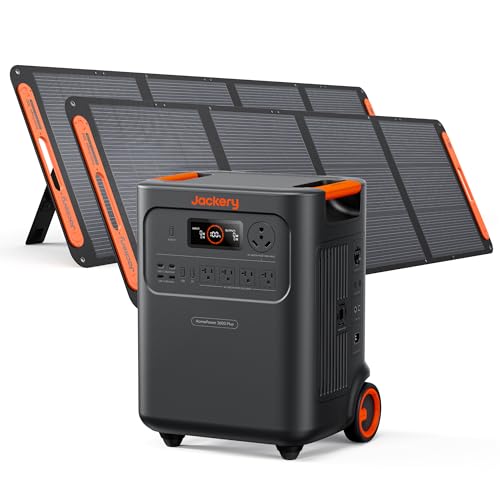 TOP CHOICEBest overallJackery HomePower 3600 Plus & 2x200W Solar PanelsView on Amazon
- 2
 TOP CHOICEBest for whole-house essentialsEF ECOFLOW DELTA 3800 Gen4 with 2x160W Solar PanelsView on Amazon
- 3
 TOP CHOICEBest for fast rechargingEF ECOFLOW DELTA 3 Max Portable Power StationView on Amazon
- 4
 Best for medium backup loadsJackery Solar Generator 1000 v2 & 100W Solar PanelView on Amazon
- 5
 Best budget pickHOWEASY Portable Power Station 120W Solar GeneratorView on Amazon
Our Top Picks
Quick Comparison
| Product | Best for | Key feature |
|---|---|---|
| Jackery HomePower 3600 Plus & 2x200W Solar Panels | Best overall | 3584Wh LFP battery, 3600W AC output, expandable to 21kWh |
| Jackery Solar Generator 1000 v2 & 100W Solar Panel | Best for medium backup loads | 1024Wh LiFePO4 battery, 1500W AC output, 50-minute fast charge |
| EF ECOFLOW DELTA 3 Max Portable Power Station | Best for fast recharging | 2048Wh LFP battery, 2400W rated output, 0–80% charge in about 1.13 hours |
| HOWEASY Portable Power Station 120W Solar Generator | Best budget pick | 88Wh lithium battery with 110V AC outlet and USB ports |
| EF ECOFLOW DELTA 3800 Gen4 & 2x160W Solar Panels | Best for whole-house essentials | 3763Wh capacity, 3600W AC output, 4–12kWh expandable |
Jackery HomePower 3600 Plus & 2x200W Solar Panels
Jackery HomePower 3600 Plus & 2x200W Solar Panels, 3584Wh, 3600W AC Output | LFP Battery, Expandable to 21kWh, Solar Generator, Essential Home Backup for Home Use, Emergencies, RV
Best for: Whole-home essential backup with solar recharging
This kit suits households that want to run several essential circuits during a multi-day outage and recharge from sunlight. Its capacity is large enough to cover a refrigerator, lighting and a CPAP for a night or more, depending on load.
Key specs
- 3584Wh LFP battery capacity
- 3600W AC output
- Includes 2x200W solar panels
- Expandable to 21kWh with additional batteries
Pros
- Large capacity suited to overnight refrigerator and medical device use
- Expandable storage allows the system to grow with needs
- LFP chemistry is generally associated with long cycle life
Cons
- Heavier and bulkier than smaller portable stations
- Full expansion adds significant total cost over time
Bottom line: The strongest all-round choice for households that want serious backup capacity and solar recharging in one kit.
View on AmazonEF ECOFLOW DELTA 3800 Gen4 with 2x160W Solar Panels
EF ECOFLOW 3763Wh DELTA 3800 Gen4 Power Station with 2X160W Solar Panels | 3600W AC Output, 7200W Surge, 4–12kWh Expandable Generator, Solar Generator for Home Backup, Camping, RV & Emergency Power
Best for: Whole-house essentials
Designed for homeowners who need to power a broader set of loads, including sump pump support, during extended grid failures. Its high surge rating helps with motor startup demands.
Key specs
- 3763Wh capacity
- 3600W AC output with 7200W surge rating
- Includes 2x160W solar panels
- Expandable from 4 to 12kWh
Pros
- High surge rating helps start motor loads such as pumps
- Scalable capacity for longer outages
- Solar kit included for recharging
Cons
- Large footprint compared with compact units
- Expansion batteries are a separate purchase
Bottom line: A good fit for homes that need to keep motor-driven appliances running and want room to expand.
View on AmazonEF ECOFLOW DELTA 3 Max Portable Power Station
EF ECOFLOW DELTA 3 Max Portable Power Station, 2048Wh LFP Battery, 2400W | 3400W X-Boost Output, Ultra-Fast 0-80% Charging in 1.13 Hr, Home Backup & RV Camping, Solar Generator (Solar Panel Optional)
Best for: Fast recharging between outages
Suited to users who may have limited recharge windows and want to restore capacity quickly from a wall outlet or solar input. The panel is sold separately, so it works well for those who already own solar or plan to add it later.
Key specs
- 2048Wh LFP battery capacity
- 2400W rated AC output, with X-Boost up to 3400W
- Rapid charging, listed at about 1.13 hours from 0 to 80%
Pros
- Fast charging reduces downtime between events
- Strong output for multiple household loads
- Solar panel is optional, so cost is flexible
Cons
- Solar panels must be bought separately for full solar setup
- Less capacity than the larger whole-home kits
Bottom line: A practical middle option for owners who value quick recharging and want to add solar later.
View on AmazonJackery Solar Generator 1000 v2 & 100W Solar Panel
Jackery Solar Generator 1000 v2 and 100W Solar Panel,1024Wh,1500W AC | LiFePO4 Battery, 50-Min Fast Charge, 10ms UPS Solar Generator for Home Emergency, Camping & RV
Best for: Medium backup loads such as a refrigerator and a few lights
A good match for apartments or smaller homes that need to keep essentials running without a whole-house system. Capacity is modest, so planning around the most important loads matters.
Key specs
- 1024Wh LiFePO4 battery capacity
- 1500W AC output
- Includes 100W solar panel
- 50-minute fast charge rating
Pros
- Lower capacity footprint and easier to store
- LiFePO4 battery chemistry is widely valued for durability
- Quick charging helps with short outage windows
Cons
- Limited runtime for high-draw appliances
- A 100W panel recharges slowly in cloudy conditions
Bottom line: A sensible choice for keeping a refrigerator, router and lights running for a few hours to a day.
View on AmazonHOWEASY Portable Power Station 120W Solar Generator
HOWEASY Portable Power Station,120W(240W Peak) Solar Generator | 88Wh Lithium Battery Power with 110V AC Outlet/DC/USB/LED Light for Outdoor Camping Trip Hunting Emergency
Best for: Phone, lamp and small device backup
Intended for light emergency use, such as charging phones, running a small fan or powering a lamp. It is not designed to run a refrigerator or CPAP machine over an extended period.
Key specs
- 88Wh lithium battery capacity
- 120W rated output (240W peak)
- 110V AC outlet plus DC and USB ports
Pros
- Compact and easy to store in a closet or emergency kit
- Multiple outlet types cover common small devices
- Simple option for short outages
Cons
- Capacity is too small for refrigerators or CPAP machines overnight
- Not suitable for whole-home or sump pump use
Bottom line: A useful basic emergency backup for electronics, but not a substitute for a whole-home solution.
View on AmazonBuying Guide
Watt-hour capacity
Capacity, measured in watt-hours (Wh), determines how long a unit can run a load. A rough estimate is watt-hours divided by the appliance’s wattage, adjusted down for conversion losses (often 10 to 20 percent). A 3,600Wh battery running a 150W refrigerator would last roughly 20 hours before losses, though actual compressor cycling changes this. Always check your appliance’s actual running draw rather than its label maximum.
Good picks for this: Jackery HomePower 3600 Plus, EF ECOFLOW DELTA 3800 Gen4 If you want more background, see 6 Best Portable Power Station Solar Generators for Home Backup (2026).
Continuous AC output and surge rating
Continuous output must exceed the combined running wattage of everything you plan to power at once. Motor-driven devices, such as sump pumps and some refrigerators, also draw a short startup surge that can be several times their running wattage. Look for a surge rating that comfortably exceeds those spikes.
Good picks for this: EF ECOFLOW DELTA 3800 Gen4, EF ECOFLOW DELTA 3 Max Portable Power Station
Solar input and recharge time
Solar panel wattage determines how quickly a battery recharges in good sun. Multiply panel wattage by peak sun hours (often 4 to 5 in many US regions) and apply system efficiency to estimate daily recharge. A 100W panel will recharge slowly compared with 400W or more, so match panels to your battery size and expected outage pattern.
Good picks for this: Jackery Solar Generator 1000 v2, Jackery HomePower 3600 Plus
Battery chemistry and durability
Lithium iron phosphate (LFP or LiFePO4) batteries are commonly associated with longer cycle life and better thermal stability than some other lithium chemistries. Manufacturers typically specify cycle counts to a set capacity retention level, so compare those figures directly rather than assuming equal lifespans.
Good picks for this: Jackery Solar Generator 1000 v2, EF ECOFLOW DELTA 3 Max Portable Power Station
Expandability
If you may need more backup later, check whether the system supports additional battery modules. Expandable platforms can grow from a modest starting point, but expansion batteries are usually sold separately, so the total investment should be planned from the start.
Good picks for this: Jackery HomePower 3600 Plus, EF ECOFLOW DELTA 3800 Gen4
Size, weight and placement
Larger capacity usually means more weight. Consider whether you will need to carry the unit, where it will sit, and whether it needs ventilation. Keep units indoors and dry, and follow manufacturer guidance on temperature range, especially for storage in garages or sheds.
Good picks for this: HOWEASY Portable Power Station 120W Solar Generator, Jackery Solar Generator 1000 v2
Essential load planning
List the devices you truly need during an outage, note their running wattage, and estimate daily energy use. A refrigerator, a CPAP machine, a few LED lights and a phone charger often matter more than a full home. For medical devices, confirm runtime needs with your equipment provider or physician. Worth reading next: 6 Best Solar Generators by Cost of Solar Generators: Compared (2026).
Good picks for this: Jackery HomePower 3600 Plus, Jackery Solar Generator 1000 v2
FAQ
How much capacity do I need to run a refrigerator overnight?
A typical refrigerator often uses roughly 1 to 2 kilowatt-hours per day, depending on age, size and ambient temperature. A battery of about 1,000Wh or more can cover one overnight, though efficiency losses and compressor cycling affect results. Check your appliance’s energy label or meter readings for an accurate figure.
Can a solar generator run a sump pump?
Many can, but sump pumps have high startup surges. Confirm that the unit’s surge rating exceeds your pump’s locked-rotor demand, and test the setup before relying on it. A licensed electrician can advise on safe connections.
Is a CPAP machine safe to run on a portable power station?
CPAP machines are often low-wattage, but medical needs vary. Confirm runtime and backup requirements with your sleep provider or physician before depending on a portable unit for therapy.
How long does it take to recharge from solar?
Recharge time depends on panel wattage, sunlight hours, weather and the battery’s state of charge. Many owners report that a 100W panel takes a day or more to refill a larger battery, while multi-hundred-watt arrays are considerably faster.
Do solar generators last for many years?
Lifespan depends on chemistry, usage and storage conditions. Manufacturers usually specify cycle life to a defined capacity retention level. Keeping units within their recommended temperature range helps preserve battery health.
Can I charge a solar generator from a wall outlet?
Most models support AC wall charging as well as solar input, which gives flexibility when sunlight is limited. Charging speed varies by model, so check the rated input figures in the specifications.
Should I buy a portable unit or a whole-home system?
Portable units suit essential loads and short outages. Whole-home or large expandable systems are better for longer outages or homes with larger electrical demands. Consider your most important circuits before deciding.
Conclusion
For most households asking about the cost of solar generator for home backup, the right choice depends on which loads matter most. The Jackery HomePower 3600 Plus is a strong all-round option with large capacity and expandability. The EF ECOFLOW DELTA 3800 Gen4 suits homes that need motor-start capability and room to grow. The EF ECOFLOW DELTA 3 Max Portable Power Station fits users who value quick recharging. The Jackery Solar Generator 1000 v2 covers medium loads in smaller spaces, and the HOWEASY Portable Power Station works for phones and small devices. Calculate your daily watt-hour needs first, then choose the unit that covers them with margin.
Sources
- Guidance on home energy use, backup power planning and efficient appliances (energy.gov)
- Safety information on portable generators, batteries and home electrical hazards (cpsc.gov)
- Fire and electrical safety standards relevant to battery storage and home power systems (nfpa.org)
Related reading
- How Much Does a Solar Power Generator Cost? Portable vs Whole-Home Options
- Wind Generator vs Solar Panels: Which Fits Your Home Backup Needs?
- Whole Home Solar Generator: 7 Best Picks for Backup Power in 2026
- Top 6 Solar Powered Steam Generators Compared for Home Use
About Graham Fisher
Graham Fisher is part of our editorial team and reviews and edits our solar generators for home backup & emergencies guides, checking product details against manufacturer specifications and owner feedback.




