
 By Lauren Holland
Updated November 2026
Choosing power backup for home appliances comes down to one question: which devices must keep running when the grid goes down, and for how long? A refrigerator, a CPAP machine and a sump pump each draw power differently, so the right unit depends on their combined watt-hour needs, surge demands and how many hours you expect to be without utility power. The picks below were compared on published specifications, brand reputation and the patterns owners commonly describe, with attention to battery capacity, inverter output, expandability and suitability for essential loads.
Our top picks at a glance
- 1
 TOP CHOICEBest overallEF ECOFLOW Delta 3 Portable Power Station, 1024Wh 1800WView on Amazon
- 2
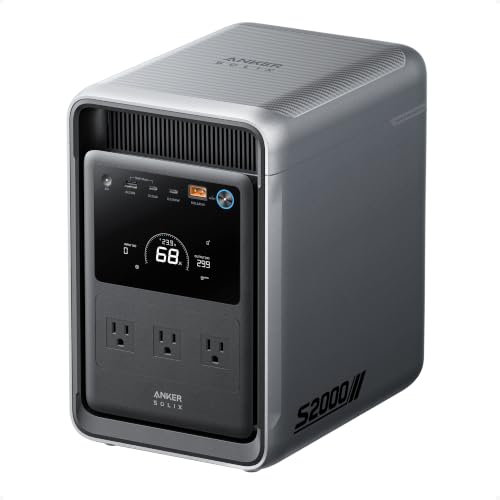 TOP CHOICEBest for whole-home essentialsAnker SOLIX S2000 Solar Powered Generator, 2,010Wh, 1,500WView on Amazon
- 3
 TOP CHOICEBest for small kitchens and bedroomsPortable Power Station 192Wh (60,000mAh) with Bag, 300WView on Amazon
- 4
 Best for refrigerators and sump pumpsBLUETTI FridgePower Backup System, 2016Wh Expandable to 4032WhView on Amazon
- 5
 Best for long outages with expansionJackery HomePower 3600 Plus Power Station, 3584Wh, 3600W AC OutputView on Amazon
- 6
 Best for whole-house, multi-day coverageABOK Ark7200 Portable Power Station + 400W Solar PanelView on Amazon
Our Top Picks
| Product | Best for | Key feature |
|---|---|---|
| EF ECOFLOW Delta 3 Portable Power Station | Overall balance of capacity and portability | 1024Wh LiFePO4 battery, 1800W AC output |
| Anker SOLIX S2000 Solar Powered Generator | Whole-home essentials on a mid-size budget | 2,010Wh capacity, 1,500W output |
| Portable Power Station 192Wh (60,000mAh) with Bag | Small kitchens and bedrooms | 192Wh, 300W output, 6 ports |
| BLUETTI FridgePower Backup System | Refrigerators and sump pumps | 2016Wh expandable to 4032Wh, 10ms UPS switching |
| Jackery HomePower 3600 Plus Power Station | Long outages with expansion | 3584Wh, 3600W AC output, expandable to 21kWh |
| ABOK Ark7200 Portable Power Station + 400W Solar Panel | Whole-house, multi-day coverage | 9792Wh LiFePO4, 7200W AC, expandable to 29.4kWh |
EF ECOFLOW Delta 3 Portable Power Station, 1024Wh 1800W
EF ECOFLOW Delta 3 Portable Power Station, 1024Wh 1800W | LiFePO4 Battery, Full Charge in 56 Min, 1800W AC/100W USB-C Output, Solar Generator for Home Backup Power, Camping & RVs
Best for: Overall balance of capacity and portability
This unit suits households that want to keep a refrigerator, lights, a router and a few phone chargers running through a short to medium outage without a large, permanently installed system. It is also a sensible choice for people who want the same unit to serve as camping or RV power.
Key specs
- 1024Wh LiFePO4 battery capacity
- 1800W AC output
- 100W USB-C output
- Listed full-charge time of about 56 minutes
Pros
- Capacity is enough for a refrigerator and essential lighting for a day or more, depending on load
- LiFePO4 chemistry is generally associated with a long cycle life
- Fast recharge time is useful when grid power returns
Cons
- A single unit will not run central air conditioning or an electric range for long
- Owners often note that a solar input is needed for extended off-grid use
Bottom line: A strong first choice for someone who wants reliable essential-load backup and a unit that can move between home and outdoor use.
View on AmazonAnker SOLIX S2000 Solar Powered Generator, 2,010Wh, 1,500W
Anker SOLIX S2000 Solar Powered Generator , 2,010Wh, 1,500W | 2,010Wh LiFePO4 Battery, 1,500W Output, Portable Power Station for Home Backup, Outdoor and Emergency Use
Best for: Whole-home essentials on a mid-size budget
This model fits households that need more runtime than a compact unit provides, such as a family that wants refrigeration, medical devices, internet equipment and a sump pump covered during a multi-hour outage.
Key specs
- 2,010Wh LiFePO4 battery capacity
- 1,500W AC output
- Designed for home backup and emergency use
Pros
- Roughly double the capacity of the 1024Wh class, giving more runtime for essential loads
- Output is sufficient for most household appliances other than central HVAC
- LiFePO4 battery is commonly associated with longer service life
Cons
- Heavier and less portable than smaller units
- Full recharge from the wall or solar takes longer than the smaller models
Bottom line: Best for households that want a single unit covering most essential appliances for a day or more.
View on AmazonPortable Power Station 192Wh (60,000mAh) with Bag, 300W
Daran Portable Power Station 192Wh with Bag, 300W (600W Surge) Power Bank LiFePO4 Battery Backup, Compact Solar Generator 6-Port Design w/2 AC Outlets for Home,RV, Hurricane, Camping,Emergency
Best for: Small kitchens and bedrooms
This compact unit is aimed at people with a limited set of devices to protect, such as a CPAP machine, phone and tablet chargers, a small fan and a few LED lights. It is also a practical option for an apartment or a backup for a single room.
Key specs
- 192Wh capacity (listed as 60,000mAh)
- 300W continuous output (600W surge)
- Two AC outlets and multiple USB ports
Pros
- Small enough to store in a closet and carry with the included bag
- Multiple ports allow several small devices to charge at once
- Lower capacity makes it easy to fully recharge from a standard outlet
Cons
- Runtime for a refrigerator or sump pump will be short
- Owners often report it is best treated as a bridge for small electronics rather than appliance backup
Bottom line: Pick this if your priority is keeping a CPAP and charging devices running during short outages.
View on AmazonBLUETTI FridgePower Backup System, 2016Wh Expandable to 4032Wh
BLUETTI FridgePower Backup System, 2016Wh Expandable to 4032Wh LFP Battery | 1800W AC (3600W Surge), 4W Self-Consumption , Ultra-Slim 75mm, 10ms UPS, for Fridge, Sump Pump, Home Backup, Emergency
Best for: Refrigerators and sump pumps
This system is designed around keeping a refrigerator and similar motor-driven loads running. It suits homeowners in flood-prone areas who want a sump pump protected and a kitchen fridge that will not spoil during an outage.
Key specs
- 2016Wh LFP battery, expandable to 4032Wh
- 1800W AC output (3600W surge)
- 10ms UPS switching time
- Ultra-slim 75mm profile
Pros
- Fast switchover is intended to keep refrigerators and electronics from losing power abruptly
- Surge rating is suited to starting motor loads such as compressors and pumps
- Expansion batteries let you grow runtime over time
Cons
- Slim form factor is less convenient for moving between locations
- Expansion adds meaningful cost and setup effort
Bottom line: A strong choice for homeowners whose main concern is a refrigerator and sump pump during power failures.
View on AmazonJackery HomePower 3600 Plus Power Station, 3584Wh, 3600W AC Output
Jackery HomePower 3600 Plus Power Station, 3584Wh, 3600W AC Output | LFP Battery, Expandable to 21kWh, Solar Generator, Essential Home Backup for Home Use, Emergencies, RV (Solar Panel Optional)
Best for: Long outages with expansion
This unit fits households that expect extended outages and want room to add capacity later, including people who may pair it with solar panels for ongoing recharging.
Key specs
- 3584Wh LFP battery capacity
- 3600W AC output
- Expandable capacity as listed in the product name
- Solar panel input is optional
Pros
- High output covers a broader range of household loads
- Expandability supports longer coverage as needs grow
- Solar pairing gives a path to recharging without grid power
Cons
- Heavy and best kept as a semi-permanent installation
- Solar panels and expansion batteries are sold separately, increasing setup effort
Bottom line: A good fit for someone planning a longer-term backup setup who values expandability.
View on AmazonABOK Ark7200 Portable Power Station + 400W Solar Panel
ABOK Ark7200 Portable Power Station + 400W Solar Panel, 7200W AC, 120/240V | 9792Wh LiFePO4, Expandable to 29.4kWh, 2.5H Full Charge, 10ms UPS, Solar Generator for Home Backup, Forestry, Power Outages
Best for: Whole-house, multi-day coverage
This is the highest-capacity option in this list, aimed at homeowners who want to keep a large share of household loads running for days, provided recharging via the included solar panel and additional capacity are planned.
Key specs
- 9792Wh LiFePO4 battery capacity
- 7200W AC output, 120/240V
- Expandable to 29.4kWh as listed
- Includes a 400W solar panel
Pros
- Capacity and output cover a wide range of whole-home essentials
- 120/240V output is relevant for some larger household circuits
- Solar panel included supports recharging during extended outages
Cons
- Very heavy and not practical to move regularly
- Owners often note that a professional electrician should handle any transfer-switch wiring
Bottom line: Best for households prepared for a substantial, semi-permanent whole-home backup system.
View on AmazonBuying Guide
Watt-hours: calculating what your appliances need
Watt-hour capacity tells you how long a unit can run a given load. Multiply each device’s wattage by the hours you need it, then add the totals. A refrigerator averaging about 100 to 150 watts running roughly 8 hours a day uses around 800 to 1,200Wh. Add a CPAP machine, a sump pump and lights, then include a 20 percent loss factor for inverter inefficiency.
Good picks for this: Anker SOLIX S2000 Solar Powered Generator, EF ECOFLOW Delta 3 Portable Power Station
Surge rating and starting loads
Motors, including refrigerator compressors and sump pumps, draw a brief spike when they start. Check that the continuous output exceeds the running wattage of your largest device and that the surge rating covers its startup spike, which can be several times the running wattage.
Good picks for this: BLUETTI FridgePower Backup System, ABOK Ark7200 Portable Power Station + 400W Solar Panel
Switchover speed for sensitive equipment
Some devices, including computers and certain medical equipment, can be disrupted by a power gap. Units advertising a fast UPS switchover time are designed to reduce that interruption. Confirm the specification and whether your device needs continuous power.
Good picks for this: BLUETTI FridgePower Backup System, Jackery HomePower 3600 Plus Power Station
Battery chemistry and cycle life
LiFePO4 (lithium iron phosphate) batteries are commonly associated with longer cycle life and better thermal stability than some other lithium chemistries. Check the listed chemistry and the manufacturer’s cycle-life claim, which is usually stated as a number of charge cycles to a defined capacity level.
Good picks for this: EF ECOFLOW Delta 3 Portable Power Station, Anker SOLIX S2000 Solar Powered Generator
Portability versus capacity
Higher capacity almost always means more weight. If you plan to move the unit between the house, a vehicle or a campsite, a compact model may be more practical. If it will stay in one place as a backup system, a heavier, higher-capacity unit may be the better tradeoff.
Good picks for this: Portable Power Station 192Wh (60,000mAh) with Bag, EF ECOFLOW Delta 3 Portable Power Station
Expandability and solar recharging
Expandable systems let you add battery modules as your needs grow. Solar input lets you recharge during long outages. Confirm whether panels and expansion batteries are included, since many are sold separately.
Good picks for this: Jackery HomePower 3600 Plus Power Station, ABOK Ark7200 Portable Power Station + 400W Solar Panel
Safe installation and use
Never connect a portable station to your home wiring through a standard outlet backfeed, which can endanger utility workers and damage equipment. Use a properly rated transfer switch or interlock installed by a licensed electrician if you want circuits powered directly. Keep units ventilated and out of wet areas.
Good picks for this: BLUETTI FridgePower Backup System, ABOK Ark7200 Portable Power Station + 400W Solar Panel
FAQ
Can a portable power station run a whole house?
Some high-capacity units can power essential circuits, but running an entire house, especially with electric heating or central air conditioning, typically requires a large battery system and a transfer switch installed by a licensed electrician.
How long will a refrigerator run on a power station?
A refrigerator often averages roughly 100 to 150 watts while cycling. A 1024Wh unit may keep one running for about a day, depending on the fridge’s efficiency, ambient temperature and how often the door is opened.
Is a CPAP machine safe to run on battery backup?
Many CPAP machines draw modest power and can run on a properly sized unit. Check your device’s wattage and confirm with your sleep physician or equipment provider before relying on backup power for medical equipment.
Do I need a transfer switch?
For portable units used with individual appliances, a transfer switch is not required. If you want to power hardwired circuits such as a sump pump or well pump, a transfer switch installed by a licensed electrician is the safe approach.
What is the difference between continuous and surge wattage?
Continuous wattage is the load a unit can supply indefinitely. Surge wattage is a short-term peak used to start motors. Your largest motor’s startup draw must fit within the surge rating.
How often should I recharge the battery?
Many owners keep the battery between about 20 and 80 percent for longer life and recharge after outages. Check the manufacturer’s storage guidance, especially if you plan to keep the unit charged over long periods.
Conclusion
For most households, the right power backup for home appliances starts with a watt-hour calculation of the devices you must keep running. A compact unit suits CPAP machines and charging, the mid-capacity options cover refrigerators and lighting, and the larger systems fit homes preparing for multi-day outages. Use the Buying Guide to match capacity, surge rating and expandability to your own load list, and consult a licensed electrician before any permanent wiring.
Sources
- Guidance on home energy use, backup planning and understanding appliance energy consumption (energy.gov)
- Safety recalls, electrical safety and generator and battery product hazard information (cpsc.gov)
- Electrical and fire safety standards relevant to home backup power installations (nfpa.org)
Related reading
- Home Backup With a Solar Generator: What It Can Power and How to Connect Safely
- Whole-Home Backup Power Solution: How to Size One for Outages (2026)
- Whole Home Solar Generator: 7 Best Picks for Backup Power in 2026
- Whole Home Power Backup System: How to Size One for Outages (2026)
- Whole Home Battery Backup Power Supply: 7 Best Picks for Outages (2026)
About Lauren Holland
Lauren Holland is part of our editorial team and reviews and edits our solar generators for home backup & emergencies guides, checking product details against manufacturer specifications and owner feedback.




