
 By Lauren Holland
Updated November 2026
Choosing an ecoflow delta pro for whole home power backup comes down to how much energy your home actually draws during an outage, how long you need to run it, and whether you want to add batteries later. This guide compares four Delta Pro-family listings sold on Amazon US. Our selection focused on published specifications, the scope of each system (inverter only versus inverter plus batteries), expandability, output capacity for running a home panel, and the patterns owners tend to describe in their feedback. We did not test these units ourselves, so treat the comparisons as a research summary rather than hands-on results.
Our top picks at a glance
- 1
 TOP CHOICEBest overallEF ECOFLOW Power Station 12288Wh Delta Pro Ultra X with AC cableView on Amazon
- 2
 Best for a larger expandable systemEF ECOFLOW 12kWh Power Station: DELTA Pro Ultra with Extra BatteryView on Amazon
- 3
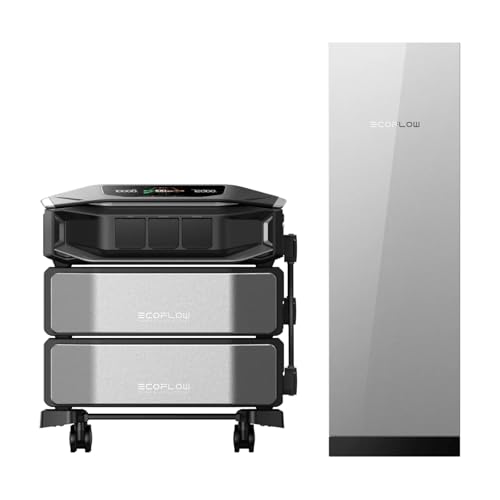 Best for a smart home panel setupEF ECOFLOW DELTA Pro Ultra X with Smart Home Panel 3, 12288Wh Power StationView on Amazon
- 4
 Best budget pickEF ECOFLOW Portable Power Station 3600Wh DELTA Pro, 120V 3600W AC OutputView on Amazon
Our Top Picks
| Product | Best for | Key feature |
|---|---|---|
| EF ECOFLOW Power Station 12288Wh Delta Pro Ultra X | Whole-home backup with room to grow | 12288Wh capacity, 12000W rated output, expandable to 180kWh |
| EF ECOFLOW 12kWh Power Station: DELTA Pro Ultra | Large homes wanting an extra battery included | 12kWh system with 240V output and expansion to 90kWh |
| EF ECOFLOW DELTA Pro Ultra X with Smart Home Panel 3 | Integrated circuit-level home backup | Smart Home Panel 3 pairing for selected circuits |
| EF ECOFLOW Portable Power Station 3600Wh DELTA Pro | Partial-home backup and a smaller budget | 3600Wh capacity, 3600W output, fast recharge |
EF ECOFLOW Power Station 12288Wh Delta Pro Ultra X with AC cable
EF ECOFLOW Power Station 12288Wh Delta Pro Ultra X with AC cable | 12000W Solar Generator for Whole-Home Backup, Expandable to 180kWh, Emergency Power Supply (1x Inverter + 2 x Batteries)
Best for: Whole-home backup for households that want a large, expandable system in one package.
This suits a homeowner who wants to keep refrigerators, well or sump pumps, lighting, internet gear and some HVAC running through a multi-day outage. The listing bundles the inverter with two batteries, which is what gives it the 12288Wh figure.
Key specs
- Listed capacity: 12288Wh
- Listed output: 12000W
- Expandable to 180kWh with additional units
- Includes AC cable
Pros
- Large capacity for multi-circuit loads
- Expandable as your backup needs grow
- Bundled inverter and batteries simplify ordering
Cons
- Physically large and heavy for a portable unit
- Full-home wiring usually requires a licensed electrician
Bottom line: The most complete option here for owners who want the biggest single-package capacity and a clear path to expansion.
View on AmazonEF ECOFLOW 12kWh Power Station: DELTA Pro Ultra with Extra Battery
EF ECOFLOW 12kWh Power Station: DELTA Pro Ultra with Extra Battery | 120/240V 7200W AC Output, Lifepo4 Battery, Expandable to 90kWh, Home Backup Power, Solar Generator for Home Use, Emergency
Best for: Larger homes that run 240V appliances and want a 12kWh system with an extra battery included.
This fits a household with electric range, dryer, or a heat pump that needs 240V output. The 120/240V rating is the main reason to consider it over smaller units.
Key specs
- Listed capacity: 12kWh
- Listed output: 120/240V, 7200W AC
- LiFePO4 battery chemistry
- Expandable to 90kWh
Pros
- 240V output supports larger appliances
- LiFePO4 chemistry is known for long cycle life
- Expansion path to very large storage
Cons
- Output is lower than the 12000W Ultra X models, which can limit simultaneous heavy loads
- Requires careful load planning and professional installation for panel integration
Bottom line: A strong fit for owners with 240V loads who want battery capacity in a single listing.
View on AmazonEF ECOFLOW DELTA Pro Ultra X with Smart Home Panel 3, 12288Wh Power Station
EF ECOFLOW DELTA Pro Ultra X with Smart Home Panel 3, 12288Wh Power Station | Lifepo4 Battery, Expandable to 180kWh, 120/240V 12000W AC Output, Solar Generator for Home Use
Best for: Homeowners who want circuit-level control through a smart home panel rather than plugging appliances into a single unit.
This configuration makes most sense if you plan to have an electrician wire selected circuits to a transfer or sub-panel, so the system powers chosen loads automatically during an outage.
Key specs
- Listed capacity: 12288Wh
- Listed output: 120/240V, 12000W AC
- LiFePO4 battery
- Expandable to 180kWh
Pros
- Circuit-based backup reduces manual switching
- High output for 240V loads
- Expandable capacity
Cons
- Installation cost and complexity are higher than plug-in setups
- Only useful if your home electrical layout suits circuit-level backup
Bottom line: Best for owners ready to commit to a permanent, electrician-installed backup system.
View on AmazonEF ECOFLOW Portable Power Station 3600Wh DELTA Pro, 120V 3600W AC Output
EF ECOFLOW Portable Power Station 3600Wh DELTA Pro, 120V 3600W AC Output | 2.7H Fast Charge Power Station, Expandable up to 25kWh, Solar Generator for Home Use, Power Outage, Camping, RV, Emergencies
Best for: Partial-home backup for essential loads, or a smaller starting point before expanding.
This suits a household that mainly needs to keep a fridge, CPAP, router, lights and a sump pump running, rather than the entire house. It is also a reasonable choice for RV or camping use.
Key specs
- Listed capacity: 3600Wh
- Listed output: 120V, 3600W AC
- Fast recharge listed at about 2.7 hours
- Expandable up to 25kWh
Pros
- Most manageable size and weight of the four
- Fast recharging helps between outages
- Can be expanded later with batteries
Cons
- Capacity is too small to run a whole house for long periods
- Output is 120V only, so 240V appliances are out of scope
Bottom line: A practical choice for essential-load backup or as a first step toward a larger system.
View on AmazonBuying Guide
Capacity and runtime
Add up the wattage of the loads you want to keep running, then divide the watt-hour capacity by that load to estimate runtime. A refrigerator might draw around 100 to 200 watts on average, while a CPAP is often under 100 watts. Real-world runtime is lower than the simple division because of inverter losses, so leave a margin of roughly 10 to 20 percent. Consult a qualified electrician before relying on a backup system for medical equipment.
Good picks for this: EF ECOFLOW Power Station 12288Wh Delta Pro Ultra X, EF ECOFLOW Portable Power Station 3600Wh DELTA Pro
Output rating and surge capacity
Continuous output tells you what you can run steadily, while surge handling matters for motors such as well pumps, sump pumps and air conditioners, which draw a larger spike at startup. Check that the continuous rating exceeds the sum of simultaneous loads, not just the largest one.
Good picks for this: EF ECOFLOW Power Station 12288Wh Delta Pro Ultra X, EF ECOFLOW DELTA Pro Ultra X with Smart Home Panel 3
Voltage: 120V versus 120/240V
Standard outlets and most lighting run on 120V. Electric ranges, clothes dryers, some water heaters and larger HVAC equipment often need 240V. If you rely on 240V appliances, confirm that the system lists 240V output before buying.
Good picks for this: EF ECOFLOW 12kWh Power Station: DELTA Pro Ultra with Extra Battery, EF ECOFLOW DELTA Pro Ultra X with Smart Home Panel 3
Expandability
Some systems can add battery modules later, which lets you start with a smaller budget and grow capacity as needs change. Confirm that the expansion battery is sold separately and compatible with your specific model.
Good picks for this: EF ECOFLOW Power Station 12288Wh Delta Pro Ultra X, EF ECOFLOW Portable Power Station 3600Wh DELTA Pro
Installation and transfer method
Plug-in portable stations work with extension cords and individual appliances. Whole-home use typically involves a transfer switch or a sub-panel, which should be installed by a licensed electrician to meet local electrical code. Never backfeed a home circuit through a standard wall outlet, as this can endanger utility workers and damage equipment.
Good picks for this: EF ECOFLOW DELTA Pro Ultra X with Smart Home Panel 3, EF ECOFLOW 12kWh Power Station: DELTA Pro Ultra with Extra Battery
Recharging options
Consider how you will recharge between outages: wall outlet, solar input, or a generator. Recharge time varies widely with input power. Owners often note that solar recharging depends heavily on panel wattage and sunlight, so plan for cloudy days.
Good picks for this: EF ECOFLOW Portable Power Station 3600Wh DELTA Pro, EF ECOFLOW Power Station 12288Wh Delta Pro Ultra X
Durability and battery care
LiFePO4 batteries generally tolerate more charge cycles than older lithium chemistries. Keep the unit indoors or in a sheltered, dry location, avoid storing it fully discharged for long periods, and follow the manufacturer’s guidance on storage charge levels.
Good picks for this: EF ECOFLOW 12kWh Power Station: DELTA Pro Ultra with Extra Battery, EF ECOFLOW Power Station 12288Wh Delta Pro Ultra X
FAQ
Can an EcoFlow Delta Pro power a whole house?
It can power a whole house only if the system’s capacity and output match your average and peak loads, and if your home is wired for the backup system. Many owners use these units for essential circuits rather than every appliance. A load audit with an electrician is the most reliable way to decide.
How long will a Delta Pro run a refrigerator?
A typical modern refrigerator averages well under 200 watts, so a 12kWh system could run one for many hours, depending on compressor cycling and inverter losses. Divide usable watt-hours by the average draw, then reduce the result to allow for losses.
Do I need an electrician to use these units?
Plug-in use with individual appliances does not usually require one. Connecting the system to your home’s electrical panel does, and this should be done by a licensed electrician following local code. Consult a professional before any panel integration.
Is a 120V or 240V model better for home backup?
It depends on your appliances. If you need to run a dryer, electric range or large HVAC unit, choose a model that lists 240V output. For lighting, refrigeration and electronics, 120V is usually enough.
Can I add more batteries later?
Several listings in this group are described as expandable, but expansion batteries are typically sold separately and must match the specific model. Verify compatibility before buying.
How do I recharge during a long outage?
Options include a wall outlet when power is available, solar input if you have compatible panels, or a generator. Recharge speed depends on the input source and wattage, so match your charging method to how long you expect an outage to last.
Conclusion
For most whole-home goals, the 12288Wh Delta Pro Ultra X listing offers the most complete single-package capacity and expansion room. Homes with 240V appliances should look closely at the 12kWh model with an extra battery. Those planning a permanent, circuit-based setup may prefer the Smart Home Panel 3 configuration, provided an electrician can install it. The 3600Wh unit suits essential-load backup, RVs and a smaller starting budget. Match the choice to your load audit rather than to the headline capacity alone.
Sources
- Guidance on home energy use, backup power planning and electrical safety basics (energy.gov)
- National Electrical Code and standards that govern home generator and transfer equipment installation (nfpa.org)
- Consumer safety information on portable power equipment and battery-related hazards (cpsc.gov)
Related reading
- 8 Best EcoFlow Delta Pro Ultra Whole-Home Backup Power Picks (2026)
- 7 Best EcoFlow Delta Pro Ultra X Whole-Home Backup Power Options for 2026
- 3 Best EcoFlow Delta Pro Ultra Home Backup Options for Whole-House Power (2026)
- Ecoflow Delta Pro Ultra X Guide: Sizing Home Backup Power (2026)
- EcoFlow Delta Pro 3600 W: How to Size It for Home Backup Power
- EcoFlow Delta 2 Pro Max: How to Size It for Home Backup Power
About Lauren Holland
Lauren Holland is part of our editorial team and reviews and edits our solar generators for home backup & emergencies guides, checking product details against manufacturer specifications and owner feedback.




