
 By Lauren Holland
Updated November 2026
If you are looking at the anker solix f3800 home backup power kit 7680wh, you probably want to keep a refrigerator, a CPAP machine and a sump pump running when the grid goes down. This guide compares five Anker SOLIX options that cover a range of outage needs, from a compact station for a few devices to a larger expandable system for whole-house loads. Our selection criteria were battery capacity in watt-hours, continuous output in watts, expandability, solar input, portability, and the patterns owners tend to report after real outages.
Our top picks at a glance
- 1
 TOP CHOICEBest overallAnker SOLIX F3800 Plus Portable Power Station and Home Power PanelView on Amazon
- 2
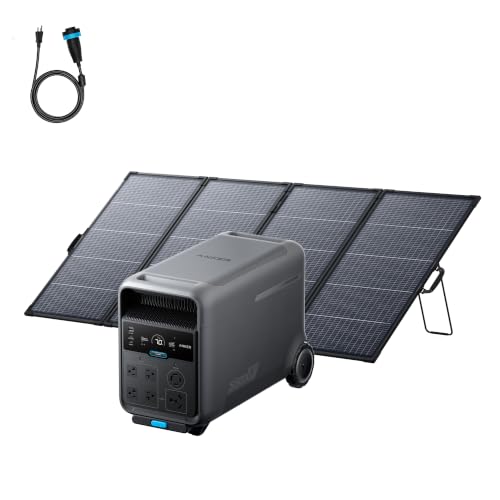 TOP CHOICEBest for whole-home expansionAnker SOLIX S5000 with 400W Solar PanelView on Amazon
- 3
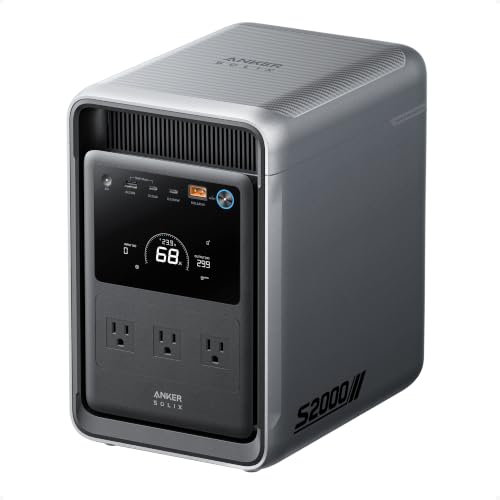 TOP CHOICEBest for medium loadsAnker SOLIX S2000 Solar Powered GeneratorView on Amazon
- 4
 Best for small kitchens and quick UPS useAnker SOLIX C1000 Gen 2 Solar Powered GeneratorView on Amazon
- 5
 Best budget pickAnker SOLIX C300 Portable Power Station with 60W Solar PanelView on Amazon
Our Top Picks
Quick Comparison
| Product | Best for | Key feature |
|---|---|---|
| Anker SOLIX F3800 Plus Portable Power Station and Home Power Panel | Whole-home backup with panel integration | 3,840Wh LiFePO4 battery, expandable to 53kWh |
| Anker SOLIX S5000 with 400W Solar Panel | Compact backup with solar recharging | 5,024Wh capacity, 3,000W solar input |
| Anker SOLIX S2000 Solar Powered Generator | Medium loads and essential circuits | 2,010Wh capacity, 1,500W output |
| Anker SOLIX C1000 Gen 2 Solar Powered Generator | Small kitchens and UPS-style switchover | Full charge in 49 minutes, 2,000W output |
| Anker SOLIX C300 Portable Power Station with 60W Solar Panel | Budget backup for a few essential devices | 288Wh battery, 140W two-way fast charging |
Anker SOLIX F3800 Plus Portable Power Station and Home Power Panel
Anker SOLIX F3800 Plus Portable Power Station and Home Power Panel, 3,840Wh | 3,840Wh LiFePO4 Battery, Expandable to 53kWh, 3,200W Solar Input, 6,000W Solar Generator for Home, RVs, and Emergencies, U
Best for: Whole-home backup with panel integration
This is the model most closely aligned with the anker solix f3800 home backup power kit 7680wh search. It suits households that want a permanent backup system tied to the home electrical panel rather than running extension cords from a portable unit. The listing states 3,840Wh capacity in the base unit, and the system is expandable, so owners planning for the larger capacity figure should plan for additional battery modules.
Key specs
- 3,840Wh LiFePO4 battery
- Expandable to 53kWh
- 3,200W solar input
- 6,000W solar generator configuration for home use
Pros
- Expandable battery architecture suits growing backup needs
- Home power panel integration reduces manual switching during outages
- LiFePO4 chemistry is generally associated with long cycle life
Cons
- Installation involves electrical work that should be handled by a licensed electrician
- Larger footprint than portable-only stations
Bottom line: Best for homeowners who want a semi-permanent backup system with room to grow and are willing to have it installed properly.
View on AmazonAnker SOLIX S5000 with 400W Solar Panel
Anker SOLIX S5000 with 400W Solar Panel, 5,024Wh, 8,000W Peak | 3,000W Solar Input, Compact 5kWh Backup LFP Battery Solar Generator for Home, Emergencies, and Outages
Best for: Whole-home expansion
This bundle pairs a 5kWh-class battery with a 400W solar panel, making it a practical choice for households that want to recharge during daylight hours after an outage. It is aimed at people who need several hours of backup for refrigeration, lighting, internet equipment and medical devices.
Key specs
- 5,024Wh battery capacity
- 8,000W peak output
- 3,000W solar input
- 400W solar panel included in the bundle
Pros
- Solar bundle simplifies setup for recharging off-grid
- High peak output handles motor startup loads such as a sump pump
- Compact for its capacity class
Cons
- Solar recharge speed depends heavily on sun exposure and panel placement
- Heavier to move than smaller portable units
Bottom line: A strong fit for homeowners who want solar recharging included and need enough capacity for a refrigerator plus a few essential circuits.
View on AmazonAnker SOLIX S2000 Solar Powered Generator
Anker SOLIX S2000 Solar Powered Generator , 2,010Wh, 1,500W | 2,010Wh LiFePO4 Battery, 1,500W Output, Portable Power Station for Home Backup, Outdoor and Emergency Use
Best for: Medium loads and essential circuits
The S2000 is a middle-capacity option for people whose backup list is shorter than a whole house but longer than a phone and router. It is a reasonable match for a refrigerator, a few lights, a Wi-Fi router and a CPAP machine during an overnight outage.
Key specs
- 2,010Wh LiFePO4 battery
- 1,500W continuous output
- Designed for home backup, outdoor and emergency use
Pros
- Good balance between capacity and portability
- Output is sufficient for most common household appliances
- Works well as a standalone emergency power source
Cons
- Not designed for whole-home loads such as central air conditioning
- Runtime on a full refrigerator-plus-lighting load will be limited
Bottom line: Best for households that need reliable backup for essentials but do not require the capacity of a full-home system.
View on AmazonAnker SOLIX C1000 Gen 2 Solar Powered Generator
Anker SOLIX C1000 Gen 2 Solar Powered Generator | 1,024Wh LiFePO4 Battery, Full Charge in 49 Min, 2,000W Portable Power Station (Peak 3,000W) for UPS, Outdoor, Emergency Use
Best for: Small kitchens and quick UPS use
The C1000 Gen 2 is a smaller unit with fast recharging, which makes it useful for switching over quickly when power drops. Owners often describe it as a sensible choice for keeping a router, a small refrigerator or a few kitchen appliances running during short outages.
Key specs
- 1,024Wh LiFePO4 battery
- 2,000W continuous output (3,000W peak)
- Full charge in 49 minutes per the listing
Pros
- Fast recharge time suits short-notice grid returns
- Compact enough for apartments or small homes
- Usable as a UPS-style backup for sensitive electronics
Cons
- Capacity limits runtime for refrigerators over a full day
- Not suitable for high-draw appliances like electric dryers or heaters
Bottom line: A practical pick for short outages, small households and users who value fast recharging over raw capacity.
View on AmazonAnker SOLIX C300 Portable Power Station with 60W Solar Panel
Anker SOLIX C300 Portable Power Station with 60W Solar Panel, 288Wh, 300W | 288Wh LiFePO4 Battery, 300W (Peak 600W), 140W Two-Way Fast Charging, Solar Panel-Ready, for Outdoor and Emergency Use
Best for: Budget backup for a few essential devices
The C300 is the smallest option here and makes sense for people who mainly need to keep phones, a CPAP machine for a short window, LED lights and a modem running. It is not intended to run a refrigerator for long periods.
Key specs
- 288Wh LiFePO4 battery
- 300W continuous output (600W peak)
- 140W two-way fast charging
- Solar panel-ready with a 60W panel option
Pros
- Lightweight and easy to store
- Two-way fast charging speeds up recharging
- Good entry point for a first backup station
Cons
- Capacity is too small for refrigerators or sump pumps over multiple hours
- Solar recharging with a 60W panel is slow
Bottom line: Ideal for minimal backup needs and as a supplement to a larger system rather than a whole-home solution.
View on AmazonBuying Guide
Battery capacity (watt-hours)
Watt-hours tell you how much energy the station stores. To estimate runtime, divide the usable watt-hours by the average wattage of the devices you plan to run, then reduce the result by roughly 10 to 15 percent for conversion losses. A refrigerator that averages 150W over 24 hours uses about 3,600Wh per day, so a battery in the 3,000Wh range will not cover a full day on its own.
Good picks for this: Anker SOLIX F3800 Plus Portable Power Station and Home Power Panel, Anker SOLIX S5000 with 400W Solar Panel
Continuous output and surge (peak) rating
Continuous wattage must cover everything running at once. Motor-driven appliances such as sump pumps and some well pumps draw a surge at startup that can be several times their running wattage. Check that the peak rating of the station exceeds the startup draw of your heaviest appliance.
Good picks for this: Anker SOLIX S5000 with 400W Solar Panel, Anker SOLIX C1000 Gen 2 Solar Powered Generator
Expandability
If you may need more capacity later, check whether the system accepts additional battery modules. The F3800 platform is designed around expansion, which matters if your initial load list grows after your first outage.
Good picks for this: Anker SOLIX F3800 Plus Portable Power Station and Home Power Panel
Solar input and recharging
Solar input determines how quickly you can recharge without grid power. Higher input ratings matter when several panels are connected. Remember that real-world solar recharge depends on panel orientation, shading, season and weather, so plan for slower recharging on cloudy days.
Good picks for this: Anker SOLIX S5000 with 400W Solar Panel, Anker SOLIX C300 Portable Power Station with 60W Solar Panel
Portability versus whole-home use
A portable station can be moved to where it is needed but is limited by its outlets. A home power panel integration requires professional installation but avoids extension cords. Decide which approach fits how your household would actually use the system during an outage.
Good picks for this: Anker SOLIX S2000 Solar Powered Generator, Anker SOLIX F3800 Plus Portable Power Station and Home Power Panel
Charging speed and UPS-style switchover
Fast recharging matters when the grid returns intermittently. Some stations also support using the battery as an uninterruptible power supply for sensitive electronics, which reduces the risk of data loss or equipment damage when power drops.
Good picks for this: Anker SOLIX C1000 Gen 2 Solar Powered Generator, Anker SOLIX C300 Portable Power Station with 60W Solar Panel
Storage, care and battery health
LiFePO4 batteries are generally associated with more charge cycles than older lithium chemistries. Store the unit in a cool, dry place, avoid leaving it at full charge or fully depleted for long periods, and follow the manufacturer’s charging guidance. Keep the unit away from flammable materials and ensure adequate ventilation.
Good picks for this: Anker SOLIX S2000 Solar Powered Generator, Anker SOLIX C300 Portable Power Station with 60W Solar Panel
FAQ
What does the anker solix f3800 home backup power kit 7680wh actually cover?
Capacity figures for this system depend on the configuration you buy and any expansion modules added. Check the exact listing and confirm the included components before planning your load.
How long will a refrigerator run on a station like this?
A typical refrigerator averages somewhere around 100 to 200 watts over a day, depending on age, efficiency and ambient temperature. Divide usable watt-hours by that average, then account for conversion losses. Many households find that a few hundred watt-hours will not cover a full day.
Can these stations power a CPAP machine overnight?
Many CPAP machines draw modest power, often well under 100W, so a mid-sized station can cover a night. Confirm your machine’s wattage on its label or manual, and consult your sleep provider or medical supplier before relying on any backup power for medical equipment.
Do I need an electrician to connect a station to my home?
Portable stations can be used without installation. Connecting a station to a home electrical panel generally requires a licensed electrician, and the work must follow local electrical codes. Do not attempt to backfeed your home wiring yourself.
How long does it take to recharge after an outage?
Recharge time depends on the input method. Grid charging is fastest when the unit supports high input wattage. Solar recharge depends on panel size, sun exposure and weather, so it can take most of a day or longer on cloudy days.
Is a sump pump a good load for a portable station?
Sump pumps have high startup surges and run for long periods during heavy rain. Choose a station with adequate peak output and enough capacity for the expected run time, and consider the pump’s actual wattage from its label.
Conclusion
For the anker solix f3800 home backup power kit 7680wh search, the F3800 Plus is the most direct fit if you want a home-integrated, expandable system and are prepared for professional installation. The S5000 suits households that want solar recharging included. The S2000 covers medium essential loads, the C1000 Gen 2 works well for short outages and UPS-style use, and the C300 is a sensible budget choice for minimal needs. Match the capacity and output to your actual appliance list, then check whether solar or expansion will matter for your situation.
Sources
- Guidance on home energy use, appliance loads and planning for backup power during outages (energy.gov)
- Consumer safety information on portable generators, batteries and home electrical hazards (cpsc.gov)
- Fire safety standards and guidance for lithium battery storage and charging (nfpa.org)
Related reading
- Anker SOLIX F3800 Home Backup Power Kit: How to Size It for Outages
- Anker SOLIX C1000 vs Jackery 1000 V2: Which Backup Power Station Fits Your Home?
- Solar Generator Kit for Home: 5 Best Picks for Backup Power (2026)
- Jackery vs Bluetti vs Anker: Which Home Backup Power Station Fits Your Outages?
- Jackery vs Anker Power Station: Which Fits Your Home Backup Needs?
About Lauren Holland
Lauren Holland is part of our editorial team and reviews and edits our solar generators for home backup & emergencies guides, checking product details against manufacturer specifications and owner feedback.



