
 By Graham Fisher
Updated November 2026
A solar power back up generator for home use keeps the lights, refrigerator, medical devices and sump pump running when the grid goes down. Choosing one comes down to three things: how many watt-hours you need to cover essential loads overnight, how fast the unit can be recharged from sunlight, and whether its surge rating can start motor-driven appliances. This list weighs battery capacity, continuous and surge output, solar input limits, expandability and the kind of owner feedback each brand tends to receive. We did not bench-test these units; the comparison draws on published specifications and recurring patterns in owner reports.
Our top picks at a glance
- 1
 TOP CHOICEBest overallJackery Solar Generator 1000 v2 and 200W Solar PanelView on Amazon
- 2
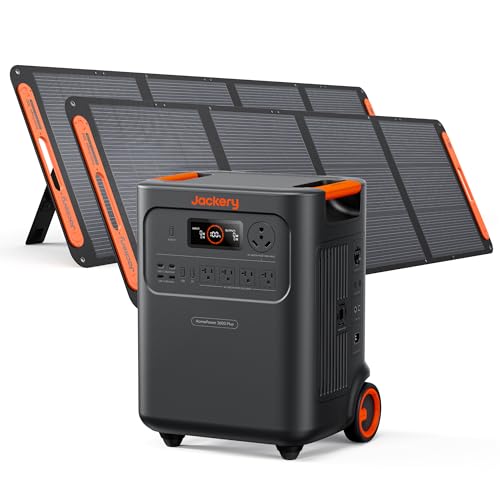 TOP CHOICEBest for whole-house expansionJackery HomePower 3600 PlusView on Amazon
- 3
 TOP CHOICEBest budget pickPortable Solar Generator 300W Portable Power Station with 60W Solar PanelView on Amazon
- 4
 Best for fast rechargingEF ECOFLOW Delta 3 Portable Power StationView on Amazon
- 5
 Best for light loadsJackery Explorer 300 Portable Power StationView on Amazon
- 6
 Best for high-capacity backupEF ECOFLOW DELTA 3000 Gen4 Power Station with 2X160W Solar PanelsView on Amazon
Our Top Picks
Quick Comparison
| Product | Best for | Key feature |
|---|---|---|
| Jackery Solar Generator 1000 v2 and 200W Solar Panel | Overall home backup | 1024Wh LiFePO4 battery with 1500W output |
| Jackery HomePower 3600 Plus | Whole-house expansion | 3584Wh battery with 3600W AC output |
| Portable Solar Generator 300W Portable Power Station | Budget backup | 280Wh battery with bundled 60W panel |
| EF ECOFLOW Delta 3 Portable Power Station | Fast recharging | 1024Wh LiFePO4 battery, full charge in 56 minutes |
| Jackery Explorer 300 Portable Power Station | Light loads | 292Wh LiFePO4 battery |
| EF ECOFLOW DELTA 3000 Gen4 Power Station | High-capacity backup | 3072Wh LiFePO4 battery with 3600W AC output |
Jackery Solar Generator 1000 v2 and 200W Solar Panel
Jackery Solar Generator 1000 v2 and 200W Solar Panel,1024Wh LiFePO4 Battery | 1500W (3000W Peak), 50-Min Fast Charge, 10ms UPS Solar Generator for Home Emergency, Camping & RV
Best for: Overall home backup for a small household
This bundle suits people who want a complete kit out of the box: a battery station and a panel sized to recharge it. It fits a household that needs refrigerator, router, lighting and a CPAP machine covered through a multi-day outage, provided loads are managed carefully.
Key specs
- 1024Wh LiFePO4 battery capacity
- 1500W continuous AC output (3000W peak)
- 200W solar panel included
- 10ms UPS switchover listed by the manufacturer
Pros
- Panel and station come matched as one system
- Lithium iron phosphate chemistry is generally associated with long cycle life
- Surge rating handles many small motor loads
Cons
- Capacity is modest for a full day of refrigeration plus other loads
- Recharging from a single 200W panel is slow on cloudy days
Bottom line: A strong pick for a household that wants one kit covering essentials and can accept rationing power during long outages.
View on AmazonJackery HomePower 3600 Plus
Jackery HomePower 3600 Plus & 2x200W Solar Panels, 3584Wh, 3600W AC Output | LFP Battery, Expandable to 21kWh, Solar Generator, Essential Home Backup for Home Use, Emergencies, RV
Best for: Whole-house expansion
This is aimed at homeowners who want to run larger appliances, including well pumps and some HVAC components, for extended periods. Its listed expandability makes it a candidate for a growing system.
Key specs
- 3584Wh LFP battery capacity
- 3600W AC output
- Two 200W solar panels included
- Expandable battery capacity listed by the manufacturer
Pros
- Capacity supports meaningful overnight loads
- Output rating covers many household appliances
- Expansion path for future needs
Cons
- Size and weight make it a fixed-location unit
- Full-home coverage still requires a transfer switch and professional installation
Bottom line: Best for homeowners planning a semi-permanent backup setup with room to grow.
View on AmazonPortable Solar Generator 300W Portable Power Station with 60W Solar Panel
Portable Solar Generator 300W Portable Power Station with 60W Solar Panel | 110V Pure Sine Wave 280Wh Battery Solar Power Pack with USB QC3.0 DC AC Outlet for Camping Smart Device RV Van Outdoor-Orang
Best for: Budget backup for light loads
This unit suits renters or apartment dwellers who need phone charging, a fan, LED lights and a small router during short outages. It is not sized for refrigeration over long periods.
Key specs
- 280Wh battery capacity
- 300W rated output with pure sine wave AC
- 60W solar panel included
- USB QC3.0 and DC outputs
Pros
- Low entry point for a solar-backed kit
- Pure sine wave output is suitable for sensitive electronics
- Compact and easy to move between rooms
Cons
- Capacity is too small for a full refrigerator overnight
- Solar input is slow with a 60W panel
Bottom line: A sensible starting point for minimal essentials, but plan to upgrade if your needs grow.
View on AmazonEF ECOFLOW Delta 3 Portable Power Station
EF ECOFLOW Delta 3 Portable Power Station, 1024Wh 1800W | LiFePO4 Battery, Full Charge in 56 Min, 1800W AC/100W USB-C Output, Solar Generator for Home Backup Power, Camping & RVs
Best for: Fast recharging
Owners who expect frequent or short-notice outages and want to top up quickly from wall power or solar will value this unit’s charging speed. It is well suited to a bedroom CPAP setup plus a few lights and devices.
Key specs
- 1024Wh LiFePO4 battery capacity
- 1800W AC output
- 100W USB-C output
- Full charge in 56 minutes per the listing
Pros
- Rapid recharge time is a practical advantage
- Output rating handles most household small appliances
- LiFePO4 chemistry supports long service life
Cons
- Overnight refrigeration will drain capacity quickly
- Solar panels are sold separately, adding setup cost
Bottom line: A good match for people prioritizing quick recharge and medical device backup.
View on AmazonJackery Explorer 300 Portable Power Station
Jackery Explorer 300 Portable Power Station,292Wh | Backup LiFePO4 Battery, Solar Generator for Outdoors, Camping, Travel, Hunting, Blackout (Solar Panel Optional)
Best for: Light loads and short outages
This smaller station is aimed at people who need to keep a router, phone, lamp and small fan running during a short blackout. Solar panels are optional, so it can also work as a wall-charged backup.
Key specs
- 292Wh LiFePO4 battery capacity
- Solar panel optional (sold separately)
- Portable, carry-handle design
Pros
- Lightweight and easy to store
- Works with or without solar
- Good for a single room of essentials
Cons
- Capacity is too limited for refrigerators or CPAP through a full night
- Not designed as a whole-home solution
Bottom line: Suited to light, short-term backup rather than long outages at home.
View on AmazonEF ECOFLOW DELTA 3000 Gen4 Power Station with 2X160W Solar Panels
EF ECOFLOW 3072Wh DELTA 3000 Gen4 Power Station with 2X160W Solar Panels | 3600W AC Output, 7200W Surge, LiFePO4 Battery Power Station, Solar Generator for Home Backup, Camping, RV & Emergency Power
Best for: High-capacity backup
This larger system targets households that need several essential circuits running for a day or more. Its 3600W output and 7200W surge rating are listed for handling heavier starting loads such as pumps.
Key specs
- 3072Wh LiFePO4 battery capacity
- 3600W AC output with 7200W surge
- Two 160W solar panels included
Pros
- Capacity supports multi-appliance overnight use
- Surge rating helps with motor-driven loads
- Panels included in the listing
Cons
- Heavy enough that it should stay in one location
- Connecting to home circuits safely requires a licensed electrician
Bottom line: Best for homeowners who want serious backup capacity and accept a larger footprint.
View on AmazonBuying Guide
Battery Capacity (Watt-Hours)
Add up the watt-hours each essential device uses per day. A refrigerator often draws roughly 1 to 2 kWh per day depending on model and climate, so a 1000Wh unit may run one for only part of a day. Divide battery watt-hours by your daily load, then reduce the result by about 15 percent to account for conversion losses.
Good picks for this: EF ECOFLOW DELTA 3000 Gen4 Power Station; Jackery HomePower 3600 Plus
Continuous and Surge Output
Continuous wattage must cover everything running at once. Surge rating matters for motors: refrigerators, well pumps and sump pumps can draw several times their running wattage at startup. Check the listed surge figure against the starting wattage on each appliance’s nameplate.
Good picks for this: EF ECOFLOW Delta 3 Portable Power Station; EF ECOFLOW DELTA 3000 Gen4 Power Station
Solar Input and Recharge Speed
Solar input in watts determines how long a recharge takes in good sun. A 200W panel in strong sunlight may deliver several hours of charging, but cloudy weather can cut output sharply. Consider how many panels you can mount and whether the unit accepts additional panels.
Good picks for this: Jackery Solar Generator 1000 v2 and 200W Solar Panel; Portable Solar Generator 300W Portable Power Station
Battery Chemistry and Durability
Lithium iron phosphate (LiFePO4 or LFP) batteries are commonly associated with more charge cycles than standard lithium-ion, and many manufacturers list cycle-life ratings. Check the warranty terms and whether the battery is user-replaceable or expandable. For a deeper look, Top 6 Solar Generators for Starlink in 2026: Off-Grid and Outage Power covers this in detail.
Good picks for this: Jackery HomePower 3600 Plus; Jackery Explorer 300 Portable Power Station
Transfer Switch and Home Integration
Plugging a station into a wall outlet can backfeed the grid and endanger utility workers. Safe whole-home use typically requires a transfer switch installed by a licensed electrician. Portable units without a transfer switch should power devices through their own outlets only.
Good picks for this: EF ECOFLOW DELTA 3000 Gen4 Power Station; Jackery HomePower 3600 Plus
Portability and Storage
Weight and footprint decide where the unit can live. Units over roughly 30 pounds are awkward to carry down stairs in an emergency, so plan the location before purchase. Keep the unit indoors in a dry, temperature-stable space.
Good picks for this: Jackery Explorer 300 Portable Power Station; Portable Solar Generator 300W Portable Power Station
Care and Maintenance
Store batteries partly charged, avoid full heat exposure, and cycle the unit periodically if it sits unused for months. Keep firmware updated where the manufacturer offers it, and inspect panel cables for wear.
Good picks for this: Jackery Solar Generator 1000 v2 and 200W Solar Panel; EF ECOFLOW Delta 3 Portable Power Station
FAQ
How long will a solar power back up generator for home run a refrigerator?
It depends on the refrigerator’s daily consumption and the battery size. A 1000Wh unit might run a typical fridge for roughly half a day, while a 3000Wh-plus unit could cover one overnight. Check the fridge’s listed kWh per year to estimate daily use.
Can a portable solar generator power a CPAP machine overnight?
Many CPAP machines draw modest wattage, so a mid-size battery can often cover a full night. Confirm the device’s wattage with your medical supplier and consult your physician before relying on any backup for medical equipment.
Will a solar generator run a sump pump during an outage?
Yes, if the unit’s surge rating exceeds the pump’s startup draw and the battery holds enough energy for the expected run time. Sump pumps can run intermittently, so estimate runtime based on water inflow. A related read: Back Up Solar Generator Picks: 6 Best Options for Home Outages (2026).
How long does it take to recharge with solar panels?
Recharge time depends on panel wattage, sunlight and battery size. A 200W panel in full sun may recharge a 1000Wh battery in several sunny hours, but overcast days can extend this considerably.
Do I need an electrician to connect a solar generator to my home?
For plug-in use with appliances on the unit’s own outlets, no. For connection to home circuits, a transfer switch installed by a licensed electrician is strongly recommended to prevent backfeeding the grid. Check local codes before any installation.
What is the difference between a solar generator and a home battery system?
A portable solar generator is a self-contained battery with outlets and optional panels, usually moved as needed. A home battery system is permanently installed, often integrated with the electrical panel. Our guide to home backup setups covers the tradeoffs in more detail.
Conclusion
For most households, the Jackery Solar Generator 1000 v2 bundle offers a balanced starting point, while the Jackery HomePower 3600 Plus and EF ECOFLOW DELTA 3000 Gen4 suit those planning larger, longer-running backup. The EF ECOFLOW Delta 3 is a good fit for fast recharging, the Portable Solar Generator 300W works for budget light-load needs, and the Jackery Explorer 300 is best for short, minimal outages. Match watt-hours to your essential loads first, then confirm surge capacity and solar input before you buy.
Sources
- Guidance on home energy use, electricity demand and backup power planning (energy.gov)
- Safety recalls, battery hazard alerts and portable power product guidance (cpsc.gov)
- Electrical and fire safety standards relevant to home energy storage (nfpa.org)
Related reading
- 5 Best Solar Power Back Up Generator Picks for Home Outages (2026)
- 6 Best Back Up Solar Generators for Home Picks Compared (2026)
- Whole Home Solar Generator: 7 Best Picks for Backup Power in 2026
- Top 6 Solar Energy Power Generator Picks for Home Backup
About Graham Fisher
Graham Fisher is part of our editorial team and reviews and edits our solar generators for home backup & emergencies guides, checking product details against manufacturer specifications and owner feedback.



