 By Graham Fisher
Updated November 2026
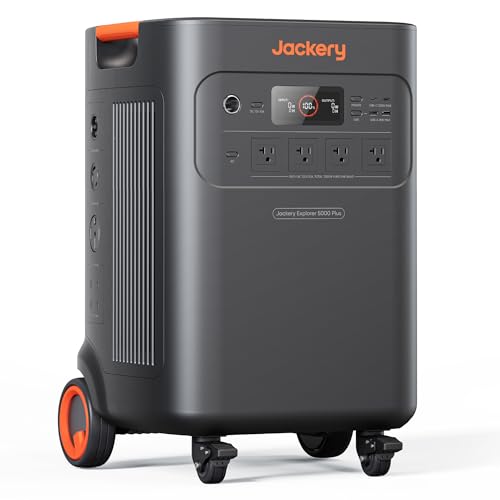
Yes, a solar Jackery portable power station is worth it for most households that need backup power for short outages, a few essential devices, or off-grid weekends. It stores energy in a battery, runs appliances from that battery, and recharges from solar panels or a wall outlet. Whether it is worth the investment depends on how much power you need and how long you need it to last.
Why a Solar Jackery Portable Power Station Can Make Sense
A portable power station is a battery with inverters and outlets built in. Pair it with solar panels and you get backup power that does not depend on fuel or a utility grid. That makes it useful during storms, when a gas generator would need refueling and ventilation, and for keeping small loads running indoors without noise or fumes. Jackery’s solar-compatible models are designed to accept panel input, so you can recharge during daylight hours.
Shopping for one? See our guide: 6 Best Jackery Portable Power Stations with Solar Panel (2026): Our Picks.
The biggest advantage is quiet, silent operation. You can run a router, phone chargers, a laptop, LED lights, and a small fan without the noise or exhaust of a gasoline unit.
What Determines Whether It Is Worth It
Three factors matter most. First, the watt-hour (Wh) capacity of the battery, which tells you how much energy it can store. Second, your daily load, which is the total watt-hours your devices use in a day. Third, your sun exposure, since panels only produce usable power when the sun is strong and unobstructed. Manufacturers typically rate panel output under ideal conditions, so real-world recharge times are often longer, especially in winter or on cloudy days.
If your critical loads total under about 1,000 Wh per day and you have reasonable sun, a solar setup is usually practical. If you want to run a refrigerator, a well pump, or central air through a long outage, you will likely need a much larger system than a single portable unit.
Practical Steps to Decide
- List only the devices you truly need during an outage, such as a refrigerator, medical equipment, lighting, and communication devices.
- Check each device’s wattage on its label and estimate daily run time in hours. Multiply watts by hours to get watt-hours.
- Add the totals and add a 20 percent buffer for inverter losses and battery aging.
- Compare the result to the battery capacity listed for the Jackery model you are considering.
- Estimate panel recharge time using the panel’s rated wattage and about 4 to 5 hours of usable sun per day as a rough baseline.
Check the official Jackery site for current specifications, compatible panels, and recharge ratings, since these change between model generations.
What We’d Use
For a compact setup that fits small home backup needs, the Jackery Explorer 300D is a sensible starting point for phones, laptops, and lighting. View on Amazon
For a larger battery that handles more appliances through a longer outage, the Jackery Explorer 1000 V2 offers more capacity. View on Amazon
Related Questions
Can a Jackery solar power station run a refrigerator?
Often yes for short periods, but a refrigerator cycles on and off and draws a surge at startup. Calculate its daily watt-hours from the label or a meter reading, then size the battery to cover it. Read more in Jackery Explorer 1000 V2 Portable Power Station: A Buyer's Guide for Home Backup.
How long does it take to recharge with solar panels?
Recharge time depends on panel wattage, sun hours, and weather. Multiply battery capacity by 1.2 and divide by realistic panel output to estimate. For sizing your panels, see Solar Panel Size Calculator for Portable Power Stations.
Can I run a whole house on a portable power station?
Usually not. Whole-home backup typically requires a larger system with a transfer switch and more battery capacity. Consult a licensed electrician before connecting anything to your home wiring. Compare options in Solar Power Generator 240V: Portable Power Station vs Whole-Home Solar Kit.
Can I charge it from a wall outlet as well?
Yes. Most Jackery models accept AC charging, which helps when sunlight is limited. For the available methods, see How Do You Charge a Jackery Portable Power Station: 4 Ways (2026).
FAQ
Can a Jackery solar power station run a refrigerator?
Many Jackery models can run a standard refrigerator for a period of time, but the result depends on the fridge’s power draw and the battery’s capacity. Refrigerators cycle on and off, so they use less energy on average than their peak rating suggests. Check your fridge’s wattage and the station’s rated output before relying on it during an outage.
How long does it take to recharge with solar panels?
Recharge time depends on the size of your solar panels, the station’s battery capacity, and how much sunlight you get that day. Cloudy weather or short winter days will slow charging considerably. Plan for a full recharge to take most of a sunny day in typical conditions.
Can I run a whole house on a portable power station?
A portable power station is generally not designed to power an entire house at once. It works best for essential items such as lights, phone chargers, a small fridge, a router, and medical devices. For whole-home backup, a larger installed system is usually the better choice.
Can I charge it from a wall outlet as well?
Yes, most Jackery power stations can be recharged from a standard wall outlet as well as from solar panels. Wall charging is usually faster and useful when sunlight is limited. Using both sources together can help you keep the battery topped up during extended bad weather.
How should I size a power station for my needs?
Start by listing the devices you want to run and their wattage, then estimate how many hours per day each will operate. Add those figures to get a rough energy total in watt-hours. Choose a station with a capacity that comfortably covers that total, with some margin for inefficiency and unexpected use.
Is a solar Jackery station useful for camping or travel too?
Yes, the same features that make these stations useful at home also make them practical for camping, road trips, and job sites. They are quiet, produce no fumes, and can run small electronics and lights without a generator. Many people use one station both for home backup and for outdoor trips.
Conclusion
If you mainly need backup for short outages, a few essential devices, or occasional off-grid use, a solar Jackery portable power station is a sensible choice and fits most households. Choose a smaller model if your needs are limited to phones, lights, and a router, and a larger model if you want to keep a refrigerator or medical equipment running longer.
If you need to power a whole home, run heavy appliances like air conditioning or electric heating for long periods, or want backup that starts automatically, a larger installed battery system with professional setup is likely the better fit. For everyone else, a well-sized portable station offers flexible, dependable backup that is easy to set up and use.
Ready to choose one?
About Graham Fisher
Graham Fisher is part of our editorial team and reviews and edits our solar generators for home backup & emergencies guides, checking product details against manufacturer specifications and owner feedback.