
 By Graham Fisher
Updated November 2026
Choosing a jackery explorer 300 portable power station, or one of its closest alternatives, comes down to a few practical questions: how much capacity you need to keep essentials running through an outage, how much power the devices draw at the same time, and how easily the unit recharges between storms. This guide compares six portable power stations from the Jackery line and nearby competitors. Our selection criteria were published specifications such as watt-hour capacity and continuous AC output, the brand’s track record with lithium battery packs, and recurring patterns in owner feedback about reliability, charge speed and noise. None of these units were tested by us; the notes below reflect manufacturer specifications and what owners commonly report.
Our top picks at a glance
- 1
 TOP CHOICEBest overallJackery Explorer 300 Portable Power Station,292Wh | Backup LiFePO4 BatView on Amazon
- 2
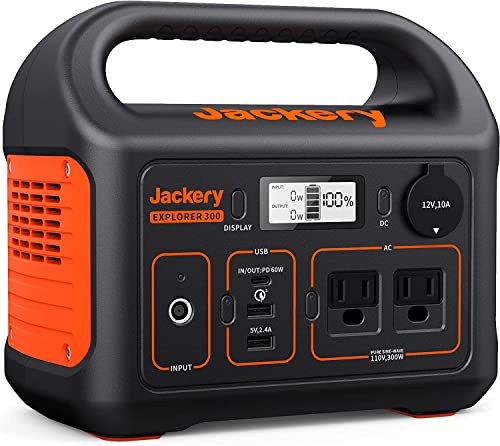 TOP CHOICEBest budget pickJackery Portable Power Station Explorer 300, 293Wh Backup Battery, SolView on Amazon
- 3
 TOP CHOICEBest for a fridge and medical deviceJackery Explorer 1000 v2 Portable Power Station, 1024Wh LiFePO4 BatterView on Amazon
- 4
 Best for small kitchens and light loadsWestinghouse iGen400s 400 Watt, 183Wh Portable Power Station and SolarView on Amazon
- 5
 Best for whole-home backupJackery Explorer 2000 v2 Portable Power Station, 2042Wh, 2200W AC OutpView on Amazon
- 6
 Best for fast rechargingBLUETTI Elite 30 V2 Portable Power Station 288Wh 600W LFP Solar GeneraView on Amazon
Our Top Picks
Quick Comparison
| Product | Best for | Key feature |
|---|---|---|
| Jackery Explorer 300 Portable Power Station, 292Wh | Phones, lights, CPAP overnight | 292Wh LiFePO4 battery in a compact body |
| Jackery Portable Power Station Explorer 300, 293Wh (Renewed) | Budget-minded buyers | Same 293Wh class, certified refurbished |
| Jackery Explorer 1000 v2 Portable Power Station, 1024Wh | Refrigerator and sump pump | 1024Wh capacity with 10ms UPS switchover |
| Westinghouse iGen400s 400 Watt, 183Wh | Small kitchens and light loads | 400W output with LED display |
| Jackery Explorer 2000 v2 Portable Power Station, 2042Wh | Whole-home backup | 2042Wh with 2200W AC output |
| BLUETTI Elite 30 V2 Portable Power Station 288Wh | Fast recharge between outages | 45-minute 0–80% fast charging |
Jackery Explorer 300 Portable Power Station,292Wh | Backup LiFePO4 Battery, Solar Generator for Outdoors, Camping, Travel, Hunting, Blackout (Solar Panel Optional)
Jackery Explorer 300 Portable Power Station,292Wh | Backup LiFePO4 Battery, Solar Generator for Outdoors, Camping, Travel, Hunting, Blackout (Solar Panel Optional)
Best for: Small backup loads such as phone charging, LED lighting, Wi-Fi routers and a CPAP machine for a night or two.
This is the model most people mean when they search for the jackery explorer 300 portable power station. It suits renters, apartment dwellers and anyone who needs a compact backup for short outages rather than running a whole household.
Key specs
- 292Wh LiFePO4 battery capacity
- Solar-compatible input (panel sold separately)
- Multiple AC, USB and DC outputs
Pros
- Lightweight and easy to move between rooms
- LiFePO4 chemistry is generally longer-lived than older lithium-ion packs
- Simple controls with clear battery display
Cons
- Capacity is too small for a full-size refrigerator running all day
- Solar panels are an extra purchase for recharging
Bottom line: A strong first pick for light emergency loads. If your backup list includes a fridge, step up to a larger model.
View on AmazonJackery Portable Power Station Explorer 300, 293Wh Backup Battery, Solar Generator (Solar Panel Not Included) for RV Outdoors Camping Hunting Blackout(Renewed)
Jackery Portable Power Station Explorer 300, 293Wh Backup Battery, Solar Generator (Solar Panel Not Included) for RV Outdoors Camping Hunting Blackout(Renewed)
Best for: Buyers who want the same 293Wh class of unit at a lower entry point.
This listing is a certified refurbished version of the Explorer 300 line. It fits people who are comfortable with a refurbished unit and want the same core function for emergencies and camping.
Key specs
- 293Wh battery capacity
- Solar input compatible (panel not included)
- AC and USB outputs for common devices
Pros
- Lower-cost route into the Explorer 300 class
- Same general form factor as the new unit
- Suitable for phones, lights and small electronics
Cons
- Renewed units may carry a shorter remaining warranty than new ones; check the listing terms
- Cosmetic wear can vary between units
Bottom line: Worth considering if you are comfortable with renewed electronics and want maximum capacity for the spend. Confirm warranty coverage before buying.
View on AmazonJackery Explorer 1000 v2 Portable Power Station, 1024Wh LiFePO4 Battery | 1500W (3000W Peak), 50-Min Fast Charge, 10ms UPS Solar Generator for Home Emergency, Camping & RV.
Jackery Explorer 1000 v2 Portable Power Station, 1024Wh LiFePO4 Battery | 1500W (3000W Peak), 50-Min Fast Charge, 10ms UPS Solar Generator for Home Emergency, Camping & RV.
Best for: Running a refrigerator, sump pump or CPAP through a multi-day outage.
Households that outgrow a 300Wh unit often move to this size. The 1024Wh capacity gives far more runtime for motor-driven loads, and the fast charging helps when grid power returns briefly.
Key specs
- 1024Wh LiFePO4 battery
- 1500W continuous AC output, 3000W peak
- 10ms UPS switchover, per the listing
Pros
- Enough capacity for refrigerator cycling during a typical outage
- Fast charging shortens recharge time
- Strong surge capacity for motor loads
Cons
- Heavier and bulkier than the 300-class units
- Runtime on high-draw devices still drops quickly; calculate your load first
Bottom line: The natural upgrade for anyone whose backup plan includes appliances rather than just electronics.
View on AmazonWestinghouse iGen400s 400 Watt, 183Wh Portable Power Station and Solar Generator with LED Display and DC Outlet for Camping, Home, Travel, Indoor/Outdoor Use (Solar Panel Not Included)
Westinghouse iGen400s 400 Watt, 183Wh Portable Power Station and Solar Generator with LED Display and DC Outlet for Camping, Home, Travel, Indoor/Outdoor Use (Solar Panel Not Included)
Best for: Light household loads and small kitchens where a 400W output covers the essentials.
Buyers who want a compact unit with a clear display and do not need the capacity of a 1000Wh-class station will find this model useful for short outages and camping.
Key specs
- 183Wh battery capacity
- 400W output rating
- LED display and DC outlet
Pros
- Compact and portable
- Readable LED display for battery status
- Adequate for chargers, lights and small appliances
Cons
- Lower capacity limits runtime for anything beyond small loads
- Not suited to refrigerators or space heaters
Bottom line: Good for kitchen-counter electronics and short outages; not a whole-room backup.
View on AmazonJackery Explorer 2000 v2 Portable Power Station, 2042Wh, 2200W AC Output | LiFePO4 Battery, USB-C PD 100W Fast Charging, Solar Generator for Emergencies, Power Outages, Camping (Solar Panel Optional)
Jackery Explorer 2000 v2 Portable Power Station, 2042Wh, 2200W AC Output | LiFePO4 Battery, USB-C PD 100W Fast Charging, Solar Generator for Emergencies, Power Outages, Camping (Solar Panel Optional)
Best for: Longer outages and running several circuits of essentials at once.
Homeowners who want to cover a refrigerator, lights, internet and medical equipment together will find the 2042Wh capacity more forgiving than the smaller units.
Key specs
- 2042Wh LiFePO4 battery
- 2200W AC output
- USB-C PD 100W fast charging
Pros
- Large capacity for multi-device outages
- High AC output for mixed loads
- USB-C PD charging for modern devices
Cons
- Considerably heavier; not easily moved
- Full recharge from the wall takes a long time without solar input
Bottom line: Best for households planning serious backup. Plan for a solar panel or long grid recharge window.
View on AmazonBLUETTI Elite 30 V2 Portable Power Station 288Wh 600W LFP Solar Generator | Power Lifting 1500W, 10ms UPS, 45 Min 0-80% Fast Charging, Emergency Backup Power for Blackout, Camping, Outage and Road Trips
BLUETTI Elite 30 V2 Portable Power Station 288Wh 600W LFP Solar Generator | Power Lifting 1500W, 10ms UPS, 45 Min 0-80% Fast Charging, Emergency Backup Power for Blackout, Camping, Outage and Road Tri
Best for: Quick turnaround between outages and users who want an alternative to the Jackery line.
This BLUETTI unit sits in the same size class as the Explorer 300 and emphasizes fast recharging, which matters when grid power comes back for only a few hours.
Key specs
- 288Wh LFP battery
- 600W rated output, 1500W power lifting per listing
- 45-minute 0–80% fast charging, per the listing
Pros
- Fast recharging shortens downtime
- LFP chemistry for long cycle life
- Compact size for its capacity class
Cons
- Capacity is similar to the Explorer 300, so runtime is limited
- Some owners report the fan is noticeable under load
Bottom line: A solid alternative if fast recharge is the top priority at this capacity level.
View on AmazonBuying Guide
Capacity (Watt-Hours)
Watt-hours tell you how much energy the battery stores. Multiply a device’s wattage by the hours you need it, then add a 15–20 percent buffer for conversion losses. A CPAP drawing about 40W for 8 hours needs roughly 320Wh, which points toward the 1000Wh class for a multi-night plan.
Good picks for this: Jackery Explorer 300 Portable Power Station, 292Wh; Jackery Explorer 1000 v2 Portable Power Station, 1024Wh
Continuous Output and Surge Rating
Continuous wattage is what the unit can supply indefinitely. Motors such as refrigerator compressors and sump pumps need a higher startup surge. Check that the surge rating exceeds the appliance’s startup draw listed on its label.
Good picks for this: Jackery Explorer 1000 v2 Portable Power Station, 1024Wh; BLUETTI Elite 30 V2 Portable Power Station 288Wh 600W LFP Solar Generator
Battery Chemistry
LiFePO4 (lithium iron phosphate) batteries are generally considered more stable and longer-lived than standard lithium-ion packs. For safety background, see Lithium Battery Safety for Portable Power Stations.
Good picks for this: Jackery Explorer 2000 v2 Portable Power Station, 2042Wh; Jackery Explorer 300 Portable Power Station, 292Wh
Recharge Options and Speed
Wall charging, car charging and solar input all differ in speed. If you plan to rely on solar, size the panel to the battery. The Solar Panel Size Calculator for Portable Power Stations helps with that math. For vehicle charging, see Jackery Car Charger Cable: How to Charge Your Power Station From a Car (2026).
Good picks for this: BLUETTI Elite 30 V2 Portable Power Station 288Wh 600W LFP Solar Generator; Jackery Explorer 2000 v2 Portable Power Station, 2042Wh
Size and Portability
A 300Wh unit typically weighs well under 10 pounds, while 2000Wh-class units are much heavier. Decide whether you will move the unit between rooms or keep it in one spot.
Good picks for this: Westinghouse iGen400s 400 Watt, 183Wh Portable Power Station and Solar Generator; Jackery Explorer 300 Portable Power Station, 292Wh
Use Case Matching
Compare your real backup list against the wattage of each device. For a broader view of which units suit specific loads, see Best Portable Power Stations for Refrigerators and Best Portable Power Stations for CPAP Machines.
Good picks for this: Jackery Explorer 1000 v2 Portable Power Station, 1024Wh; Jackery Explorer 300 Portable Power Station, 292Wh
Durability and Care
Keep the unit indoors at moderate temperatures, avoid storing it fully drained or fully charged for months, and recharge periodically. Follow the manufacturer’s storage guidance in the manual.
Good picks for this: Jackery Explorer 2000 v2 Portable Power Station, 2042Wh; BLUETTI Elite 30 V2 Portable Power Station 288Wh 600W LFP Solar Generator
FAQ
Can a jackery explorer 300 portable power station run a refrigerator?
A 292Wh unit can power a refrigerator for a limited time, but a typical fridge cycles on and off, so actual runtime depends on its average daily draw. Many owners find it runs a fridge for a few hours rather than a full day. Check the fridge’s energy label and calculate from there.
How long will a 292Wh battery run a CPAP?
Runtime depends on the CPAP’s actual draw and whether a humidifier is in use. Divide 292Wh by the average watt draw, then account for conversion losses. Consult your sleep specialist or equipment supplier before relying on any backup for medical equipment.
Is a LiFePO4 battery safer than standard lithium-ion?
LiFePO4 chemistry is generally regarded as more thermally stable, which is one reason it appears in many portable power stations. Safety still depends on proper use, charging and ventilation.
Do I need a solar panel with a power station?
Not necessarily. Wall charging works for most outages if grid power returns. A solar panel helps when the grid stays down for days, but it is sold separately on most listings.
What is the difference between continuous and peak output?
Continuous output is sustained power the unit can supply for long periods. Peak or surge output is a short burst for motor startup. Match the surge rating to your appliance’s startup draw.
Can I charge a power station from a car?
Yes, with a compatible DC cable plugged into the vehicle’s outlet. Charging speed is slower than wall charging, and running the engine may be needed to avoid draining the car battery.
Are renewed power stations a good idea?
Renewed units can offer value, but check the warranty, return policy and battery condition details in the listing before purchase.
Conclusion
For light emergency loads and a compact footprint, the Jackery Explorer 300 Portable Power Station, 292Wh is the most direct fit. Budget-focused buyers may consider the renewed listing, provided warranty terms are acceptable. Households that need to keep a refrigerator or sump pump running should look at the Jackery Explorer 1000 v2 Portable Power Station, 1024Wh. For longer whole-home plans, the Jackery Explorer 2000 v2 Portable Power Station, 2042Wh offers the most headroom, and the BLUETTI Elite 30 V2 Portable Power Station 288Wh 600W LFP Solar Generator suits anyone who prioritizes fast recharging at a similar capacity. For a side-by-side look at alternatives, see Jackery vs Anker Power Station: Which Fits Your Home Backup Needs?.
Sources
- Guidance on home energy use, emergency preparedness and how to estimate appliance energy consumption (energy.gov)
- Product safety information and recall notices for portable electrical and battery-powered products (cpsc.gov)
- Emergency power outage planning checklists and backup power safety tips (ready.gov)
About Graham Fisher
Graham Fisher is part of our editorial team and reviews and edits our solar generators for home backup & emergencies guides, checking product details against manufacturer specifications and owner feedback.






