By Emily Parker
Choosing a portable solar generator usually means balancing stored energy against how much you are willing to carry. The model with the largest battery capacity may be too heavy to load in and out of a car, while the lightest model may not run your appliances long enough. To choose well, compare weight per watt-hour, look at carrying features, plan for solar panel portability, and check the ports you need.
What a portable solar generator is and who it suits
A portable solar generator is a battery-based power station with a built-in inverter, one or more charging inputs, and a set of output ports. It stores energy from wall outlets, a vehicle, or solar panels and turns that stored energy into power for your devices. Because it is rechargeable and does not burn fuel, it can be used indoors, in a tent, on a tailgate, or in a home during an outage.
It suits people who want quiet, emission-free power without the maintenance of a fuel generator. It makes sense for car camping, van travel, small home backup loads, outdoor events, and jobsite tools. It is not intended to power an entire house around the clock, although some larger models can support several appliances for a limited time. If you are not sure where to start, browse the general range of portable solar generators and then narrow down based on your real needs. You can also review the best portable solar generators for context on what different categories include.
Weight per watt-hour: the core trade-off
The most useful way to compare portability is to look at weight per watt-hour. In simple terms, you divide the unit’s weight by its battery capacity in watt-hours. A lower result means you carry less weight for every watt-hour of stored energy. This ratio is a better starting point than overall weight alone because a large battery naturally makes a unit heavier.
Weight per watt-hour also reveals design differences. Some portable power stations use battery cells and packaging that keep the unit relatively light for its capacity. Others use heavier battery chemistry or a thicker metal case, which may feel more durable but harder to lift. For car camping, you want a unit you can lift into a trunk or onto a picnic table without straining. For home backup, weight matters less because the unit stays in one place.
Capacity in watt-hours tells you how much total energy the battery can supply. If a manufacturer only lists battery capacity in amp-hours, convert it by multiplying amp-hours by the battery voltage. Comparing watt-hours and weight directly is the practical way to see which model gives you the most usable energy per pound you have to carry.
Handles, wheels, and form factor
A heavy battery is much easier to move when the generator has a well-placed handle and maybe wheels. Pay attention to the shape of the unit, not just its weight. Some units are shaped like a suitcase with a single telescoping handle and two wheels. Others are closer to a cube with recessed side handles for lifting. The right form factor depends on where you need the generator to go.
Here are the features to check:
- Carry handles: Look for handles on the side or top that give you a comfortable grip. A handle that is too low or too narrow makes a moderately heavy unit feel much heavier.
- Wheels: Some models have two large wheels and a pull handle, which works well for rolling across pavement or along a driveway. Smaller wheels can struggle on grass or gravel.
- Footprint: A low, wide unit may be stable but take up more car space. A taller, narrower unit may be easier to slide behind a seat but can tip over more easily.
- Stackability: If you plan to store the generator in a garage or closet, check whether the top can support light items without blocking vents.
For car camping, a unit with a comfortable handle and enough weight distribution to carry from the trunk to the campsite is ideal. For home backup, wheels matter more if the generator lives in a utility room and needs to move near a window or door for setup.
Car camping versus home use
Think about the environment where the generator will work the hardest. Car camping usually favors lighter weight, compact dimensions, and easy handling. Home backup favors higher capacity, more AC outlets, and the ability to power larger devices for longer. The table below compares these two use cases so you can see which trade-offs matter.
| Consideration | Car camping | Home backup |
|---|---|---|
| Main priority | Easy to lift and store in a vehicle | More stored energy for appliances |
| Weight | Lower weight per watt-hour matters | Weight is less critical if it stays put |
| Handles and wheels | Handles for carrying, maybe small wheels | Larger wheels for rolling distance |
| Ports needed | USB, USB-C, one or two AC outlets | Several AC outlets, maybe a 12V output |
| Solar panels | Folding panels that pack small | Larger panels stored at home or on a roof |
For car camping, keep your appliance list short. You need enough capacity to charge phones, power a small cooler, keep lights on, and maybe run a laptop. A compact unit with a low weight-per-watt-hour ratio will be more pleasant to carry. For home use, consider whether you want the unit to support a refrigerator, a small heater, medical equipment, or a sump pump during an outage. If a home connection is involved, do not back-feed an outlet with a household cord. That type of connection is dangerous and should only be done by a licensed electrician using a transfer switch or interlock and an approved inlet. We also found 5 Best EcoFlow Portable Solar Generators for Home Backup (2026) useful on this point.
Solar panel portability
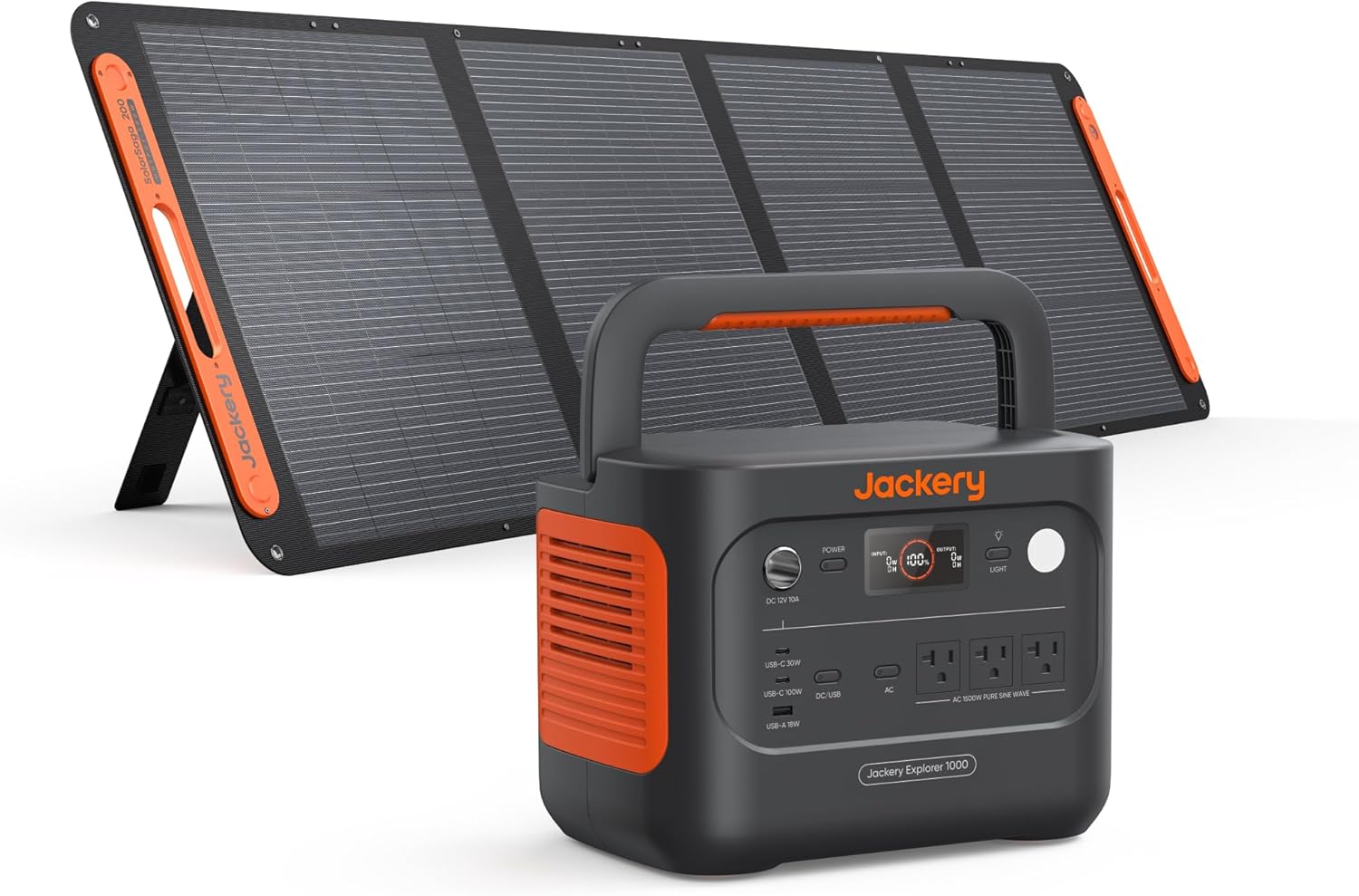
The generator is only one half of the solar equation. The panels need to be portable enough for your use. Rigid panels are efficient and affordable but heavier and harder to pack. Folding panels are designed for travel; they fold into a compact shape and may include their own stand. Semi-flexible panels can lie against a curved surface, but they still need proper airflow.
When choosing panels, compare the panel’s wattage and voltage with the generator’s solar input range. Do not exceed the maximum input voltage stated in the generator manual. Also check the connector type so the panel plugs into the generator without an awkward adapter. For campsite use, a folding panel that stands on its own and can angle toward the sun is easier to set up. If you mostly plan to recharge at home, a larger rigid panel may be fine. Look for foldable solar panels when you need a setup that packs down for travel.
Ports and charging options
The number and type of ports determine how many devices you can power at once. Look for these basics:
- AC outlets: Use these for laptops, small appliances, CPAP machines, and other devices that normally plug into a wall.
- USB-A ports: Useful for phones, cameras, flashlights, and other small electronics.
- USB-C ports: Many modern laptops and tablets charge over USB-C, and some portable power stations can deliver enough power through that port to run a laptop.
- 12V car outlet: Useful for tire inflators, car refrigerators, and other accessories.
- DC barrel ports or regulated 12V outputs: Often used for LED lights, routers, and small electronics.
Do not just count ports. Check the maximum output per port and the total output across all ports. Some units share a single limit among several USB ports, so plugging in many devices may reduce charging speed. Also check the maximum AC output, because that tells you what the inverter can sustain at once. Your devices may draw more at startup, so choose a unit that can handle brief surges from small appliances.
How to match capacity and compatibility
Start by listing the devices you expect to run at the same time. For each device, note its power draw in watts and how many hours you plan to use it. Multiply watts by hours to get watt-hours, then add up all the loads. For example, a 60-watt laptop charger used for two hours needs about 120 watt-hours before accounting for losses. This is an estimate, but it gives you a target for battery capacity.
When the generator converts DC battery power to AC wall power, some energy is lost as heat. A common planning assumption is inverter efficiency around 85 to 90 percent. That means you should add a buffer to your calculated load. If you are unsure how to match your loads to a generator, the how to size a solar generator guide walks through the process in more detail.
Compatibility also matters. The generator’s solar input has a voltage range and a maximum wattage. The panel wattage should be within that range, and the open-circuit voltage of the panel should stay below the generator’s maximum input voltage. If you use multiple panels, check whether the generator supports series or parallel connections. When in doubt, follow the manufacturer’s instructions and compare spec sheets before buying.
If you need to power a CPAP machine, confirm the exact power requirements with the device manufacturer and your doctor or supplier. Medical devices can vary. Have a backup plan in case the generator stops charging, and keep the unit’s battery topped off before use.
Common buying mistakes
One mistake is focusing only on battery capacity and ignoring weight per watt-hour. A massive battery may be fine in a garage, but unusable on a camping trip. Another mistake is assuming all solar panels work with all generators. Solar input voltage, connector types, and charge controller limits vary, so check compatibility first.
Shoppers also overestimate how many watts they need and underestimate how long they use a device. Wattage tells you the rate of power use; watt-hours tell you how much energy is available. A generator with a high surge rating can start a small appliance but may only run it for a short time if the battery capacity is too low.
Port selection is another common oversight. If most of your electronics charge over USB-C, count those ports carefully. If you need to plug in a small refrigerator, AC output and total capacity matter more. To avoid these mistakes, compare multiple models side by side with your specific usage list. The how to compare solar generators guide gives a useful framework for that process.
Care, cleaning, and upkeep
Portable solar generators need simple but consistent care. Store the unit in a dry, clean place away from direct sunlight and extreme heat. Avoid leaving it in a hot car for long periods, because high temperatures can shorten battery life. If the unit has vents, keep them clear of dust and debris so the cooling fan can work properly.
Clean the exterior with a dry or slightly damp cloth and do not use harsh solvents. Keep solar panels clean as well; dirt and dust reduce charging output. Before storing the generator for a long period, charge the battery to the level recommended in the manual. Check the manufacturer’s instructions for the specific charging routine and storage voltage. Firmware updates, if the unit supports an app, should be installed according to the manufacturer’s guidance because they can improve charging behavior and output stability.
If you rely on the generator for emergency home backup, test it occasionally by charging it and running a few loads. This also helps confirm that the battery still holds a charge and that all ports function correctly.
FAQ
What does weight per watt-hour mean?
Weight per watt-hour is a comparison metric. You divide the generator’s weight by its battery capacity in watt-hours. A lower number means you are carrying less weight for each unit of stored energy, which is a good indicator of portability.
Can I use a portable solar generator for home backup?
Yes, for small or moderate loads such as lights, a refrigerator, a router, or a CPAP machine, you can use a portable solar generator. For a whole-home connection, have a licensed electrician install a transfer switch or interlock and an approved inlet. Never connect a generator to a wall outlet with a household cord.
How many AC ports do I need?
It depends on the number of devices you run at once. Car camping users often need one or two AC outlets. Home backup users usually want several AC outlets so they can power a refrigerator, a lamp, and a laptop at the same time. Remember that the total AC output is limited, so the number of ports is not the only factor.
How do I know if a solar panel will work with my generator?
Compare the panel’s wattage and open-circuit voltage with the generator’s solar input specifications. The panel wattage should stay within the generator’s rated solar input, and the voltage must not exceed the maximum input voltage. Use the correct connector and follow the manufacturer’s guidance.
Choosing a portable solar generator is really about matching the unit to your daily habits. Use weight per watt-hour to evaluate portability, check handles and wheels for comfort, look at panel portability, and count your ports before you commit. If you keep these basics in mind, you can choose a generator that is easy to take along and powerful enough when you need it. For more general help, start with the solar generator buying guides hub and work through your priorities one by one.
About Emily Parker
Emily Parker is part of our editorial team and reviews and edits our solar generators for home backup & emergencies guides, checking product details against manufacturer specifications and owner feedback.