Some links on this page are affiliate links. If you buy through them, we may earn a commission at no extra cost to you. As an Amazon Associate I earn from qualifying purchases. Learn more ›
Best Portable Solar Generators
Seven portable solar generators compared on listing specs, including capacity, output, weight and ports. Check each listing for current price and details.
This post contains Amazon affiliate links. As an Amazon Associate I earn from qualifying purchases, at no extra cost to you.
Portable solar generators are battery power stations that accept solar panel input, so you can store energy from the sun and run lights, small appliances and devices away from a wall outlet. The models below range from a 146Wh unit to a 1,843.2Wh model, with output ratings from 100W to 2,400W.
The picks here were chosen by comparing listing specifications and features, not by hands-on testing. None of these units has been tested for this article. Check each listing for current price and details before you buy, because availability, bundles and specifications can change.
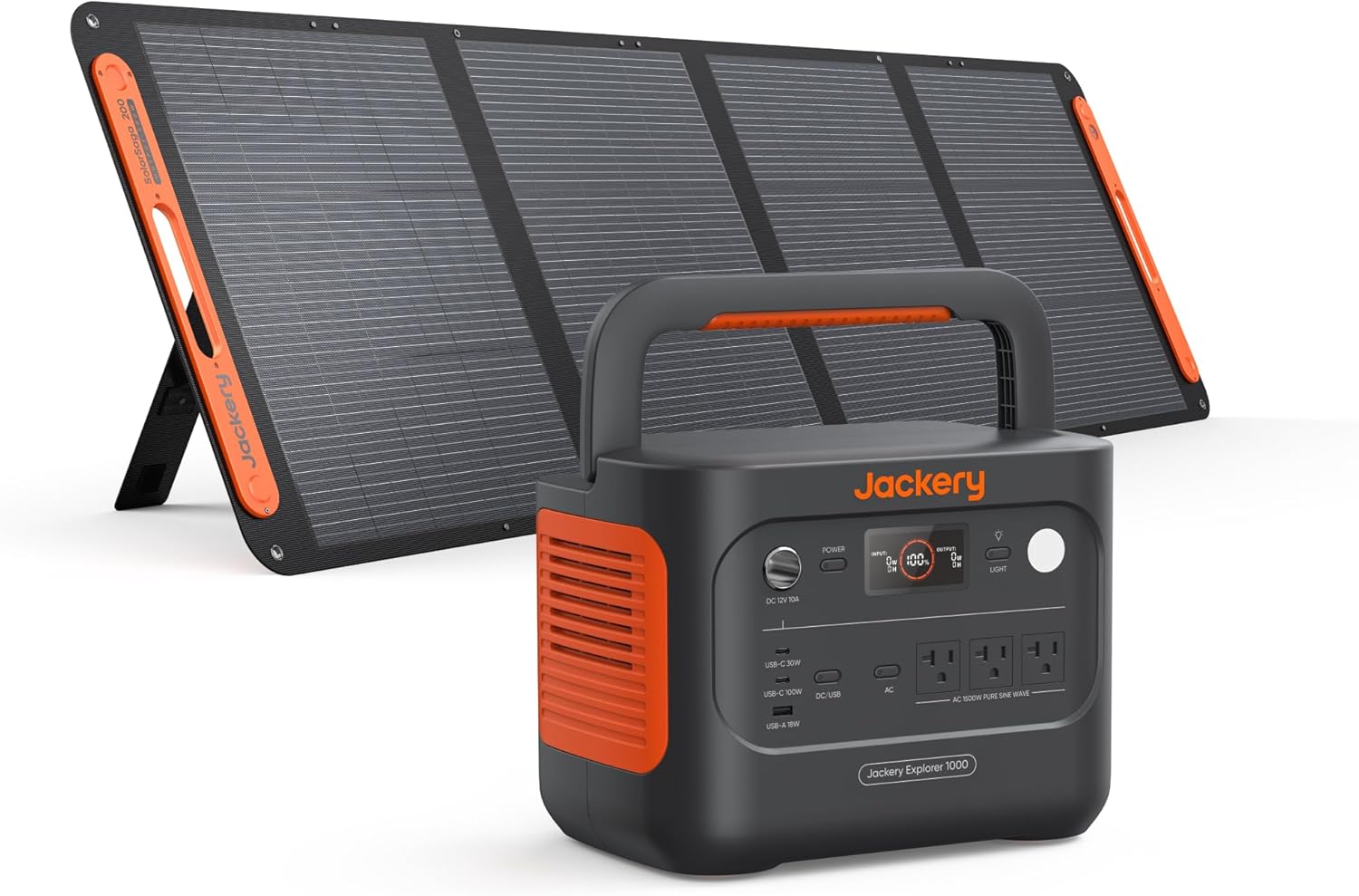
The Jackery Solar Generator 1000 V2 combines a 1,500W portable power station with a 200W solar panel for off-grid energy independence. Its lightweight 23.8 lb design, fast one-hour charging capability, and 10-year LFP battery lifespan make it ideal for campers, road trippers, and homeowners seeking reliable backup power.
Pros & Cons
Pros
Exceptional fast charging in one hour with emergency mode activation via app
Outstanding battery longevity with LFP technology maintaining capacity over 4,000 charge cycles
Compact and lightweight design makes it genuinely portable for camping and travel
Included 200W solar panel provides free, renewable charging capability
Multiple charging ports and smart app control offer flexibility for various scenarios
Cons
One-hour emergency charging requires manual app activation before each use, adding an extra step
Solar panel charges to only 80% in 6 hours, so alternative charging methods needed for faster full charges
Detailed Review
The Jackery Solar Generator 1000 V2 is a hybrid portable power station paired with a 200W solar panel, designed for outdoor enthusiasts, emergency preparedness, and anyone seeking energy independence. With its 1,070Wh capacity and 1,500W continuous output, it handles demanding appliances like air conditioning units, refrigerators, and electric cooking equipment. This system is perfect for camping trips, RV adventures, remote work setups, and home backup power during outages.
Performance-wise, the standout feature is the one-hour emergency charging capability, which gets the unit from dead to full in just 60 minutes when activated through the Jackery App. For everyday use, it defaults to 1.7-hour charging to preserve battery health, while the included 200W solar panel offers sustainable charging that reaches 80% capacity in six hours. The 3,000W surge peak handles startup demands of larger appliances, ensuring compatibility with most household devices.
Build quality is impressive with a durable LFP lithium battery that maintains over 70% of its original capacity even after 4,000 charge cycles, translating to more than a decade of reliable service. At just 23.8 pounds with a foldable handle, portability is genuine rather than theoretical. The unit features comprehensive connectivity options including two USB-C ports with 100W PD fast charging, one USB-A port, a DC car port, three pure sine wave AC outlets, and integrated LED lights for nighttime use.
Drawbacks are minimal but worth noting: the one-hour emergency charging requires app activation before each use, which some users may find inconvenient. Additionally, the solar panel alone takes six hours to reach 80% charge, meaning you'll need wall outlet or alternator charging for faster replenishment. The price point is premium, though the included solar panel and extended warranty justify the investment compared to power stations sold separately from panels.
The Jackery Solar Generator 1000 V2 delivers exceptional value for serious outdoor adventurers and emergency preparedness planners. Its combination of fast charging, renewable solar capability, long battery lifespan, and robust power output makes it a top choice in the portable power station category. Whether powering camping trips, providing backup during emergencies, or enabling remote work in nature, this system reliably performs its mission.
Specifications
Power Capacity: 1,070Wh battery capacity with 1,500W continuous AC output and 3,000W surge peak power.
Charging Options: One-hour emergency charging via app, 1.7-hour standard AC charging, 3-hour alternator charging with 600W charger, or 6-hour solar charging to 80% with included 200W panel.
Battery Technology: LFP lithium battery with 4,000+ cycle lifespan and 10-year durability rating, maintaining 70% capacity after 4,000 cycles.
Connectivity: Two USB-C ports (100W PD fast charging), one USB-A port, one DC car port, three pure sine wave AC outlets, and integrated LED lights.
Physical Specs: Weight 23.8 lbs, foldable handle design, compact form factor suitable for travel and storage.
Included Components: Explorer 1000 V2 power station, 200W solar panel, AC charging cable, user manual, and 5-year coverage warranty.
Buyer Guide
Who Should Buy This: Campers and RV travelers needing reliable off-grid power, homeowners preparing for emergency outages, remote workers requiring portable electricity, and outdoor enthusiasts who value energy independence and sustainability.
Ideal Use Cases: Extended camping trips where solar charging reduces fuel dependency, backup power during home outages, powering outdoor events and gatherings, supporting remote work in nature, and emergency preparedness for natural disasters.
Key Considerations: Verify that your most-used appliances fall within the 1,500W continuous power range (check device specifications). Consider your typical charging scenario: if you need rapid daily recharges, prioritize wall outlet or alternator charging over relying solely on the solar panel. Evaluate whether the 1,070Wh capacity meets your multi-day needs or if you require larger capacity models.
Comparison Tip: Compare this against standalone power stations without solar panels. The LFP battery technology ensures better longevity than older lithium-ion designs found in competing products.
Warranty and Support: Five-year coverage is included, and Jackery provides responsive customer support for shipment and technical questions. Register your unit in the Jackery App to access firmware updates and optimize charging performance.
The EBL Acc2400 is a high-capacity portable power station delivering 2400W output with 1843.2Wh capacity, ideal for camping, off-grid adventures, and home emergency backup. It stands out for its 12-device simultaneous charging capability, fast 0.1-second emergency switchover, and exceptional value compared to premium competitors.
Pros & Cons
Pros
Outstanding value proposition delivering performance comparable to premium brands like Bluetti and Jackery at half the cost
Versatile power delivery handles everything from small USB devices to high-wattage equipment like window AC units and power tools
Rapid AC charging via standard wall outlet with optional solar panel expansion capability for true off-grid independence
Exceptional durability backed by 2-year manufacturer warranty and proven 3500+ cycle LiFePO4 battery technology
Well-designed user interface with intuitive controls, clear display, and practical emergency lighting features
Cons
Some units have reported charging issues requiring customer service intervention, though manufacturer provides responsive support and replacements
No Bluetooth connectivity for remote monitoring, though built-in display adequately shows all essential information
55-pound weight and size require two-handed carrying, which may challenge users with limited mobility
Detailed Review
The EBL Acc2400 is a versatile portable power station built for outdoor enthusiasts, emergency preparedness, and anyone seeking reliable backup power. Whether you're truck camping, preparing for blackouts, or powering remote worksites, this 1843.2Wh capacity unit delivers the performance of premium brands at a fraction of the cost.
What truly sets this power station apart is its combination of raw power and connectivity. The 2400W continuous output handles demanding appliances like window air conditioners and power tools without hesitation, while the 12 simultaneous charging ports accommodate entire families or work crews. The intelligent emergency mode switching in 0.1 seconds protects your computer files and sensitive equipment during unexpected outages, a critical feature often overlooked in budget models.
Build quality impresses across the board. The LiFePO4 battery technology delivers over 3500 charge-discharge cycles and a 10-year lifespan, outlasting conventional lithium batteries by 4-7 times. The shock-resistant casing and flame-retardant materials prove EBL designed this for real-world abuse. The intuitive LCD display provides instant battery status, while the 4-mode LED light handles both practical illumination and emergency signaling needs.
A small percentage of users reported initial charging problems requiring customer service assistance, though the manufacturer's responsive support and willingness to upgrade units demonstrates strong warranty backing. The lack of Bluetooth connectivity is negligible given the comprehensive onboard display. The 55-pound weight is substantial but manageable with the dual-handle design.
Verdict: The EBL Acc2400 delivers exceptional value and real-world performance for camping, emergency backup, and off-grid power needs. Its combination of high output capacity, extensive connectivity, rapid emergency response, and proven durability makes it a smart choice for budget-conscious buyers who refuse to compromise on reliability.
Specifications
Capacity and Output: 1843.2Wh total capacity with 2400W continuous output and 4800W peak starting wattage.
Battery Technology: LiFePO4 lithium iron phosphate with 3500+ charge cycles and 10+ year service life. Built-in protection system prevents overcharging, over-discharging, short circuits, and thermal damage.
Connectivity: 4 AC outlets (2400W max), 2 USB-A ports, 2 USB-C fast-charging ports (100W PD), 1 12V car port, 2 DC ports, and 1 wireless charging panel. Supports 12 simultaneous device charges.
Physical Specs: 16.93 inches long by 11.8 inches wide by 11.02 inches high. Weighs 54-55 pounds with dual-side carrying handles. Color: Grey.
Safety Features: Shock-resistant design, flame-retardant materials, intelligent emergency power mode with 0.1-second switchover, 4-mode LED light, clear LCD display showing battery percentage and status.
Ideal For: Campers and outdoor adventurers seeking reliable portable power without premium pricing. Homeowners wanting emergency backup for blackouts and power outages. Small business owners and contractors needing jobsite power for tools and equipment. Families wanting multi-device charging capability for road trips and camping.
Best Use Cases: Truck camping and RV trips where AC power and device charging are essential. Home emergency preparedness to protect computers and run essential appliances during extended outages. Remote work locations requiring laptop power and charging stations. Group camping where multiple people need simultaneous device charging.
Consider Alternatives If: You need Bluetooth app control for remote monitoring. You require ultra-lightweight portability under 30 pounds. You plan to rely on solar charging exclusively without AC backup. You need capacity above 2400Wh for extended off-grid living.
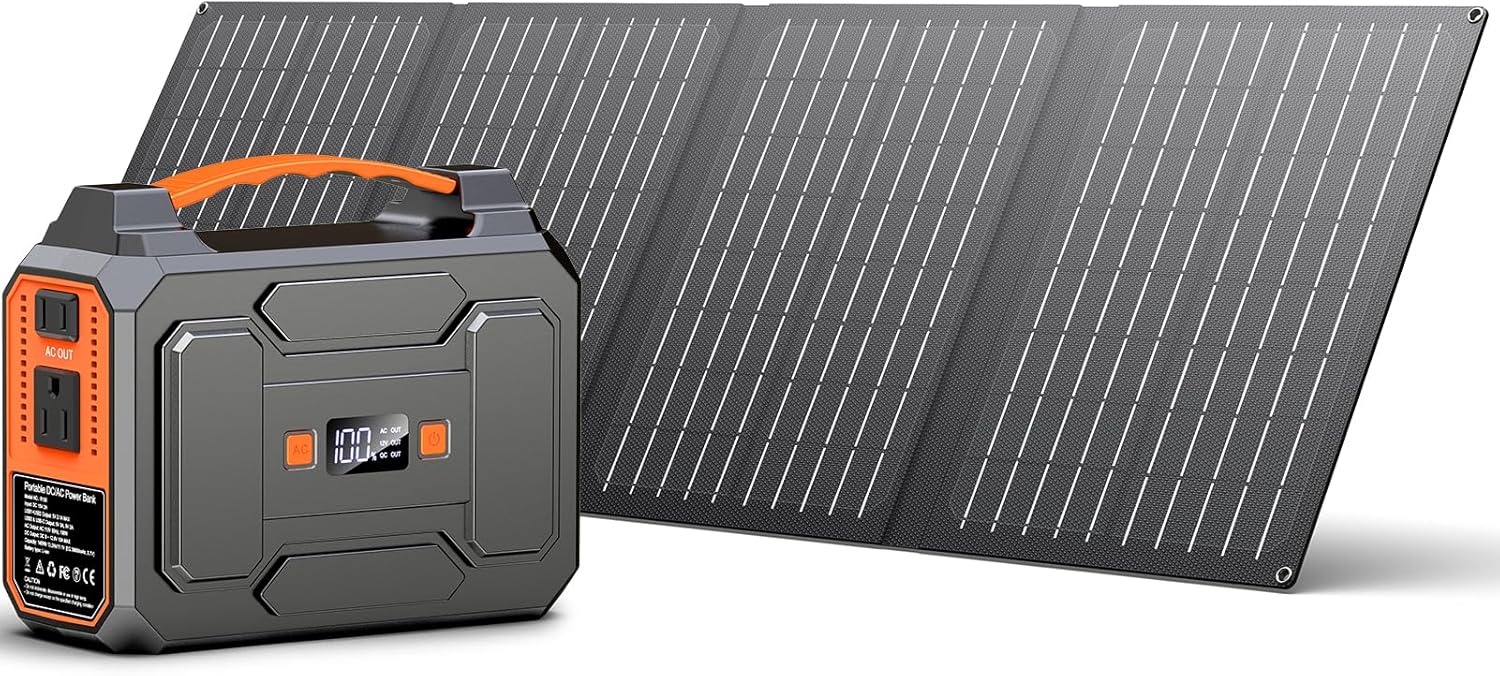
The DYNESS 300W portable power station delivers reliable backup power with LiFePO4 battery technology, 6 output ports, and flexible recharging options. Ideal for campers, RV owners, and anyone needing compact emergency power at an affordable price point.
Pros & Cons
Pros
Excellent value for money with robust functionality and quality construction at an affordable price
Versatile connectivity with 6 output ports allows charging multiple devices and powering various appliances at once
Fast charging capability, especially with solar panels, makes it practical for extended outdoor trips
Proven real-world performance powering CPAP machines, refrigerators, and camping equipment with reliable power delivery
Compact, lightweight form factor balances power capacity with genuine portability for travel and emergency use
Cons
300W power output limits use with high-wattage appliances like full-size air conditioners or power tools
Solar panel sold separately adds to total cost for off-grid charging capability
No app control or smart features, though this keeps the device simple and reliable for basic backup power needs
Detailed Review
The DYNESS 300W portable power station is a compact battery backup solution designed for campers, RV owners, travelers, and homeowners seeking emergency power. Built around a 256Wh LiFePO4 battery, this unit delivers 300W continuous power and includes six output ports to charge or power multiple devices simultaneously. It's an excellent choice for those wanting dependable backup power without breaking the bank.
The standout feature is its versatile connectivity and proven real-world performance. Users report successfully powering CPAP machines for multiple nights, running 55-cubic-foot refrigerators for hours, and keeping essential camping gear charged. The pure sine wave AC outlet protects sensitive electronics, while USB-C, USB-A, DC, and car outlets provide flexibility for virtually any device. Multiple recharge methods, including AC wall outlet, compatible solar panels, and car chargers, make it practical for both home backup and off-grid adventures.
Build quality is solid and the design prioritizes practicality over complexity. The digital display provides clear battery status, the lightweight construction makes it genuinely portable, and the compact 9.3-by-5-by-6.8-inch footprint fits easily in vehicles, closets, or emergency kits. Users consistently praise the build quality and appreciate that it performs reliably without unnecessary smart features or app requirements.
The main limitation is the 300W power output, which restricts use with high-wattage appliances like full-size air conditioners or power tools. Additionally, solar panels are sold separately, adding to the total investment for off-grid capability. For smaller appliances and emergency backup power, however, these constraints are minor trade-offs.
The DYNESS 300W is a smart choice for budget-conscious buyers needing reliable portable power. It delivers genuine functionality, proven durability, and real-world performance at a competitive price, backed by a 2-year manufacturer warranty from an established global brand.
Specifications
Power Specifications: 300W continuous output, 600W peak starting wattage, 110V pure sine wave AC outlet, 60Hz frequency, 0.3 kW engine power maximum.
Battery: 256Wh LiFePO4 battery with long cycle life and stable energy storage, providing reliable backup power for extended use.
Output Ports: 1x 110V AC outlet, 1x USB-C port, 1x USB-A port, 2x DC outputs, 1x car cigarette outlet for comprehensive device compatibility.
Recharging Options: AC wall outlet, compatible solar panels, car charger, or dual input capability for flexible off-grid and on-grid charging.
Physical Dimensions: 9.3 inches length by 5 inches width by 6.8 inches height, lightweight and portable design for travel and emergency use.
Warranty: 2-year manufacturer warranty, model PPS300-4, manufactured by DYNESS.
Buyer Guide
Best For: Campers and RV owners needing reliable power for laptops, routers, and mini fridges. Emergency backup for home power outages. Travel and outdoor enthusiasts wanting portable charging for phones, cameras, and small appliances. CPAP users and medical device backup power.
Power Capacity Considerations: The 300W continuous output handles most small appliances and portable devices effectively. It powers laptops, routers, mini fridges, CPAP machines, and cameras with ease. However, it cannot run high-wattage appliances like full-size air conditioners, power tools, or large heating elements.
Recharging Strategy: For home backup, use the AC wall outlet for fastest charging. For camping and off-grid use, consider purchasing a compatible solar panel separately to extend runtime and enable continuous charging during extended trips. Car charger option provides flexibility for road trips and travel.
Device Compatibility: The pure sine wave AC outlet protects sensitive electronics from power fluctuations. USB ports accommodate most phones and tablets. DC outputs work with RV appliances and specialized equipment. Verify your specific devices work with 110V AC output before purchasing.
Value Assessment: At this price point, the DYNESS 300W offers exceptional value compared to larger, more expensive power stations. It's an ideal entry-level portable power solution or secondary backup unit for those with modest power needs.
The Apowking R100 is a compact 146Wh solar-powered generator with included 40W solar panels and 7 output ports, ideal for camping, emergencies, and off-grid activities. Its lightweight 3.3lb design and high 20.5% solar conversion efficiency make it an excellent choice for outdoor enthusiasts seeking reliable, eco-friendly portable power.
Pros & Cons
Pros
Exceptional value with solar panels included in the box, saving money versus separate purchases
Multiple charging options with 7 outlets accommodate laptops, phones, drones, tablets, and car accessories simultaneously
Lightweight and compact form factor makes it genuinely portable for camping, travel, and emergency preparedness
Reliable solar efficiency even in suboptimal weather conditions thanks to monocrystalline cell technology
Smart safety features including BMS protection and thermal management prevent damage and extend lifespan
Cons
100W running output may be insufficient for high-power appliances like hair dryers or power tools
146Wh capacity provides limited runtime for extended off-grid use without multiple full solar charge cycles
Solar panel charging speed depends on weather and sunlight availability, making AC adapter essential for quick recharges
Detailed Review
The Apowking R100 is a compact 146Wh portable solar generator designed for outdoor adventurers, emergency preparedness, and anyone seeking off-grid power. This all-in-one system includes 40W solar panels with 20.5% conversion efficiency, making it one of the few generators on the market that arrives ready to use without purchasing additional accessories. It weighs just 3.3 pounds and fits easily into backpacks and luggage, making it ideal for camping trips, RV travel, and emergency home backup power.
The standout feature is its impressive array of 7 output ports that deliver genuine versatility. Two 110V AC outlets handle devices up to 100W (200W peak), while dual USB-A ports, USB-C with Quick Charge 3.0, and a DC 12V output accommodate phones, tablets, drones, car accessories, and more. This multi-port design means you can charge several devices simultaneously without frustrating switching between cables. The 146Wh capacity provides sufficient juice for multiple full phone charges, laptop top-ups, or continuous operation of small appliances like fans and LED lights.
Build quality is solid with aluminum construction, tempered glass solar panels, and monocrystalline silicon cells that maintain respectable efficiency even under cloudy skies. The integrated Battery Management System protects against voltage spikes and overheating, while dual LED flashlights with flashlight, strobe, and SOS modes add genuine utility during emergencies or nighttime camping. The compact dimensions and lightweight design never feel like compromises, as the engineering balances portability with functionality effectively.
Realistic drawbacks include the 100W continuous output, which limits compatibility with high-power tools and appliances. The 146Wh capacity, while respectable for a portable unit, requires strategic usage planning for multi-day trips without AC recharging. Solar charging depends entirely on weather conditions, so the included AC adapter becomes essential during cloudy periods or for quick turnarounds.
The Apowking R100 delivers exceptional value for outdoor enthusiasts and emergency preparedness. Its included solar panels, multiple charging ports, lightweight portability, and solid safety features create a genuinely useful power solution at an accessible price point. Ideal for camping, van life, emergency backup, and anyone wanting reliable portable power without the bulk or expense of larger generators.
Specifications
Power Capacity: 146Wh / 39,600mAh Running Output: 100W continuous, 200W peak Solar Panel Output: 40W monocrystalline with 20.5% conversion efficiency Output Ports: 2x 110V AC, 2x USB-A (5V/3.1A), 2x USB-C Quick Charge 3.0 (5V/3A, 9V/2A), 1x DC 12V (9-12.6V/10A max)
Physical Specifications: 7.5 inches L x 3.7 inches W x 6.1 inches H, weighs 3.3 pounds Materials: Aluminum, monocrystalline silicon, tempered glass Safety Features: Battery Management System, temperature control, voltage regulation, automatic shutdown Included Accessories: 40W solar panels, AC power adapter, 12V car charging cable, cigarette lighter adapter, user manuals Warranty: 12 months customer support
Buyer Guide
Who Should Buy This? The Apowking R100 suits outdoor enthusiasts, campers, RV travelers, emergency preppers, and anyone needing portable backup power. Its lightweight design and included solar panels make it perfect for those prioritizing portability and eco-friendly charging. The multiple output ports appeal to users with diverse device needs.
Best Use Cases: Camping trips, van life adventures, emergency home backup, outdoor events, travel, hiking base camps, and off-grid cabins. The 100W output handles phones, laptops, tablets, drones, small fans, LED lights, and car accessories effectively.
Capacity Considerations: One full charge powers a smartphone 10-15 times, a laptop once, or small appliances for several hours. Plan accordingly for multi-day trips by using the AC adapter or relying on solar charging during daylight hours.
Solar Charging Reality: Expect 6-8 hours of direct sunlight for a full solar charge. Cloudy weather significantly slows charging, so the AC adapter is essential for reliable backup power. This is not a limitation but rather realistic solar technology performance.
Comparison Advantage: Most portable generators cost extra for solar panels. The Apowking R100 includes them, offering better value for solar-powered users. The 7 output ports exceed many competitors offering only USB charging.
The HOWEASY K300 is a 222Wh portable power station with a 300W pure sine wave AC outlet, weighing 5.5 pounds and offering nine simultaneous output ports including USB-C 65W. It suits campers, RV owners, and households wanting backup power for phones, lights, and small devices during outages.
Pros & Cons
Pros
Compact footprint and light weight make it genuinely portable
Wide variety of output ports covers most small devices in one unit
Pure sine wave output is safe for modern electronics
Multiple charging methods, including solar, add flexibility off-grid
Cons
The 222Wh capacity limits runtime for high-draw appliances such as space heaters, microwaves, or air conditioners
Solar panel is not included, so off-grid charging requires a separate purchase
Manufacturer warranty is listed inconsistently, so buyers should confirm coverage before purchase
Detailed Review
The HOWEASY K300 is a compact 222Wh portable power station designed for campers, RV travelers, and households that need backup power during short outages. It delivers a 300W pure sine wave AC output, so it can run laptops, CPAP machines, lights, and small kitchen appliances.
Its standout strength is connectivity. Nine output ports, including two QC 3.0 USB ports, a USB-C 65W port, three DC ports, and two 3-pin AC sockets, let you power several devices at the same time. The built-in LED flashlight with steady and SOS modes adds practical value for emergencies.
At 5.5 pounds and roughly 8.25 by 4.7 by 5.8 inches, the unit is easy to carry with its folding handle. The build feels sturdy for its class, and the integrated BMS monitors voltage, current, and temperature to help protect the battery during use.
The main drawback is capacity. At 222Wh, runtime for higher-wattage appliances will be short, and the solar panel must be purchased separately. Buyers should also verify warranty terms, since listings show differing coverage periods.
Overall, the HOWEASY K300 is a practical, budget-conscious choice for weekend camping, emergency lighting, and charging phones and small electronics. Buyers expecting to run heavy appliances for long periods should consider a larger capacity model.
The EcoFlow Delta 3 Classic is a portable 1024Wh solar generator delivering 1800W continuous power (3600W surge) with ultra-fast 45-minute charging and 5.8-hour solar recharge capability. Ideal for homeowners, campers, and off-grid enthusiasts seeking reliable backup power with LiFePO4 longevity.
Pros & Cons
Pros
Exceptional charging speed with 0-80% in 45 minutes makes it practical for emergency home backup
High-efficiency 25% solar conversion rate with N-Type cells maximizes renewable charging potential
Advanced UPS protection with sub-10ms response time prevents data loss and equipment damage
Durable LiFePO4 chemistry outlasts traditional lithium batteries by years of daily cycling
Expandable to 2600W with X-Boost technology accommodates future power needs and heavier appliances
Cons
Separate shipping of generator and solar panel may cause inconvenience and delayed setup
1024Wh capacity limits runtime to approximately 34 minutes at full 1800W draw for sustained use
Premium pricing reflects quality but may exceed budgets for casual or occasional backup power users
Detailed Review
The EcoFlow Delta 3 Classic is a premium portable power station designed for homeowners seeking reliable backup power, outdoor enthusiasts planning extended camping trips, and off-grid living advocates. This 1024Wh solar generator combines fast-charging technology with renewable solar integration, making it a versatile solution for emergency preparedness and adventure.
Performance stands out with 1800W continuous output and 3600W surge capacity, powering everything from kitchen appliances to sensitive electronics. The X-Stream AC charging reaches 80% capacity in just 45 minutes, while the included 220W solar panel recharges the system in 5.8 hours under optimal sunlight. X-Boost technology expands maximum output to 2600W, accommodating heavier loads that would otherwise exceed standard specifications.
Build quality reflects EcoFlow's engineering focus with LiFePO4 battery cells rated for 10+ years of daily use and EV-grade CTC design. The composite and glass construction balances durability with portability at a reasonable carrying weight. The smart Battery Management System monitors health and safety continuously, protecting your investment through intelligent charge cycling.
The sub-10ms UPS functionality automatically switches to battery power when grid electricity fails, preventing data loss on computers and protecting medical devices. This response time is critical for sensitive equipment that cannot tolerate even brief power interruptions. Real-world users appreciate this feature during unexpected outages and brownouts.
The main limitation is runtime at full load, providing approximately 34 minutes of continuous 1800W operation before battery depletion. For sustained power needs, users should either pair multiple units or manage loads strategically. The separate shipping of the generator and panel may delay initial setup but ensures both arrive safely.
Specifications
Power Output: 1800W continuous, 3600W surge, expandable to 2600W with X-Boost
Battery Capacity: 1024Wh LiFePO4 with 10+ year lifespan
AC Charging: 0-80% in 45 minutes via X-Stream technology
Solar Charging: 5.8 hours with included 220W bifacial panel at 25% conversion efficiency
USB Output: 100W USB-C port for fast device charging
UPS Response: Less than 10ms automatic battery switchover
Dimensions: 7.9 inches L x 11.1 inches W x 15.7 inches H
Warranty: 5-year manufacturer coverage
Buyer Guide
Best For: Home emergency backup, camping and RV travel, off-grid cabin power, sensitive electronics protection, and solar enthusiasts building renewable energy systems.
Consider This Model If: You need fast charging capability, value solar independence, want UPS protection for electronics, and plan daily or frequent power station use justifying the premium investment.
Look Elsewhere If: You require extended runtimes beyond 30-45 minutes, have a limited budget for power backup, or only need occasional emergency power without solar integration.
Setup Tips: Expect separate arrival of the generator and 220W panel. Install the solar panel in direct sunlight for optimal charging. Use the smart Battery Management System app to monitor health and optimize charging cycles for maximum longevity.
The Anker SOLIX C1000 Gen 2 is a 1,024Wh LiFePO4 portable power station with 2,000W continuous output, 9 ports, and a 10 ms UPS switchover, bundled with a 200W bifacial PS200 solar panel. It suits campers, RV owners, and households that want quiet backup power for CPAP machines, laptops, and small appliances.
Pros & Cons
Pros
Strong output and nine ports handle multiple devices and mid-power appliances simultaneously
Fast solar and AC recharging shortens downtime between uses
LiFePO4 chemistry offers a long cycle life and safer battery chemistry than many lithium-ion alternatives
Compact, lighter design compared with similar-capacity models, with a 5-year warranty
Cons
At roughly 22 lbs class weight and a 15-inch footprint, it is still too heavy for frequent backpacking use
Solar recharge times depend on panel placement and weather, and the 600W input requires more than the included 200W panel to reach the quoted 1.8-hour charge
Full capability, including the fastest charging, requires the Anker app and some setup
Detailed Review
The Anker SOLIX C1000 Gen 2 is a portable power station built around a 1,024Wh LiFePO4 battery, designed for campers, overlanders, and homeowners who want backup power without a noisy gas generator. It pairs that capacity with a 2,000W continuous rating and a 3,000W surge capability, so it can run most everyday appliances.
Its standout feature is the combination of high output and fast recharging. Plugging in up to 600W of solar can bring the battery to full in roughly 1.8 hours under good conditions, and HyperFlash charging from AC can refill it in about 49 minutes. The under 10 ms UPS switchover is a practical advantage for CPAP machines and laptops during brief outages.
The unit's dimensions of 15.1 by 8.2 by 9.6 inches make it manageable for a vehicle trunk or a garage shelf, and Anker states it is 14% smaller and 11% lighter than comparable models. The included PS200 bifacial panel and cables give buyers a complete solar kit, though the panel should be treated as a starting point rather than a full solar array.
The main drawbacks are weight, which limits portability for long hikes, and the reliance on the Anker app for advanced features like TOU scheduling and HyperFlash. Solar performance will also vary with weather and panel orientation, so realistic expectations matter.
Overall, the C1000 Gen 2 is a well-rounded choice for camping, home backup, and off-grid use. Its long cycle life, fast charging, and five-year warranty make it a dependable investment for buyers who need reliable power in a single portable package.
Portable Solar Generator Buying Guide
Capacity and Output Wattage
Capacity, given in watt-hours (Wh), shows how much energy a unit stores. Output wattage shows how much load it can supply at one time. The Jackery Explorer 1000 v2 solar generator lists 1,070Wh of capacity and 1,500W of AC output, with a 3,000W surge peak. At the smaller end, the Apowking 100W solar generator lists 146Wh of capacity and 100W of output, with a 200W peak. The EBL listing shows two different capacity figures, so confirm the number on that listing before comparing it with others. For a fuller method, see How to Compare Solar Generators: A Spec-Sheet Checklist.
Weight and Portability
Weight and size decide how easily a unit moves between a car, a campsite and a home. The HOWEASY 300W portable power station lists a weight of 5.5 pounds and a 222Wh capacity, and its listing mentions a folding handle. The Apowking unit lists 3.3 pounds. The EBL unit is much heavier, listed at 55 pounds in its features and 54 pounds in its specifications, and it has dual-side handles. The Jackery lists 23.8 pounds with a foldable handle. Weight is not listed for the EcoFlow or Anker units, so use their listed dimensions, 7.9 by 11.1 by 15.7 inches and 15.1 by 8.2 by 9.6 inches, to judge fit. For a closer look at this trade-off, read How to Choose a Portable Solar Generator: Weight vs Capacity.
Outlets and Ports
Port layouts vary widely. The Jackery lists three pure sine wave AC ports, two USB-C ports, one USB-A port and a DC car port. The EBL lists four AC ports, two USB-A ports, two USB-C ports, a car port, two DC ports and a wireless charging panel, and it says it can charge 12 devices at once. The Dyness 300W portable power station lists one AC outlet, a USB-C port, a USB-A port, two DC outputs and a car outlet. The Anker lists nine ports in total. The HOWEASY listing describes two 3-pole 300W sockets and a USB-C port rated at 65W. Match the port types to your devices, and check each listing’s per-outlet wattage before connecting anything.
Solar Input and Recharge Times
Solar input determines how quickly a unit recharges from the sun. The Jackery listing says a 200W panel brings its unit to 80% in six hours, while a 600W alternator charger reaches full charge in three hours. The EcoFlow Delta 3 Classic solar generator lists a 220W panel recharge in 5.8 hours, and its AC charging reaches 80% in 45 minutes. The Anker lists up to 600W of solar input at a maximum of 60V, with a full recharge in 1.8 hours. The HOWEASY lists a solar input range of 18 to 24V, and the Dyness lists compatibility with a solar panel that is sold as optional. Listed times depend on the panel named in each listing and on sunlight at your location. Solar charging burns no fuel, but follow the manufacturer’s manual for panel connections, charging and fuses. 6 Best Jackery 2026 Plus Solar Generator Options Compared (2026) goes further into this.
Battery Chemistry and Protection
Several listings name lithium iron phosphate (LiFePO4 or LFP) batteries, including the Jackery, EBL, Dyness and EcoFlow units. The Jackery listing says its battery keeps over 70% of its original capacity after 4,000 charge cycles. The Anker listing says its battery keeps at least 80% capacity after 4,000 cycles. The EBL listing describes a protection system that guards against overcharging, over-discharging, short circuits and high temperatures, and the HOWEASY listing says its battery management system monitors voltage, current and temperature. The Apowking listing also describes a battery management system with voltage and temperature control. Battery chemistry is not listed for the Anker or Apowking units. Both the EcoFlow and Anker listings give a UPS switchover time of under 10 ms, while the EBL listing gives 0.1 seconds. A related read: 6 Best Jackery 300W Solar Generator Options Compared (2026).
Final Thoughts
For small loads such as phones, a laptop and a few lights, the Apowking unit and the HOWEASY unit are the lightest options on this list, with listed weights of 3.3 pounds and 5.5 pounds. Their lower capacities, 146Wh and 222Wh, suit short trips and simple setups more than long runs. For larger setups that need more output, the Jackery Explorer 1000 v2 solar generator and the Anker SOLIX C1000 Gen 2 with 200W solar panel list 1,500W and 2,000W of output, with 1,070Wh and 1,024Wh of capacity. Those units weigh more and need more room, so compare their dimensions and weight against where you plan to use them.
Watt-hour capacity is the amount of energy a unit stores. To estimate how long a device will run, divide the unit’s watt-hours by the device’s wattage, and expect real results to fall short of that figure because of conversion losses. For a worked example, see How to Size a Solar Generator: A Step-by-Step Worked Example.
Can these units run a refrigerator?
Some listings name refrigerators among supported loads, including the EcoFlow and Jackery units. Check the refrigerator’s wattage on its label, compare it with the unit’s listed output and surge ratings, and follow the manufacturer’s manual for connections.
How long does solar charging take?
Listed solar recharge times vary by panel and sunlight. The Anker listing gives 1.8 hours with 600W of solar, the EcoFlow listing gives 5.8 hours with a 220W panel, and the Jackery listing gives six hours to reach 80% with a 200W panel. Actual times depend on conditions where you set up the panel. You may also like 5 Best EcoFlow Portable Solar Generators for Home Backup (2026).
Can these units be used indoors?
Battery and solar units like these do not burn fuel. Even so, follow the manufacturer’s manual for placement, ventilation, connections, fuses and charging, and do not rely on a product listing alone for those details.
About Emily Parker
Emily Parker is part of our editorial team and reviews and edits our solar generators for home backup & emergencies guides, checking product details against manufacturer specifications and owner feedback.
A step-by-step guide to sizing a solar generator using a real-world example. Learn how to calculate watt-hours, account for surge power, and plan for recharging.
LiFePO4 batteries last longer and tolerate more charge cycles, while NMC lithium-ion packs weigh less and perform better in cold weather. Here is how to choose for your power station.
This guide explains how to compare portable solar generators by weight per watt-hour, handles, wheels, panel portability, and ports for car camping or home backup.
Learn how the jackery solar generator 1000 v2 handles home backup. Calculate watt-hour needs for a fridge, CPAP or sump pump and size your setup right.
Learn how the jackery 500w solar panel works, what output to expect, how to size it for home backup, and how to connect it safely to your power station.
Compare five home emergency battery backup power options for outages, from small CPAP-friendly units to larger whole-essentials stations. Find your fit.
Our ecoflow river 2 max review covers the 499Wh LiFePO4 battery, 1000W output, solar charging and who should buy or skip this home backup power station.
Learn how home battery backup power systems work, how to calculate the watt-hours you need for a fridge, CPAP or sump pump, and how to avoid common sizing mista

 By Emily Parker