 By Graham Fisher
Updated November 2026
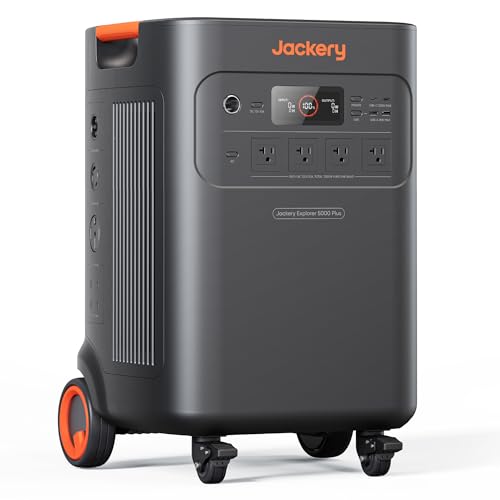
A jackery homepower 3600 plus deal is only worth taking if the unit’s capacity, output and expansion options match what you need to keep running during an outage. This guide walks through how to size your loads, compare the specs that matter, and judge a discounted listing without relying on sale hype. Think of it as a checklist you can run before you click buy.
Start With Your Outage Power Needs
Before you look at any discount, calculate how much energy you actually need. Start with the appliances you want to keep running, then find each one’s wattage on its label or nameplate. Multiply running watts by the hours you expect to use each device per day to get watt-hours (Wh). A refrigerator might draw around 100 to 200 watts while running, but its compressor cycles, so your daily energy use is usually far lower than its peak rating suggests.
Add up the daily watt-hours for your critical loads, then add a 20 percent buffer for inverter losses and battery aging. That total tells you whether a given capacity is realistic. Motor loads such as a sump pump or well pump need extra surge capacity at startup, so check the unit’s surge rating too. If you are unsure about wiring a unit to your home, consult a licensed electrician before connecting it to your panel.
Compare the Specs That Actually Matter
Once you know your daily energy need, compare the unit’s specifications against it. Capacity in watt-hours and continuous output in watts are the two numbers that drive what you can run and for how long. Expansion battery support determines whether you can grow capacity later, which can matter more than a one-time discount on the base unit.
| Factor | What to check | Why it matters |
|---|---|---|
| Capacity (Wh) | Rated battery energy | Sets total runtime for your loads |
| Continuous output (W) | Rated sustained power | Must exceed combined running wattage |
| Surge rating (W) | Short-term peak power | Needed for motors like pumps and compressors |
| Expansion support | Compatible add-on batteries | Lets you increase runtime later |
| Charging options | Wall, solar and vehicle inputs | Determines recharge speed during a long outage |
If you are weighing this model against others in its class, compare the same metrics side by side. Our overview of Jackery HomePower 3600 Plus Solar Generator: 5 Best Picks Compared (2026) shows how the model stacks up against similar units on capacity and output.
Evaluate Whether a Discount Changes the Math
A lower price only helps if the unit still meets your sizing targets. Check whether the listing is the same model, the same capacity, and includes the same accessories as the standard version. Some bundles add cables, solar input kits or expansion batteries that change the value, so read the item list closely. Confirm the seller and the return policy, and make sure the product is sold through a reputable channel. Avoid deals that look too good to be true, since counterfeit or refurbished units are sometimes listed without clear labeling.
It also helps to compare against the next model up or down. A slightly larger unit can cost more but may save you from buying a second battery later. For background on sizing choices, see Jackery HomePower 3600 Pro Max: Sizing Guide for Outage Backup (2026).
Set Up for Reliable Backup Power
Buying the unit is only half the job. Charge it fully before the first use and cycle it through a few charges to confirm it behaves as expected. Keep the unit in a dry, ventilated spot, away from direct heat, and never run it in an enclosed space where exhaust or heat could build up. Test your critical loads one at a time to see how long the battery actually lasts, then update your sizing estimate based on real results.
For step-by-step setup and safe-use details, the manufacturer’s manual is the authoritative source. Our summary in Jackery 5000 Plus Manual: Setup, Settings and Safe Use Guide covers the general process in plain terms.
Quick setup checklist
- Calculate daily watt-hours for your critical loads.
- Add a 20 percent buffer for losses and aging.
- Confirm continuous and surge output ratings.
- Check expansion battery compatibility.
- Verify the listing matches the standard model and included accessories.
- Charge fully and run a test before relying on it.
Common Mistakes to Avoid
- Buying on discount alone without checking capacity against your real loads.
- Ignoring surge rating, which can trip the unit when a pump or compressor starts.
- Assuming the advertised runtime matches your actual usage; real results vary with temperature and load.
- Skipping a test run, so you discover limitations only during a real outage.
- Overlooking expansion options that could be cheaper than buying a larger unit now.
Recommended gear
These accessories can help you get more from a backup power setup. Choose only items compatible with your specific model.
- Jackery SolarSaga solar panels add renewable recharging so the unit can refill during extended outages. View on Amazon
- Kill A Watt P3 meter lets you measure the actual wattage of each appliance to refine your sizing numbers. View on Amazon
- Jackery expansion battery extends total capacity when your outage needs grow beyond the base unit. View on Amazon
For more model comparisons, see 3 Best Jackery Homepower 3600 Plus Portable Power Stations (2026): Our Picks and 3 Best Jackery HomePower 3600 Plus Models for Home Backup (2026).
FAQ
Is a jackery homepower 3600 plus deal worth it for home backup?
It can be, if the capacity and output match your critical loads and the listing is the same model with the accessories you expect. Run your watt-hour math first, then judge the discount against that.
How do I know if the unit will run my refrigerator?
Check the refrigerator’s running wattage and its daily energy use, then compare both to the unit’s continuous output and capacity. Remember that compressors need extra surge capacity at startup.
Can I add more battery capacity later?
Many portable power stations support compatible expansion batteries. Confirm compatibility with the specific model before buying, since expansion options vary by product.
How long will it power my home during an outage?
Runtime depends on your total load, temperature and battery condition. Divide usable watt-hours by your average daily load for a rough estimate, then verify with a real test.
Should I consult a professional before connecting it to my home?
Yes. Connecting a backup unit to your electrical panel can involve safety and code requirements, so a licensed electrician should handle any permanent installation.
Conclusion
A jackery homepower 3600 plus deal is a good buy only when the numbers work for your home. Calculate your daily watt-hours, check surge and expansion options, and confirm the listing matches the model you want. Test the unit before you rely on it during a real outage.
Ready to choose one?
About Graham Fisher
Graham Fisher is part of our editorial team and reviews and edits our solar generators for home backup & emergencies guides, checking product details against manufacturer specifications and owner feedback.