
 By Graham Fisher
Updated November 2026
If you are shopping for a Jackery 5000 Plus weight comparison, you are probably trying to answer a practical question: can you move this power station around, and will it still fit the home backup job you have in mind? Portability matters because a unit that is hard to carry, roll or position may never leave the garage when an outage hits. This guide compares five Jackery models in the 5000 Plus family and adjacent lines, using manufacturer specifications, brand reputation and common owner feedback as the main criteria: battery capacity, AC output, expandability, weight class and suitability for whole-home or essential-circuit backup.
Our top picks at a glance
- 1
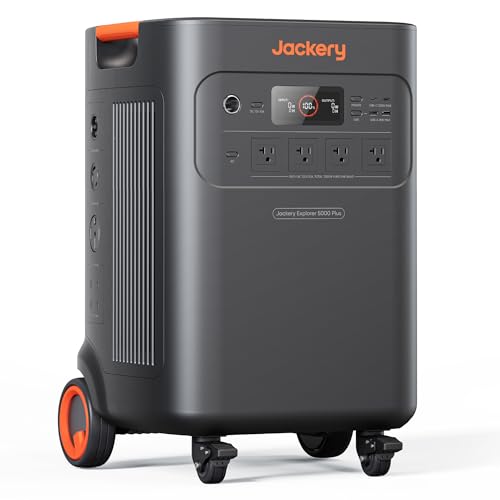 TOP CHOICEBest overallJackery Explorer 5000 Plus Power StationView on Amazon
- 2
 TOP CHOICEBest for whole-home backup kitsJackery Solar Generator 5000 Plus and 2x200W PanelsView on Amazon
- 3
 TOP CHOICEBest for extra runtimeJackery Battery Pack 5000 PlusView on Amazon
- 4
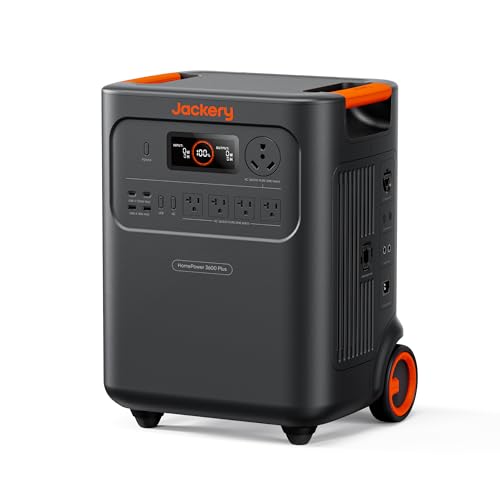 Best for 3600W essential loadsJackery HomePower 3600 Plus Power StationView on Amazon
- 5
 Best budget pickJackery HomePower 2000 Plus v2 Power StationView on Amazon
Our Top Picks
| Product | Best for | Key feature |
|---|---|---|
| Jackery Explorer 5000 Plus Power Station | Whole-home backup with one main unit | 5040Wh LiFePO4 capacity, 7200W AC output |
| Jackery Battery Pack 5000 Plus | Adding runtime to an existing 5000 Plus | 5040Wh expansion battery, 4000 life cycles |
| Jackery Solar Generator 5000 Plus and 2x200W Panels | Complete kit with solar recharging | 5040Wh with two 200W panels included |
| Jackery HomePower 3600 Plus Power Station | Essential circuits and sensitive loads | 3584Wh LFP battery, 3600W AC output |
| Jackery HomePower 2000 Plus v2 Power Station | Lighter, smaller essential-loads backup | 2048Wh LFP battery, 2400W AC output |
Jackery Explorer 5000 Plus Power Station
Jackery Explorer 5000 Plus Power Station, 5040Wh, 7200W AC Output | LiFePO4, 120V/240V Output, Expandable to 60kWh, Essential Home Backup for Power Outages (Solar Panel Optional)
Best for: Whole-home backup with one main unit
This is the flagship of the group and the reference point for the Jackery 5000 Plus weight question. It suits households that want a single large power station to cover refrigerators, lights, a sump pump and a few outlets during an outage, and that have a way to move it on a cart or with two people.
Key specs
- 5040Wh LiFePO4 battery capacity
- 7200W AC output
- 120V/240V output
- Expandable to 60kWh with additional batteries
Pros
- Large capacity covers many essential circuits for a meaningful stretch
- LiFePO4 chemistry is generally associated with long cycle life
- Expandable, so capacity can grow with your needs
Cons
- Heavy enough that owners usually plan on a hand truck or two people to move it
- Larger footprint than smaller units, which matters in tight storage spaces
Bottom line: Pick this if you want one core unit for serious home backup and can accommodate its size and weight.
View on AmazonJackery Battery Pack 5000 Plus
4000 Life Cycles, Expandable Home Backup for Solar Generator 5000 Plus, Home Use, Emergency Jackery Battery Pack 5000 Plus, 5040Wh LiFePO4 Expansion Battery
Best for: Adding runtime to an existing 5000 Plus
This is an expansion battery rather than a standalone generator. It fits owners who already run a 5000 Plus and want longer outage coverage without buying a second complete power station.
Key specs
- 5040Wh LiFePO4 expansion capacity
- Rated for 4000 life cycles per manufacturer specifications
- Designed to pair with Solar Generator 5000 Plus systems
Pros
- Doubles stored energy when paired with a compatible base unit
- Lets you scale capacity in steps as your budget allows
- Long rated cycle life for daily-use or frequent-outage areas
Cons
- Useless on its own; it needs a compatible power station
- Adds significant weight to the overall setup
Bottom line: Best for existing 5000 Plus owners who need more hours of backup rather than more output power.
View on AmazonJackery Solar Generator 5000 Plus and 2x200W Panels
Jackery Solar Generator 5000 Plus and 2x200W Panels, 5040Wh,7200W AC Output | LiFePO4, 10-Year Lifespan, Whole Home Backup for Emergency
Best for: Complete kit with solar recharging
This bundle pairs the 5000 Plus power station with two 200W solar panels. It suits buyers who want to recharge during extended outages or in off-grid use, and who prefer a single package instead of sourcing panels separately.
Key specs
- 5040Wh LiFePO4 capacity
- 7200W AC output
- Two 200W solar panels included
- Listed with a 10-year lifespan by the manufacturer
Pros
- Panels are included, so the system is ready to recharge from sunlight
- Solves the “how do I keep it charged” question for multi-day outages
- Clear whole-home backup positioning in the listing
Cons
- Panels and power station add substantial weight and bulk to transport
- Recharging speed depends on sun exposure and panel placement
Bottom line: Choose this if you want one purchase that covers both storage and solar recharging for a home backup plan.
View on AmazonJackery HomePower 3600 Plus Power Station
Jackery HomePower 3600 Plus Power Station, 3584Wh, 3600W AC Output | LFP Battery, Expandable to 21kWh, Solar Generator, Essential Home Backup for Home Use, Emergencies, RV (Solar Panel Optional)
Best for: Essential circuits and sensitive loads
This unit is a step down in capacity from the 5000 Plus but still offers strong backup for essential circuits. It is a practical choice for households that mainly need refrigeration, medical devices, internet and lighting, and that value a lighter, easier-to-place unit.
Key specs
- 3584Wh LFP battery capacity
- 3600W AC output
- Expandable to 21kWh
Pros
- Noticeably lighter and more compact than the 5000 Plus class
- LFP battery chemistry is widely used for durability and thermal stability
- Expandable, leaving room to grow
Cons
- Less stored energy than the 5000 Plus for long outages
- Output ceiling is lower, which may matter for high-draw appliances
Bottom line: A strong middle ground for buyers who want easier portability and enough capacity for essential circuits.
View on AmazonJackery HomePower 2000 Plus v2 Power Station
Jackery HomePower 2000 Plus v2 Power Station, 2048Wh, 2400W AC Output | LFP Battery, Expandable to 12kWh, Essential Home Backup for Outages, Emergencies & RV (Solar Panel Optional)
Best for: Lighter, smaller essential-loads backup
This is the most compact unit in the lineup and the easiest to move. It fits apartments, small homes and buyers who only need to keep a few critical devices running, such as a refrigerator for part of a day, phone charging and a CPAP.
Key specs
- 2048Wh LFP battery capacity
- 2400W AC output
- Expandable to 12kWh
Pros
- Much easier to carry and store than the 5000 Plus class
- Lower purchase commitment for a first home backup unit
- Expandable, so you can add capacity later
Cons
- Limited runtime for whole-home loads or long outages
- Lower output and capacity may not suit high-draw appliances
Bottom line: Best for buyers who prioritize light weight and essential-device coverage over maximum runtime.
View on AmazonBuying Guide
Weight and portability
Weight is the main reason the Jackery 5000 Plus weight question comes up. Check the manufacturer’s listed weight for the exact configuration you plan to buy, because a bundle with solar panels or expansion batteries weighs much more than the base unit. Plan for the path from storage to the outlet location, including stairs, doorways and any ramp or cart you will use.
Good picks for this: Jackery HomePower 2000 Plus v2 Power Station, Jackery HomePower 3600 Plus Power Station
Capacity in watt-hours
Capacity, measured in watt-hours (Wh), tells you roughly how much energy the unit stores. To estimate runtime, add up the wattage of the devices you need, convert to hourly energy use, and divide capacity by that figure, then account for inverter losses. A refrigerator averaging around 150 watts over a day, for example, uses roughly 3.6kWh, so a 5040Wh unit could cover that load for a day under typical assumptions.
Good picks for this: Jackery Explorer 5000 Plus Power Station, Jackery Battery Pack 5000 Plus
AC output and surge capacity
Continuous output rating determines how many devices you can run at once. Motors, such as well pumps and sump pumps, need extra surge capacity at startup. Check the surge figure in the specifications, not just the continuous rating, before you assume a unit can start a particular appliance.
Good picks for this: Jackery Explorer 5000 Plus Power Station, Jackery HomePower 3600 Plus Power Station
Battery chemistry
LiFePO4 and LFP are both lithium iron phosphate chemistries, generally associated with longer cycle life and greater thermal stability than some other lithium types. Manufacturers list cycle counts under specific test conditions, so treat those numbers as comparisons rather than guarantees.
Good picks for this: Jackery Battery Pack 5000 Plus, Jackery HomePower 2000 Plus v2 Power Station
Expandability
If you may need more runtime later, confirm which expansion batteries are compatible with the base unit before you buy. Expansion gives flexibility, but the added battery weight can change how you move the system.
Good picks for this: Jackery Explorer 5000 Plus Power Station, Jackery HomePower 3600 Plus Power Station
Solar recharging
If you expect multi-day outages, a solar-ready setup matters. Panel wattage, sun hours in your area and panel placement all affect how fast the battery refills. Bundled kits remove the guesswork about compatibility.
Good picks for this: Jackery Solar Generator 5000 Plus and 2x200W Panels, Jackery HomePower 2000 Plus v2 Power Station
Storage, care and placement
Keep the unit indoors or in a sheltered spot, away from heat sources and direct water exposure. Follow the manufacturer’s storage charge level guidance and recharge periodically if it sits unused. Heavy units should sit on a stable, level surface where they cannot be knocked over.
Good picks for this: Jackery Explorer 5000 Plus Power Station, Jackery HomePower 2000 Plus v2 Power Station
FAQ
How much does a Jackery 5000 Plus weigh?
Weight depends on the exact configuration. The base power station is heavy enough to need a hand truck or two people, and bundles with solar panels or expansion batteries add more. Check the manufacturer’s listed weight for the specific model before you plan storage or transport.
Can one person move a Jackery 5000 Plus?
Many owners would recommend two people or a wheeled cart for safer handling. Lift with your legs, keep the load close to your body, and avoid carrying it up stairs alone.
Which Jackery is best if I want something lighter?
The Jackery HomePower 2000 Plus v2 Power Station is the most compact option in this lineup and generally the easiest to move. Expect shorter runtime for whole-home loads.
Does the Battery Pack 5000 Plus work on its own?
No. It is an expansion battery and needs a compatible power station to function. Confirm compatibility before you buy.
How do I estimate how long a unit will run my refrigerator?
Find the refrigerator’s average daily energy use in kilowatt-hours, often on its EnergyGuide label, then divide the unit’s usable capacity by that figure and account for inverter efficiency losses. Results are estimates; actual runtime varies with temperature and usage.
Is a solar panel bundle necessary for outages?
Not always. Short outages may be covered by stored energy alone, while multi-day outages benefit from solar recharging. Consider your typical outage length and sun exposure.
Should I consult a professional before connecting to my home?
Yes. Connecting a power station to household circuits, such as through a transfer switch, should be handled by a licensed electrician to meet local electrical codes and avoid backfeeding the grid.
Conclusion
For most people searching on the Jackery 5000 Plus weight question, the choice comes down to how much runtime you need versus how much weight you can handle. The Jackery Explorer 5000 Plus Power Station and the Solar Generator 5000 Plus bundle suit whole-home backup with the largest storage. The Battery Pack 5000 Plus is the logical add-on for owners who need more hours. The HomePower 3600 Plus is a practical middle ground for essential circuits, and the HomePower 2000 Plus v2 is the lightest, most portable option for smaller loads. Match the unit to your critical devices, check the listed weight for your exact configuration, and confirm compatibility before purchase.
Sources
- Guidance on home energy use, appliance power draw and backup planning (energy.gov)
- Consumer safety information on portable power equipment and battery handling (cpsc.gov)
- Fire safety standards and guidance for lithium battery storage and charging (nfpa.org)
Related reading
- Jackery Solar Generator 5000 Plus Review: Features and Performance
- Jackery HomePower 3600 Plus Solar Generator: 5 Best Picks Compared (2026)
- Jackery Explorer 5000 Plus Review: Is It Worth It?
- Jackery Explorer 2026 Plus Solar Generator: 5 Best Picks Compared (2026)
- Jackery 5000 Plus Manual: Setup, Settings and Safe Use Guide
About Graham Fisher
Graham Fisher is part of our editorial team and reviews and edits our solar generators for home backup & emergencies guides, checking product details against manufacturer specifications and owner feedback.



