
 By Graham Fisher
Updated November 2026
If you are asking whether Jackery generators are any good, you are probably trying to keep a fridge, a CPAP machine or a sump pump running when the grid goes down. The short answer is that Jackery’s portable power stations are well regarded for home backup, but how good a given model is depends on its battery size, its output rating and whether it can handle your specific loads. This guide compares six Jackery models on capacity, surge handling, expandability and the use cases owners most often describe, so you can judge fit rather than brand reputation alone.
Our top picks at a glance
- 1
 TOP CHOICEBest overallJackery HomePower 3600 PlusView on Amazon
- 2
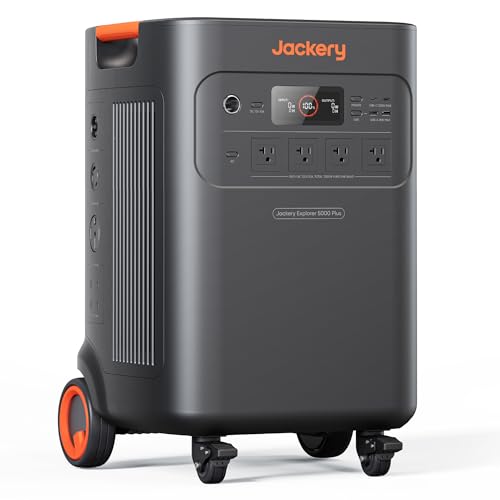 TOP CHOICEBest for whole-home backupJackery Explorer 5000 PlusView on Amazon
- 3
 TOP CHOICEBest for small kitchens and essentialsJackery Solar Generator 1000 v2 and 200W Solar PanelView on Amazon
- 4
 Best budget pickJackery Explorer 300 Portable Power StationView on Amazon
- 5
 Best for CPAP and medical loadsJackery HomePower 3000 Portable Power StationView on Amazon
- 6
 Best for portable outage useJackery Explorer 1000 v2 Portable Power StationView on Amazon
Our Top Picks
Quick Comparison
| Product | Best for | Key feature |
|---|---|---|
| Jackery HomePower 3600 Plus | Whole-home essentials and expansion | 3584Wh LFP battery, expandable to 21kWh |
| Jackery Explorer 5000 Plus | Whole-home backup with 240V loads | 5040Wh LiFePO4, 120V/240V output, expandable to 60kWh |
| Jackery Solar Generator 1000 v2 and 200W Solar Panel | Small kitchens and core appliances | 1024Wh battery with 200W solar panel and 10ms UPS switching |
| Jackery Explorer 300 Portable Power Station | Budget backup and light loads | 292Wh LiFePO4 in a compact body |
| Jackery HomePower 3000 Portable Power Station | CPAP, fridge and sump pump backup | 3072Wh LFP with 3600W output and 7200W surge |
| Jackery Explorer 1000 v2 Portable Power Station | Portable outage and RV use | 1024Wh LiFePO4 with 1500W output and 50-minute fast charge |
Jackery HomePower 3600 Plus
LFP Battery, Expandable to 21kWh, Solar Generator, Essential Home Backup for Home Use, Emergencies, RV (Solar Panel Optional) Jackery HomePower 3600 Plus Power Station, 3584Wh, 3600W AC Output
Best for: Whole-home essentials and expansion
This model suits households that want to power more than a single appliance and may add capacity later. Its 3584Wh LFP battery covers a day of refrigeration, lighting, internet gear and a few devices for many homes, depending on usage.
Key specs
- 3584Wh LFP battery capacity
- 3600W AC output
- Expandable to 21kWh with additional battery modules
Pros
- Large capacity for multi-appliance outages
- Expansion path as your needs grow
- LFP chemistry is generally valued for long cycle life
Cons
- Heavy enough that moving it is a two-person task for many owners
- Full expansion requires buying extra battery modules separately
Bottom line: A strong choice for homeowners who want one unit that can grow into a serious whole-home system.
View on AmazonJackery Explorer 5000 Plus
Jackery Explorer 5000 Plus Power Station, 5040Wh, 7200W AC Output | LiFePO4, 120V/240V Output, Expandable to 60kWh, Essential Home Backup for Power Outages (Solar Panel Optional)
Best for: Whole-home backup with 240V loads
Built for people who need 240V output for larger appliances such as electric ranges or well pumps. Owners planning for extended outages often look at this model first because of its high capacity and expansion options.
Key specs
- 5040Wh LiFePO4 battery
- 7200W AC output
- 120V/240V output, expandable to 60kWh
Pros
- 240V output supports larger household loads
- Very high capacity for multi-day outages
- Scalable battery design
Cons
- Significant size and weight for a portable unit
- Needs a proper charging plan, since full recharge from wall power takes time
Bottom line: Best suited to households that need heavy-load and 240V capability and are prepared for a larger installation footprint.
View on AmazonJackery Solar Generator 1000 v2 and 200W Solar Panel
Jackery Solar Generator 1000 v2 and 200W Solar Panel,1024Wh LiFePO4 Battery | 1500W (3000W Peak), 50-Min Fast Charge, 10ms UPS Solar Generator for Home Emergency, Camping & RV
Best for: Small kitchens and core appliances
This bundle is aimed at people who want a complete kit with a panel included. It handles refrigerators, lights, phone and laptop charging, and small kitchen appliances during short outages.
Key specs
- 1024Wh LiFePO4 battery
- 1500W continuous output (3000W peak)
- 10ms UPS switching and 200W solar panel included
Pros
- Solar panel included in the bundle
- Fast 50-minute charge rating
- Useful UPS-style switchover for sensitive electronics
Cons
- Capacity is modest for running a refrigerator through a long outage
- Solar charging speed depends heavily on sun exposure
Bottom line: A practical kit for apartments and small homes that need essentials covered and want solar recharging included.
View on AmazonJackery Explorer 300 Portable Power Station
Backup LiFePO4 Battery, Solar Generator for Outdoors, Camping, Travel, Hunting, Blackout (Solar Panel Optional) Jackery Explorer 300 Portable Power Station,292Wh
Best for: Budget backup and light loads
A compact entry point for people who need to charge phones, run a small fan or keep a router online. It is not designed to carry a refrigerator for long, but many owners use it as a first backup unit or for camping.
Key specs
- 292Wh LiFePO4 battery
- Compact portable body
- Solar panel optional
Pros
- Lightweight and easy to store
- Good fit for phones, lights and small electronics
- LiFePO4 chemistry is generally regarded as stable
Cons
- Limited capacity for whole-appliance backup
- Not suitable for high-draw loads like sump pumps
Bottom line: Good for light, short-duration needs and as a starter unit, but it will not carry a full household through a multi-hour outage.
View on AmazonJackery HomePower 3000 Portable Power Station
7200W Surge, LFP Battery, Solar Generator, Essential Home Backup for Home Use, Power Outage (Solar Panel Optional) Jackery HomePower 3000 Portable Power Station, 3072Wh, 3600W AC Output
Best for: CPAP, fridge and sump pump backup
This model is often considered for households with critical loads: a CPAP machine overnight, a refrigerator and a sump pump with a motor that draws a large startup surge. Its surge rating matters as much as its steady output.
Key specs
- 3072Wh LFP battery
- 3600W AC output with 7200W surge
- Solar panel optional
Pros
- High surge rating helps with motor startup loads
- Capacity suits overnight CPAP and refrigerator use
- LFP chemistry is generally valued for longevity
Cons
- Bulky for a portable unit
- Solar charging requires separately purchased panels
Bottom line: A solid pick for medical-equipment and motor-load backup. Anyone relying on a CPAP should confirm runtime with their equipment’s wattage and consult their provider.
View on AmazonJackery Explorer 1000 v2 Portable Power Station
Jackery Explorer 1000 v2 Portable Power Station, 1024Wh LiFePO4 Battery | 1500W (3000W Peak), 50-Min Fast Charge, 10ms UPS Solar Generator for Home Emergency, Camping & RV.
Best for: Portable outage and RV use
A mid-size portable station that moves between the house, a camper and a tailgate more easily than the larger home units. Owners often use it as a short-outage backup and for trips.
Key specs
- 1024Wh LiFePO4 battery
- 1500W continuous output (3000W peak)
- 50-minute fast charge and 10ms UPS function
Pros
- Portable enough to move between locations
- Fast recharge rating reduces downtime between uses
- Good output for mid-power appliances
Cons
- Capacity is limited for long outages or large refrigerators
- No built-in panel, so solar is an added purchase
Bottom line: Best for people who want one unit that covers short outages and camping without the bulk of a whole-home system.
View on AmazonBuying Guide
Battery Capacity (Watt-Hours)
Capacity in watt-hours tells you how long a station can run a load. Divide the battery’s Wh by your appliance’s wattage to estimate runtime, then reduce that figure by roughly 10 to 20 percent for conversion losses. A refrigerator averaging 150 watts on a 3000Wh battery, for example, might run well over a day, while a 292Wh unit will last only a few hours.
Good picks for this: Jackery HomePower 3600 Plus, Jackery Explorer 5000 Plus
Continuous Output and Surge Rating
Continuous output is the steady wattage the unit can supply. Surge rating matters for motors, such as sump pumps and well pumps, which draw a brief spike when they start. Check that the surge figure exceeds the startup draw listed on your appliance’s label.
Good picks for this: Jackery HomePower 3000 Portable Power Station, Jackery Solar Generator 1000 v2 and 200W Solar Panel
Battery Chemistry
Most Jackery models use LiFePO4 or LFP batteries. These chemistries are generally regarded as more stable and longer-lasting than older lithium-ion designs, though the exact cycle life depends on use and temperature. Keep units indoors or in a temperature-controlled space when possible.
Good picks for this: Jackery Explorer 300 Portable Power Station, Jackery Explorer 1000 v2 Portable Power Station
Expandability
If you may want more backup later, look at whether the battery can be expanded with additional modules. Expansion lets you start with a smaller initial outlay and grow capacity over time, though the total system will still require space and charging capacity.
Good picks for this: Jackery HomePower 3600 Plus, Jackery Explorer 5000 Plus
Charging Options and Solar Recharge
Wall charging is the fastest and most dependable method. Solar recharging is useful for extended outages, but output depends on panel wattage, sun hours and weather. Some bundles include a panel, while others sell the panel separately. Compare the included panel wattage to your recharge goals.
Good picks for this: Jackery Solar Generator 1000 v2 and 200W Solar Panel, Jackery Explorer 1000 v2 Portable Power Station
Size, Weight and Placement
Large home units can weigh enough that moving them requires two people, and they need a dry, ventilated spot. Measure the space where the unit will sit and confirm the path it will travel if you plan to relocate it. Smaller stations are easier to store in a closet or garage.
Good picks for this: Jackery Explorer 300 Portable Power Station, Jackery Explorer 1000 v2 Portable Power Station
Durability and Care
Store the unit at moderate temperatures and avoid leaving it fully discharged for long periods. Follow the manufacturer’s guidance on periodic charging and keep vents clear of dust. Proper care helps preserve battery health over the life of the unit.
Good picks for this: Jackery HomePower 3000 Portable Power Station, Jackery Explorer 5000 Plus
FAQ
Are Jackery generators any good for emergency home backup?
Many owners report that Jackery units perform reliably for essentials like lights, phones, refrigerators and CPAP machines, provided the model’s capacity and output match the load. Whether a specific model is good for you depends on your wattage needs and outage length.
How long will a Jackery run a refrigerator?
Runtime depends on the fridge’s average daily consumption, not its peak draw. A 3000Wh unit may run a typical refrigerator for a day or more, while a 1000Wh unit will last considerably less. Check your fridge’s rated energy use per day to estimate.
Can a Jackery power a sump pump?
Some models have surge ratings high enough to handle a sump pump’s startup spike. Confirm that the unit’s surge rating exceeds your pump’s startup draw and that its runtime suits your expected outage.
Are Jackery batteries LiFePO4?
Several current models use LiFePO4 or LFP chemistry. Check the specific product listing to confirm the battery type for the model you are considering.
Do Jackery units need solar panels?
No. Most models can be charged from a wall outlet. Solar panels are an optional add-on for extended outages or off-grid use, and some bundles include one.
Can I use a Jackery for CPAP backup?
Many owners use Jackery stations for overnight CPAP therapy. Check your machine’s wattage and plan for enough runtime. Because interruptions to medical equipment can be serious, consult your healthcare provider about your backup plan.
Conclusion
Jackery generators are generally well regarded for home backup, but the right model depends on your load. For whole-home coverage and future growth, the HomePower 3600 Plus and Explorer 5000 Plus lead. For motor-driven and medical loads, the HomePower 3000 is a strong fit. The 1000 v2 bundle suits small homes and essentials, the Explorer 1000 v2 works for portable outage and RV use, and the Explorer 300 is a budget starting point for light needs. Calculate your daily watt-hours before you choose.
Sources
- How to estimate household energy use and plan for backup power (energy.gov)
- Safety guidance for portable battery products and generators (cpsc.gov)
- Emergency power planning and preparing a home backup kit (ready.gov)
Before you buy: helpful guides
Related reading
- Jackery Solar Generator for House: 6 Best Picks Compared (2026)
- Jackery Solar Generator HomePower 3000: 5 Best Picks Compared (2026)
- Jackery Solar Generator Home Power 3000: 4 Best Options Compared (2026)
- Jackery HomePower 3600 Plus Solar Generator: 5 Best Picks Compared (2026)
About Graham Fisher
Graham Fisher is part of our editorial team and reviews and edits our solar generators for home backup & emergencies guides, checking product details against manufacturer specifications and owner feedback.

