 By Graham Fisher
Updated November 2026
If you are looking for a jackery anderson extension cable, you probably have a solar panel sitting too far from your power station, or you want to add distance without running a thick cable through the yard. An Anderson connector is the square, keyed plug that most Jackery and other portable power station solar inputs use, and an extension cable simply lengthens the run between the panel and the station. This list compares six options on the criteria that matter most for home backup: connector compatibility with Jackery and SolarSaga hardware, wire gauge and current capacity, cable length, build quality, and how well each cable matches the way owners typically describe using it in outage kits.
Our top picks at a glance
- 1
 TOP CHOICEBest overallJackery Anderson Extension Cable for SolarSaga 100 Prime/SolarSaga 500X Solar PanelView on Amazon
- 2
 TOP CHOICEBest for short runsELFCULB 10AWG 6FT Anderson Extension Cable 2 6 10 20 35 50FT Solar ExtView on Amazon
- 3
 TOP CHOICEBest for a Jackery-branded DC runJackery DC Extension Cable for Solar Panel, Grey | 16.4 feet / 5 MeterView on Amazon
- 4
 Best for long-distance solar placementMOOKEERF 10AWG Anderson Extension Cable – 20FT Solar Extension Cable AView on Amazon
- 5Best budget pick with multiple lengthsELFCULB 10AWG 10FT Anderson Extension Cable 2 6 10 20 35 50FT Solar ExView on Amazon
- 6
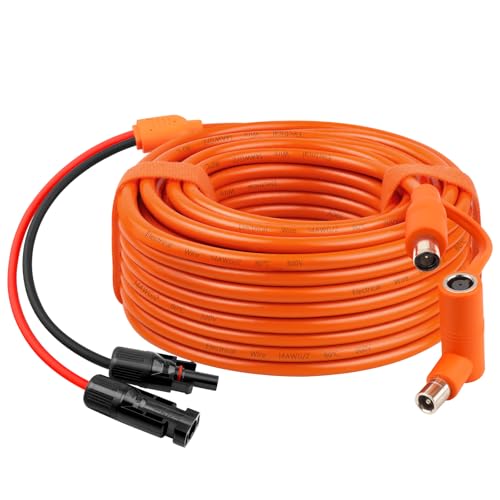 Best for heavy-duty long runsXRDS -RF Solar Connector to DC 8mm Extension Cable 35FT, 14/12AWG HeavView on Amazon
Our Top Picks
Quick Comparison
| Product | Best for | Key feature |
|---|---|---|
| Jackery Anderson Extension Cable for SolarSaga 100 Prime/SolarSaga 500X | Owners of SolarSaga panels who want a matched cable | Anderson connector designed for SolarSaga panel output |
| ELFCULB 10AWG 6FT Anderson Extension Cable | Short runs between panel and station | 10AWG wire in a compact 6-foot length |
| Jackery DC Extension Cable for Solar Panel, 16.4 ft | Mid-length runs with a Jackery-branded cable | 16.4-foot (5 m) length in grey |
| MOOKEERF 10AWG Anderson Extension Cable 20FT | Placing panels well away from the station | 20-foot length with 10AWG conductors |
| ELFCULB 10AWG 10FT Anderson Extension Cable | Balanced length for a typical patio or yard | 10-foot 10AWG cable with Anderson connectors |
| XRDS Solar Connector to DC 8mm Extension Cable 35FT | Very long runs and heavier current loads | 35-foot length in 14/12AWG heavy-duty wire |
Jackery Anderson Extension Cable for SolarSaga 100 Prime/SolarSaga 500X Solar Panel
Jackery Anderson Extension Cable for SolarSaga 100 Prime/SolarSaga 500X Solar Panel
Best for: Owners of SolarSaga panels who want a cable matched to the panel’s own connector.
This is the most direct choice if your panel is a SolarSaga 100 Prime or SolarSaga 500X and you want the extension to come from the same ecosystem. It suits buyers who prefer not to mix connector standards in a single backup kit.
Key specs
- Anderson-style connector for SolarSaga panel output
- Designed for the SolarSaga 100 Prime and SolarSaga 500X listings
Pros
- Matches the panel connector without adapters
- Simple setup for a single-brand solar kit
- Clear compatibility with the named panels
Cons
- Compatibility is tied to specific SolarSaga models, so check before buying
- Length options may be more limited than third-party cables
Bottom line: Pick this if you already own a SolarSaga panel and want the simplest, most matched extension.
View on AmazonELFCULB 10AWG 6FT Anderson Extension Cable 2 6 10 20 35 50FT Solar Extension Cable Anderson Connector for Portable Power Station Solar Generator Solar Panel (6FT)
ELFCULB 10AWG 6FT Anderson Extension Cable 2 6 10 20 35 50FT Solar Extension Cable Anderson Connector for Portable Power Station Solar Generator Solar Panel (6FT)
Best for: Short runs between a solar panel and a power station.
A 6-foot run is useful when the panel sits near a porch rail or a shed wall and the station is only a short walk away. It is a good fit for compact setups where extra cable length would only create clutter.
Key specs
- 10AWG conductors
- 6-foot length
- Anderson connector for portable power station solar input
Pros
- Short length keeps the run tidy
- 10AWG wire is suitable for typical solar input currents
- Works with common Anderson-style inputs
Cons
- Too short for most ground-mounted panel placements
- Owners sometimes buy a longer length later, so plan ahead
Bottom line: A practical, low-clutter choice when the panel and station are already close together.
View on AmazonJackery DC Extension Cable for Solar Panel, Grey | 16.4 feet / 5 Meter
Jackery DC Extension Cable for Solar Panel, Grey | 16.4 feet / 5 Meter
Best for: Mid-length runs with a Jackery-branded cable.
A 16.4-foot (5-meter) cable covers the typical distance between a panel placed on the ground and a station on a patio or in a garage doorway. It suits owners who want the extension to come from the same brand as their power station.
Key specs
- Length: 16.4 feet (5 meters)
- Grey jacket
- DC solar extension for panel-to-station connection
Pros
- Brand match with Jackery power stations
- Length suits most yard and patio layouts
- Straightforward to route and label
Cons
- Fixed length with fewer options than some third-party sets
- Gauge and connector details should be confirmed against your specific panel and station
Bottom line: A sensible middle-of-the-road pick for Jackery owners who want a brand-matched extension.
View on AmazonMOOKEERF 10AWG Anderson Extension Cable – 20FT Solar Extension Cable Anderson Connector for Portable Power Station Solar Panel Solar Generator
MOOKEERF 10AWG Anderson Extension Cable – 20FT Solar Extension Cable Anderson Connector for Portable Power Station Solar Panel Solar Generator
Best for: Placing solar panels well away from the power station.
A 20-foot run lets you position panels in full sun while keeping the station indoors or under cover. It is a good match for homeowners whose best sun exposure is across the yard.
Key specs
- 10AWG conductors
- 20-foot length
- Anderson connector
Pros
- Long reach without moving the station
- 10AWG wire helps limit voltage drop on longer runs
- Useful for keeping the station protected from weather
Cons
- Longer cable means more voltage drop than a short run, so panel output may fall slightly
- Requires careful routing to avoid trip hazards
Bottom line: Ideal when sun exposure and station location are far apart and you can route the cable safely.
View on AmazonELFCULB 10AWG 10FT Anderson Extension Cable 2 6 10 20 35 50FT Solar Extension Cable Anderson Connector for Portable Power Station Solar Generator Solar Panel (10FT)
ELFCULB 10AWG 10FT Anderson Extension Cable 2 6 10 20 35 50FT Solar Extension Cable Anderson Connector for Portable Power Station Solar Generator Solar Panel (10FT)
Best for: A balanced length for a typical patio or yard setup.
A 10-foot cable covers the gap between a panel on a balcony or patio rail and a station on the ground. It is a middle option for buyers who want more reach than a 6-foot cable without the bulk of a 20-foot run.
Key specs
- 10AWG conductors
- 10-foot length
- Anderson connector for portable power station solar input
Pros
- Good balance of reach and manageability
- 10AWG wire suits common solar currents
- Easy to store in a backup kit
Cons
- May still be short for ground-mounted panels placed far away
- Connector fit should be confirmed against your station and panel
Bottom line: A versatile middle length for most home patio and yard layouts.
View on AmazonXRDS -RF Solar Connector to DC 8mm Extension Cable 35FT, 14/12AWG Heavy Duty Adapter Cord with DC 7909 & 8020 for Jackery Explorer 240/500/1000/1500/2000 Pro, Portable Power Station
XRDS -RF Solar Connector to DC 8mm Extension Cable 35FT, 14/12AWG Heavy Duty Adapter Cord with DC 7909 & 8020 for Jackery Explorer 240/500/1000/1500/2000 Pro, Portable Power Station
Best for: Very long runs and heavier current loads.
A 35-foot heavy-duty cable is aimed at buyers who need to place panels at a distance, such as on a detached garage or across a larger lot. Its 14/12AWG wire and DC 8mm adapter approach address a different connector pathway than the Anderson-only options above.
Key specs
- 35-foot length
- 14/12AWG heavy-duty conductors
- Adapter cord with DC 7909 and 8020 connections, as named in the listing
Pros
- Heavier gauge helps limit voltage drop over long distances
- Long reach for distant panel placement
- Listed compatibility with several Jackery Explorer models
Cons
- Heavier and bulkier to store and route than shorter cables
- Adapter-based connection means you should verify the connector type on your own panel and station
Bottom line: The right choice when distance and current capacity matter more than compact storage.
View on AmazonBuying Guide
Connector compatibility
Before buying any jackery anderson extension cable, identify the connector on your panel and on your station. Anderson-style connectors are common on Jackery and other portable power stations, but DC 7909, 8020 and 8mm connectors also appear in the market. Mismatched connectors either will not fit or will need an adapter, which adds resistance and another failure point.
Good picks for this: Jackery Anderson Extension Cable for SolarSaga 100 Prime/SolarSaga 500X; XRDS Solar Connector to DC 8mm Extension Cable 35FT
Wire gauge and current capacity
Thicker wire carries more current with less heat and less voltage drop. A lower AWG number means a thicker conductor, so 10AWG is heavier than 14AWG. For longer runs, a heavier gauge helps keep more of the panel’s output reaching the station.
Good picks for this: MOOKEERF 10AWG Anderson Extension Cable 20FT; XRDS Solar Connector to DC 8mm Extension Cable 35FT
Cable length and voltage drop
Longer cables add resistance. A practical approach is to measure the actual route, add a few feet for slack, and buy the shortest cable that reaches. Avoid coiling excess cable tightly, since coiled wire can heat up under load.
Good picks for this: ELFCULB 10AWG 10FT Anderson Extension Cable; Jackery DC Extension Cable for Solar Panel, 16.4 ft
Use case: fixed installation or portable kit
A cable that lives permanently between a panel and a station can be longer and heavier. A portable outage kit benefits from shorter, lighter cables that coil neatly into a bag. Decide how often you will reconfigure the setup before choosing length.
Good picks for this: ELFCULB 10AWG 6FT Anderson Extension Cable; Jackery DC Extension Cable for Solar Panel, 16.4 ft
Durability and jacket quality
Solar cables spend time in sun, rain and temperature swings. Look for a jacket rated for outdoor use and connectors with a secure locking or snap-fit design. Owners often report that loose or corroded connectors cause more trouble than the cable itself, so inspect connections periodically.
Good picks for this: Jackery Anderson Extension Cable for SolarSaga 100 Prime/SolarSaga 500X; Jackery DC Extension Cable for Solar Panel, 16.4 ft
Safe routing and cable management
Route cables away from walkways, doorways and gutters. Use cable clips or ties to keep runs off the ground where people walk. Keep connections out of standing water and never bury a solar extension without checking local electrical guidance.
Good picks for this: MOOKEERF 10AWG Anderson Extension Cable 20FT; ELFCULB 10AWG 10FT Anderson Extension Cable
Labeling and keeping spares
If you run more than one panel or keep a spare cable in an emergency kit, label each end with its panel or station. Keep a spare of the length you use most often so a damaged cable does not stop your backup plan during an outage.
Good picks for this: ELFCULB 10AWG 6FT Anderson Extension Cable; ELFCULB 10AWG 10FT Anderson Extension Cable
FAQ
What is a jackery anderson extension cable used for?
It lengthens the DC connection between a solar panel and a portable power station. This lets you place the panel in full sun while keeping the station in a sheltered spot.
Will a longer extension cable reduce charging speed?
It can. Longer runs add resistance, which causes some voltage drop. Heavier gauge wire, such as 10AWG, helps limit that loss. Owners commonly report that the effect is modest on moderate lengths but more noticeable on very long runs.
Do I need the same brand cable as my power station?
Not always, but the connector must match. Confirm whether your panel and station use Anderson-style plugs or another type such as DC 7909 or 8020, and buy a cable or adapter that fits both ends.
What wire gauge should I choose?
For short runs, 10AWG is a common choice. For longer distances or higher current, heavier options such as 12AWG or 14/12AWG heavy-duty cable are often recommended. Check your panel and station specifications for the maximum current.
Can I connect two extension cables together?
You can, but each connection adds resistance and another point of failure. It is usually better to buy one cable of the correct total length from the start.
How do I keep the connectors safe outdoors?
Keep connectors dry, avoid standing water, and inspect them for corrosion or cracked housings. Replace any cable with damaged insulation or loose connectors.
Is this a question for a licensed electrician?
For permanent installations, especially where a panel is mounted on a roof or a cable is run through a wall, consult a licensed electrician or solar installer. They can confirm wire gauge, fusing and code requirements for your area.
Conclusion
The best jackery anderson extension cable depends on your connector, your distance and your current needs. If you own a SolarSaga panel, the matched Jackery Anderson Extension Cable is the simplest path. For short runs, the 6-foot ELFCULB cable keeps things tidy. The 10-foot ELFCULB suits most patios, the 16.4-foot Jackery DC cable covers typical yard layouts, and the 20-foot MOOKEERF handles longer placements. For very long runs with heavier loads, the 35-foot XRDS cable with 14/12AWG wire is the most robust option. Confirm connector compatibility and gauge against your own equipment before you buy, and see Jackery Solar Panel Extension Cable: How to Choose and Connect One Safely (2026) for connection steps, and Jackery DC Extension Cable: 3 Best Picks for Solar Panels (2026) for another comparison of options.
For broader context on connecting panels to a station, read Jackery Anderson Connector & Cable: How to Choose and Use the Right One, Jackery Solar Panel Cable: How to Choose and Connect the Right One and Jackery 10m Dc Extension Cable Plus (2026): Which Should You Choose?.
Sources
- Guidance on home solar system components, wiring considerations and safe installation practices (energy.gov)
- Electrical safety standards and codes relevant to DC wiring and outdoor installations (nfpa.org)
- Product safety certification information for electrical cables and connectors
About Graham Fisher
Graham Fisher is part of our editorial team and reviews and edits our solar generators for home backup & emergencies guides, checking product details against manufacturer specifications and owner feedback.