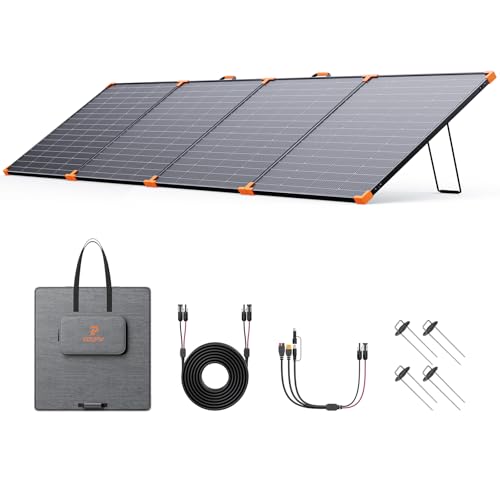
 By Emily Parker
Updated November 2026
An ecoflow solar to xt60/xt60i charging cable is the link between your solar panel’s output and your power station’s input, and the wrong one can quietly slow charging, overheat connectors or leave you short on reach at the panel. Choosing well comes down to four things: wire gauge (AWG), cable length, connector quality and whether the cable is built for outdoor and off-grid use. This guide compares three widely listed options with those criteria in mind, so you can pick a cable that matches your setup and your outage plan.
Our Top Picks
Each pick below is selected on specifications, brand reputation and the patterns owners tend to mention in their feedback. We did not run these cables through our own testing, so treat the specs as what the listings state, not as measured results.
Quick Comparison
| Product | Best for | Key feature |
|---|---|---|
| Hiutgowt 12AWG XT60i Solar Cable 20FT | Balanced reach and wire thickness for most home setups | 12AWG wire with a 20-foot base length and multiple length options |
| Hiutgowt 10AWG XT60i Solar Cable 25FT | Longer runs and higher current draw | Heavier 10AWG wire with a 25-foot base length |
| ELFCULB Solar to XT60i Cable 10AWG 2FT | Short connections between panel, controller and station | 10AWG stranded tinned copper in a compact 2-foot length |
Hiutgowt 12AWG XT60i Solar Cable 20FT

Hiutgowt 12AWG XT60i Solar Cable 20FT, Solar to XT60i Cable 3 10 15 25 30 40 50FT, Solar Panel Connector to XT60i Extension Cable, XT60i Charging Cable for Portable Power Station
This is a practical middle-ground choice for owners who want a longer run from a roof or yard panel to the power station without going to a heavier wire. It suits a typical backyard or garage setup where the panel sits a moderate distance from the station.
Key specs
- Wire gauge: 12AWG (as stated in the listing name)
- Connector: XT60i to solar-side output (per listing)
- Base length: 20 feet, with other lengths offered in the same listing
Pros
- Good balance of reach and wire thickness for common solar input currents
- Multiple length options within one product family make replacements simpler
- Works with the XT60i connector style used on many EcoFlow stations
Cons
- Thicker than a short patch cable, so it is less flexible in tight routing
- Longer runs still add some voltage drop, so panel placement matters
Hiutgowt 10AWG XT60i Solar Cable 25FT
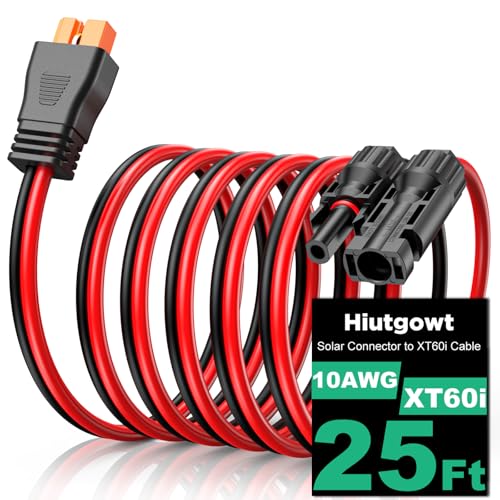
Hiutgowt 10AWG XT60i Solar Cable 25FT, Solar to XT60i Cable 3 10 15 20 30 40 50FT, Solar Panel Connector to XT60i Extension Cable, XT60i Charging Cable for Portable Power Station
This option is aimed at longer distances or setups where you want less resistance in the wire. Owners running larger panel arrays or placing the panel far from the station often look for a heavier gauge like this one.
Key specs
- Wire gauge: 10AWG (as stated in the listing name)
- Connector: XT60i solar-side connection
- Base length: 25 feet, with additional lengths listed
Pros
- Thicker 10AWG wire helps limit voltage drop over longer runs
- Longer base length covers more mounting locations
- Suitable for higher-current solar input than thinner cables
Cons
- Heavier and stiffer, which makes neat cable management harder
- Overkill for short connections where a lighter wire would do
ELFCULB Solar to XT60i Cable 10AWG 2FT
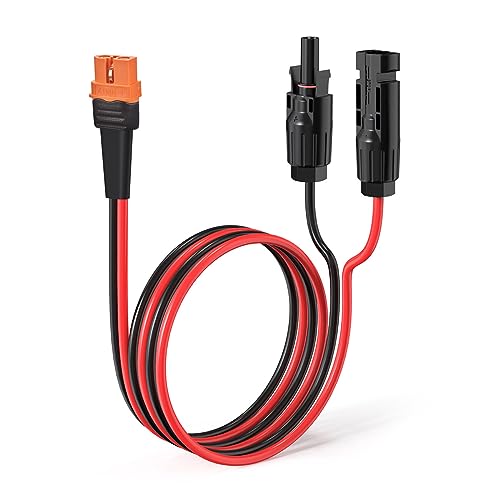
ELFCULB Solar to XT60i Cable 10AWG 2FT for Portable Power Station | XT60i solar charging cable with stranded tinned copper wire for solar generators, battery charging, and off-grid power.
This is a short, purpose-built connection for setups where the panel, a charge controller or a junction sits right beside the power station. It is less about reach and more about a clean, low-resistance link in a compact space.
Key specs
- Wire gauge: 10AWG (as stated in the listing name)
- Conductor: stranded tinned copper (per listing)
- Length: 2 feet
Pros
- Stranded tinned copper is flexible and resists corrosion in outdoor use
- Short length keeps resistance and clutter to a minimum
- Heavy-gauge wire for the current levels typical of solar input
Cons
- Only 2 feet, so it will not reach a panel placed farther away
- Needs an additional extension if you want distance, which adds connection points
Buying Guide
Selection criteria
Start with three questions: how far is the panel from the station, what is the maximum input your panel and station can handle, and will the cable sit outdoors? Your answers narrow the gauge, length and jacket type you need. Keep in mind that the solar input rating on your power station and your panel’s short-circuit current both matter; check the manufacturer’s manual for the limits your specific model accepts.
Important features
- Wire gauge (AWG): Lower AWG numbers mean thicker wire. Thicker wire carries more current with less heat and voltage loss, which matters more as runs get longer.
- Connector type: Confirm the cable uses the XT60 or XT60i connector your station expects, and that the solar-side connector matches your panel.
- Conductor material: Stranded copper flexes better than solid wire and handles repeated bending. Tinned copper resists corrosion.
- Jacket and UV rating: Outdoor cables should be rated for sunlight and weather. Check the listing for UV or outdoor wording.
- Length options: Measure the real route, including vertical drops and bends, then add slack.
Specs to check
- Your power station’s maximum solar input voltage and current
- Your panel’s rated voltage and short-circuit current
- Connector polarity and style (XT60 versus XT60i) on both ends
- Maximum cable length that still keeps voltage drop acceptable for your run
Choosing by need
- Short connections (under about 5 feet): A compact, heavier-gauge cable such as the 2-foot option keeps losses low and clutter minimal.
- Typical backyard or garage runs: A 12AWG cable of around 20 feet covers most layouts without excessive stiffness.
- Long or high-current runs: A 10AWG cable of 25 feet or more reduces voltage drop when the panel sits far from the station.
Things to watch out for
- Do not use a cable with a connector that is merely similar to XT60; mismatched connectors can fail to seat or cause heat at the joint.
- Avoid stacking multiple extension cables, since each joint adds resistance and a potential failure point. Use one correctly rated run where possible.
- Route cables away from sharp edges, hot surfaces and standing water, and secure them so they cannot be pulled loose.
- Inspect connectors periodically for discoloration, looseness or melting.
Electrical limits vary by model and installation. If you are unsure whether a cable is safe for your panel or station, consult the manufacturer’s documentation or a qualified electrician before connecting it.
FAQ
Is an XT60 and an XT60i connector the same thing?
They are closely related but not interchangeable in every case. The XT60 family is a common high-current connector style, and the “i” variant is designed for specific polarity and fit. Match the exact type your power station and panel use, and confirm with your manual.
Which AWG should I choose for a solar charging cable?
Thicker wire (lower AWG number) is better for longer runs and higher current because it reduces voltage drop and heat. For short connections, a heavier gauge still works well. The right choice depends on your panel’s current and the distance involved.
How long can a solar to XT60i cable be?
There is no single universal limit, because it depends on wire gauge, current and acceptable loss. Longer runs need thicker wire. If you need a long distance, choose a heavier gauge and keep the number of joints to a minimum.
Can I use an extension cable to make my run longer?
You can, but each connection adds resistance and a failure point. If you must extend, make sure every section is rated for the current and that the connectors are compatible and secure.
Does cable length affect charging speed?
Length affects voltage drop rather than the panel’s rated output directly. A long, thin cable can reduce the power that reaches the station, which may slow charging. Using a thicker gauge over a long run helps preserve performance. For more on charging speed, see Why Is My Solar Generator Charging Slowly? Causes and Fixes.
What should I do if my cable gets warm?
Warmth at the connector or along the wire can indicate a loose joint, undersized wire or excessive current. Disconnect the cable, let it cool, and inspect the connectors. If the problem repeats, stop using the cable and have a qualified person check the system. For a broader checklist, see Solar Generator Not Charging? A Step-by-Step Troubleshooting Guide.
Do I need a different cable for RV or off-grid use?
The same principles apply: match connectors, size the wire for the run and protect against weather and vibration. Off-grid and RV setups often involve longer or more exposed runs, so confirm your gauge against the distance. You can read more in Solar Generators for RVs: Sizing, Charging and Limits.
Is a short cable always better?
Shorter is generally better for efficiency and neatness, but only if it still reaches comfortably without strain on the connectors. Choose the shortest length that allows clean routing and no tension at either end.
Conclusion
For most home setups, the 12AWG 20-foot cable is the most versatile choice, balancing reach and wire thickness. If your panel sits far from the station or you expect higher current, the 10AWG 25-foot cable reduces voltage drop and is worth the extra stiffness. For a short, clean link right beside the station, the 10AWG 2-foot cable keeps losses and clutter low. Match the connector type, confirm your power station’s and panel’s current limits, and inspect connections regularly. Where the specs are unclear, check the manufacturer’s manual or ask a qualified electrician.
Related reading
- EcoFlow Solar to XT60 Charging Cable: Step-by-Step Setup Guide
- Ecoflow Solar Charging Cable: Setup, Specs and Common Mistakes
- Ecoflow Mc4 to Xt60i Solar Cable: A Practical Guide (2026)
About Emily Parker
Emily Parker is part of our editorial team and reviews and edits our solar generators for home backup & emergencies guides, checking product details against manufacturer specifications and owner feedback.