 By Emily Parker
Updated November 2026
If you own an EcoFlow power station and want to charge it from solar panels, you will likely need an ecoflow solar to xt60i charging cable. The XT60i connector is the input plug on many portable power stations, and most solar panels end in MC4 connectors, so a cable that bridges the two is the usual solution. This guide compares three cables from the product set we reviewed, using the criteria that matter most when you are wiring a solar input: wire gauge, cable length, connector quality, and fit for your setup. The picks are ordered by how well each one matches common home backup and portable solar needs.
Our Top Picks
Quick Comparison
| Product | Best for | Key feature |
|---|---|---|
| Hiutgowt 12AWG XT60i Solar Cable 20FT | Longer runs from panels to a power station | 12AWG wire in multiple length options |
| Hiutgowt 10AWG XT60i Solar Cable 25FT | Higher-current setups and longer distances | Thicker 10AWG wire for lower voltage drop |
| ELFCULB Solar to XT60i Cable 10AWG 2FT | Short connections and compact setups | Stranded tinned copper wire in a short length |
Hiutgowt 12AWG XT60i Solar Cable 20FT

Hiutgowt 12AWG XT60i Solar Cable 20FT, Solar to XT60i Cable 3 10 15 25 30 40 50FT, Solar Panel Connector to XT60i Extension Cable, XT60i Charging Cable for Portable Power Station
This cable suits people who need to place solar panels a fair distance from their power station, such as on a roof, a fence line or a yard rack, and who want a balance between flexibility and conductor size. It is a sensible middle-ground choice for typical home backup arrangements where the panels are not right next to the station.
Key specs
- Wire gauge: 12AWG
- Connector type: XT60i on the power station end, solar panel connector on the other end
- Length: 20FT listed; the listing offers several other lengths
- Intended use: solar input to a portable power station
Pros
- 12AWG conductor handles a reasonable solar current over a 20-foot run
- Multiple length options make it easier to match your install
- Designed specifically for XT60i solar input, so the connector fits the station directly
Cons
- Thinner than 10AWG, so voltage drop becomes more noticeable on very long runs
- Owners sometimes report that the 20FT length is more than they need for short installs
Hiutgowt 10AWG XT60i Solar Cable 25FT
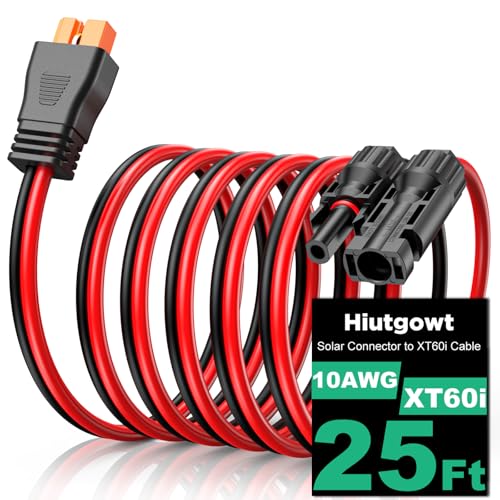
Hiutgowt 10AWG XT60i Solar Cable 25FT, Solar to XT60i Cable 3 10 15 20 30 40 50FT, Solar Panel Connector to XT60i Extension Cable, XT60i Charging Cable for Portable Power Station
This is the heavier-gauge option in the set. It fits users with longer cable runs or systems that push more current, where a thicker conductor reduces resistive losses. If your panels sit far from the power station, or you run a higher-wattage array, the extra copper is worth considering.
Key specs
- Wire gauge: 10AWG
- Connector type: XT60i on the power station end, solar panel connector on the other end
- Length: 25FT listed; other lengths are offered in the same listing
- Intended use: solar input to a portable power station
Pros
- 10AWG wire lowers voltage drop over longer distances compared with thinner gauges
- Suitable for higher-current solar setups
- Several lengths are available, including the 25FT option
Cons
- Heavier and stiffer than 12AWG, which can make routing more awkward
- May be more cable than needed for a short, compact installation
ELFCULB Solar to XT60i Cable 10AWG 2FT
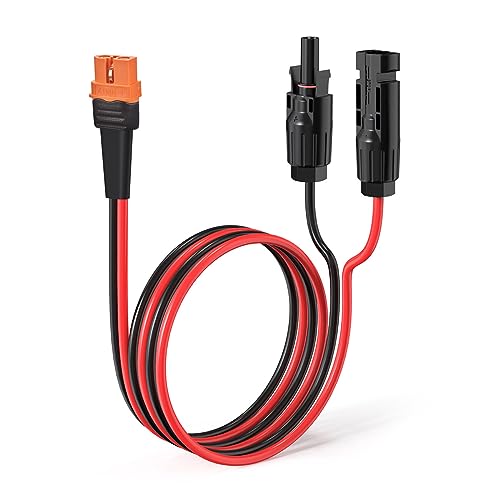
ELFCULB Solar to XT60i Cable 10AWG 2FT for Portable Power Station | XT60i solar charging cable with stranded tinned copper wire for solar generators, battery charging, and off-grid power.
This short cable is aimed at compact setups where the panel and power station sit close together, such as a balcony, a camping pad next to a vehicle, or a small rack. Its 2-foot length keeps clutter low and reduces the voltage drop that comes with long runs. It is less suited to placing panels across a yard.
Key specs
- Wire gauge: 10AWG
- Conductor: stranded tinned copper
- Length: 2FT
- Intended use: solar charging for portable power stations, battery charging and off-grid power
Pros
- Thick 10AWG stranded copper keeps losses low over its short length
- Tinned copper strands resist corrosion better than bare copper in damp conditions
- Short length keeps the setup tidy and reduces tangling
Cons
- At 2 feet, it only works when your panel and station are very close together
- You may need an extension cable if your install requires more reach
Buying Guide
Choosing a solar to XT60i cable is mostly a matter of matching three things: wire gauge, length, and connector compatibility. Getting these right avoids wasted power and the frustration of a cable that does not reach or does not seat properly.
Selection Criteria We Used
The picks above were compared on published specifications, brand reputation for portable power accessories, and patterns in owner feedback. Owners commonly comment on three things: whether the connector fits the XT60i input snugly, whether the cable length matches the install, and whether the wire feels adequately thick for the run. We did not test these cables ourselves; the observations reflect what manufacturers specify and what owners frequently report.
Important Features
- XT60i connector: Confirm the plug type matches your power station’s solar input. EcoFlow stations commonly use XT60-family connectors, but check your manual.
- Solar-side connector: Most panels use MC4 connectors. Make sure the cable’s other end matches your panel.
- Insulation and build: Look for UV-resistant jacketing if the cable will be outdoors for long periods.
Specs to Check
- Wire gauge (AWG): Lower AWG numbers mean thicker wire. 10AWG carries current more efficiently than 12AWG over the same distance.
- Length: Measure the actual distance between panel and station, then add slack. Longer cables lose more voltage.
- Conductor material: Stranded copper is more flexible than solid core and handles repeated bending better.
Choosing by Need
- Panel close to the station (under 5 feet): A short 10AWG cable keeps losses minimal and avoids excess slack.
- Panel 10 to 25 feet away: A 12AWG or 10AWG cable in the 20 to 25 foot range fits most yard and roof runs.
- Higher-current or very long runs: Favor 10AWG to limit voltage drop, and check your panel and station’s maximum input ratings before buying.
Things to Watch Out For
- Do not exceed your power station’s rated solar input voltage or current. Check the manual’s specifications before connecting a high-output panel.
- Avoid daisy-chaining many adapters, since each joint adds resistance and a possible failure point.
- Inspect connectors for melting, discoloration or looseness. Replace damaged cables rather than taping them.
- Keep cable runs away from foot traffic and sharp edges to prevent insulation damage.
For guidance on the full wiring process, see EcoFlow MC4 to XT60 Solar Cable: Step-by-Step Wiring Guide. If your station charges slowly after connecting, Why Is My Solar Generator Charging Slowly? Causes and Fixes covers the common causes, including cable length and gauge. If charging stops entirely, Solar Generator Not Charging? A Step-by-Step Troubleshooting Guide walks through the checks in order.
FAQ
What does XT60i mean on an EcoFlow solar cable?
XT60i refers to a family of high-current connectors used on many portable power stations. Several EcoFlow models use an XT60-style input for solar charging. Always confirm the connector type in your station’s manual before buying a cable.
Which wire gauge should I choose for a solar to XT60i cable?
For short runs and compact setups, a 10AWG cable works well and minimizes losses. For longer distances, 10AWG is generally preferable to 12AWG because the thicker conductor reduces voltage drop. Thinner gauges can work for moderate lengths at lower currents.
How long can a solar charging cable be?
There is no single universal maximum, but longer cables lose more voltage and can slow charging. Keep runs as short as practical, and choose a thicker gauge when the distance is significant. Check your panel and station’s specifications for any stated limits.
Can I use a solar to XT60i cable with any solar panel?
Only if the panel’s output connector matches the cable’s solar-side end. Most modern panels use MC4 connectors, and many cables are sold with MC4 on one end. Verify the panel’s output voltage and current fall within the power station’s solar input ratings.
Does cable thickness affect charging speed?
Yes. Thicker wire has lower resistance, so less power is lost as heat along the run. Over long distances, this can result in noticeably faster and more efficient charging. The charge controller and panel output still set the maximum rate.
Is it safe to leave a solar charging cable outdoors?
Cables rated for outdoor use with UV-resistant jacketing are generally suited to outdoor exposure. Protect connectors from water and direct sun where possible, and inspect cables regularly for cracking or damage. For wiring questions beyond basic setup, consult a qualified electrician.
Can I extend my solar cable if it is too short?
Extension cables exist, but every connection adds resistance and a potential failure point. If you need more reach, a single correctly rated cable of the right length is usually the safer choice. If you do extend, use the same or thicker gauge and make secure, weatherproof connections.
Conclusion
For most people charging an EcoFlow station from solar, the right ecoflow solar to xt60i charging cable comes down to distance and current. The ELFCULB 10AWG 2FT cable suits compact installs where the panel sits right beside the station. The Hiutgowt 12AWG 20FT cable is a practical middle ground for typical yard or roof runs. The Hiutgowt 10AWG 25FT cable fits longer distances and higher-current setups, where its thicker wire helps limit voltage drop. Measure your actual run, confirm your connector and panel specifications, and choose the gauge and length that match.
Related reading
About Emily Parker
Emily Parker is part of our editorial team and reviews and edits our solar generators for home backup & emergencies guides, checking product details against manufacturer specifications and owner feedback.