 By Graham Fisher
Choosing between a portable solar generator and a home battery system comes down to where you need power, how much of your home you want to cover, and whether you can modify your house. A portable solar generator is a self-contained unit with a battery, an inverter, and a solar charge controller that you can move from room to room or pack into a vehicle. A home battery system is a wall-mounted unit wired into your electrical panel by a licensed electrician to provide automatic backup for your house.
The short answer
Portable solar generators suit renters, campers, tailgaters, and anyone who wants backup power for a few devices without modifying their home. Home battery systems suit homeowners who want automatic whole-home or critical-load backup and are prepared to handle permits, electrical work, and professional installation. Both can be charged by solar panels. The portable unit is a complete package in one box, while the home battery typically works alongside rooftop solar and the grid. For a broad view of the overall category, the solar generators guide is a good starting point.
How each option works
Portable solar generator
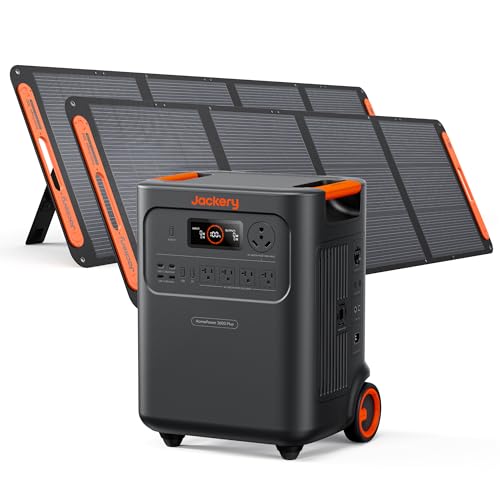
A portable solar generator is a single unit that contains a rechargeable battery, an inverter for household AC power, a solar charge controller, and outlets such as USB ports, 12-volt plugs, and AC sockets. You charge the battery by plugging in portable solar panels, an AC wall adapter, or in some cases a vehicle outlet. Because nothing is wired into your home, you can move the unit between rooms, take it outdoors, or load it into a vehicle. It produces no exhaust, so it is safer indoors than a fuel generator, but you should still follow the manufacturer’s instructions for placement, charging, and storage.
To estimate how long a device can run, divide the battery capacity in watt-hours by the power draw in watts. For planning, a 1,000-watt-hour battery powering a 100-watt device comes out to 10 hours of theoretical runtime. Inverter losses in the common 85 to 90 percent range mean the realistic estimate is closer to 8.5 to 9 hours. Use that as a rough rule of thumb and confirm real numbers on the unit’s spec sheet. Battery capacity is usually listed in watt-hours; if you see only amp-hours, multiply by the battery voltage to get watt-hours. For a closer look, see the portable solar generator guide. If you want more background, see 5 Best EcoFlow Portable Solar Generators for Home Backup (2026).
Home battery system
A home battery system is a wall-mounted battery pack with an integrated inverter and control software. A licensed electrician connects it to your electrical panel, and it can be paired with existing rooftop solar. When the grid goes down, the system detects the loss and switches to battery power on its own. The amount of your home it can carry depends on the battery capacity, the inverter output, and whether the installation uses a whole-home connection or a critical-load subpanel.
Most jurisdictions require a permit and inspection for this type of installation. The electrician may also need to upgrade wiring, a main breaker, or the service panel. This is not a do-it-yourself project, and it should be designed around your local electrical code. Choose the mounting location according to the manufacturer’s guidance and the installer’s recommendation, typically in a garage, utility room, or protected exterior wall. The system’s monitoring software typically shows state of charge, charging activity, and recent outage events. For another angle, check out 4 Best Ecoflow 7200W Battery Generator Options for Home Backup (2026).
Side-by-side comparison
| Factor | Portable solar generator | Home battery system |
|---|---|---|
| Installation | None; self-contained and ready to use | Professional electrician required; connected to electrical panel |
| Permits | Usually not required | Usually required, with local inspection |
| Capacity | Smaller; varies by model | Larger; often expandable with additional modules |
| Portability | Move it anywhere | Permanently mounted |
| Solar charging | Portable panels you plug in | Usually paired with rooftop solar; can also charge from grid |
| Outage behavior | Manual, when you plug devices into it | Automatic switchover |
| Main cost factors | Equipment purchase only | Equipment, labor, permits, possible panel upgrades |
| Upkeep | Periodic charging and moderate storage temperature | Software monitoring; occasional checks by an installer |
When a portable solar generator is the better choice
A portable solar generator is the better choice when you live in a rental, an apartment, or any situation where you cannot modify the building. You get backup power without asking for permission and without scheduling an electrician. It also works for camping, road trips, tailgating, boating, and temporary power at a cabin or a job site.
Choose the portable route if you need any of the following:
- Power in several different locations depending on the day.
- A backup unit you can store in a closet and carry out during an outage.
- A gradual setup; buy the battery first and add solar panels later.
- Enough energy for phones, laptops, a router, a small refrigerator, or lights during a short outage.
Because there is no fuel and no exhaust, you do not need the outdoor ventilation that a fuel generator requires. Still, avoid covering the unit, keep it off soft or flammable surfaces while charging, and follow the manual. If you rely on a CPAP or other medical device, check with the device manufacturer and your doctor or supplier before depending on any battery, and keep a separate backup plan ready. When you compare portable power stations, focus on battery capacity, inverter output, solar input rating, and the types of outlets you need. Portable power stations vary widely, so read the spec sheet rather than judging by physical size.
When a home battery system is the better choice
A wall-mounted home battery system is the better choice when you own your home and want automatic backup without running extension cords down hallways. It makes particular sense if you already have rooftop solar and want to keep that solar power flowing during an outage. Many grid-tied solar arrays shut off when the grid fails; a battery system with the right controls lets you keep using the energy you produce.
Home battery systems also suit homes with heavier critical loads. A sump pump, well pump, refrigerator, furnace blower, or medical device can draw more wattage than a small portable inverter can start. A stationary system with a larger battery and a higher inverter rating can handle those loads and switch over without you touching anything.
Any permanent connection to your home must be made by a licensed electrician through a transfer switch, an interlock, or an inverter designed for that purpose. Never connect a portable unit or generator to a wall outlet with a makeshift cord. That type of back-feed can energize utility lines, endanger utility workers, and violate electrical codes. For more practical blackout strategies, see using a solar generator during a power outage.
Upkeep and long-term ownership
All batteries lose capacity over time. How fast depends on the chemistry, temperature, how deeply the battery is cycled, and the build quality of the system. The manufacturer’s instructions are the best guide for storage temperature, charging habits, and maintenance. For a portable unit, that usually means keeping it in a moderate-temperature space and topping off the charge periodically while it is stored. For a home battery, the system manages itself through software, and an installer may check it occasionally. Worth reading next: Jackery Portable Battery Charger: How to Choose and Use One (2026).
Neither system is a lifetime device. A portable unit can eventually be taken to a battery recycling location. A wall-mounted battery typically needs to be removed by the installer or another qualified service provider. Warranties and service terms differ by manufacturer, so read the warranty documents before buying and check local recycling rules. On cost, the portable unit keeps the upfront outlay simpler because there is no labor or permit expense, while the home battery carries the extra costs of installation, electrical upgrades, and often a monitoring service.
FAQ
Can a portable solar generator power a whole house?
Generally, no. A portable solar generator is designed to run a handful of devices plugged directly into it, not to feed an entire electrical panel. You can power a refrigerator, lights, a laptop, and communication equipment for a while, depending on the battery capacity and the draw of each device. To power the panel itself, you would need a transfer switch and inlet installed by a licensed electrician, which moves the project into the territory of a stationary system.
Do home battery systems work during a power outage?
Yes, when installed correctly. The system senses the loss of grid power and switches to battery power automatically. How much of your home it can carry depends on the installed capacity and the inverter rating, so the electrician should size the system around your essential loads. Follow the manufacturer’s instructions and keep the unit serviced as recommended.
Which is more affordable as a starting point?
A portable solar generator is generally the less expensive way to start because there is no installation, permit, or electrician cost. A home battery system includes equipment, professional installation, permits, and often electrical panel upgrades, so the total installed cost is higher. Compare spec sheets, quotes from licensed electricians, and any local incentive programs rather than assuming one answer applies everywhere.
Can you start with a portable unit and add a home battery later?
Yes. Many homeowners use a portable solar generator first to learn how much power their household actually consumes, then add a wall-mounted battery system later. The portable unit remains useful for travel, outdoor events, and temporary backup during installation. Do not try to wire the portable unit into the panel; treat it as a separate, mobile appliance. For a realistic look at what these batteries can carry, see the off-grid living guide.
The right system matches the job. A portable solar generator gives you moveable power with low upfront complexity. A home battery system gives you automatic, permanent coverage if you can involve an electrician and get a permit. Look at your outage history, the wattage of your essential devices, whether you rent or own, and whether you already have rooftop solar. Those answers will point you to the right layout.
About Graham Fisher
Graham Fisher is part of our editorial team and reviews and edits our solar generators for home backup & emergencies guides, checking product details against manufacturer specifications and owner feedback.