
 By Emily Parker
Updated November 2026
Choosing an ecoflow 7200w battery generator for home backup comes down to three things: how much power you need at once (surge and continuous), how long you need to run essentials like a refrigerator, CPAP or sump pump, and whether you want room to add capacity later. The picks below were selected by reviewing manufacturer specifications, brand reputation for power stations and the patterns owners commonly report about output, expandability and day-to-day usability. None of these units were tested by the author, and all figures should be checked against the current product listing before you buy.
Our top picks at a glance
- 1
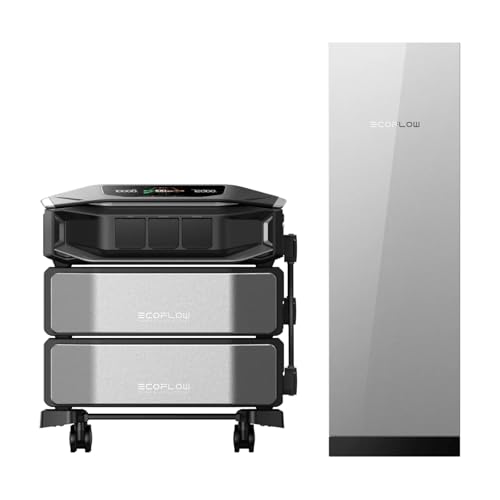 TOP CHOICEBest overallEF ECOFLOW DELTA Pro Ultra X with Smart Home Panel 3View on Amazon
- 2
 Best for whole-home backupEF ECOFLOW DELTA Pro 3600WhView on Amazon
- 3
 Best for surge loadsEF ECOFLOW DELTA 3 Ultra 3072Wh Solar GeneratorView on Amazon
- 4
 Best for expandable solar backupJackery HomePower 3600 PlusView on Amazon
Our Top Picks
| Product | Best for | Key feature |
|---|---|---|
| EF ECOFLOW DELTA Pro Ultra X with Smart Home Panel 3 | Whole-home and 240V circuit backup | 12,288Wh LFP battery with 120/240V, 12000W AC output, expandable |
| EF ECOFLOW DELTA Pro 3600Wh | Essential circuits and fast recharging | 3600Wh capacity, 120V 3600W AC output, expandable up to 25kWh |
| EF ECOFLOW DELTA 3 Ultra 3072Wh Solar Generator | Motors and appliances with high startup surges | 3600W continuous output with 7200W surge rating |
| Jackery HomePower 3600 Plus | Solar-first homes that plan to expand storage | 3584Wh LFP battery, 3600W AC output, expandable to 21kWh |
EF ECOFLOW DELTA Pro Ultra X with Smart Home Panel 3
EF ECOFLOW DELTA Pro Ultra X with Smart Home Panel 3, 12288Wh Power Station | Lifepo4 Battery, Expandable to 180kWh, 120/240V 12000W AC Output, Solar Generator for Home Use
Best for: Whole-home and 240V circuit backup
This is the largest unit in this lineup and suits households that want to power major appliances, electric range circuits or a well pump during extended outages. It is designed to integrate with a smart home panel, which allows circuits to be switched on or off by priority.
Key specs
- 12,288Wh LFP (lithium iron phosphate) battery
- 120/240V, 12000W AC output
- Expandable to 180kWh with additional batteries
- Designed for solar input
Pros
- Enough capacity to run a large share of household loads for a long time
- 240V output supports heavier appliances
- LFP chemistry generally tolerates many more charge cycles than older lithium-ion designs
Cons
- Large and heavy, so it is not practical to move often
- Installation with a smart panel may require a licensed electrician
Bottom line: Best for homeowners who want near whole-home coverage and are willing to plan a semi-permanent installation.
View on AmazonEF ECOFLOW DELTA Pro 3600Wh
EF ECOFLOW Portable Power Station 3600Wh DELTA Pro, 120V 3600W AC Output | 2.7H Fast Charge Power Station, Expandable up to 25kWh, Solar Generator for Home Use, Power Outage, Camping, RV, Emergencies
Best for: Essential circuits and fast recharging
A strong middle option for households that need to keep the refrigerator, lights, internet gear, a CPAP and a few outlets running. It is portable enough to move between rooms and can be expanded later if needs grow.
Key specs
- 3600Wh capacity
- 120V, 3600W AC output
- Expandable up to 25kWh
Pros
- Good balance of capacity and portability
- Expansion path makes it a reasonable long-term base
- Suitable for camping, RV and emergency use as well
Cons
- Runtime on heavy loads such as electric heaters or dryers will be short
- Full whole-home coverage requires expansion batteries and more planning
Bottom line: A sensible pick for apartments and smaller homes that focus on critical loads rather than the whole house.
View on AmazonEF ECOFLOW DELTA 3 Ultra 3072Wh Solar Generator
EF ECOFLOW DELTA 3 Ultra 3072Wh Solar Generator with 2X220W Solar Panels | Portable Power Station with 3600W (Surge 7200W) Output, Solar Generator for Home Use, RV, Camping Accessories
Best for: Motors and appliances with high startup surges
Well suited to loads that draw a large burst of power on startup, such as well pumps, sump pumps and some window air conditioners. The 7200W surge rating gives a margin that smaller units often lack.
Key specs
- 3072Wh capacity
- 3600W continuous AC output, 7200W surge
- Designed to pair with solar panels
Pros
- Surge capacity helps motor-driven appliances start reliably
- Solar bundle option supports recharging during daytime outages
- Reasonable portability for its output class
Cons
- Total stored energy is lower than the larger DELTA Pro models
- Surge ratings are short-duration, so continuous loads still define runtime
Bottom line: Best for households whose main concern is starting pumps and compressors during an outage.
View on AmazonJackery HomePower 3600 Plus
Jackery HomePower 3600 Plus & 2x200W Solar Panels, 3584Wh, 3600W AC Output | LFP Battery, Expandable to 21kWh, Solar Generator, Essential Home Backup for Home Use, Emergencies, RV
Best for: Solar-first homes that plan to expand storage
Designed as a home battery and solar system hybrid, this unit fits households that want solar charging as the main recharge method and plan to add capacity over time.
Key specs
- 3584Wh LFP battery
- 3600W AC output
- Expandable to 21kWh
Pros
- LFP battery chemistry supports long service life
- Strong expansion path for longer outages
- Solar-focused design suits daily use as well as backup
Cons
- Solar charging only helps if panels are installed and sunlight is available during the outage
- Expansion adds meaningful cost and setup effort
Bottom line: A good fit for owners who want a solar-centered system that can grow into a larger home backup setup.
View on AmazonBuying Guide
Output power and surge rating
Continuous output (watts the unit can supply indefinitely) must cover the sum of the loads you run at the same time. Surge rating matters for motors. A refrigerator may draw a few hundred watts running but several times that on startup. Check both numbers before choosing.
Good picks for this: EF ECOFLOW DELTA 3 Ultra 3072Wh Solar Generator, EF ECOFLOW DELTA Pro 3600Wh
Battery capacity and runtime
Watt-hours (Wh) measure stored energy. Divide the capacity by your average load in watts to estimate runtime, then reduce the result by roughly 10 to 20 percent to account for conversion losses. A 3600Wh unit running a 300W average load gives roughly 10 hours in theory, less in practice.
Good picks for this: EF ECOFLOW DELTA Pro 3600Wh, Jackery HomePower 3600 Plus
Battery chemistry
LFP (lithium iron phosphate) batteries are common in current home units. They generally offer more charge cycles and better thermal stability than older lithium-ion chemistries, though they are heavier per watt-hour. Confirm the chemistry in the listing.
Good picks for this: EF ECOFLOW DELTA Pro Ultra X with Smart Home Panel 3, Jackery HomePower 3600 Plus
Expandability
If you may need more runtime later, check the maximum expanded capacity and whether expansion batteries are sold separately. Expansion is often the cheapest route to longer outage coverage, but it requires compatible hardware.
Good picks for this: EF ECOFLOW DELTA Pro Ultra X with Smart Home Panel 3, Jackery HomePower 3600 Plus
Solar charging capability
Solar input lets you recharge during multi-day outages. Check the maximum solar input wattage and whether the unit includes or supports the panel setup you plan to use. Solar charging only helps when sunlight is available.
Good picks for this: EF ECOFLOW DELTA 3 Ultra 3072Wh Solar Generator, Jackery HomePower 3600 Plus
Portability and installation
Weight and dimensions determine whether you can move the unit between rooms or need a fixed location. Larger systems that connect to a home panel may require professional installation. Plan the location, ventilation and outlet access before buying.
Good picks for this: EF ECOFLOW DELTA Pro 3600Wh, EF ECOFLOW DELTA Pro Ultra X with Smart Home Panel 3
Care and storage
Keep the battery in a cool, dry place and avoid storing it fully empty or fully charged for long periods. Manufacturers generally recommend partial charge for storage and periodic top-ups. Follow the owner manual for your specific model.
Good picks for this: Jackery HomePower 3600 Plus, EF ECOFLOW DELTA Pro 3600Wh
FAQ
What does 7200W mean on an ecoflow 7200w battery generator?
In most listings for this type of unit, 7200W refers to surge output, which is the short-term peak the inverter can deliver during motor startup. Continuous output is usually lower. Always check both figures.
How many hours will a power station run a refrigerator?
A typical modern refrigerator averages roughly 100 to 300 watts over a day, depending on size, age and ambient temperature. A 3600Wh unit may run one for well over a day, but results vary, so calculate using your appliance’s actual energy use.
Can it power a CPAP machine overnight?
Many CPAP machines draw a modest amount of power, so a mid-size power station can often run one through the night. Confirm the device’s wattage in its manual and consult your sleep provider or medical equipment supplier before relying on backup power for medical equipment.
Can it run a sump pump?
Yes, if the unit’s continuous and surge ratings exceed the pump’s requirements. Sump pumps have startup surges, so check the pump’s rated amps and starting watts. A licensed electrician can help confirm a safe setup.
Is LFP better than other lithium batteries for home backup?
LFP is generally regarded as more thermally stable and longer lasting in cycles, though it is heavier. For stationary or semi-permanent backup, that trade-off is often worthwhile.
Do I need an electrician to connect it to my home?
Plug-in use with standard outlets generally does not require an electrician. Connecting to a home panel or transfer switch does, and local electrical codes apply. Consult a licensed electrician for any hardwired installation.
How long does a power station last?
Service life depends on chemistry, depth of discharge, temperature and charging habits. Manufacturers typically specify cycle life; check the listing or manual for the figure that applies to your model.
Conclusion
For whole-home coverage, including 240V appliances, the EF ECOFLOW DELTA Pro Ultra X with Smart Home Panel 3 is the most capable of the four. For a balanced mix of capacity and portability, the EF ECOFLOW DELTA Pro 3600Wh suits essential-circuit backup. If motor startup surges are your main concern, the EF ECOFLOW DELTA 3 Ultra stands out. The Jackery HomePower 3600 Plus fits households that want a solar-first system that can expand. Match the unit to your largest simultaneous load and your required runtime, then confirm the specifications in the current listing.
Sources
- Guidance on home energy use, backup power planning and how to estimate household electricity needs (energy.gov)
- Safety recalls, portable power product warnings and safe use guidance for consumers (cpsc.gov)
- Safety certification standards and what certification marks indicate for battery-powered equipment (ul.com)
Related reading
- Top 5 EcoFlow Solar Power Generator Picks for Home Backup
- Ecoflow River 3 Plus Smart Extra Battery: 3 Best Options Compared (2026)
- Ecoflow Delta Pro 3 with Extra Battery: How to Size Your Backup (2026)
About Emily Parker
Emily Parker is part of our editorial team and reviews and edits our solar generators for home backup & emergencies guides, checking product details against manufacturer specifications and owner feedback.






