 By Graham Fisher
Updated November 2026
A 300 watt solar generator can run phones, laptops, LED lights, Wi-Fi routers, small fans and a CPAP machine for a limited time. It generally cannot start a refrigerator, space heater, microwave or power tool, because those draw more power than the unit’s inverter can supply. Think of it as a device-charging and light-duty backup unit, not a whole-room power source.
Why a 300W Unit Has Limited Reach
The “300 watt” rating describes how much power the inverter can deliver at one time, which is the continuous output. The battery capacity, measured in watt-hours (Wh), determines how long that power lasts. Many 300-class units hold roughly 250 to 300 Wh, so a device drawing 30 watts runs for about eight to ten hours in theory, while a device drawing 200 watts runs for well under two hours. Real-world runtime is always shorter because of inverter losses, which typically consume 10 to 15 percent of the stored energy.
Shopping for one? See our guide: 6 Best Solar Powered Generators for Home Backup Compared (2026).
The result is a simple rule: the continuous wattage caps what you can plug in together, and the watt-hour capacity caps how long you can keep it going. For a fuller primer on the two numbers, see Solar Generator Wattage Calculator: Add Up Your Devices.
Devices a 300W Solar Generator Can Run
Most low-draw electronics fall comfortably inside the output limit. Approximate running loads you can expect:
- Smartphones: about 5 to 20 watts while charging. A full phone charge uses only a few watt-hours.
- Laptops: roughly 30 to 65 watts while working.
- LED lights: 5 to 15 watts per fixture.
- Wi-Fi router and modem: about 10 to 25 watts combined.
- Box or small desk fans: 25 to 60 watts on low or medium.
- CPAP machines: many run between 30 and 60 watts, though manufacturers’ specifications vary by model and humidifier setting. Confirm your machine’s rating and consult your sleep provider before relying on any battery backup. See Using a Solar Generator or Power Station for a CPAP Machine.
- Small televisions: 30 to 80 watts depending on screen size.
Devices It Usually Cannot Run
Anything with a heating element or a motor that starts under load is a problem. A standard refrigerator needs a surge at startup that can exceed 1,000 watts for a moment, and its average running draw often lands between 100 and 300 watts depending on size and efficiency. Electric kettles, toasters, hair dryers, microwaves and space heaters draw 800 watts or more. Sump pumps have high startup surges and are generally out of reach for this class. Surge capacity matters here, which is covered in Surge vs Continuous Power: What Your Solar Generator Can Actually Start.
Estimating Runtime Step by Step
- Find each device’s wattage on its label or power brick. If only amps and volts are listed, multiply them.
- Estimate daily hours of use for each device.
- Multiply watts by hours to get watt-hours per device, then add them together.
- Divide the total by the generator’s usable capacity, then multiply by 0.85 to account for inverter losses.
- Compare the result to the device’s continuous load so you don’t exceed the 300W output limit.
For example, a 20-watt router running 10 hours uses 200 Wh. Add a 50-watt fan for 4 hours (200 Wh) and the total is 400 Wh, more than a typical 300-class battery can supply in one cycle. Trimming hours or devices is the practical fix.
Practical Tips to Stretch Your Power
- Use LED bulbs and charge phones and tablets instead of running multiple devices at once.
- Unplug chargers when they are not in use, since idle “vampire” draw adds up over a long outage.
- Set the fan to low and turn off lights in rooms you are not using.
- Recharge during daylight with a compatible solar panel, and track the battery level so you know when to ration.
- Keep medical equipment on a dedicated plan and talk to your doctor or equipment supplier about backup options.
What We’d Use
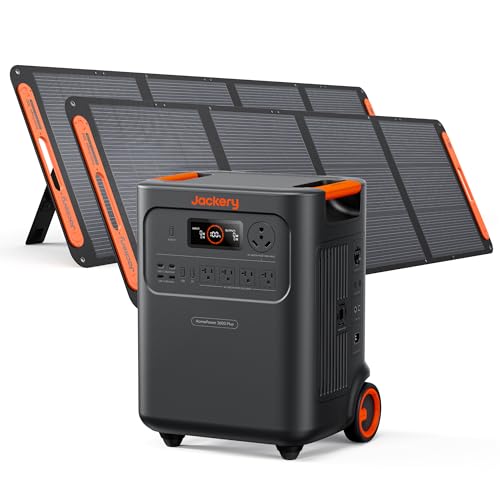
For a light-duty kit that handles phones, lights and a router, a compact unit from the Jackery Explorer line is a common choice among owners of small power stations. For lighting and device charging in a small space, the Anker SOLIX C300 DC is a compact option often mentioned for portability. Pair either with a small foldable panel for daytime top-ups.
Related Questions
Can a 300W solar generator run a refrigerator?
Usually not for long. A refrigerator’s startup surge and average draw can overwhelm a 300-class unit, and the battery will drain quickly. Larger capacity is needed; see Can a Solar Generator Run a Refrigerator? How to Estimate Runtime.
How long will a 300W solar generator last on a phone?
A phone battery is roughly 15 to 20 Wh, so a 300 Wh unit can charge a phone many times, subject to conversion losses.
Can I run a CPAP overnight on it?
It may be possible depending on the machine’s draw and battery size, but confirm the numbers with your device’s specifications and a medical professional before depending on it.
Does solar charging make a 300W unit last longer?
Solar charging extends the time you can run devices, but it does not increase the continuous output limit. Panel size and daylight hours determine how fast it refills.
What is the difference between a 300W generator and a 300Wh battery?
Watts measure how much power flows at once; watt-hours measure how much energy is stored. A 300W inverter with a 300Wh battery can run a 300W load for about one hour, minus losses.
Related reading
Ready to choose one?
About Graham Fisher
Graham Fisher is part of our editorial team and reviews and edits our solar generators for home backup & emergencies guides, checking product details against manufacturer specifications and owner feedback.