By Emily Parker
Updated November 2026
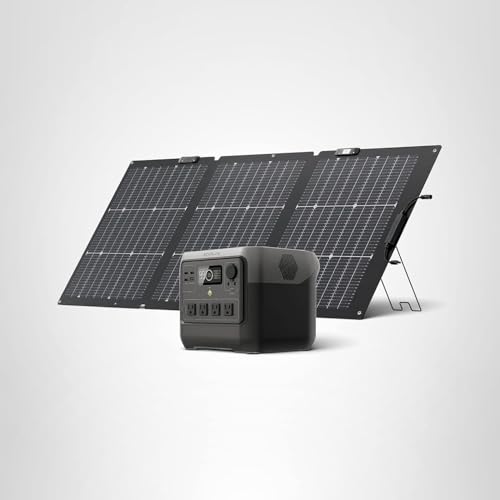
An ecoflow delta pro ultra portable power station can keep a refrigerator, a CPAP machine and a sump pump running through a power cut, but only if the battery is sized to your actual loads. This guide shows you how to total your daily watt-hours, estimate runtime, and decide whether one unit is enough or whether you need expansion capacity.
Step 1: List Each Device and Its Wattage
Start with the label on each appliance or its manual. Look for the running watts, which is the steady draw while the device is on. Refrigerators often list amps instead; multiply amps by 120 volts to get watts.
Shopping for one? See our guide: EF EcoFlow Portable Power Station 3600Wh Delta Pro: 4 Best Options (2026).
- Refrigerator: typically 100 to 200 running watts, with a higher surge when the compressor starts.
- CPAP machine: commonly 30 to 60 watts while running, usually 8 hours a night.
- Sump pump: often 800 to 1,000 watts while pumping, but only for short bursts.
Step 2: Convert Loads to Daily Watt-Hours
Watt-hours (Wh) are watts multiplied by hours of use. A refrigerator does not run constantly; most units cycle on roughly 30 to 50 percent of the time. Estimate duty cycle conservatively and multiply it out, as shown below.
| Device | Running Watts | Hours per Day | Daily Wh (estimate) |
|---|---|---|---|
| Refrigerator | 150 | 10 (cycling) | 1,500 |
| CPAP | 40 | 8 | 320 |
| Sump pump | 900 | 0.5 (bursts) | 450 |
| Total | about 2,270 Wh |
Add a 20 percent buffer for inverter losses and battery aging. In this example, that brings the target to roughly 2,700 Wh per day.
Step 3: Check Usable Capacity and Runtime
Manufacturers list nominal battery capacity, but usable energy is lower because of conversion losses and reserve settings. Plan on using about 80 to 85 percent of the rated figure. Divide your usable capacity by your daily load to estimate how many days a single charge will last, and divide by your hourly load to estimate hours of runtime for a specific appliance.
Keep in mind that sump pumps and refrigerator compressors draw high surge currents. Confirm that the unit’s continuous and surge output ratings exceed those peaks before relying on it.
Step 4: Plan Recharging During an Outage
A portable station only helps if it can be recharged. Owners often pair these units with solar panels or a vehicle charging cable to extend runtime over multiple days. Solar input is slower and depends on sunlight, so a realistic plan includes the panel wattage and your typical peak sun hours. For guidance on pairing your unit with a backup strategy, see Ecoflow Delta Pro Ultra Whole-home Power Solution: A Practical Guide (2026) and Ecoflow Delta Pro Ultra X Guide: Sizing Home Backup Power (2026).
Common Mistakes to Avoid
- Sizing only for running watts and ignoring motor surge at startup.
- Assuming a refrigerator runs 24 hours a day at full draw.
- Forgetting that rated capacity is not fully usable capacity.
- Letting the battery drop to zero repeatedly, which can shorten its service life.
- Skipping a test run to confirm real-world runtime before a storm.
Recommended Gear
- Plug-in power meter: measures real watt and watt-hour use of each appliance, so your estimates rest on actual readings. View on Amazon
- Heavy-duty extension cord: rated for the load keeps connections safe when running a sump pump from the station. View on Amazon
FAQ
Can an ecoflow delta pro ultra portable power station run a whole house?
Not in most cases on its own. Whole-house backup usually needs a larger system or a transfer setup, and a qualified electrician should handle any connection to home wiring.
How many hours will a CPAP run on the battery?
Divide usable capacity by the CPAP’s running watts. At around 40 watts, a large battery can supply many nights, but confirm the figure using your device’s label and your own usage.
Should I consult a professional before connecting a sump pump?
Yes. A licensed electrician or plumber can confirm circuit capacity, safe cord sizing and whether a dedicated backup pump makes more sense for your home.
Conclusion
Total your daily watt-hours, add a safety buffer, and compare the result against usable battery capacity. Test the setup before an outage so you know real runtime. With those numbers in hand, you can decide confidently how much backup power your home needs.
Related reading
- Ecoflow Delta Pro Portable Power Station Review: Is It Worth It?
- Ecoflow Delta Pro 3 Portable Backup Power Station System: A Practical Guide (2026)
- Ecoflow Delta 3 Ultra Series Portable Power Station: A Practical Guide (2026)
- Ecoflow River 2 Pro Portable Power Station: What It Runs and How Long (2026)
Ready to choose one?
About Emily Parker
Emily Parker is part of our editorial team and reviews and edits our solar generators for home backup & emergencies guides, checking product details against manufacturer specifications and owner feedback.