By Emily Parker
Updated November 2026
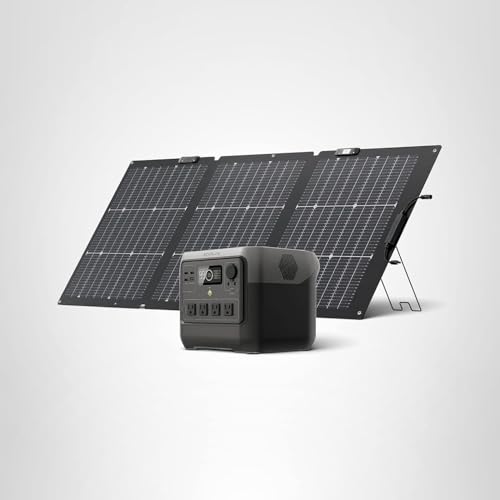
The ecoflow delta 3 ultra series portable power station is a battery-based generator designed to keep essential household loads running during an outage. This guide shows you how to estimate the capacity you need, how to calculate runtime for specific appliances, and how to avoid the sizing mistakes that leave people short when the power goes out.
Step 1: List the Loads You Actually Need to Run
Start with the appliances you want to keep alive, not the whole house. Most backup plans focus on a short list: a refrigerator or freezer, a CPAP machine, a sump pump, Wi-Fi equipment, phone charging, and a few lights. Each item has a rated wattage printed on its label or in the manual. Write down both the running watts and, for motor-driven devices like refrigerators and pumps, the startup surge.
Shopping for one? See our guide: EcoFlow Delta 2 Max Portable Power Station Review: Features and Performance.
Step 2: Convert Your Loads into Watt-Hours
Battery capacity is measured in watt-hours (Wh), so you need to turn each load into energy used per day. Multiply the device’s average watts by the hours it runs per day, then divide by the power station’s inverter efficiency, which is typically somewhere around 85 to 90 percent. A simple example: a CPAP drawing 40 watts for 8 hours uses about 320 Wh per night, or roughly 360 Wh once you account for conversion losses.
| Load | Typical Running Watts | Hours per Day | Approx. Daily Wh |
|---|---|---|---|
| Refrigerator | 100 to 150 (average, cycling) | 10 to 12 (duty cycle) | 1,000 to 1,500 |
| CPAP machine | 30 to 60 | 8 | 240 to 480 |
| Sump pump (1/3 HP) | 500 to 800 (while running) | 0.5 to 1 | 250 to 800 |
| Wi-Fi router and modem | 15 to 25 | 24 | 360 to 600 |
| LED lighting | 40 total | 5 | 200 |
Treat these numbers as ballpark figures. Your own appliances may differ, so check the nameplate or a plug-in power meter for better accuracy.
Step 3: Match Total Watt-Hours and Peak Output to Your Plan
Add up your daily watt-hours to get a baseline, then add a margin of 20 percent so the battery never runs fully flat. Next, check the inverter’s continuous output rating against the sum of your running loads. The surge rating matters for motors: a refrigerator or pump can briefly draw several times its running wattage at startup. If your running loads plus surge exceed the unit’s peak limit, devices will shut off even when the battery still has charge.
Use a Simple Runtime Formula
Runtime in hours equals usable battery Wh divided by your average load in watts. A 1,000 Wh station running a steady 100 W load gives you roughly 8 to 9 hours, not 10, because of conversion losses and the protective reserve most units keep. Recheck the math with your own figures rather than relying on rough estimates.
Step 4: Plan for Recharging Between Outages
A battery only helps if you can refill it. Wall charging is fastest when grid power is available, but long outages call for a backup charging source. Solar panels, a vehicle charging adapter, or a generator can extend operation for days. Solar charging depends on daylight hours and panel wattage, so plan on partial recharges rather than full ones on cloudy days.
Common Mistakes
- Ignoring startup surge on refrigerators and sump pumps, which causes unexpected shutdowns.
- Assuming the full rated capacity is usable, when some reserve is always held back.
- Sizing for average loads only and forgetting that a CPAP or medical device must run without interruption.
- Skipping a test run. Run your actual devices on the station for an hour before an emergency.
- Forgetting that ambient heat and cold reduce battery performance, so store the unit indoors.
For more on sizing a unit for specific loads, see Ecoflow Delta 3 Plus Portable Power Station Review (2026) and EcoFlow Delta 3 vs Delta 3 Plus: Which Power Station Fits Your Backup Needs?. If you plan to add solar, Solar Panel Size Calculator for Portable Power Stations shows how to match panel wattage to recharge goals.
Recommended Gear
- Plug-in power meter: Measures the real watt draw and daily energy use of each appliance, which beats relying on label numbers. View on Amazon
- Solar panel kit for portable stations: Lets you recharge during extended outages when grid power is unavailable. View on Amazon
- Heavy-duty extension cord rated for outdoor use: Helps route power safely from the station to appliances without overloading small cords. View on Amazon
FAQ
How many watt-hours do I need to run a refrigerator overnight?
A typical full-size refrigerator often uses somewhere between 1,000 and 1,500 Wh per day because it cycles on and off. Check the appliance’s energy label for its annual kWh rating and divide by 365 to estimate daily use.
Can I run a sump pump from a portable power station?
Yes, if the station’s surge rating covers the pump’s startup draw and the battery holds enough energy for the expected runtime. Pumps are motor loads, so confirm peak output before buying.
Is a CPAP machine safe to run from a battery backup?
Many CPAP users rely on battery backup during outages, but medical needs vary. Consult your sleep physician or equipment provider to confirm the correct battery setup for your device and prescribed therapy.
Conclusion
Choosing the right ecoflow delta 3 ultra series portable power station comes down to a clear list of loads, their daily watt-hours, and the surge demands of motor-driven devices. Build in a reserve margin, confirm peak output, and test the setup before you need it. A few minutes of math now prevents a dark, cold night later.
Related reading
- Ecoflow Delta Pro Portable Power Station Review: Is It Worth It?
- Ecoflow Delta Pro 3 Portable Backup Power Station System: A Practical Guide (2026)
Ready to choose one?
About Emily Parker
Emily Parker is part of our editorial team and reviews and edits our solar generators for home backup & emergencies guides, checking product details against manufacturer specifications and owner feedback.