
 By Graham Fisher
Updated November 2026
Choosing an outdoor solar power generator comes down to three things: how much stored energy it holds, how many watts it can push out at once, and whether it can recharge from sunlight without fuss. This list weighs those factors against the typical needs of people who want backup power for a fridge, phone charging, lights, a small fan or a CPAP during a blackout, along with how easily each unit handles outdoor conditions. We looked at manufacturer specifications, brand reputation and the patterns owners often report, and we did not test these units ourselves. Use the picks below as a starting point, then check the watt-hour math against your own loads.
Our top picks at a glance
- 1
 TOP CHOICEBest overallJackery Solar Generator 1000 v2 and 200W Solar PanelView on Amazon
- 2
 TOP CHOICEBest for camping and day tripsJackery Explorer 300 Portable Power StationView on Amazon
- 3
 TOP CHOICEBest for weekend kits with a panel includedPortable Solar Generator 300W Portable Power Station with 60W Solar PanelView on Amazon
- 4
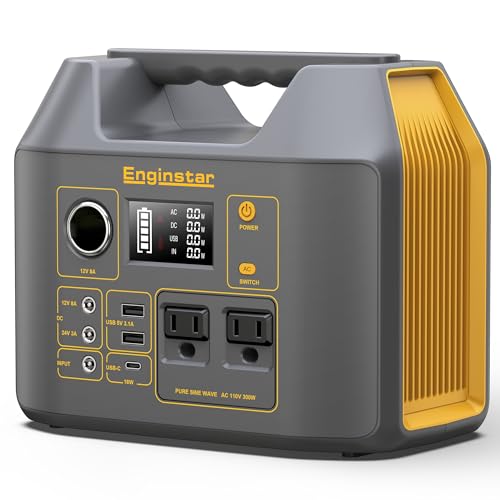 Best for higher capacity off-grid useEnginStar 296Wh Portable Solar GeneratorView on Amazon
- 5
 Best for light loadsTakki Solar Generator 120W Peak Portable Power StationView on Amazon
- 6
 Best budget pickHOWEASY Portable Power Station 120W Solar GeneratorView on Amazon
Our Top Picks
Quick Comparison
| Product | Best for | Key feature |
|---|---|---|
| Jackery Solar Generator 1000 v2 and 200W Solar Panel | Home emergency backup | 1024Wh LiFePO4 battery with 10ms UPS switching |
| Jackery Explorer 300 Portable Power Station | Camping and day trips | 292Wh LiFePO4 battery, solar input optional |
| Portable Solar Generator 300W Portable Power Station with 60W Solar Panel | Weekend kits with a panel included | 280Wh battery with bundled 60W panel |
| EnginStar 296Wh Portable Solar Generator | Off-grid trips and RV use | Pure sine wave output and 300W AC outlet |
| Takki Solar Generator 120W Peak Portable Power Station | Light loads like lights and phones | Compact 88.8Wh battery with 21W panel |
| HOWEASY Portable Power Station 120W Solar Generator | Budget-minded emergency kits | 88Wh battery with 110V AC outlet |
Jackery Solar Generator 1000 v2 and 200W Solar Panel
Jackery Solar Generator 1000 v2 and 200W Solar Panel,1024Wh LiFePO4 Battery | 1500W (3000W Peak), 50-Min Fast Charge, 10ms UPS Solar Generator for Home Emergency, Camping & RV
Best for: Home emergency backup with a fridge or sump pump on the list
This is the most capable unit here and suits households that want to keep several circuits running through a multi-day outage. Its 1024Wh capacity and 1500W continuous rating give it room for a refrigerator and a few small loads at once.
Key specs
- 1024Wh LiFePO4 battery
- 1500W continuous output (3000W peak)
- Bundled 200W solar panel
- 10ms UPS switching for sensitive electronics
Pros
- Enough capacity for a refrigerator during a typical outage window
- Fast recharge option advertised at about 50 minutes
- Bundled panel means one purchase covers the full setup
Cons
- Heavier than smaller portable units, so moving it takes effort
- Full solar recharge still depends on weather and panel placement
Bottom line: Best for households that want the most stored energy here and can keep the unit near a sunny spot during an outage.
View on AmazonJackery Explorer 300 Portable Power Station
Jackery Explorer 300 Portable Power Station,292Wh | Backup LiFePO4 Battery, Solar Generator for Outdoors, Camping, Travel, Hunting, Blackout (Solar Panel Optional)
Best for: Camping and day trips
A smaller 292Wh unit that fits well in a vehicle or a backpack-sized kit. It handles phones, lights, a small fan and a laptop without much trouble, though it will not run a full-size refrigerator for long.
Key specs
- 292Wh LiFePO4 battery
- Solar panel input available as an add-on
Pros
- Light enough to carry to a campsite or tailgate
- Lithium iron phosphate chemistry is known for long cycle life
- Recognized brand with broad owner feedback
Cons
- Limited capacity for high-draw appliances
- Solar panel is sold separately, which adds setup planning
Bottom line: A good pick for light loads and portable use, not for running a whole kitchen through a blackout.
View on AmazonPortable Solar Generator 300W Portable Power Station with 60W Solar Panel
Portable Solar Generator 300W Portable Power Station with 60W Solar Panel | 110V Pure Sine Wave 280Wh Battery Solar Power Pack with USB QC3.0 DC AC Outlet for Camping Smart Device RV Van Outdoor-Orang
Best for: Weekend kits with a panel included
This listing bundles a 60W panel with a 280Wh battery and a 110V pure sine wave outlet. It suits people who want a complete starter kit for a cabin, RV or emergency bag without sourcing parts separately.
Key specs
- 280Wh battery capacity
- 300W output with 110V pure sine wave
- 60W solar panel included
- USB QC3.0 and DC outputs
Pros
- Complete kit in a single listing
- Pure sine wave output suits most electronics
- Multiple output types for phones and small devices
Cons
- A 60W panel recharges slowly on cloudy days
- Capacity is modest for refrigerator-level loads
Bottom line: Suits someone building a first solar kit for light outdoor or emergency use who wants everything in one box.
View on AmazonEnginStar 296Wh Portable Solar Generator
EnginStar 296Wh Portable Solar Generator, Pure Sine Wave Power Station | 110V Power Bank, 300W AC Outlet 80000mAh Lithium Battery Pack for Camping Outdoors Trip RV Hunting Vans Emergency
Best for: Off-grid trips and RV use
A mid-size unit with a 300W AC outlet and pure sine wave output. It targets people who spend time away from grid power and need a steady supply for small appliances and electronics.
Key specs
- 296Wh capacity
- 300W AC outlet
- Pure sine wave output
Pros
- Pure sine wave output is suited to sensitive electronics
- Useful for RVs, vans and hunting camps
- Clear listing of output and capacity
Cons
- Lesser-known brand, so owner feedback is thinner than for major names
- Capacity is not large enough for extended whole-home loads
Bottom line: A reasonable fit for off-grid users who want pure sine wave output at a mid-size capacity.
View on AmazonTakki Solar Generator 120W Peak Portable Power Station
Takki Solar Generator 120W Peak Portable Power Station with 21W Solar Panel 88.8Wh Battery Power Bank with 110V AC Outlet for Camping RV Tent Home Outages Emergency
Best for: Light loads like lights and phones
The smallest battery in this group at 88.8Wh, paired with a 21W panel. It makes sense for charging phones, running LED lights and powering a small device during a short outage or a tent stay.
Key specs
- 88.8Wh battery
- 120W peak output
- 21W solar panel included
- 110V AC outlet
Pros
- Very light and easy to store
- Panel is included for a self-contained kit
- Suited to phones, lights and small electronics
Cons
- Capacity is too small for a refrigerator or CPAP through a full night
- A 21W panel charges slowly
Bottom line: Best for minimal loads and emergency charging rather than real backup for appliances.
View on AmazonHOWEASY Portable Power Station 120W Solar Generator
HOWEASY Portable Power Station,120W(240W Peak) Solar Generator | 88Wh Lithium Battery Power with 110V AC Outlet/DC/USB/LED Light for Outdoor Camping Trip Hunting Emergency
Best for: Budget-minded emergency kits
An entry-level unit with an 88Wh battery and a 110V AC outlet. It suits someone who wants a low-cost starting point for charging devices and running a light or small fan in an emergency.
Key specs
- 88Wh battery
- 120W rated output (240W peak)
- 110V AC, DC and USB outputs
Pros
- Simple setup for basic charging needs
- Multiple output ports including USB
- Compact enough for a glovebox or emergency bag
Cons
- Small capacity limits runtime for anything beyond phones and lights
- Brand has less owner feedback than larger names
Bottom line: A sensible budget pick for basic emergency charging, provided expectations stay modest.
View on AmazonBuying Guide
Watt-Hour Capacity
Capacity is measured in watt-hours (Wh). To estimate runtime, multiply the appliance’s wattage by the hours you need it, then divide the battery’s Wh by that number. A 1024Wh unit running a 100W refrigerator, which cycles on and off, may last well over a day, while a 88Wh unit will only power a phone and a light for a short stretch. Include a 10–20% allowance for conversion losses when you do the math.
Good picks for this: Jackery Solar Generator 1000 v2 and 200W Solar Panel, EnginStar 296Wh Portable Solar Generator
Continuous and Surge Output
Continuous wattage is what the unit can supply all the time. Surge or peak wattage covers the brief spike motors need when starting. Check that the continuous rating exceeds the running wattage of your heaviest device. A refrigerator or sump pump can demand several times its running watts at startup, so surge headroom matters.
Good picks for this: Jackery Solar Generator 1000 v2 and 200W Solar Panel, Portable Solar Generator 300W Portable Power Station with 60W Solar Panel
Battery Chemistry
Lithium iron phosphate (LiFePO4) batteries are widely used in these units and are generally associated with longer cycle life than some other lithium chemistries. Confirm the chemistry in the spec sheet, since it affects how many charge cycles you can expect before capacity drops noticeably.
Good picks for this: Jackery Explorer 300 Portable Power Station, Jackery Solar Generator 1000 v2 and 200W Solar Panel
Solar Input and Recharge Time
Solar recharge depends on panel wattage, sun angle, weather and how long the panel is exposed. A 60W or 21W panel will take a long time to refill a large battery. Plan for real-world recharge times that are longer than the rated figures, and consider whether you can add a second panel later.
Good picks for this: Portable Solar Generator 300W Portable Power Station with 60W Solar Panel, Takki Solar Generator 120W Peak Portable Power Station
Output Ports and Outlets
Look for the outlets you actually need: a 110V AC outlet for standard appliances, USB ports for phones and tablets, and DC outputs for 12V gear. Pure sine wave output is preferred for electronics with sensitive power supplies. Count the outlets against the devices you plan to run at the same time.
Good picks for this: EnginStar 296Wh Portable Solar Generator, HOWEASY Portable Power Station 120W Solar Generator
Weight and Portability
Units in this range can weigh from a few pounds to over 20 pounds. If you plan to move the unit between a garage, a yard and a vehicle, weight matters as much as capacity. Consider whether you will carry it up stairs during an outage or keep it in one spot.
Good picks for this: Takki Solar Generator 120W Peak Portable Power Station, Jackery Explorer 300 Portable Power Station
Outdoor Durability and Care
Outdoor use means exposure to temperature swings, dust and moisture. Manufacturers typically specify an operating temperature range; check it, and avoid charging or running the battery in extreme heat or freezing conditions. Store the unit in a shaded, dry place, and keep solar panels clean for efficient charging. For any medical device or sump pump, consult the device maker and a licensed electrician before relying on a portable unit for critical loads.
Good picks for this: Jackery Explorer 300 Portable Power Station, EnginStar 296Wh Portable Solar Generator
FAQ
How many watt-hours do I need to run a refrigerator overnight?
A typical refrigerator often averages well under its rated running wattage because the compressor cycles. Many households estimate daily energy use in the range of 1 to 2 kWh, so a 1000Wh-class unit may cover part of a day rather than a full day. Measure your own unit with a plug-in watt meter for an accurate figure.
Can a solar generator run a CPAP machine?
Many CPAP machines draw modest power, but runtime depends on the device model and whether a humidifier is in use. Confirm the wattage on your device label and check it against the unit’s continuous output and capacity. Consult your sleep provider before relying on a portable unit for therapy.
Do I need the solar panel to use the generator?
No. Most units can be charged from a wall outlet or a car, and the solar panel is an additional recharge option. Some listings include a panel and others sell it separately.
What is the difference between continuous and peak output?
Continuous output is the wattage the unit can supply indefinitely within its limits. Peak output is a short-duration maximum, often for motor startup. Choose a unit whose continuous rating covers your running loads.
How long does solar recharging take?
It depends on panel wattage, sunlight and battery size. A small panel can take many hours or days to fully recharge a mid-size battery. Plan for slower charging in winter or under cloud cover.
Is a pure sine wave output important?
Pure sine wave output is generally recommended for electronics with sensitive power supplies, including some medical and computing devices. Modified sine wave may work for simple loads but can cause problems with others.
Can these units power a sump pump?
Sump pumps often have high startup surges. Confirm the pump’s running and starting wattage, and check that the unit’s surge rating covers it. A licensed electrician or pump installer can help confirm safe sizing.
Conclusion
For whole-household backup, the Jackery Solar Generator 1000 v2 and 200W Solar Panel has the most stored energy among these picks and the most headroom for a refrigerator. For camping, tailgating or light outdoor use, the Jackery Explorer 300 and the bundled 300W kit are better matched to the load. The EnginStar unit suits off-grid trips needing pure sine wave output, while the Takki and HOWEASY units fit minimal charging needs and tight budgets. Run your own watt-hour math before you buy, and match the battery size and continuous output to your heaviest device.
Sources
- Guidance on home energy use, backup power planning and how to estimate household electricity needs (energy.gov)
- Consumer safety information on portable power devices, batteries and recall notices (cpsc.gov)
- Fire safety standards and guidance for lithium-ion batteries and electrical equipment (nfpa.org)
Related reading
- Yeti Solar Power Generator: What It Runs and How to Size One
- Whole Home Solar Generator: 7 Best Picks for Backup Power in 2026
- Using a Solar Generator or Power Station for a CPAP Machine
- Using a Solar Generator During a Power Outage: A Practical Plan
- Top 6 Solar Energy Power Generator Picks for Home Backup
- Top 5 EcoFlow Solar Power Generator Picks for Home Backup
About Graham Fisher
Graham Fisher is part of our editorial team and reviews and edits our solar generators for home backup & emergencies guides, checking product details against manufacturer specifications and owner feedback.





