 By Graham Fisher
Updated November 2026
Choosing a diy solar generator for home backup means balancing three things: how much energy you need stored, how much power the unit can deliver at once, and how much setup work you are willing to do. This list compares five options in the Amazon catalog, covering a turnkey expandable power station, a midsize unit, two build-it-yourself guides, and a small pure sine wave generator. The selection method is research-based: we looked at manufacturer specifications, brand reputation and the patterns owners commonly describe in their feedback, with a focus on watt-hour capacity, continuous and surge output, battery chemistry and suitability for essentials like a refrigerator, CPAP machine or sump pump.
Our top picks at a glance
- 1
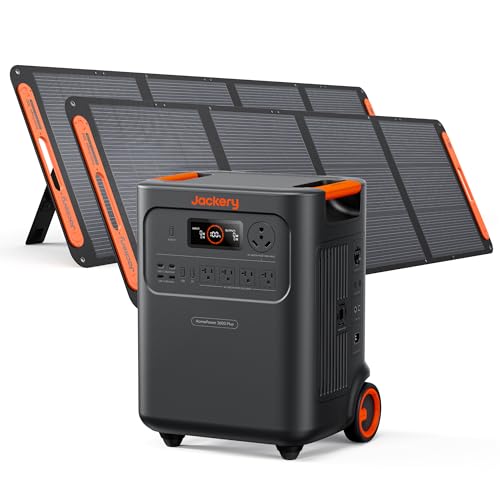 TOP CHOICEBest overallJackery HomePower 3600 Plus & 2x200W Solar PanelsView on Amazon
- 2
 TOP CHOICEBest for midsize outage kitsJackery Solar Generator 1000 v2 and 200W Solar PanelView on Amazon
- 3
 TOP CHOICEBest for learning the buildBuild Your Own Portable Solar Generator: A Step-by-Step DIY GuideView on Amazon
- 4
 Best for off-grid planningThe DIY Solar Generator: How to Build Your Own Portable Power StationView on Amazon
- 5
 Best budget pickJackery Solar Generator 300 and 40W Solar PanelView on Amazon
Our Top Picks
| Product | Best for | Key feature |
|---|---|---|
| Jackery HomePower 3600 Plus & 2x200W Solar Panels | Whole-essentials home backup | 3584Wh LFP battery, 3600W AC output, expandable |
| Jackery Solar Generator 1000 v2 and 200W Solar Panel | Midsize outage kits | 1024Wh LiFePO4, 1500W output, fast charging |
| Build Your Own Portable Solar Generator (DIY guide) | Hands-on builders | Step-by-step system design guidance |
| The DIY Solar Generator (DIY guide) | Off-grid and emergency planning | Covers build plus camping and off-grid use |
| Jackery Solar Generator 300 and 40W Solar Panel | Small loads and tight budgets | 292Wh battery, 300W pure sine wave AC |
Jackery HomePower 3600 Plus & 2x200W Solar Panels
Jackery HomePower 3600 Plus & 2x200W Solar Panels, 3584Wh, 3600W AC Output | LFP Battery, Expandable to 21kWh, Solar Generator, Essential Home Backup for Home Use, Emergencies, RV
Best for: Whole-essentials home backup with room to grow
This is the most complete option here for a household that wants to keep a refrigerator, lights, internet gear and a medical device running through a multi-hour outage. It is sold as a bundled kit with two 200W panels, so it arrives ready to recharge from sunlight.
Key specs
- 3584Wh LFP (lithium iron phosphate) battery
- 3600W AC output
- Expandable to 21kWh with additional battery modules, per the listing
- Includes 2x200W solar panels
Pros
- Large capacity covers a refrigerator and essential circuits for a meaningful stretch
- LFP chemistry is generally associated with long cycle life
- Expansion path lets you add storage later without replacing the unit
Cons
- Heavy and bulky compared with portable units, so it stays on a fixed spot
- Full-kit cost is substantial, and expansion adds to it
Bottom line: Best for households that want the largest runtime in this list and may expand over time.
View on AmazonJackery Solar Generator 1000 v2 and 200W Solar Panel
Jackery Solar Generator 1000 v2 and 200W Solar Panel,1024Wh LiFePO4 Battery | 1500W (3000W Peak), 50-Min Fast Charge, 10ms UPS Solar Generator for Home Emergency, Camping & RV
Best for: Midsize outage kits for a few key appliances
A good middle ground for someone who wants a bundled solar kit that handles a CPAP, phone and router plus a small refrigerator for part of a day, without the footprint of a whole-home system.
Key specs
- 1024Wh LiFePO4 battery
- 1500W continuous AC output (3000W peak), per the listing
- Includes a 200W solar panel
Pros
- Output is sufficient for most common household appliances
- Fast charging shortens recovery time between outages
- Portable enough to move between rooms or into a vehicle
Cons
- Roughly a day of refrigerator runtime at most, depending on conditions
- One 200W panel recharges slowly on cloudy days
Bottom line: A sensible choice for CPAP-plus-essentials backup where a larger system is more than needed.
View on AmazonBuild Your Own Portable Solar Generator: A Step-by-Step DIY Guide
Build Your Own Portable Solar Generator: A Step-by-Step DIY Guide to Solar Backup Power, Off-Grid Energy Systems, and Portable Solar Battery Generators
Best for: Learning how to assemble a portable solar power system
This is a book rather than a finished generator. It suits readers who want to understand battery, inverter and charge controller sizing before buying or building hardware.
Key specs
- Format: instructional guide to portable solar battery generators
- Covers solar backup power and off-grid system basics, per the title
Pros
- Teaches the reasoning behind component sizing, not just a parts list
- Useful for comparing commercial units against a custom build
- Low-cost way to plan a home backup project
Cons
- No hardware included, so you must source and wire every component
- Electrical work carries real risk; a licensed electrician should review home connections
Bottom line: Pick this if you want to build a system yourself and understand what you are assembling.
View on AmazonThe DIY Solar Generator: How to Build Your Own Portable Power Station
The DIY Solar Generator: How to Build Your Own Portable Power Station for Emergencies, Camping, and Off-Grid Living
Best for: Emergency and off-grid planning with a build focus
This guide covers building a portable power station for emergencies, camping and off-grid living, making it a broader planning resource than a single-purpose manual.
Key specs
- Format: instructional guide to building a portable power station
- Scope includes emergency and off-grid use, per the title
Pros
- Covers multiple use cases, useful for planning beyond home outages
- Helps you think through backup runtime for a specific load
- Pairs well with the other build-focused guide in this list
Cons
- Does not include parts, so budgeting and sourcing are on you
- Safety guidance for battery handling should be verified against current standards
Bottom line: Suited to readers who want an emergency-focused build plan with off-grid context.
View on AmazonJackery Solar Generator 300 and 40W Solar Panel
Jackery Solar Generator 300 and 40W Solar Panel,292Wh,300W AC | Pure Sine Wave AC Outlet, for RV, Outdoors, Camping, Travel, Blackout
Best for: Small loads and a tight budget
A compact entry point for charging phones, lamps, a small fan or a laptop during a short outage. It is not built for a refrigerator over the long term.
Key specs
- 292Wh battery capacity
- 300W AC output with pure sine wave outlet
- Includes a 40W solar panel
Pros
- Pure sine wave output is safer for sensitive electronics
- Light and easy to store
- Simple setup with minimal wiring knowledge
Cons
- Too little capacity for a refrigerator beyond a short window
- A 40W panel charges slowly, so recovery takes a full day or more
Bottom line: A budget pick for minimal loads, not a whole-kitchen backup solution.
View on AmazonBuying Guide
Watt-hour capacity and runtime
Capacity, measured in watt-hours (Wh), tells you how much energy the unit stores. A simple estimate is watts of load multiplied by hours needed, then divided by the battery’s usable efficiency, which is typically below 100 percent once inverter losses are included. A 60W fridge running about 24 hours uses roughly 1,440Wh per day on average once cycling is counted, so a 292Wh unit covers only a few hours of that. Check your appliance nameplates or a plug-in power meter before choosing.
Good picks for this: Jackery HomePower 3600 Plus & 2x200W Solar Panels, Jackery Solar Generator 1000 v2 and 200W Solar Panel
Continuous and surge output
Continuous wattage must cover everything running at once. Surge wattage matters for motors, such as a sump pump or well pump, which draw several times their running power when they start. Confirm the surge rating against the startup draw listed on the motor’s label.
Good picks for this: Jackery Solar Generator 1000 v2 and 200W Solar Panel, Jackery HomePower 3600 Plus & 2x200W Solar Panels
Battery chemistry
Lithium iron phosphate (LFP or LiFePO4) batteries are common in home backup units and are generally associated with longer cycle life than many other lithium chemistries. Confirm the chemistry in the spec sheet rather than assuming it.
Good picks for this: Jackery HomePower 3600 Plus & 2x200W Solar Panels, Jackery Solar Generator 1000 v2 and 200W Solar Panel
Solar input and recharge time
Panel wattage sets how fast you can recharge in good sun. A 40W panel can take a day or more to refill a small battery, while 200W panels shorten that considerably. Account for weather, roof orientation and shading, since real output is often well below panel rating.
Good picks for this: Jackery Solar Generator 1000 v2 and 200W Solar Panel, Jackery Solar Generator 300 and 40W Solar Panel
Pure sine wave output
A pure sine wave inverter produces clean power that most electronics, medical devices and variable-speed motors handle well. Modified sine wave output can cause problems with some equipment, so check the output type before connecting a CPAP or medical device.
Good picks for this: Jackery Solar Generator 300 and 40W Solar Panel, Jackery Solar Generator 1000 v2 and 200W Solar Panel
Expandability and future needs
If your needs may grow, consider whether the system accepts additional battery modules or extra panels. Expansion lets you add capacity without buying a second complete unit.
Good picks for this: Jackery HomePower 3600 Plus & 2x200W Solar Panels
Build skill and safety
Building your own system means handling batteries, inverters and wiring that can deliver dangerous current. Use properly rated fuses, breakers and enclosures, and have a licensed electrician review any connection to your home’s electrical panel. Guides are educational, not substitutes for code-compliant work.
Good picks for this: Build Your Own Portable Solar Generator: A Step-by-Step DIY Guide, The DIY Solar Generator: How to Build Your Own Portable Power Station
FAQ
Can a diy solar generator for home run a refrigerator?
Yes, but runtime depends on the fridge’s daily energy use, which is often well above its nameplate wattage over a full day because the compressor cycles. Unless you are using a large, expandable system, expect a smaller unit to power the fridge for only a few hours. Keeping doors closed and using a power meter helps you plan realistic figures.
Is a CPAP machine safe to run on a solar generator?
Many CPAP machines run on modest power, but you should confirm the device’s wattage and whether it needs pure sine wave output. Check with your sleep physician or equipment provider before relying on any backup. For guidance on sizing, see Using a Solar Generator or Power Station for a CPAP Machine.
What is the difference between a solar generator and a home battery system?
A portable unit is movable and plugs into standard outlets, while a home battery system is typically installed and wired into the electrical panel. The Portable Solar Generator vs Home Battery System comparison explains which suits which situation.
How do I work out how many watt-hours I need?
List the devices you want to run, their wattage, and how many hours per day each runs. Multiply watts by hours to get watt-hours per day, add a margin for inverter losses, then compare the total against the unit’s usable capacity. What Can a 1000W Solar Generator Run? (With Runtime Math) shows the arithmetic in practice.
Can a sump pump run on a solar generator?
Sump pumps have a high startup surge, so the generator’s surge rating matters as much as its capacity. Check the pump’s startup draw and confirm the unit can handle it. Surge vs Continuous Power: What Your Solar Generator Can Actually Start explains the difference.
How long does it take to recharge with solar panels?
Recharge time depends on battery size, panel wattage, sunlight, and the angle and shading of the panels. Real-world output is usually lower than rated output, so plan for slower charging on cloudy days and in winter.
Do I need a licensed electrician to connect a solar generator to my home?
Plugging appliances directly into a portable unit generally does not require an electrician. Connecting a system to your home’s wiring, including through a transfer switch, should be handled by a licensed electrician to meet local code and avoid backfeeding the utility grid.
Conclusion
For most households wanting a finished, expandable diy solar generator for home backup, the Jackery HomePower 3600 Plus is the strongest fit here, while the Jackery Solar Generator 1000 v2 suits midsize outage kits. If you prefer to build your own, the two DIY guides explain system design, though you will need to source every component and verify electrical safety. The Jackery Solar Generator 300 is best reserved for small loads and tight budgets, not refrigerators. Match capacity and surge rating to your actual appliances before you buy.
Sources
- Guidance on home energy use, battery storage and backup power planning (energy.gov)
- Safety recalls and consumer advisories for portable batteries and power equipment (cpsc.gov)
- Electrical and fire safety standards relevant to home power systems (nfpa.org)
Related reading
About Graham Fisher
Graham Fisher is part of our editorial team and reviews and edits our solar generators for home backup & emergencies guides, checking product details against manufacturer specifications and owner feedback.