
 By Graham Fisher
Updated November 2026
Choosing a jackery explorer 2000 plus portable power station comes down to how much battery you need, how much output your appliances demand, and whether you want to expand storage later. This guide compares six current Jackery models in the 2,000 Wh class and up, measured against four criteria: usable capacity, continuous AC output, surge handling for motor loads like a sump pump, and owner feedback on build quality and charging speed. Everything here is based on manufacturer specifications and patterns in owner reports, not on hands-on testing.
Our top picks at a glance
- 1
 TOP CHOICEBest overallJackery Explorer 2000 Plus Portable Power Station with 2x100W mini Solar PanelsView on Amazon
- 2
 TOP CHOICEBest for whole-home backupJackery HomePower 3600 Plus Power StationView on Amazon
- 3
 TOP CHOICEBest for expandable storageJackery HomePower 2000 Plus v2 Power StationView on Amazon
- 4
 Best for fast rechargingJackery Explorer 2000 v2 Portable Power StationView on Amazon
- 5
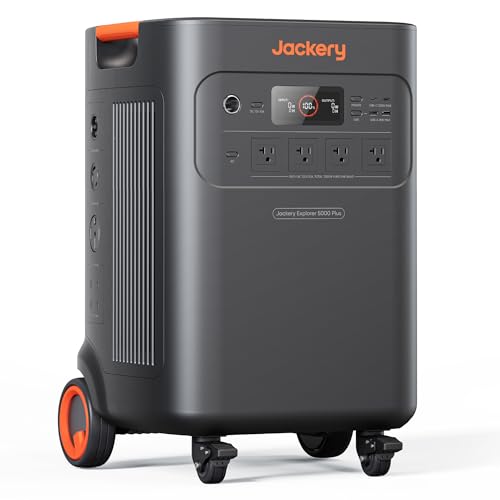 Best for heavy loadsJackery Explorer 5000 Plus Power StationView on Amazon
- 6
 Best budget pickJackery Explorer 1000 v2 Portable Power StationView on Amazon
Our Top Picks
Quick Comparison
| Product | Best for | Key feature |
|---|---|---|
| Jackery Explorer 2000 Plus (with solar) | Overall balance of capacity and portability | 2,042Wh LiFePO4 with two 100W mini solar panels |
| Jackery HomePower 3600 Plus | Whole-home backup | 3,600W AC output, expandable to 21kWh |
| Jackery HomePower 2000 Plus v2 | Expandable storage | 2,048Wh LFP, expandable to 12kWh |
| Jackery Explorer 2000 v2 | Fast recharging | USB-C PD 100W fast charging |
| Jackery Explorer 5000 Plus | Heavy loads and long outages | 5,040Wh, 7,200W AC output, 120V/240V |
| Jackery Explorer 1000 v2 | Budget-conscious buyers | 1,024Wh LiFePO4, 10ms UPS switchover |
Jackery Explorer 2000 Plus Portable Power Station with 2x100W mini Solar Panels
Jackery Explorer 2000 Plus Portable Power Station with 2x100Wmini Solar Panels, 2042Wh LiFePO4 Battery, 3000W AC Output, Expandable to 24kWh, 10-Year Lifespan, for Outdoor RV Camping and Emergency
Best for: Overall balance of capacity and portability
This bundle suits households and RV owners who want the 2,042Wh Explorer 2000 Plus class with solar recharging included from the start.
Key specs
- 2,042Wh LiFePO4 battery
- 3,000W AC output
- Expandable to 24kWh
- Two 100W mini solar panels included
- Manufacturer-stated 10-year lifespan
Pros
- Solar panels included, so recharging is possible without a separate purchase
- LiFePO4 chemistry generally tolerates more charge cycles than older lithium-ion designs
- Expansion option adds capacity as needs grow
Cons
- Mini panels produce modest power, so full recharge from sun takes a full day or more
- Heavier than the 1000-class models, so it is less convenient to carry
Bottom line: A strong first choice if you want capacity, solar and a long lifespan in one package.
View on AmazonJackery HomePower 3600 Plus Power Station
Jackery HomePower 3600 Plus Power Station, 3584Wh, 3600W AC Output | LFP Battery, Expandable to 21kWh, Solar Generator, Essential Home Backup for Home Use, Emergencies, RV (Solar Panel Optional)
Best for: Whole-home backup
Designed for households that want to run more circuits during an outage, including refrigeration, lighting, and some heating or cooling loads, with a 3,600W AC output.
Key specs
- 3,584Wh LFP battery
- 3,600W AC output
- Expandable to 21kWh
- Solar panel optional
Pros
- Output headroom handles most typical household appliances
- Expansion capacity is substantial for multi-day outages
- LFP chemistry is known for thermal stability
Cons
- Considerably heavier and bulkier than the 2000-class units
- Full installation benefits usually require a dedicated electrician setup
Bottom line: Best for buyers who want to power more of the house rather than a few essential outlets.
View on AmazonJackery HomePower 2000 Plus v2 Power Station
Jackery HomePower 2000 Plus v2 Power Station, 2048Wh, 2400W AC Output | LFP Battery, Expandable to 12kWh, Essential Home Backup for Outages, Emergencies & RV (Solar Panel Optional)
Best for: Expandable storage
A good fit for buyers who start with roughly 2,000Wh and expect to add batteries later for longer outages or off-grid use.
Key specs
- 2,048Wh LFP battery
- 2,400W AC output
- Expandable to 12kWh
- Solar panel optional
Pros
- Clear upgrade path from a single unit
- LFP battery chemistry suits frequent cycling
- Output is sufficient for refrigerators and CPAP machines
Cons
- Lower continuous output than the 3,600W model for high-draw appliances
- Expansion batteries add meaningful cost and weight over time
Bottom line: Ideal for households planning to grow their backup system gradually.
View on AmazonJackery Explorer 2000 v2 Portable Power Station
Jackery Explorer 2000 v2 Portable Power Station, 2042Wh, 2200W AC Output | LiFePO4 Battery, USB-C PD 100W Fast Charging, Solar Generator for Emergencies, Power Outages, Camping (Solar Panel Optional)
Best for: Fast recharging
Suited to users who want to top up quickly between uses, whether from an outlet, a car or a solar input.
Key specs
- 2,042Wh LiFePO4 battery
- 2,200W AC output
- USB-C PD 100W fast charging
Pros
- Fast-charging ports reduce wait time between uses
- LiFePO4 battery supports long cycle life
- Good capacity for overnight CPAP and refrigerator loads
Cons
- AC output is lower than the Plus-series units for large motors
- Solar panels sold separately
Bottom line: A practical choice when quick turnaround matters more than maximum output.
View on AmazonJackery Explorer 5000 Plus Power Station
Jackery Explorer 5000 Plus Power Station, 5040Wh, 7200W AC Output | LiFePO4, 120V/240V Output, Expandable to 60kWh, Essential Home Backup for Power Outages (Solar Panel Optional)
Best for: Heavy loads and long outages
For households with high-draw appliances or a need for split-phase 240V output during extended outages.
Key specs
- 5,040Wh LiFePO4 battery
- 7,200W AC output
- 120V/240V output
- Expandable to 60kWh
Pros
- Output and capacity handle demanding appliances
- 240V option broadens compatibility
- Very large expansion ceiling
Cons
- Heavy and not practical to move frequently
- Higher investment than most buyers in this class need
Bottom line: Worth considering for serious whole-home or workshop backup, not for light emergency use.
View on AmazonJackery Explorer 1000 v2 Portable Power Station
Jackery Explorer 1000 v2 Portable Power Station, 1024Wh LiFePO4 Battery | 1500W (3000W Peak), 50-Min Fast Charge, 10ms UPS Solar Generator for Home Emergency, Camping & RV.
Best for: Budget-conscious buyers
A smaller option for those who want Jackery reliability with lighter weight, though it offers less runtime than the 2000 Plus models.
Key specs
- 1,024Wh LiFePO4 battery
- 1,500W AC output (3,000W peak)
- 50-minute fast charge
- 10ms UPS switchover
Pros
- Lighter and easier to carry
- Fast charge and UPS switchover suit sensitive electronics
- Good match for short outages and camping
Cons
- Roughly half the stored energy of the 2000 Plus models
- May not run a refrigerator for a full day
Bottom line: Pick this if your needs are modest and portability matters more than runtime.
View on AmazonBuying Guide
Usable capacity and runtime
Watt-hours (Wh) tell you how much energy a station stores. To estimate runtime, divide usable watt-hours by the appliance’s average wattage, then account for conversion losses of roughly 10 to 15 percent. A 2,042Wh unit running a 100W device lasts roughly 17 to 18 hours in theory, less in practice.
Good picks for this: Jackery Explorer 2000 Plus with solar bundle, Jackery Explorer 2000 v2
Continuous and surge output
Check the continuous AC rating against the sum of simultaneous loads. Motor-driven appliances such as sump pumps and refrigerators draw a startup surge several times their running wattage. Make sure the station’s peak rating covers that surge.
Good picks for this: Jackery HomePower 3600 Plus, Jackery Explorer 5000 Plus
Battery chemistry
LiFePO4 and LFP batteries are generally associated with longer cycle life and better thermal stability than older lithium-ion designs. Review the manufacturer’s stated cycle rating and warranty terms before buying. For guidance on safe handling, see Lithium Battery Safety for Portable Power Stations.
Good picks for this: Jackery HomePower 2000 Plus v2, Jackery Explorer 2000 v2
Expandability
If you expect longer outages later, check whether the station accepts add-on batteries and the maximum total capacity. Expansion lets you buy in stages instead of replacing the unit.
Good picks for this: Jackery HomePower 2000 Plus v2, Jackery Explorer 5000 Plus
Charging options and speed
Look at how the station recharges: wall outlet, car input, and solar. Fast-charge ratings shorten recovery time between outages. Solar recharging depends on panel wattage, sunlight, and weather, so plan for a day or more of sun for a full charge with small panels.
Good picks for this: Jackery Explorer 2000 v2, Jackery Explorer 1000 v2
Size and portability
Weight rises quickly with capacity. A station you cannot lift or move easily may stay in the garage during the outage that matters. Match the unit to who will carry it and where it will sit.
Good picks for this: Jackery Explorer 1000 v2, Jackery Explorer 2000 Plus with solar bundle
Durability and care
Store the station in a dry, temperature-moderate space, keep it partially charged for long storage, and follow the manufacturer’s guidance on maintenance. Owners commonly report that routine care extends battery life.
Good picks for this: Jackery HomePower 3600 Plus, Jackery Explorer 2000 Plus with solar bundle
FAQ
How long will a Jackery Explorer 2000 Plus run a refrigerator?
A typical modern refrigerator averages roughly 100 to 200 watts over a day, depending on age, size and ambient temperature. A 2,042Wh station can often cover many hours of refrigerator use, but exact runtime depends on the appliance and the conversion losses of the station. Check the appliance’s energy label to estimate its daily consumption.
Can it run a CPAP machine overnight?
Many CPAP machines draw well under 100 watts, so a 2,000Wh-class station can often support a full night. Confirm your machine’s wattage and consult your sleep provider before relying on backup power for medical equipment.
Is solar recharging fast?
Not usually with mini panels. Recharge speed depends on panel wattage, sun angle and weather. Larger solar arrays recharge much faster. See Solar Panel Size Calculator for Portable Power Stations for sizing guidance.
Are LiFePO4 batteries safer than other lithium batteries?
LiFePO4 is generally considered more thermally stable than some other lithium chemistries, but no battery is risk-free. Follow manufacturer instructions for charging, storage and ventilation.
Can I use it indoors during an outage?
Portable power stations are designed for indoor use with good ventilation, but never run a gas generator indoors. Keep the unit off the floor, away from water, and clear of blocked vents.
Which model should I start with?
If you want capacity and solar in one package, start with the Explorer 2000 Plus with solar bundle. If you plan to expand later, the HomePower 2000 Plus v2 is a logical starting point.
Conclusion
For most households, the Explorer 2000 Plus with solar bundle offers the most balanced mix of capacity, recharging options and lifespan. Buyers who need to run more of the house should look at the HomePower 3600 Plus or the Explorer 5000 Plus. Fast-recharge priorities point to the Explorer 2000 v2, while the Explorer 1000 v2 fits light, portable use. Verify your appliance wattage before buying, since runtime depends on your actual loads.
Sources
- How to estimate household energy use and backup power planning (energy.gov)
- Safety guidance for portable power equipment and lithium batteries (cpsc.gov)
- Emergency power planning and outage preparedness (ready.gov)
Related reading
- Jackery Explorer 300d Portable Power Station: What It Runs and How Long
- 6 Best Jackery Explorer 300 Portable Power Station Models for Home Backup (2026)
- 4 Best Jackery Portable Power Station Explorer 500 Models for Home Backup (2026)
- Ecoflow Delta 3 Plus Portable Power Station Review (2026)
About Graham Fisher
Graham Fisher is part of our editorial team and reviews and edits our solar generators for home backup & emergencies guides, checking product details against manufacturer specifications and owner feedback.






