 By Graham Fisher
Updated November 2026
Shoppers searching for a jackery solar generator sale usually want one thing: a unit that can keep the lights, refrigerator, CPAP machine or sump pump running when the grid goes down, without guessing at capacity. This list compares six current Jackery models with that goal in mind. We judged each one on usable watt-hour capacity, continuous AC output, surge rating, battery chemistry, solar input and expandability, and on the owner feedback patterns that show up most often for each line. Nothing here is based on our own bench testing, so treat specifications as the manufacturer states them and confirm details on the listing before you buy.
Our top picks at a glance
- 1
 TOP CHOICEBest overallJackery Solar Generator 1000 v2 and 200W Solar PanelView on Amazon
- 2
 TOP CHOICEBest for small kitchensJackery Explorer 2000 v2 Portable Power StationView on Amazon
- 3
 TOP CHOICEBest for whole-home backupJackery HomePower 3000 Portable Power StationView on Amazon
- 4
 Best budget pickJackery Explorer 300 Portable Power StationView on Amazon
- 5
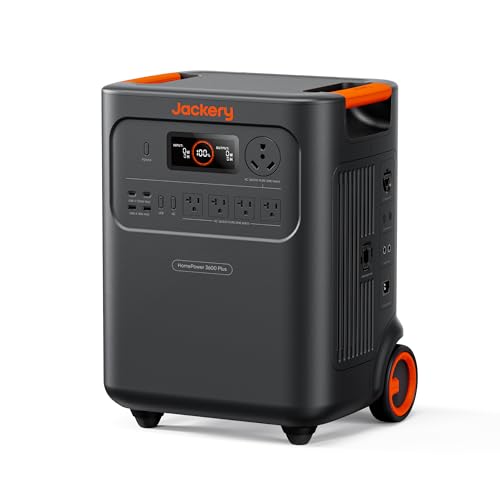
 Best for expandable storageJackery HomePower 3600 Plus Power StationView on Amazon
- 6
 Best for mid-size essential loadsJackery HomePower 2000 Plus v2 Power StationView on Amazon
Our Top Picks
Quick Comparison
| Product | Best for | Key feature |
|---|---|---|
| Jackery Solar Generator 1000 v2 and 200W Solar Panel | Overall balance of capacity, solar and portability | Bundled 200W panel and 1024Wh LiFePO4 battery |
| Jackery Explorer 2000 v2 Portable Power Station | Small kitchens and medium essential loads | 2042Wh capacity with 2200W AC output |
| Jackery HomePower 3000 Portable Power Station | Whole-home backup of key circuits | 3072Wh capacity, 3600W AC output, 7200W surge |
| Jackery Explorer 300 Portable Power Station | Light backup and budget-conscious buyers | 292Wh LiFePO4 battery in a compact body |
| Jackery HomePower 3600 Plus Power Station | Households planning future expansion | 3584Wh capacity, expandable to 21kWh |
| Jackery HomePower 2000 Plus v2 Power Station | Essential outage loads with room to grow | 2048Wh capacity, expandable to 12kWh |
Jackery Solar Generator 1000 v2 and 200W Solar Panel
Jackery Solar Generator 1000 v2 and 200W Solar Panel,1024Wh LiFePO4 Battery | 1500W (3000W Peak), 50-Min Fast Charge, 10ms UPS Solar Generator for Home Emergency, Camping & RV
Best for: Overall balance of capacity, solar and portability
This bundle suits homeowners who want a complete starting kit: a battery and a panel sold together, aimed at emergency backup, short outages and off-grid weekends. It is a good first step if you are not yet sure how much capacity you need.
Key specs
- 1024Wh LiFePO4 battery
- 1500W continuous AC output (3000W peak)
- 200W solar panel included
- 50-minute fast charge (per listing)
- 10ms UPS switchover (per listing)
Pros
- Panel included, so solar charging works out of the box
- LiFePO4 chemistry generally offers longer cycle life than lead-acid
- Fast recharge from the wall shortens the window between outages
Cons
- 1024Wh will not run a refrigerator and a sump pump together for long
- Single 200W panel recharges slowly on cloudy days
Bottom line: A strong pick for someone who wants solar included and needs to power a few small essentials rather than a whole circuit.
View on AmazonJackery Explorer 2000 v2 Portable Power Station
Jackery Explorer 2000 v2 Portable Power Station, 2042Wh, 2200W AC Output | LiFePO4 Battery, USB-C PD 100W Fast Charging, Solar Generator for Emergencies, Power Outages, Camping (Solar Panel Optional)
Best for: Small kitchens and medium essential loads
Households that need more runtime than a 1000Wh-class unit but do not need whole-home capacity will find this model a practical middle ground. Solar panels are sold separately, so budget for them if you want off-grid recharging.
Key specs
- 2042Wh LiFePO4 battery
- 2200W AC output
- USB-C PD 100W fast charging
- Solar panel optional
Pros
- Enough capacity to run a mini-fridge and lighting for a day or more, depending on load
- High AC output handles most kitchen appliances
- USB-C PD charging covers laptops and phones
Cons
- Solar panels are not included
- Heavier than the smaller Explorer models, which limits portability
Bottom line: Best for renters or small households who want a single portable unit covering kitchen and bedroom essentials during outages.
View on AmazonJackery HomePower 3000 Portable Power Station
7200W Surge, LFP Battery, Solar Generator, Essential Home Backup for Home Use, Power Outage (Solar Panel Optional) Jackery HomePower 3000 Portable Power Station, 3072Wh, 3600W AC Output
Best for: Whole-home backup of key circuits
This is the model most often considered when the goal is to keep several circuits running, including a refrigerator, well pump, furnace blower and medical equipment. Pair it with a qualified electrician for transfer switch and circuit planning.
Key specs
- 3072Wh LFP battery
- 3600W AC output
- 7200W surge rating
- Solar panel optional
Pros
- Surge rating helps start motors such as well pumps and refrigerator compressors
- Capacity suits a day or two of essential loads for many households
- Designed as a home backup unit rather than a camping battery
Cons
- Heavy enough that it is best kept in one place
- Solar input must be purchased separately to recharge off-grid
Bottom line: A good fit for homeowners who want to keep specific circuits live during extended outages and are willing to plan the setup.
View on AmazonJackery Explorer 300 Portable Power Station
Backup LiFePO4 Battery, Solar Generator for Outdoors, Camping, Travel, Hunting, Blackout (Solar Panel Optional) Jackery Explorer 300 Portable Power Station,292Wh
Best for: Light backup and budget-conscious buyers
A compact option for charging phones, running a small fan or LED lamp, or keeping a modest medical device going for a few hours. It is less suited to appliances with high startup loads.
Key specs
- 292Wh LiFePO4 battery
- Compact, portable body
- Solar panel optional
Pros
- Light enough to carry to a camp or into a basement during a storm
- LiFePO4 battery is a durable chemistry
- Good entry point for a first portable power station
Cons
- 292Wh is too small for refrigerators or sump pumps
- Limited runtime for anything beyond phones, lights and small electronics
Bottom line: Suits someone who needs basic device charging and short backup rather than whole-appliance power.
View on AmazonJackery HomePower 3600 Plus Power Station
LFP Battery, Expandable to 21kWh, Solar Generator, Essential Home Backup for Home Use, Emergencies, RV (Solar Panel Optional) Jackery HomePower 3600 Plus Power Station, 3584Wh, 3600W AC Output
Best for: Households planning future expansion
This model fits buyers who want to start with a large unit and add capacity later. The expansion path matters more here than the base capacity alone.
Key specs
- 3584Wh LFP battery
- 3600W AC output
- Expandable to 21kWh (per listing)
- Solar panel optional
Pros
- Expansion capability lets runtime grow over time
- Higher base capacity than the HomePower 3000
- Designed for home backup use cases
Cons
- Expansion batteries add meaningful cost and weight
- Large footprint and weight require a dedicated spot
Bottom line: Best for households that expect their backup needs to grow and want a platform they can build on.
View on AmazonJackery HomePower 2000 Plus v2 Power Station
Jackery HomePower 2000 Plus v2 Power Station, 2048Wh, 2400W AC Output | LFP Battery, Expandable to 12kWh, Essential Home Backup for Outages, Emergencies & RV (Solar Panel Optional)
Best for: Essential outage loads with room to grow
A mid-size home backup unit for people who want to cover a refrigerator, lighting, Wi-Fi and a few outlets, with the option to add batteries later.
Key specs
- 2048Wh LFP battery
- 2400W AC output
- Expandable to 12kWh (per listing)
- Solar panel optional
Pros
- Capacity sized for essential rather than whole-home loads
- Expansion path gives a lower starting footprint than the 3000-class units
- LFP chemistry suits frequent cycling
Cons
- Lower AC output than the 3000-class models limits large motor startup
- Solar panels are not included
Bottom line: A sensible choice for households with a defined list of essentials and no plans to run central air or electric heat.
View on AmazonBuying Guide
Usable watt-hour capacity
Watt-hours (Wh) tell you how much energy a battery stores. Divide the Wh by the total wattage of the devices you plan to run, and remember that inverters lose some energy, usually around 10 to 15 percent. A 2048Wh battery running a 200W refrigerator for roughly 8 hours of compressor time is a realistic example, though real refrigerators cycle on and off, so actual runtime varies.
Good picks for this: Jackery HomePower 3000 Portable Power Station, Jackery Explorer 2000 v2 Portable Power Station
Continuous output and surge rating
Continuous output is the wattage the unit can supply steadily. Surge rating covers the brief spike motors need when they start. Refrigerators, well pumps and sump pumps often draw several times their running wattage at startup, so check the surge figure, not just the continuous one.
Good picks for this: Jackery HomePower 3000 Portable Power Station, Jackery HomePower 2000 Plus v2 Power Station
Battery chemistry
LiFePO4 and LFP batteries are common in this category and are generally associated with longer cycle life and better thermal stability than some older lithium chemistries. Confirm the chemistry on each listing before buying.
Good picks for this: Jackery Solar Generator 1000 v2 and 200W Solar Panel, Jackery Explorer 300 Portable Power Station
Solar input and recharge time
Solar panels set your recharge time more than almost any other factor. A 200W panel in full sun may take most of a day to fill a 1000Wh battery, and clouds slow that considerably. Many Jackery units list solar input separately, so add panel cost and wattage to your plan from the start.
Good picks for this: Jackery Solar Generator 1000 v2 and 200W Solar Panel, Jackery Explorer 2000 v2 Portable Power Station
Expandability
Some models accept extra battery modules, which lets you grow runtime without buying a second unit. Check the maximum expandable capacity on the listing and whether the expansion batteries are sold separately.
Good picks for this: Jackery HomePower 3600 Plus Power Station, Jackery HomePower 2000 Plus v2 Power Station
Size and weight
Units in the 2000Wh and above range are heavy. Plan where the unit will sit, how you will move it, and whether it can be kept indoors and dry. Lighter models are easier to carry but offer far less energy.
Good picks for this: Jackery Explorer 300 Portable Power Station, Jackery Explorer 2000 v2 Portable Power Station
Storage and care
Store the unit at moderate temperatures and avoid leaving it fully discharged for long periods. Recharge periodically during long storage, following the manufacturer’s maintenance guidance in the owner manual.
Good picks for this: Jackery HomePower 3000 Portable Power Station, Jackery Explorer 300 Portable Power Station
FAQ
How do I know if a jackery solar generator sale is a good deal?
Compare the usable watt-hours, continuous output and whether solar panels are included. A lower sticker price means little if the capacity cannot cover your essential loads. Check whether the listing includes the panel, the expansion batteries or neither, so you compare like with like.
Can a Jackery unit run a refrigerator during an outage?
Many can, but runtime depends on the refrigerator’s power draw, how often its compressor cycles and the battery’s usable capacity. Estimate daily consumption from the appliance’s energy label, then divide your battery’s Wh by that figure. Results are approximate.
Does a Jackery solar generator work with a CPAP machine?
Many CPAP machines draw modest power and can run on a properly sized unit for a night or more. Because medical equipment is involved, confirm your device’s power requirements with your provider and a qualified medical equipment supplier before relying on any backup.
Do I need solar panels to use a Jackery power station?
No. You can recharge from a wall outlet or a vehicle socket on most models. Solar panels matter most for extended outages or off-grid use, when wall power is unavailable.
Can I run a sump pump on a Jackery unit?
Sump pumps have high startup surges, so surge rating matters. Check the pump’s running and starting wattage, and choose a unit whose surge rating comfortably exceeds it. Consult an electrician or plumber if you are unsure.
Are LiFePO4 batteries safer than other lithium batteries?
LiFePO4 chemistry is generally regarded as more thermally stable than some other lithium-ion types, which is one reason it appears in many home backup products. No battery is risk-free, so follow the manufacturer’s charging and storage instructions.
Conclusion
For most shoppers comparing a jackery solar generator sale, the right model depends on which loads you need to cover. The Jackery Solar Generator 1000 v2 bundle suits buyers who want solar included. The Explorer 2000 v2 fits small kitchens and medium essentials. The HomePower 3000 is aimed at whole-home circuits with motor loads. The Explorer 300 covers light, device-level backup, while the HomePower 3600 Plus and HomePower 2000 Plus v2 suit households planning to expand over time. Match capacity, surge rating and solar input to your actual loads before you buy.
For related reading, see Jackery Solar Generator for Home: 5 Best Picks Compared (2026) and Jackery Solar Generator Kit: How to Choose and Size One for Home Backup (2026). Readers comparing brands may also find Solar Power Generator Off Grid: EcoFlow vs Jackery (2026) useful, and Jackery Solar Generator Deals: How to Find Real Savings in 2026 covers how to evaluate offers on your own.
Sources
- Guidance on home backup power planning, energy use and emergency preparedness (energy.gov)
- Consumer safety information on portable battery products, charging and storage (cpsc.gov)
- Emergency preparedness advice for power outages and backup supplies (ready.gov)
Before you buy: helpful guides
Related reading
About Graham Fisher
Graham Fisher is part of our editorial team and reviews and edits our solar generators for home backup & emergencies guides, checking product details against manufacturer specifications and owner feedback.