
 By Graham Fisher
Updated November 2026
A solar generator air conditioner setup works best when you match the cooling unit’s power draw and BTU rating to the battery capacity you actually have. Air conditioners are among the heaviest loads a portable power station will carry, so the selection criteria here are running wattage, the size of space each unit is rated for, and whether the unit is built for DC or AC power. Each pick below is based on published manufacturer specifications and common owner feedback patterns; none of them were tested in our own setup.
Our top picks at a glance
- 1
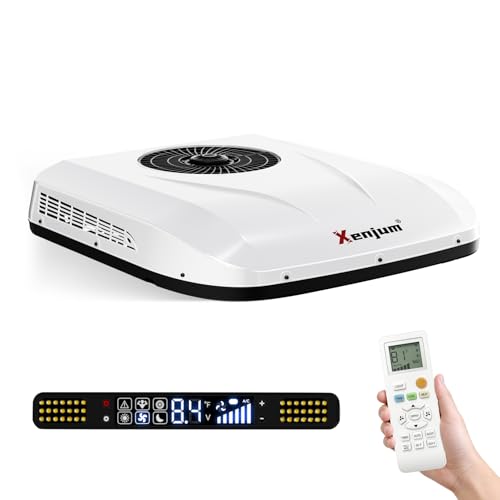 TOP CHOICEBest overallXenjum 12V RV Air Conditioner with HeaterView on Amazon
- 2
 Best for small tents and dog housesMovejoy 3000 BTU Portable Air ConditionerView on Amazon
- 3
 Best for RV roof-style installsRecPro 9.5K BTU Low Profile RV Black Air ConditionerView on Amazon
Our Top Picks
Quick Comparison
| Product | Best for | Key feature |
|---|---|---|
| Xenjum 12V RV Air Conditioner with Heater | Off-grid RVs and vans | 12V DC battery operation |
| Movejoy 3000 BTU Portable Air Conditioner | Tents and dog houses | 400W draw, small space |
| RecPro 9.5K BTU Low Profile RV Black Air Conditioner | Larger RV cabins | Quiet, remote control |
Xenjum 12V RV Air Conditioner with Heater
Xenjum 12V RV Air Conditioner with Heater, 11000BTU ONLY-43LBS Camper AC Unit, Ultra-Low Energy Use, 12 Volt DC Battery Powered Quiet AC for Off-Grid Camping, RVs, Vans, Trucks, Trailers (w/heater) If you want more background, see Solar Powered Air Conditioner DIY: What Works and How to Size It.
Best for: Running cooling directly from a 12-volt battery bank without an inverter.
This unit suits campers and van owners who already run a 12V battery system charged by solar panels and want to avoid inverter losses.
Pros:
- Runs on 12V DC, so it can connect straight to a battery bank
- Includes a heater function for shoulder seasons
Cons:
- Requires a large 12V battery bank to run for more than a short stretch
Movejoy 3000 BTU Portable Air Conditioner
Movejoy 3000 BTU Portable Air Conditioner for Camping & Tents, Dog Houses | Real rotary compressor. Tents & dog houses under 80 sq ft. 400W draws about 2.5 hrs per 1,000Wh station
Best for: Cooling a small enclosed space on a modest power station.
This is a fit for campers using a tent or a dog house who need a compact unit and a lower wattage draw than full-size room units.
Pros:
- Manufacturer lists about 400W draw, so a 1,000Wh station gives roughly 2.5 hours of run time at that rate
- Rated for spaces under 80 square feet
Cons:
- Limited to very small spaces; not suited to a full room
RecPro 9.5K BTU Low Profile RV Black Air Conditioner
RecPro 9.5K BTU Low Profile RV Black Air Conditioner (No Heat Pump) | Quiet Operation, Non-Ducted, Remote Control, LED Digital Display, Timer Function, Different Modes
Best for: Quiet cooling in a larger RV or cabin with a roof-mount style install.
It fits owners who want a low-profile roof unit with remote control and timer features, and who have a battery system sized for AC loads.
Pros:
- Low profile design with a remote and LED display
- Timer function and multiple operating modes
Cons:
- Higher power demand than the smaller units, so it needs a larger power station
Buying Guide
Check the running wattage, not just the BTU rating
Manufacturers list both BTU output and electrical draw, and the wattage figure is what determines how long a battery lasts. Divide your station’s watt-hour capacity by the unit’s average running watts to estimate hours. Startup surge can be higher than the rated draw, so leave margin.
Match the unit to the space
BTU ratings are tied to square footage. Undersized units run constantly and drain batteries faster. Oversized units cycle on and off, which can be less efficient on battery power.
Decide between DC and AC power
DC units can connect to a 12V battery bank and avoid inverter losses. AC units plug into a power station’s inverter outlet and are more flexible if you also run other appliances. Check which your system supports before you buy.
Plan your solar recharge
An air conditioner can drain a battery faster than panels can refill it on a cloudy day. Consider how many panel watts you have and how many peak sun hours your location gets. If you want a broader sizing approach, see Using a Solar Generator During a Power Outage: A Practical Plan and What Can a 2000W Solar Generator Run? (With Runtime Math).
Good picks for this: Movejoy 3000 BTU Portable Air Conditioner and Xenjum 12V RV Air Conditioner
FAQ
Can a solar generator run a full-size window air conditioner?
Most portable power stations cannot run a full-size window unit for long, because those draw well over 1,000 watts while running. Smaller, compact units are a more realistic match for portable batteries.
How long will an air conditioner run on a solar generator?
Divide the station’s watt-hour capacity by the unit’s average running watts, then reduce the result for inverter losses and battery depletion limits. Real run time depends on room heat, thermostat setting and battery state.
Do I need a special solar generator for air conditioning?
You need a station with enough continuous output wattage and battery capacity for the unit you choose. Check the startup surge rating in the station’s specifications as well as the running wattage.
Conclusion
For a 12V camper or van, the Xenjum unit is the most direct match for a DC battery system. For a small tent or dog house, the Movejoy unit keeps the load modest. For a larger RV with a roof-mount install, the RecPro unit suits owners who have the battery capacity to support it. Check the specifications against your own power station before buying, and consult a qualified electrician if you plan a permanent installation.
Sources
- Federal guidance on home energy use and efficiency ratings for cooling equipment (energy.gov)
- Emergency preparedness planning, including backup power for outages (ready.gov)
- Efficiency standards for air conditioning equipment (energystar.gov)
Related reading
- Air Water Generator Solar: How It Works and What to Know Before You Buy
- Yeti Solar Power Generator: What It Runs and How to Size One
- Wind Generator vs Solar Panels: Which Fits Your Home Backup Needs?
- Why Is My Solar Generator Charging Slowly? Causes and Fixes
About Graham Fisher
Graham Fisher is part of our editorial team and reviews and edits our solar generators for home backup & emergencies guides, checking product details against manufacturer specifications and owner feedback.






