
 By Lauren Holland
Updated November 2026
Whole home backup power keeps the lights, refrigerator, internet router, sump pump and medical equipment running when the grid goes down. Choosing the right system depends on how much of the house you need to keep alive, how long outages tend to last, whether you have solar, and how much you want to handle installation and fuel. The six products below were selected on published specifications, brand reputation for backup performance, and patterns that owners commonly report, including output ratings, battery capacity, expandability, transfer-switch compatibility and weather protection. This is a research-based list, not a set of hands-on tests.
Our top picks at a glance
- 1
 TOP CHOICEBest overallJackery HomePower 3600 Plus & 2x200W Solar PanelsView on Amazon
- 2
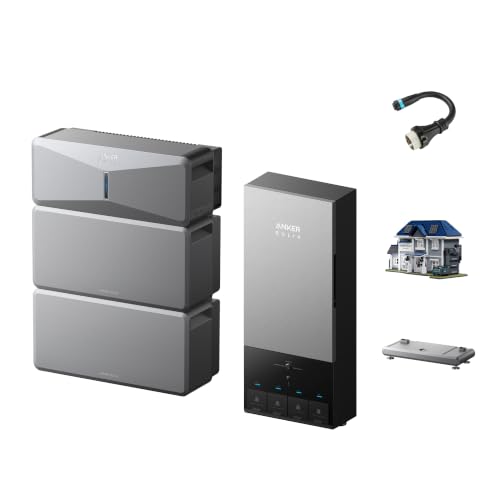 TOP CHOICEBest for whole-house expansionAnker SOLIX E10 Power Dock and Extra BatteryView on Amazon
- 3
 TOP CHOICEBest for high-output loadsEF ECOFLOW Portable Power Station 3600Wh DELTA ProView on Amazon
- 4
 Best for 240V homesEF ECOFLOW DELTA Pro 3 Portable Power StationView on Amazon
- 5
 Best for automatic standby powerGenerac 14kW Whole Home GeneratorView on Amazon
- 6
 Best for solar-ready modular storageAnker SOLIX F3800 Plus Portable Power Station and Home Power PanelView on Amazon
Our Top Picks
| Product | Best for | Key feature |
|---|---|---|
| Jackery HomePower 3600 Plus & 2x200W Solar Panels | Balanced home backup with solar recharge | 3584Wh capacity, 3600W AC output |
| Anker SOLIX E10 Power Dock and Extra Battery | Expandable whole-home coverage | 10kW output, 200A whole-home coverage |
| EF ECOFLOW Portable Power Station 3600Wh DELTA Pro | Heavy appliance loads and fast recharge | 3600W AC output, 2.7-hour fast charge |
| EF ECOFLOW DELTA Pro 3 Portable Power Station | Homes with 240V appliances | 4000W AC output, 120/240V |
| Generac 14kW Whole Home Generator | Automatic whole-house standby power | 14kW output, automatic 200A transfer switch |
| Anker SOLIX F3800 Plus Portable Power Station and Home Power Panel | Modular solar-ready storage | 3,840Wh LiFePO4, expandable to 53kWh |
Jackery HomePower 3600 Plus & 2x200W Solar Panels
Jackery HomePower 3600 Plus & 2x200W Solar Panels, 3584Wh, 3600W AC Output | LFP Battery, Expandable to 21kWh, Solar Generator, Essential Home Backup for Home Use, Emergencies, RV
Best for: Balanced home backup with solar recharge
This bundle suits households that want a single, solar-paired system to cover refrigerator, lighting, Wi-Fi and a few larger loads during multi-hour outages, and that want to recharge between storms without relying on fuel.
Key specs
- Capacity: 3584Wh (per listing)
- AC output: 3600W (per listing)
- Battery chemistry: LFP, expandable (per listing)
- Included solar panels: two 200W panels
Pros
- Solar panels are included, so recharging is planned from the start.
- LFP chemistry is generally associated with long cycle life.
- Output is sufficient for most essential circuits in a typical home.
Cons
- A full-home load profile will drain the battery within hours without solar input.
- Solar charging speed depends heavily on sun and panel placement.
Bottom line: A strong choice for homeowners who want an all-in-one solar kit for essential loads rather than whole-house coverage.
View on AmazonAnker SOLIX E10 Power Dock and Extra Battery
Anker SOLIX E10, Power Dock and Extra Battery, 12kWh-90kWh | 10kW Output,200A whole-home coverage, NEMA 4 & 3R rated, Up to 12-Month 0% APR
Best for: Expandable whole-home coverage
This system fits homeowners who expect their backup needs to grow, for example with added batteries or future solar, and who want a path toward circuit-level whole-home coverage.
Key specs
- Output: 10kW (per listing)
- Whole-home coverage: 200A (per listing)
- Storage range: 12kWh to 90kWh (per listing)
- Weather rating: NEMA 4 and NEMA 3R (per listing)
Pros
- Scales from modest to large storage capacity.
- Outdoor weather ratings support installation near the meter or panel.
- High output rating suits central air and well pumps in many layouts.
Cons
- Installation planning and electrician involvement are more significant than with portable units.
- Full capacity is a larger investment in both setup time and complexity.
Bottom line: Best for homeowners planning a phased, expandable system that may eventually cover the whole house.
View on AmazonEF ECOFLOW Portable Power Station 3600Wh DELTA Pro
EF ECOFLOW Portable Power Station 3600Wh DELTA Pro, 120V 3600W AC Output | 2.7H Fast Charge Power Station, Expandable up to 25kWh, Solar Generator for Home Use, Power Outage, Camping, RV, Emergencies
Best for: Heavy appliance loads and fast recharge
This unit fits households whose outages involve higher-draw items such as microwaves, window air conditioners or power tools, and who want quick recharging from an outlet between events.
Key specs
- Capacity: 3600Wh (per listing)
- AC output: 3600W at 120V (per listing)
- Charging: 2.7-hour fast charge (per listing)
- Expandable up to 25kWh (per listing)
Pros
- High AC output handles many common household appliances.
- Fast recharge shortens the gap between outages.
- Expansion options allow longer runtime over time.
Cons
- At full load, runtime shrinks quickly; calculate watt-hours carefully.
- Heavy weight makes it a fixed-location unit for most households.
Bottom line: A good pick for 120V homes that need strong output and quick turnaround between outages.
View on AmazonEF ECOFLOW DELTA Pro 3 Portable Power Station
EF ECOFLOW DELTA Pro 3 Portable Power Station, 4096Wh, 4000W AC Output | LFP Battery, Expandable to 48kWh, 120/240V, Solar Generator for Home Use, Camping Accessories, Emergencies, Power Outages, RV
Best for: Homes with 240V appliances
This system is aimed at homes with 240V equipment such as electric dryers, ranges or well pumps, where split-phase output matters for compatibility.
Key specs
- Capacity: 4096Wh (per listing)
- AC output: 4000W (per listing)
- Voltage options: 120V and 240V (per listing)
- Expandable to 48kWh (per listing)
Pros
- 240V output supports larger appliances that portable 120V units cannot run.
- LFP battery design is associated with long cycle life.
- Expansion capacity is substantial for longer outages.
Cons
- Connecting 240V loads safely usually requires a licensed electrician.
- Larger footprint and weight than basic portable stations.
Bottom line: Best for homeowners with 240V appliances who are comfortable with professional installation.
View on AmazonGenerac 14kW Whole Home Generator
Generac 14kW Whole Home Generator, Transfer Switch & Cellular Capability | Whole House Backup Power, Automatic 200 Amp Transfer Switch, Outdoor Gas Propane, Protects Home Outages, Storm Protection
Best for: Automatic whole-house standby power
This standby generator suits homeowners who want power to return automatically within seconds of an outage, without manually operating extension cords or transferring circuits.
Key specs
- Output: 14kW (per listing)
- Transfer switch: automatic 200A (per listing)
- Fuel: outdoor gas or propane (per listing)
Pros
- Automatic transfer keeps the whole house running with minimal user action.
- Runs on gas or propane, so fuel supply does not depend on sunlight.
- Designed for outdoor installation and storm conditions.
Cons
- Requires professional installation, fuel line work and permits in most areas.
- Produces noise and exhaust, which requires proper placement and maintenance.
Bottom line: The right choice for homeowners who want true whole-house backup with automatic switching and can accept a permanent installation.
View on AmazonAnker SOLIX F3800 Plus Portable Power Station and Home Power Panel
Anker SOLIX F3800 Plus Portable Power Station and Home Power Panel, 3,840Wh | 3,840Wh LiFePO4 Battery, Expandable to 53kWh, 3,200W Solar Input, 6,000W Solar Generator for Home, RVs, and Emergencies, U
Best for: Modular solar-ready storage
This system fits homeowners who want a portable-style battery with a home power panel option and solar input capacity for future expansion.
Key specs
- Capacity: 3,840Wh LiFePO4 (per listing)
- Expandable: up to 53kWh (per listing)
- Solar input: 3,200W (per listing)
Pros
- High solar input supports faster recharging when panels are available.
- Expansion options allow growth in storage over time.
- LiFePO4 chemistry is generally associated with durability.
Cons
- Whole-home coverage depends on the panel and circuit setup, which needs planning.
- Solar charging performance varies with weather and roof orientation.
Bottom line: Suited to households planning a solar-plus-storage setup that can grow with their needs.
View on AmazonBuying Guide
Capacity and Runtime
Start by listing the loads you need to keep running and their wattage. Multiply each device’s wattage by the hours you expect to run it, add the totals, and add roughly 15 to 20 percent for inverter losses. A refrigerator averaging 150 watts for 24 hours uses about 3.6kWh, so a 3600Wh unit alone would not cover it for a full day without other loads being reduced.
Good picks for this: Jackery HomePower 3600 Plus and Anker SOLIX E10
Continuous vs. Surge Output
Check both continuous and surge ratings. Motors, compressors and well pumps often draw several times their running wattage at startup. A unit with adequate continuous output but low surge capacity may trip when a refrigerator or pump starts.
Good picks for this: EF ECOFLOW DELTA Pro 3 and EF ECOFLOW Portable Power Station 3600Wh DELTA Pro
Voltage and Circuit Compatibility
Confirm whether your appliances run on 120V or 240V. Many homes have split-phase service, and some appliances such as electric dryers, ranges and certain well pumps need 240V. Portable 120V units will not run them.
Good picks for this: EF ECOFLOW DELTA Pro 3 and Generac 14kW Whole Home Generator
Transfer Switch and Installation
A whole-home system that connects to the house panel usually needs a transfer switch so the system does not backfeed the utility grid. This is a safety requirement, and installation should be handled by a licensed electrician who follows local code. Consult a professional before connecting any backup system to your panel.
Good picks for this: Generac 14kW Whole Home Generator and Anker SOLIX E10
Recharging and Solar Input
Decide how you will recharge. Wall charging is fastest for most units, but solar input extends runtime during long outages if sunlight is available. Check the solar input rating and the number of panels the unit supports.
Good picks for this: Jackery HomePower 3600 Plus and Anker SOLIX F3800 Plus
Battery Chemistry and Lifespan
LFP and LiFePO4 batteries are commonly associated with longer cycle life than some older lithium chemistries. Manufacturers often specify cycle counts at a given depth of discharge, so compare those figures rather than marketing claims.
Good picks for this: EF ECOFLOW DELTA Pro 3 and Anker SOLIX F3800 Plus
Weather Protection and Placement
If the system will live outdoors, check its weather rating. Ratings such as NEMA 3R or NEMA 4 indicate resistance to rain, dust and certain environmental conditions. Keep any fuel-based unit well away from windows and doors because of carbon monoxide risk.
Good picks for this: Anker SOLIX E10 and Generac 14kW Whole Home Generator
FAQ
How many watt-hours do I need for whole-home backup?
It depends on your daily energy use. Many homes use between 25 and 40 kWh per day, and covering all of it with batteries requires very large storage. Most owners prioritize essential circuits and size for 12 to 24 hours of critical loads instead.
Can a portable power station run my whole house?
Some units can power many circuits at once, but a full home rarely fits within a single portable battery. Expandable systems or a whole-home standby generator are more typical for complete coverage.
Do I need an electrician?
Yes, for any connection to the home electrical panel. A licensed electrician should install a transfer switch and confirm compliance with local code. Consult a professional before making that connection.
What is the difference between a portable power station and a standby generator?
A portable power station stores energy in batteries and is recharged by wall power or solar. A standby generator burns gas or propane, starts automatically, and can run as long as fuel is supplied.
How long will a battery last during an outage?
Runtime equals usable watt-hours divided by the load in watts, reduced by inverter losses. For example, a 3,000Wh usable battery powering a steady 500W load lasts roughly five hours, before losses.
Is solar recharging reliable during storms?
Solar output drops sharply during heavy cloud cover and storms. Owners often treat solar as a supplement, with wall or generator charging as the backup.
Conclusion
For balanced home backup with solar recharge, the Jackery HomePower 3600 Plus fits many households. Homeowners planning expandable storage should look at the Anker SOLIX E10 or F3800 Plus. Heavy 120V loads point toward the DELTA Pro, while 240V homes should consider the DELTA Pro 3 with professional installation. For automatic, true whole-house power, the Generac 14kW is the most direct option. Match the system to your essential loads, your voltage and your tolerance for installation work.
Sources
- Guidance on home energy use, backup planning and residential electrical considerations (energy.gov)
- Safety recommendations for portable generators and battery-powered equipment (cpsc.gov)
- Electrical and fire safety standards relevant to home power systems (nfpa.org)
Related reading
- Whole-Home Backup Power Solution: How to Size One for Outages (2026)
- 8 Best EcoFlow Delta Pro Ultra Whole-Home Backup Power Picks (2026)
- 7 Best EcoFlow Delta Pro Ultra X Whole-Home Backup Power Options for 2026
- 3 Best EcoFlow Delta Pro Ultra Home Backup Options for Whole-House Power (2026)
- Top 5 EcoFlow Power Stations with Solar Panel Options for Home Backup (2026)
About Lauren Holland
Lauren Holland is part of our editorial team and reviews and edits our solar generators for home backup & emergencies guides, checking product details against manufacturer specifications and owner feedback.



