
 By Graham Fisher
Updated November 2026
A solar generator with 220V outlet lets you run 240V appliances such as electric dryers, well pumps, window air conditioners and some induction cooktops during an outage, which standard 120V-only units cannot do. This list focuses on models that provide a true 220V or 240V output, along with enough capacity and surge rating to handle real household loads. Selection criteria: split-phase or 240V output, battery capacity in watt-hours, continuous and surge wattage, solar input, and the owner feedback patterns that show up most often in product listings.
Our top picks at a glance
- 1
 TOP CHOICEBest overallOSCAL PowerMax 6000 Solar Generator with 3×400W Solar PanelView on Amazon
- 2
 TOP CHOICEBest for large whole-home backupJackery HomePower 3600 Plus & 2x200W Solar PanelsView on Amazon
- 3
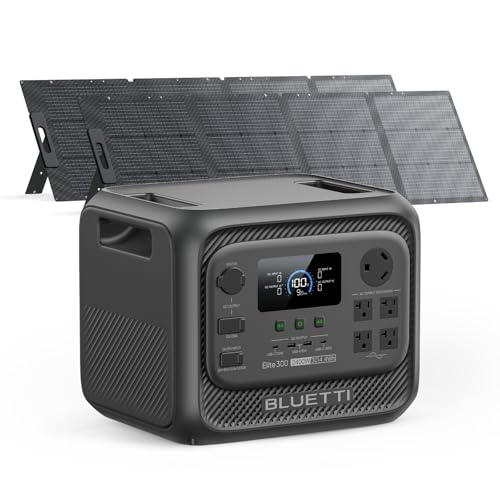 TOP CHOICEBest for RV and home dual useBLUETTI Solar Generator Elite 300 & 2x200W Solar PanelView on Amazon
- 4
 Best for expandable capacityABOK Ark3600 Portable Power Station with 400W Solar PanelView on Amazon
- 5
 Best budget-conscious mid-size pickJackery Solar Generator 1000 v2 and 200W Solar PanelView on Amazon
- 6
 Best for high surge loadsP5000 Plus 5120Wh 120/240V Portable Power Station, 3600W Solar GeneratView on Amazon
- 7
 Best for fast charging and UPS switchingJackery Explorer 2000 v2 and 2x200W Solar Panels, 2042Wh, 2200W AC OutView on Amazon
Our Top Picks
Quick Comparison
| Product | Best for | Key feature |
|---|---|---|
| OSCAL PowerMax 6000 | Whole-home split-phase backup | 6000W split-phase outlets |
| Jackery HomePower 3600 Plus | Large expandable home backup | 3584Wh, expandable to 21kWh |
| BLUETTI Elite 300 | RV and home dual use | TT-30 RV port, 2400W outlets |
| ABOK Ark3600 | Long-term expandable storage | Expandable to 11520Wh |
| Jackery Solar Generator 1000 v2 | Smaller, budget-conscious setups | 1024Wh, 50-minute fast charge |
| P5000 Plus 5120Wh | Heavy surge loads | 5000W surge, dual voltage |
| Jackery Explorer 2000 v2 | Fast switchover during outages | 20ms UPS, 100W USB-C PD |
OSCAL PowerMax 6000 Solar Generator with 3×400W Solar Panel
OSCAL PowerMax 6000 Solar Generator with 3×400W Solar Panel, 120V/240V Split Phase Voltage 6000W AC Outlets (9000W Peak), 2200W AC Charging/2400W Solar Charging, Emergency for Home, Battery Backup
Best for: Whole-home split-phase backup
This suits homeowners who want to run a 240V dryer, well pump or heat pump water heater alongside essential circuits during a multi-day outage.
Pros
- Split-phase 120V/240V outputs rated at 6000W continuous
- Three included 400W solar panels for strong daytime recharging
Cons
- Large footprint compared with smaller portable units
Jackery HomePower 3600 Plus & 2x200W Solar Panels
Jackery HomePower 3600 Plus & 2x200W Solar Panels, 3584Wh, 3600W AC Output | LFP Battery, Expandable to 21kWh, Solar Generator, Essential Home Backup for Home Use, Emergencies, RV
Best for: Large expandable home backup
A good fit for households that expect outages of a day or more and may add battery modules later as needs grow.
Pros
- 3584Wh LFP battery with 3600W AC output
- Expandable capacity up to 21kWh per manufacturer specifications
Cons
- Expansion batteries are sold separately and add to the total setup cost
BLUETTI Solar Generator Elite 300 & 2x200W Solar Panel
BLUETTI Solar Generator Elite 300 & 2x200W Solar Panel 3014.4Wh LFP Battery | w/ 2400W AC Outlets (4800W Surge), Smallest 3kWh, Portable Power Station for RV, Home Backup, w/ TT-30 RV Port & 12V/30A D
Best for: RV and home dual use
Works well for people who want one unit that covers home backup and occasional RV or camper trips, thanks to its built-in RV port.
Pros
- Includes a TT-30 RV port in addition to 2400W AC outlets
- About 3kWh capacity in a relatively compact body
Cons
- Capacity is modest for multi-day whole-home loads
ABOK Ark3600 Portable Power Station with 400W Solar Panel
ABOK Ark3600 Portable Power Station with 400W Solar Panel,2000W Solar Input | 3840Wh LiFePO4 Battery, Expandable to 11520Wh,15 Outlets, 3600W Solar Generator for Home Backup, Hurricane, Camping, RV
Best for: Long-term expandable storage
Best for owners planning to build out a larger battery bank over time while keeping a single inverter platform.
Pros
- 3840Wh LiFePO4 battery with 2000W solar input
- Expandable to 11520Wh per manufacturer specifications
Cons
- Brand reputation and long-term support are less established than larger names
Jackery Solar Generator 1000 v2 and 200W Solar Panel
Jackery Solar Generator 1000 v2 and 200W Solar Panel,1024Wh LiFePO4 Battery | 1500W (3000W Peak), 50-Min Fast Charge, 10ms UPS Solar Generator for Home Emergency, Camping & RV
Best for: Smaller, budget-conscious setups
A practical choice for keeping a refrigerator, lights and a few 240V-compatible loads running on a smaller budget, though it will not carry heavy 240V appliances for long.
Pros
- 1024Wh LiFePO4 battery with 10ms UPS switching
- Fast recharge, rated at about 50 minutes per manufacturer specs
Cons
- Capacity is limited for a full day of 240V appliance use
Buying Guide
Confirm you need true 240V output
Before comparing models, check the nameplate on each appliance you plan to run. Electric dryers, well pumps, many window air conditioners and some induction cooktops need 240V, and a 120V-only power station cannot supply them. Models that offer a 120V/240V split-phase or dedicated 240V outlet are the only ones that will handle these loads.
Match battery capacity to your critical loads
Battery capacity is listed in watt-hours (Wh) and tells you how long a device can run. Add up the wattage of the appliances you want to keep on, estimate how many hours you need them, and make sure the total watt-hours of the unit comfortably exceeds that figure. Remember that real-world output is lower than the rated capacity because of conversion losses.
Check continuous and surge wattage
Continuous output rating shows how much power the unit can supply steadily, while surge rating covers the brief spike motors need when starting. Well pumps, air conditioners and refrigerators all draw a large startup surge, so choose a unit whose surge rating is well above the starting draw of your largest motor.
Consider solar input and recharge speed
Solar input determines how quickly the battery recharges from panels, and it matters most for extended outages. Look at the maximum solar input in watts and whether the panels are included. Also check AC charging speed, since recharging from the grid or a generator can be much faster than solar alone.
Think about expandability and portability
Some systems allow you to add extra battery modules to increase capacity over time, which can be useful if your backup needs grow. If you plan to move the unit between a home and an RV or campsite, weigh the unit and consider whether it has handles or wheels. Expandable systems are usually heavier and less portable, so balance these trade-offs against your actual use.
FAQ
Can a solar generator with 220V outlet power my whole house?
Most units in this list can cover essential circuits such as the refrigerator, lights, internet equipment and a few outlets, but running an entire house at once usually requires a larger, expandable system and careful load management. Plan around critical loads rather than the full home. A licensed electrician can help if you want a transfer switch installed.
Do I need a transfer switch to use these units?
A transfer switch is not strictly required for plugging appliances directly into the unit, but it is the safest way to connect a power station to your home wiring. Without one, there is a risk of backfeeding the utility grid, which can endanger line workers. Consult a qualified electrician before making any permanent connection.
How long will a 220V solar generator run an appliance?
Runtime depends on the appliance’s wattage and the unit’s usable watt-hours. As a rough guide, divide the battery’s watt-hours by the appliance’s average wattage, then reduce the result to account for inverter losses. Actual runtime varies with temperature, age of the battery and how much the appliance cycles on and off.
Can solar panels recharge the unit during a power outage?
Yes, solar panels can recharge the battery even when the grid is down, since the power station does not depend on utility power for solar input. Recharge speed depends on panel wattage, sunlight, and weather. For a multi-day outage, pairing the solar input with a backup charging method is often a good idea.
Are LiFePO4 batteries better for home backup?
Many units in this list use LiFePO4 (lithium iron phosphate) batteries, which are generally valued for their long cycle life and stable chemistry. They tend to hold up well over many charge cycles compared with some other lithium types. Check the warranty and cycle rating for any model you are considering.
Conclusion
If you need a 220V or 240V outlet for large appliances and want the most flexibility to grow your system, the larger expandable models such as the OSCAL PowerMax 6000 and Jackery HomePower 3600 Plus are the strongest fits. They suit homeowners planning for longer outages or partial whole-home backup.
For smaller budgets, shorter outages, or users who also want portability for RV or camping trips, units like the BLUETTI Elite 300, ABOK Ark3600 and Jackery Solar Generator 1000 v2 offer a more compact footprint. Choose based on your critical loads, how long you need backup, and whether you will move the unit around.
Related reading
- Yeti Solar Power Generator: What It Runs and How to Size One
- Wind Generator vs Solar Panels: Which Fits Your Home Backup Needs?
- Why Is My Solar Generator Charging Slowly? Causes and Fixes
About Graham Fisher
Graham Fisher is part of our editorial team and reviews and edits our solar generators for home backup & emergencies guides, checking product details against manufacturer specifications and owner feedback.



