
 By Graham Fisher
Updated November 2026
Finding a jackery compatible solar panel is less about brand loyalty and more about matching three things: the panel’s output, the connector your power station expects, and the wattage your backup load actually needs. A panel that works mechanically but charges too slowly will leave a fridge or CPAP machine running on a dwindling battery. This guide compares five panels that owners commonly pair with Jackery-style power stations, and explains how to choose among them. Our selection criteria were specifications, brand reputation, and patterns in owner feedback. We did not test these panels ourselves.
Our top picks at a glance
- 1
 TOP CHOICEBest overall200W Portable Solar Panel for Power Station, 24% High Efficiency ETFEView on Amazon
- 2
 TOP CHOICEBest for compatibility with mixed power stationsSOKIOVOLA N-Type 16BB 200W Portable Solar Panel for EF/Jackery/Bluetti/Anker Power StationView on Amazon
- 3
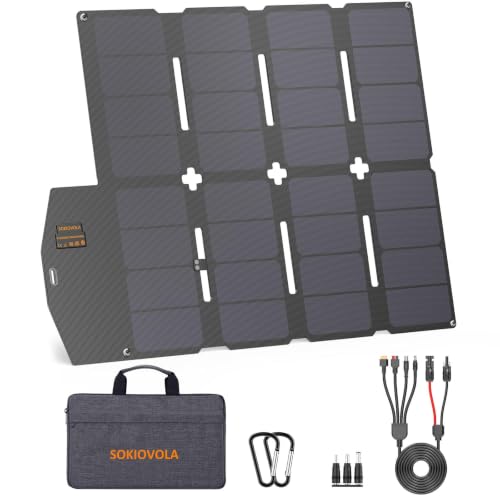 TOP CHOICEBest budget pickSOKIOVOLA 100W Portable Solar Panel MC-4 Foldable Solar Panel Charger KitsView on Amazon
- 4
 Best for light weekend useZOUPW 100W Portable Solar Panel for Power Station,23.5% Efficiency MonView on Amazon
- 5
 Best for high-capacity backupZOUPW 440W (2x220W) N-Type 16BB Portable Solar Panel for Power StationView on Amazon
Our Top Picks
Quick Comparison
| Product | Best for | Key feature |
|---|---|---|
| ZOUPW 440W (2x220W) N-Type 16BB Portable Solar Panel | High-capacity backup | 440W total array output, IP67 rating |
| 200W Portable Solar Panel for Power Station | Best overall | 200W output, Type-C and MC4 outputs |
| SOKIOVOLA N-Type 16BB 200W Portable Solar Panel | Mixed power station owners | 25.5% listed efficiency, IP68 rating |
| ZOUPW 100W Portable Solar Panel for Power Station | Light weekend use | 23.5% listed efficiency, IP67 rating |
| SOKIOVOLA 100W Portable Solar Panel MC-4 Foldable Kit | Budget pick | Lightweight foldable design, IP68 rating |
ZOUPW 440W (2x220W) N-Type 16BB Portable Solar Panel for Power Station
ZOUPW 440W (2x220W) N-Type 16BB Portable Solar Panel for Power Station | 25% Efficiency Foldable Solar Panel for Jackery 1000 V2/Anker/Ecoflow/Bluetti,IP67 Waterproof for RV Camping Off-grid Power
Best for: High-capacity backup
This is the most powerful option in the lineup, aimed at homeowners who want to run a refrigerator, sump pump, or CPAP through a longer outage and recharge faster during daylight. It is a larger setup, so it suits a fixed or semi-permanent location better than a quick camping trip.
Key specs (per listing name):
- Total rated output: 440W (2 x 220W)
- N-Type 16BB cell design
- Listed efficiency: 25%
- IP67 waterproof rating
- Listed compatibility includes Jackery 1000 V2
Pros
- Highest combined wattage in this list, which shortens recharge time
- Listed compatibility with several major power station brands
- IP67 rating handles rain and dust for outdoor mounting
Cons
- Heavier and bulkier than single-panel options, so setup takes more effort
- Needs a stable mounting spot with good sun exposure to deliver its rated output
Bottom line: Pick this if you need the fastest daytime recharge for a larger power station and can dedicate space to a bigger array.
View on Amazon200W Portable Solar Panel for Power Station, 24% High Efficiency ETFE Foldable Solar Panel Charger
200W Portable Solar Panel for Power Station, 24% High Efficiency ETFE Foldable Solar Panel Charger, QC3.0, Type-C 60W, MC4 Output, IP65 Waterproof, for Outdoor Camping, RV, Emergency Power Supply
Best for: Best overall
A good middle ground for homeowners who want meaningful daytime charging without the bulk of a multi-panel array. The 200W rating makes it a practical match for many mid-size power stations during an outage.
Key specs (per listing name):
- Output: 200W
- Efficiency: 24% (listed)
- ETFE foldable design
- QC3.0 and Type-C 60W output
- MC4 output connector
- IP65 waterproof rating
Pros
- Balanced wattage for everyday backup charging
- MC4 output and USB outputs add flexibility for phones and small devices
- Foldable design makes storage and transport simpler
Cons
- IP65 is water-resistant rather than fully submersible, so avoid heavy standing water
- Single-panel output may still take most of a day to recharge a large battery
Bottom line: A sensible default for most households that want one panel covering phones, lights, and a medium-sized backup battery.
View on AmazonSOKIOVOLA N-Type 16BB 200W Portable Solar Panel for EF/Jackery/Bluetti/Anker Power Station
SOKIOVOLA N-Type 16BB 200W Portable Solar Panel for EF/Jackery/Bluetti/Anker Power Station Foldable Solar Panel 25.5% High Efficiency IP68 Waterproof for Outdoor Trip RV Camping Blackout Off Grid
Best for: Best for compatibility with mixed power stations
Suited to households that own, or may later own, power stations from more than one brand. The listing names several compatible brands, which helps when your power station is not a Jackery model.
Key specs (per listing name):
- Output: 200W
- N-Type 16BB cell design
- Listed efficiency: 25.5%
- IP68 waterproof rating
- Foldable design
Pros
- Named compatibility with several major power station brands
- IP68 rating is higher than many portable panels in this class
- Listed efficiency is among the higher figures in this lineup
Cons
- Connector compatibility still depends on your specific model; check your input port
- Output on cloudy days will drop well below rated power, as with any panel
Bottom line: Choose this if you want a 200W panel and may switch or add power stations later.
View on AmazonZOUPW 100W Portable Solar Panel for Power Station, 23.5% Efficiency Mono Foldable Solar Charger
ZOUPW 100W Portable Solar Panel for Power Station,23.5% Efficiency Mono Foldable Solar Charger for Jackery 300/Ecoflow River/Anker/Bluetti,IP67 Waterproof for Camping RV Off-Grid Emergency Power
Best for: Best for light weekend use
A lighter, lower-wattage panel for households that mainly need to top up phones, lights, and small devices, or who want a secondary panel for a cabin or RV.
Key specs (per listing name):
- Output: 100W
- Mono cell design
- Listed efficiency: 23.5%
- IP67 waterproof rating
- Listed compatibility includes Jackery 300 and Ecoflow River
Pros
- Easy to carry and set up by one person
- Listed compatibility with smaller power stations
- IP67 rating suits outdoor use
Cons
- 100W output recharges larger batteries slowly
- Not enough on its own to run a refrigerator for an extended outage
Bottom line: Best for lighter loads or as a backup panel alongside a larger array.
View on AmazonSOKIOVOLA 100W Portable Solar Panel MC-4 Foldable Solar Panel Charger Kits
SOKIOVOLA 100W Portable Solar Panel MC-4 Foldable Solar Panel Charger Kits 18V IP68 Waterproof Lightweight and Compact for Small Power Station RV Travel Outdoor Activities
Best for: Best budget pick
Aimed at buyers who want a 100W foldable panel with an MC-4 connector and a durable outdoor rating without paying for premium features. It fits small power stations and general outdoor use.
Key specs (per listing name):
- Output: 100W
- MC-4 connector
- 18V nominal
- IP68 waterproof rating
- Lightweight, compact foldable design
Pros
- Budget-friendly entry point for a 100W panel
- IP68 rating is strong for the category
- Compact when folded
Cons
- Lower wattage limits how quickly it charges mid-size batteries
- Fewer built-in output options than some premium panels
Bottom line: A practical choice for small backup needs or a second panel on a tight budget.
View on AmazonBuying Guide
Connector Type and Compatibility
Most portable panels use MC-4 connectors, but your power station may use an XT60, a proprietary port, or a DC input with an adapter. Confirm the input type and voltage range in your power station’s manual before buying. Adapters or extension cables can bridge small gaps, but they add resistance and should be rated for the current. For a deeper look at wiring, see Jackery Solar Panel Connector: How to Wire and Connect Panels Safely and Solar Panel Compatibility With Power Stations: Voltage, Connectors and MPPT Limits.
Good picks for this: SOKIOVOLA N-Type 16BB 200W Portable Solar Panel, 200W Portable Solar Panel for Power Station
Wattage and Recharge Time
Panel wattage is a rated maximum under ideal sun, typically a few hours at midday in good weather. Real output is often well below rating. A rough estimate: divide your battery’s watt-hour capacity by the panel’s effective output (rated watts times about 0.6 to 0.7 for realistic conditions), then compare the result to your daylight hours. For a fuller method, read How Long Does It Take to Charge a Solar Generator With Solar Panels? and Solar Panel Size Calculator for Portable Power Stations.
Good picks for this: ZOUPW 440W (2x220W) N-Type 16BB Portable Solar Panel, ZOUPW 100W Portable Solar Panel for Power Station
Size, Weight and Portability
Folding panels trade some efficiency for convenience. A 100W panel is light enough for one person to carry; a 440W array usually needs two people and a stable mounting point. Measure your storage space and decide whether you will leave the panel set up permanently or pack it away after each use.
Good picks for this: SOKIOVOLA 100W Portable Solar Panel MC-4 Foldable Solar Panel Charger Kits, ZOUPW 100W Portable Solar Panel for Power Station
Waterproof and Weather Ratings
IP ratings describe dust and water resistance. IP65 handles rain and dust; IP67 tolerates temporary immersion; IP68 is rated for longer submersion under specified conditions. Outdoor panels get rain, dew, and dirt, so a higher rating matters more for panels left outside. Check the manufacturer’s stated test conditions rather than assuming full waterproofing.
Good picks for this: SOKIOVOLA N-Type 16BB 200W Portable Solar Panel, ZOUPW 440W (2x220W) N-Type 16BB Portable Solar Panel
Cell Technology and Efficiency
N-Type and mono cells generally convert sunlight more efficiently than older designs, which can matter when roof or yard space is limited. Efficiency figures are listed by manufacturers under lab-style conditions, so treat them as comparisons between panels rather than guarantees for your site.
Good picks for this: SOKIOVOLA N-Type 16BB 200W Portable Solar Panel, ZOUPW 100W Portable Solar Panel for Power Station
Use Case: Emergency Backup vs. Off-Grid Living
For outage backup, a single 100W to 200W panel can keep phones, lights, and a small fan running. A refrigerator or sump pump needs a larger battery and more panel capacity. Think about your actual daily watt-hour use before choosing. The Portable Solar Panels for Solar Generators: What to Look For guide covers this in more depth.
Good picks for this: 200W Portable Solar Panel for Power Station, ZOUPW 440W (2x220W) N-Type 16BB Portable Solar Panel
Care and Long-Term Durability
Keep panel surfaces clean and free of debris. Store folded panels out of direct heat, and avoid bending the cable where it meets the junction. Check MC4 connectors for corrosion or looseness each season. Panels with higher IP ratings generally tolerate neglect better, though no panel is maintenance-free.
Good picks for this: SOKIOVOLA 100W Portable Solar Panel MC-4 Foldable Solar Panel Charger Kits, SOKIOVOLA N-Type 16BB 200W Portable Solar Panel
FAQ
Will any solar panel work with a Jackery power station?
Not automatically. The panel’s output voltage and connector must match your Jackery’s input specifications. Many Jackery models accept MC4 or similar inputs, but always check your model’s manual and the panel’s compatibility list before connecting.
Can I connect two 100W panels to one power station?
Often yes, in series or parallel, but the total voltage and current must stay within the power station’s input limits. Mixing panels of different specifications can reduce output. Read Connecting Solar Panels in Series vs Parallel for a Power Station before wiring multiple panels.
How much solar input do I need to run a refrigerator?
It depends on the refrigerator’s daily consumption, which varies widely. Check the appliance’s energy label or manual for kilowatt-hours per day, then calculate how much panel output you need to recharge that amount within your daylight hours. Consult a qualified electrician for anything connected to home wiring.
Is IP65 enough for a panel left outside year-round?
IP65 protects against rain and dust but not prolonged submersion. For a panel left outdoors continuously, a higher rating such as IP67 or IP68 offers more margin, and mounting it where it will not collect standing water helps further.
Do solar panels charge on cloudy days?
Yes, but at reduced output, often a fraction of rated wattage. Charging will be slower and less predictable, so plan extra battery reserve for overcast periods.
Should I use an extension cable with my panel?
Short extensions are common, but longer runs add resistance and can reduce output. Use a cable rated for the current and keep runs as short as practical. See Jackery DC Extension Cable: 3 Best Picks for Solar Panels (2026) for options.
Conclusion
For most households, a 200W panel offers a practical balance of charging speed and portability, and the ZOUPW 200W-class option and SOKIOVOLA N-Type 16BB 200W panel are sensible starting points. If you need faster recharging for a larger battery, the 440W array is the strongest option here, provided you have room to mount it. Smaller loads and light weekend use suit the 100W panels, and the SOKIOVOLA 100W kit is the most budget-conscious choice. Match wattage to your daily watt-hour use, confirm connector compatibility with your specific power station, and check the IP rating against where the panel will live.
Sources
- Guidance on home energy use, solar basics, and backup power planning (energy.gov)
- Consumer safety information on portable electrical equipment and batteries (cpsc.gov)
- Research on photovoltaic performance and real-world output factors (nrel.gov)
About Graham Fisher
Graham Fisher is part of our editorial team and reviews and edits our solar generators for home backup & emergencies guides, checking product details against manufacturer specifications and owner feedback.






