
 By Emily Parker
Updated November 2026
Shopping for an ecoflow home battery backup setup usually starts with one question: what has to keep running when the grid goes down? For most households that means a refrigerator, a few lights, a Wi-Fi router, maybe a CPAP machine or a sump pump. The right EcoFlow product depends on how many watts those loads draw, how long you need them to run, and whether you want to power a single circuit or the whole house. This list is built around those criteria: usable capacity in watt-hours, continuous AC output, expandability, solar compatibility, and how well each product fits a home backup role rather than camping or job-site use.
Our top picks at a glance
- 1
 TOP CHOICEBest overallEF ECOFLOW Delta 3 Portable Power Station, 1024Wh 1800WView on Amazon
- 2
 TOP CHOICEBest for whole-home expansionEF ECOFLOW DELTA Pro Ultra Series 6144Wh Smart Extra BatteryView on Amazon
- 3
 TOP CHOICEBest for full-home capacityEF ECOFLOW Power Station Delta Pro Ultra X 12288Wh 12000WView on Amazon
- 4
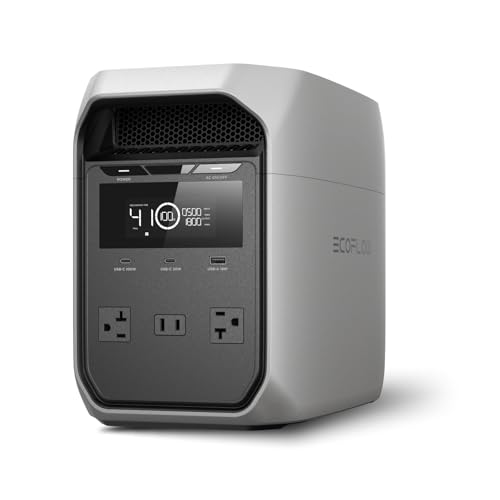 Best budget pickEF ECOFLOW Portable Power Station Delta 3 Classic, 1024Wh 1800W ACView on Amazon
- 5
 Best for circuit-level transferEF ECOFLOW Smart Home Panel 2, Whole-Home Backup System HubView on Amazon
Our Top Picks
Quick Comparison
| Product | Best for | Key feature |
|---|---|---|
| EF ECOFLOW Delta 3 Portable Power Station | Overall home backup for essentials | 1024Wh LiFePO4 battery with 1800W AC output |
| EF ECOFLOW DELTA Pro Ultra Series Smart Extra Battery | Expanding an existing EcoFlow system | 6144Wh plug-and-play expansion battery |
| EF ECOFLOW Power Station Delta Pro Ultra X 12288Wh | Whole-home backup with high capacity | 12000W inverter, expandable battery capacity |
| EF ECOFLOW Portable Power Station Delta 3 Classic | Budget-minded essentials backup | 1024Wh battery with 10ms UPS-style switching |
| EF ECOFLOW Smart Home Panel 2 | Choosing which circuits stay powered | 12-circuit sub-panel with 20ms auto-switchover |
EF ECOFLOW Delta 3 Portable Power Station, 1024Wh 1800W
EF ECOFLOW Delta 3 Portable Power Station, 1024Wh 1800W | LiFePO4 Battery, Full Charge in 56 Min, 1800W AC/100W USB-C Output, Solar Generator for Home Backup Power, Camping & RVs
Best for: Overall home backup for essentials
This is a good fit for a household that wants to keep a refrigerator, lights, phone and laptop charging, and a router running through a typical outage without wiring anything into the house. It is also a reasonable choice for people who want one unit that can move between backup duty and occasional camping trips.
Key specs
- 1024Wh LiFePO4 battery capacity
- 1800W continuous AC output
- 100W USB-C output
- Solar input compatible for recharging during extended outages
Pros
- Enough capacity for a refrigerator and essential circuits for a meaningful stretch of hours
- LiFePO4 chemistry is generally associated with a long cycle life compared with older lithium-ion designs
- Fast recharge from the wall is a practical advantage after an outage
Cons
- Capacity is modest for running a full household including electric heat or cooking
- Expansion requires additional battery modules and a larger budget
Bottom line: A strong default choice for someone who wants reliable essentials backup and may later add solar or a second unit.
View on AmazonEF ECOFLOW DELTA Pro Ultra Series 6144Wh Smart Extra Battery
EF ECOFLOW DELTA Pro Ultra Series 6144Wh Smart Extra Battery | Lifepo4 Battery,Plug-and-play,Backup for Home Use, Emergency, Camping, RV
Best for: Expanding an existing EcoFlow system
This is aimed at owners who already have a compatible EcoFlow power station and want to multiply their runtime without buying a second complete unit. It suits households planning a larger whole-home setup over time.
Key specs
- 6144Wh LiFePO4 capacity per extra battery module
- Plug-and-play design intended to pair with compatible EcoFlow inverter units
Pros
- Large capacity addition that scales runtime quickly
- Designed to integrate with the DELTA Pro Ultra ecosystem
- Useful for households with multi-day outage concerns
Cons
- Only useful if paired with a compatible inverter or power station
- Significant physical size and weight for storage planning
Bottom line: Best for owners who have already committed to the EcoFlow Pro ecosystem and need more stored energy.
View on AmazonEF ECOFLOW Power Station Delta Pro Ultra X 12288Wh 12000W
EF ECOFLOW Power Station 12288Wh Delta Pro Ultra X with AC cable | 12000W Solar Generator for Whole-Home Backup, Expandable to 180kWh, Emergency Power Supply (1x Inverter + 2 x Batteries)
Best for: Full-home capacity with high power output
This system is designed for households that want to run much of the home during an outage, including larger loads such as well pumps, central air components, or electric appliances. It is a significant investment in space and installation planning.
Key specs
- 12288Wh total capacity as listed
- 12000W inverter output as listed
- Configured as one inverter plus two batteries per the listing
Pros
- Very high power output for demanding loads
- Expandable architecture for future capacity growth
- Suited to whole-home backup planning
Cons
- Physically large and heavy, requiring dedicated placement
- Installation and load planning should be reviewed with a licensed electrician
Bottom line: Suited to homeowners planning serious whole-home resilience rather than a simple outage kit.
View on AmazonEF ECOFLOW Portable Power Station Delta 3 Classic, 1024Wh 1800W AC
EF ECOFLOW Portable Power Station Delta 3 Classic, 1024Wh 1800W AC | 3600W Surge, 1 Hr Fast Charge, 100W USB-C Output, LiFePO4 Battery, 10ms UPS Solar Generator for Home Backup, Camping & RVs
Best for: Budget-minded essentials backup
This is a practical option for someone who wants the same 1024Wh class of capacity as the standard Delta 3 with a simpler feature set. It fits renters and apartment dwellers who need outage power for a short list of devices.
Key specs
- 1024Wh LiFePO4 battery capacity
- 1800W AC output with 3600W surge rating as listed
- 100W USB-C output
- 10ms UPS-style switching as listed
Pros
- Same core capacity class as the Delta 3 line
- Fast switching helps sensitive electronics like routers and desktop computers
- Compact enough for indoor storage
Cons
- Not designed for high-draw appliances like electric dryers or space heaters
- Runtime for a refrigerator depends heavily on the appliance’s actual duty cycle
Bottom line: A sensible pick for essentials-only backup where keeping the cost of the setup contained matters most.
View on AmazonEF ECOFLOW Smart Home Panel 2, Whole-Home Backup System Hub
EF ECOFLOW Smart Home Panel 2, the Whole-Home Backup System Hub | 20ms Auto‑Switchover, EcoFlow App Control, 12‑Circuit Sub‑Panel works with DPU, DP3, Solar & Gas Generators
Best for: Choosing which circuits stay powered
The Smart Home Panel 2 is not a battery. It is a sub-panel hub that decides which circuits receive backup power when the grid drops. It suits households that want to protect specific loads, such as the refrigerator, freezer and medical equipment, without running the full house off stored energy. A licensed electrician should handle installation.
Key specs
- 12-circuit sub-panel as listed
- 20ms auto-switchover as listed
- EcoFlow app control
Pros
- Circuit-level control keeps battery use focused on critical loads
- Automatic switchover reduces the need to act during an outage
- Works alongside compatible EcoFlow batteries and solar inputs
Cons
- Requires professional electrical installation and permits in most jurisdictions
- Only delivers value when paired with an adequately sized battery system
Bottom line: Right for homeowners who want a permanent, automatic backup layout and are willing to hire an electrician.
View on AmazonBuying Guide
Usable Watt-Hour Capacity
Watt-hours (Wh) tell you how much energy a battery stores. To estimate runtime, multiply the load in watts by the hours you need, then add roughly 15 to 20 percent for inverter losses. A refrigerator averaging 150 watts over a day, for example, uses about 3.6 kWh, so it would drain a 1024Wh battery in well under a day without recharging. Owners often find that real-world runtime lands below the box number because of conversion losses.
Good picks for this: EF ECOFLOW Delta 3 Portable Power Station, EF ECOFLOW DELTA Pro Ultra Series Smart Extra Battery
Continuous Output Versus Surge Rating
Continuous AC output is the wattage the unit can sustain. Surge rating is the brief peak it can handle when a motor starts. Refrigerators, well pumps and sump pumps all have startup surges that can be several times their running wattage. Check the start-up draw listed on the appliance nameplate before deciding whether a given output rating is enough.
Good picks for this: EF ECOFLOW Portable Power Station Delta 3 Classic, EF ECOFLOW Power Station Delta Pro Ultra X 12288Wh
Battery Chemistry and Lifespan
LiFePO4 (lithium iron phosphate) batteries are generally associated with a longer cycle life and better thermal stability than some other lithium-ion chemistries. Manufacturers typically specify cycle counts at a given depth of discharge, so compare those figures rather than assuming a number. Keep the unit in a cool, dry area and avoid storing it fully empty for long periods.
Good picks for this: EF ECOFLOW Delta 3 Portable Power Station, EF ECOFLOW DELTA Pro Ultra Series Smart Extra Battery
Expandability
If you expect your needs to grow, check whether the power station accepts extra battery modules. Expansion lets you buy capacity in stages instead of replacing the whole system. Confirm compatibility between inverter and battery models before buying, since not every combination is supported.
Good picks for this: EF ECOFLOW DELTA Pro Ultra Series Smart Extra Battery, EF ECOFLOW Power Station Delta Pro Ultra X 12288Wh
Solar Recharging
For outages lasting more than a day, the ability to recharge from solar panels matters. Check the maximum solar input wattage and the panel voltage range the unit accepts. Pairing a 1000Wh-class battery with a modest panel array can extend runtime considerably during sunny weather, though recharge times vary with weather and panel orientation.
Good picks for this: EF ECOFLOW Delta 3 Portable Power Station, EF ECOFLOW Power Station Delta Pro Ultra X 12288Wh
Transfer Method and Installation
Portable units are plugged in as needed and offer flexibility. Whole-home or circuit-level systems connect to your electrical panel and switch automatically. Permanent installations generally require a licensed electrician and may need local permits. Verify your panel’s capacity and the code requirements where you live before buying.
Good picks for this: EF ECOFLOW Smart Home Panel 2, EF ECOFLOW Portable Power Station Delta 3 Classic
Medical Device Planning
If you rely on a CPAP or other medical equipment, calculate the device’s daily watt-hour use from its label or manufacturer documentation, then size the battery with extra margin. Keep backup power for medical devices a priority in your plan and consult your physician or equipment supplier about outage procedures.
Good picks for this: EF ECOFLOW Delta 3 Portable Power Station, EF ECOFLOW Smart Home Panel 2
FAQ
How many watt-hours do I need to run a refrigerator during an outage?
It depends on the model and how often the compressor cycles. Many full-size refrigerators use roughly 1 to 2 kWh per day, though efficient models use less. Check the yellow EnergyGuide label for estimated annual kWh and divide by 365 for a rough daily figure.
Can an ecoflow home battery backup run my whole house?
Most portable units cannot power a whole house for long. Whole-home coverage typically requires a large battery system paired with a transfer hub, and it should be designed by a licensed electrician who calculates your actual load.
Is a sump pump safe to run on battery power?
Sump pumps are a common backup target because flooding can be serious. Make sure the unit’s continuous and surge ratings cover the pump’s startup draw, and consider a battery-backed pump designed for the purpose if the load is high.
How long does a CPAP run on a power station?
CPAP machines draw relatively little power, often in the range of tens of watts. Check your device’s rated wattage and multiply by your nightly hours. Consult your sleep specialist or equipment supplier for guidance specific to your machine.
Do I need an electrician to install a smart home panel?
In most areas, yes. Connecting a sub-panel to your main electrical service involves permits, code compliance and safety considerations. Hire a licensed electrician familiar with your local requirements.
Can I recharge an EcoFlow battery with solar during an outage?
Yes, if the unit accepts solar input and you have compatible panels. Recharge speed depends on panel wattage, sunlight and the unit’s maximum input rating.
Conclusion
For most households looking at an ecoflow home battery backup setup, the Delta 3 is a sensible starting point for essentials like a refrigerator, router and lights. Owners who already run an EcoFlow system and want more runtime should look at the Delta Pro Ultra extra battery. Those planning whole-home coverage can consider the Delta Pro Ultra X, while the Delta 3 Classic suits tighter budgets with lighter loads. If you want automatic, circuit-level protection, the Smart Home Panel 2 is the component to add, ideally paired with a battery sized to your critical loads.
Sources
- Guidance on home energy use, backup power planning and appliance efficiency (energy.gov)
- Consumer safety information on portable generators, batteries and home electrical hazards (cpsc.gov)
- Safety certification standards relevant to batteries and power conversion equipment (ul.com)
Related reading
- EcoFlow Extra Battery Cable: 5 Best Options for Home Backup (2026)
- 8 Best Ecoflow Ocean Pro Battery Options for Home Backup (2026)
- 6 Best EcoFlow Extra Battery Expansion Adapter Options for Home Backup
About Emily Parker
Emily Parker is part of our editorial team and reviews and edits our solar generators for home backup & emergencies guides, checking product details against manufacturer specifications and owner feedback.






