
 By Emily Parker
Updated November 2026
The ecoflow delta 3 ultra plus extra battery pairing is aimed at households that want to keep a refrigerator, medical equipment, sump pump and a few lights running through a multi-day outage without relying on a gas generator. The main unit is listed at 3072Wh, and the setup can be expanded toward 11kWh with additional expansion packs. This review looks at what the listing states, how the system is typically sized, and where it fits compared with smaller or lower-capacity options. Buyers who run a few essential loads and want quiet, indoor-safe backup will likely find it useful. Buyers who only need a phone charger and a few lights, or who want to power a full house with central air conditioning, should look elsewhere.

EF ECOFLOW 3072Wh DELTA 3 Ultra Plus with Delta 3 Max Plus Extra Battery | Portable Power Station with 3600W (7200W Surge) Output, Expandable to 11kWh, Solar Generator for Home Use, Camping, RV
Product Overview
The EF ECOFLOW DELTA 3 Ultra Plus, bundled with a Delta 3 Max Plus extra battery, is a portable power station built around lithium iron phosphate (LiFePO4) cells. Its listing describes a 3072Wh capacity and a 3600W continuous AC output with a 7200W surge rating. The system is marketed for home backup, camping and RV use, and the listing indicates it can be expanded to 11kWh.
The appeal of a unit like this is its combination of capacity and output. Many portable stations are rated for a few hundred watt-hours and suit phone charging or a small fan. A 3000-plus Wh system with a 3600W inverter is in a different category: it can run a microwave for a short period, a window air conditioner on a modest setting in some cases, or a refrigerator and a CPAP machine for a full night. Real-world runtime depends heavily on load, so the listed figures are best treated as a ceiling rather than a promise.
Because the extra battery is listed as a Delta 3 Max Plus expansion unit, the bundle is designed to work as one connected system rather than two unrelated devices. Owners who start with the main unit and add expansion capacity later are the typical audience for this kind of configuration.
Key Features & Specifications
The table below lists only the values stated in the product name and well-established specifications for this model line. Confirm final figures on the manufacturer’s listing before purchasing.
| Feature | What the listing indicates |
|---|---|
| Capacity | 3072Wh (main unit) |
| Continuous AC output | 3600W |
| Surge output | 7200W |
| Expandability | Up to 11kWh with additional expansion batteries |
| Battery chemistry | LiFePO4 (lithium iron phosphate) |
| Intended use | Home backup, camping, RV |
| Bundled accessory | Delta 3 Max Plus extra battery |
LiFePO4 chemistry is generally associated with a longer cycle life than some older lithium-ion designs, which matters for a unit you may cycle frequently with solar. Check the manufacturer’s warranty and cycle-life statements for exact numbers.
Pros & Cons
Pros
- Large 3072Wh capacity suits overnight refrigeration, medical devices and sump pump backup.
- 3600W continuous output covers most household essentials, including many small appliances.
- Expandable toward 11kWh, so capacity can grow with needs.
- LiFePO4 chemistry is typically associated with long cycle life and better thermal stability.
- Works for indoor use, unlike fuel generators, which matters for carbon monoxide safety.
- Single-vendor bundle reduces compatibility guesswork for the extra battery.
Cons
- Heavy and bulky compared with compact power banks; not a casual carry-along unit.
- A full-capacity setup represents a significant investment, so it is a premium option, not a budget pick.
- Recharge time depends on your input source; wall charging alone can take many hours at full capacity.
- High-draw appliances such as central AC, electric dryers and space heaters will drain it quickly.
- Owners who only need a few hours of backup may be paying for capacity they never use.
Performance Analysis
Performance comes down to a simple calculation: usable watt-hours divided by the average draw of your loads, minus conversion losses. Inverters are not perfectly efficient, and battery management systems typically reserve some capacity, so usable energy is usually less than the rated 3072Wh. A reasonable planning assumption is 80 to 90 percent of rated capacity for well-matched loads.
Consider a worked example. A modern refrigerator often draws around 100 to 200 watts while running, but cycles on and off, so its average consumption over 24 hours may be closer to 1 to 2 kWh per day, depending on the model and ambient temperature. A CPAP machine typically uses somewhere around 30 to 60 watts during sleep. A sump pump might run intermittently at several hundred watts. Adding these together, a household running only these essentials could plausibly get one to two days of runtime from the 3072Wh unit, and more with the expansion battery. Your own numbers will differ, so measure your loads with a plug-in watt meter before relying on any estimate.
Owner feedback patterns for large LiFePO4 stations tend to focus on three areas: quiet operation compared with gas generators, straightforward expansion once the extra battery is connected, and the reality that recharge time from wall power is slow at this capacity. Solar input shortens recharge time considerably but depends on panel wattage, sun hours and weather. Surge capacity is useful for motor startup, though owners generally report that the listed surge figure is a short-duration rating, not sustained output.
Who Should Buy This Product?
This system fits households that have a defined list of essential loads and want reliable backup for outages lasting from several hours to a few days. It is also a reasonable choice for people with medical equipment that requires continuous power, provided they have a backup plan for extended outages and check with their equipment provider about power requirements.
It is a weaker fit for people who only want to keep phones and a router charged, since a much smaller station would serve them at lower cost. It is also not the right tool for whole-home backup that includes central air conditioning, electric water heating or an electric range. For those needs, a transfer switch and a larger, professionally installed system are more appropriate. Consult a licensed electrician before connecting any portable station to home wiring.
Buying Guide
Start by listing your essential appliances and their wattage. Check the nameplate on each device, then measure actual draw with a watt meter if possible. Add the watt-hours you need per day, multiply by the number of days of backup you want, and compare the total to the usable capacity of the station. Leave a margin of at least 20 percent.
Next, confirm your recharge plan. If you intend to rely on solar, check the maximum solar input wattage and whether your panels match the station’s input specifications. If you rely on wall charging, account for the time it takes to refill the battery between outages.
Finally, weigh the bundle against alternatives. Two well-known options to compare are the standalone expansion battery that pairs with the Delta 3 family, and a lower-capacity system if your needs are modest:
- Delta 3 Max Plus extra battery (2048Wh). A LiFePO4 expansion unit designed to work with the Delta 3 Max Plus and Delta 3 Ultra Plus. Useful if you already own a compatible main unit and want to add capacity.
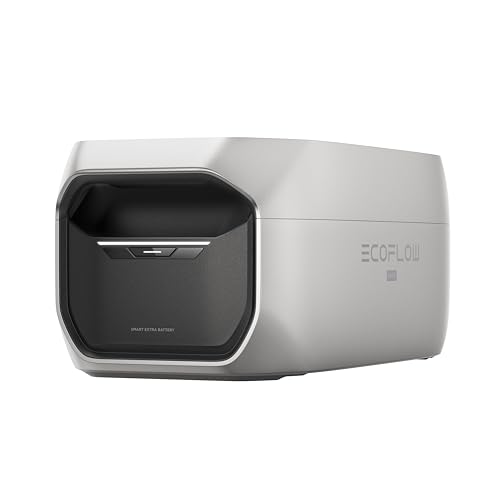
EF ECOFLOW Portable Power Station DELTA 3 MAX Plus Extra Battery, 2048Wh | LiFePO4 Expansion Battery for Power Station DELTA 3 Max Plus and DELTA 3 Ultra Plus
- Delta 3 Series Smart Extra Battery (1024Wh). A smaller expansion battery compatible with several Delta 3 family stations, though the listing states it is not compatible with the Delta 3 Classic. Suited to users who need a moderate capacity increase at a lower entry point.

EF ECOFLOW Delta 3 Series Smart Extra Battery, 1024Wh LiFePO4 Battery | Expansion Battery only for Power Station Delta 2/Delta 3/Delta 3 Plus/Delta 3 1500 – Incompatible with Delta 3 Classic
For sizing help and related configurations, see Ecoflow Delta Pro 3 with Extra Battery: How to Size Your Backup (2026) and EcoFlow Delta 3 vs Delta 3 Plus: Which Power Station Fits Your Backup Needs?. If you are comparing model generations, Ecoflow Delta 3 Max vs Max Plus: A Practical Guide (2026) covers the differences, and EcoFlow Delta 3 Ultra Plus: Specs, Sizing and Home Backup Guide goes deeper on specifications.
FAQ
How long will the ecoflow delta 3 ultra plus extra battery setup run a refrigerator?
Runtime depends on the refrigerator’s efficiency, ambient temperature and how often it cycles. Many modern refrigerators use an average of roughly 1 to 2 kWh per day, so the combined system could plausibly keep one running for well over a day. Measure your unit’s actual consumption to get a reliable figure.
Can it power a CPAP machine overnight?
Most CPAP machines draw a modest amount of power during sleep, often in the range of tens of watts. The combined capacity should handle several nights of use. If you depend on the device, confirm its specific power draw and consult your sleep medicine provider about backup planning.
Is the extra battery required to use the main unit?
No. The main station operates on its own. The extra battery adds capacity and is intended to be connected to the main unit as an expansion, so it is most useful when you need more runtime than the base capacity provides.
Can I run central air conditioning on this system?
Generally not for extended periods. Central AC systems draw significant power, often well above what a typical portable station can sustain for long. Smaller window units or fans are more realistic loads for this class of product.
How long does it take to recharge?
Recharge time depends on input power. Wall charging at full capacity takes many hours, and solar recharging depends on panel wattage and sunlight. Check the manufacturer’s stated charge times for your specific input method.
Is it safe to use indoors?
Portable power stations produce no combustion exhaust, which is a major advantage over gasoline or propane generators that should never be run indoors. Still, keep the unit ventilated, avoid covering it, and follow the manufacturer’s manual for safe operation.
Do I need a transfer switch to connect it to my house?
For safety and code reasons, connecting a portable station to home circuits typically requires a properly installed transfer switch or interlock. Consult a licensed electrician before attempting any connection to household wiring.
Final Verdict
The ecoflow delta 3 ultra plus extra battery combination is a strong option for households that need quiet, indoor-safe backup for a defined set of essential loads, with room to expand over time. Its 3072Wh base capacity, 3600W continuous output and expandability toward 11kWh address the needs of most families who want to protect a refrigerator, medical equipment and a sump pump during outages. It is less suitable for light users, who will be paying for more capacity than they need, or for anyone expecting to run central air conditioning or electric heating.
Before buying, measure your real loads, confirm recharge options, and check compatibility with the expansion battery you plan to use. If the sizing math works for your home, this is a capable and well-matched setup.
View on AmazonAbout Emily Parker
Emily Parker is part of our editorial team and reviews and edits our solar generators for home backup & emergencies guides, checking product details against manufacturer specifications and owner feedback.

