
 By Emily Parker
Updated November 2026
Losing power for a few hours is an inconvenience. Losing it for a day or more can spoil food, shut off a sump pump and leave a CPAP machine without power overnight. Anyone looking at an ecoflow whole house backup setup is usually trying to answer one question: which combination of battery capacity, switching equipment and output will keep the essentials running without wiring a full generator? This list weighs five options against four criteria: how much circuit coverage they offer, usable energy capacity, surge and continuous output ratings, and how well the system integrates with EcoFlow’s ecosystem and its transfer hardware.
Our top picks at a glance
- 1
 TOP CHOICEBest overallEF ECOFLOW Smart Home Panel 2View on Amazon
- 2
 TOP CHOICEBest for large homesEF ECOFLOW Power Station 12288Wh Delta Pro Ultra XView on Amazon
- 3
 TOP CHOICEBest for high-output gas backupDuroMax XP13000HX 13,000-Watt Dual Fuel Portable GeneratorView on Amazon
- 4
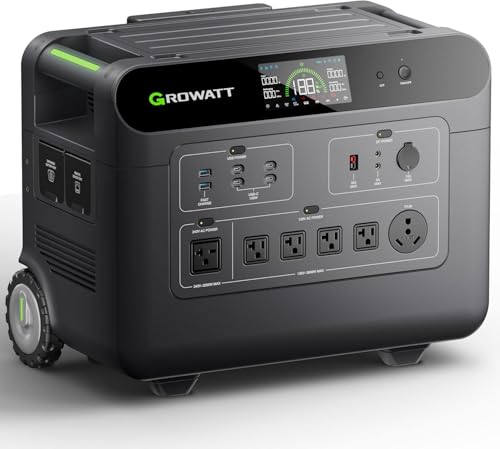 Best for expandable storageGROWATT HELIOS 3600 Portable Power StationView on Amazon
- 5
 Best budget pickEF ECOFLOW Delta 3 Ultra 3072Wh Portable Power StationView on Amazon
Our Top Picks
| Product | Best for | Key feature |
|---|---|---|
| EF ECOFLOW Smart Home Panel 2 | Whole-home switching and circuit control | Automatic switchover with a 12-circuit sub-panel |
| EF ECOFLOW Power Station 12288Wh Delta Pro Ultra X | Large homes with heavy loads | 12,000W output and expandable capacity |
| DuroMax XP13000HX 13,000-Watt Dual Fuel Portable Generator | Long outages where fuel can be refilled | Gas and propane operation with electric start |
| GROWATT HELIOS 3600 Portable Power Station | Households that want to grow capacity over time | Expandable up to 36kWh with 240V output |
| EF ECOFLOW Delta 3 Ultra 3072Wh Portable Power Station | Partial-home backup on a tighter budget | 3600W continuous output with a 7200W surge rating |
EF ECOFLOW Smart Home Panel 2
EF ECOFLOW Smart Home Panel 2, the Whole-Home Backup System Hub | 20ms Auto‑Switchover, EcoFlow App Control, 12‑Circuit Sub‑Panel works with DPU, DP3, Solar & Gas Generators
Best for: Whole-home switching and circuit control
This is the hub that makes an EcoFlow setup behave like a real home backup system rather than a collection of extension cords. It sits between your utility panel and selected circuits, moves those circuits to battery power when the grid drops, and lets you manage them from the EcoFlow app. It suits homeowners who already own or plan to buy EcoFlow batteries and want automatic, hands-off switchover.
Key specs:
- Advertised automatic switchover time of about 20 milliseconds
- 12-circuit sub-panel for prioritized loads
- Compatible with EcoFlow Delta Pro Ultra, Delta Pro 3, solar and gas generator inputs
- Controlled through the EcoFlow app
Pros:
- Fast switchover keeps refrigerators and electronics from noticeably restarting
- Circuit-level control lets you protect what matters most
- Works as the central hub for multiple EcoFlow power sources
Cons:
- Requires licensed electrical installation, which adds to the total project effort
- Only covers the circuits you wire into the sub-panel, so it is not a full-house solution on its own
Bottom line: Pick this if you want automatic whole-home-style switching and plan to pair it with EcoFlow batteries. Plan for an electrician.
View on AmazonEF ECOFLOW Power Station 12288Wh Delta Pro Ultra X
EF ECOFLOW Power Station 12288Wh Delta Pro Ultra X with AC cable | 12000W Solar Generator for Whole-Home Backup, Expandable to 180kWh, Emergency Power Supply (1x Inverter + 2 x Batteries)
Best for: Large homes with heavy loads
The listing describes a 12,288Wh battery paired with a 12,000W inverter, which is the kind of output needed to run an electric range, a well pump and central air at the same time. Owners who need to keep much of a household running through a multi-day storm will find this the most capable option here. It is also expandable, which matters if you want to cover longer outages later.
Key specs:
- 12,288Wh capacity (listing)
- 12,000W AC output (listing)
- Expandable battery capacity (listing)
Pros:
- Output is high enough for large appliances that smaller stations cannot start
- Expandable design supports longer outages
- Integrates with EcoFlow’s transfer and panel accessories
Cons:
- Large and heavy, so it is best kept as a fixed installation
- Full capacity requires careful planning of charging sources
Bottom line: The right choice for larger homes that need serious output and room to expand.
View on AmazonDuroMax XP13000HX 13,000-Watt Dual Fuel Portable Generator
DuroMax XP13000HX 13,000-Watt Dual Fuel Portable Generator – Gas & Propane, Electric Start, Whole Home Power Backup, Transfer Switch Ready, RV & Emergency Ready
Best for: Long outages where fuel can be refilled
This is not an EcoFlow product, but it is a common companion to a battery system. Its listing describes gas and propane operation, electric start and transfer-switch readiness, which makes it a practical backup when batteries run low during extended outages. Owners often pair a generator like this with a battery hub so the battery handles the first hours and the generator covers the rest.
Key specs:
- 13,000-watt rating (listing)
- Dual fuel: gasoline and propane (listing)
- Electric start and transfer-switch ready (listing)
Pros:
- Runs indefinitely as long as fuel is available
- High wattage suits large loads
- Propane option stores longer than gasoline
Cons:
- Produces noise and exhaust, so it must be placed outdoors and away from windows
- Requires fuel storage and regular maintenance
Bottom line: A strong complement to an EcoFlow setup for households that expect multi-day outages. Always install it with a proper transfer switch and never run it indoors.
View on AmazonGROWATT HELIOS 3600 Portable Power Station
GROWATT HELIOS 3600 Portable Power Station, 3600Wh LFP Solar Generator | Expandable up to 36kWh capacity, 240V/7200W AC Output. Delivers steady electric power for whole house backup emergency use
Best for: Households that want to grow capacity over time
The listing highlights a 3600Wh lithium iron phosphate battery that can be expanded, along with a 240V output. That combination lets a household start with critical circuits and add capacity as budget allows. It suits owners who want a modular approach rather than buying one large unit upfront.
Key specs:
- 3600Wh LFP battery (listing)
- Expandable up to 36kWh (listing)
- 240V / 7200W AC output (listing)
Pros:
- Modular expansion path
- 240V output supports larger appliances
- LFP chemistry is generally known for long cycle life
Cons:
- Less of an ecosystem fit if you already own EcoFlow hardware
- Transfer and wiring still require a qualified electrician
Bottom line: A good pick for owners who want to start small and scale, especially if they prefer a non-EcoFlow battery.
View on AmazonEF ECOFLOW Delta 3 Ultra 3072Wh Portable Power Station
EF ECOFLOW Delta 3 Ultra 3072Wh Portable Power Station, 3600W AC Output | (Surge 7200W), LFP Battery Power Station, Solar Generator for Home Use, Camping Accessories, Emergencies & RV Backup
Best for: Partial-home backup on a tighter budget
This is the most approachable option in the list. At 3072Wh with 3600W continuous output and a 7200W surge rating, it can run a refrigerator, lights, a router and a CPAP machine, though not most major appliances at once. It is also portable, so it doubles as a camping or RV power source.
Key specs:
- 3072Wh LFP battery (listing)
- 3600W AC output with 7200W surge (listing)
- Portable form factor for home and outdoor use (listing)
Pros:
- Plug-in use with no electrician needed
- Surge rating handles motor startup loads
- Works for both home and recreational use
Cons:
- Limited runtime for whole-home loads
- Needs a transfer method for a fully integrated backup
Bottom line: The practical starting point for households that want to keep essentials running without a full installation.
View on AmazonBuying Guide
Circuit coverage and transfer method
Decide early whether you want to back up a few circuits or the whole house. Plug-in stations power individual devices; a transfer hub or sub-panel feeds selected circuits automatically. Mapping which outlets and appliances you need before shopping prevents overbuying.
Good picks for this: EF ECOFLOW Smart Home Panel 2, EF ECOFLOW Delta 3 Ultra 3072Wh Portable Power Station
Usable watt-hours and runtime
Add the wattage of each essential load and multiply by hours of use to find daily watt-hours. A refrigerator averaging 150 watts for 24 hours uses roughly 3.6kWh. Remember that inverters lose some energy, so plan for usable capacity that is lower than the rated figure. Our site’s sizing guides walk through this calculation in more depth.
Good picks for this: EF ECOFLOW Power Station 12288Wh Delta Pro Ultra X, GROWATT HELIOS 3600 Portable Power Station
Continuous output and surge rating
Continuous wattage must cover everything running at once. Surge rating matters for motors such as well pumps, sump pumps and air conditioners, which draw several times their running wattage at startup. Check both numbers, not just the headline figure.
Good picks for this: EF ECOFLOW Delta 3 Ultra 3072Wh Portable Power Station, DuroMax XP13000HX 13,000-Watt Dual Fuel Portable Generator
Expandability
If you expect longer outages or plan to add solar later, choose a system that can add battery modules. Expandable designs let you spend in stages. Confirm the expansion limit and whether batteries must be matched to the same brand.
Good picks for this: GROWATT HELIOS 3600 Portable Power Station, EF ECOFLOW Power Station 12288Wh Delta Pro Ultra X
Ecosystem compatibility
Accessories such as transfer hubs, solar inputs and apps work best within one brand. Mixing brands can require adapters or may not be supported. Check compatibility lists before buying.
Good picks for this: EF ECOFLOW Smart Home Panel 2, EF ECOFLOW Delta 3 Ultra 3072Wh Portable Power Station
Installation and electrical safety
Any connection to a home’s electrical panel should be done by a licensed electrician who follows local code. Backfeeding the grid through an improper connection can injure utility workers. Permits and inspections may be required in your area.
Good picks for this: EF ECOFLOW Smart Home Panel 2, DuroMax XP13000HX 13,000-Watt Dual Fuel Portable Generator
Placement, ventilation and maintenance
Batteries should be kept dry, out of direct sun, and at moderate temperatures. Gas generators must run outdoors with clearance from openings. Check battery charge levels and firmware periodically so the system is ready when a storm arrives.
Good picks for this: GROWATT HELIOS 3600 Portable Power Station, DuroMax XP13000HX 13,000-Watt Dual Fuel Portable Generator
FAQ
Can an EcoFlow system back up my whole house?
Most EcoFlow setups back up selected circuits rather than every outlet and appliance. A transfer hub and high-capacity batteries can cover a large share of a home, but the exact coverage depends on your panel, your loads and how many circuits you wire in.
How long will a home battery system run during an outage?
Runtime is capacity divided by the load you are powering, adjusted for inverter losses. A refrigerator alone can run for a day or more on a mid-size battery, while air conditioning will drain the same battery in hours. Use a watt-hour calculator with your actual appliance wattages.
Do I need an electrician to install a transfer switch or hub?
Yes, for any connection to the home’s electrical panel. Plug-in portable stations do not require installation, but hardwired systems should be installed by a licensed professional who can confirm code compliance.
Can I charge the batteries with solar during an outage?
Many EcoFlow batteries accept solar input, which can extend runtime during long outages. Solar output depends on sunlight, panel size and weather, so it is a supplement rather than a guaranteed charging source.
What is the difference between continuous and surge wattage?
Continuous wattage is the power the unit can supply indefinitely. Surge wattage is a short burst for motor startup. Appliances with compressors or pumps often need surge capacity to start, even if their running wattage is lower.
Is a gas generator a better choice than a battery system?
Neither is universally better. Generators provide long runtime with refueling but produce noise and exhaust. Battery systems are quiet and instant but limited by stored energy. Many households use both, with the battery covering the first hours of an outage.
Conclusion
For most households, the best approach is to match the system to the loads you truly need during an outage. The EF ECOFLOW Smart Home Panel 2 suits anyone who wants automatic switchover and plans to pair it with EcoFlow batteries. The EF ECOFLOW Power Station 12288Wh Delta Pro Ultra X fits larger homes with heavy loads. The DuroMax XP13000HX works as a long-runtime companion for extended outages. The GROWATT HELIOS 3600 suits owners who want to grow capacity over time, and the EF ECOFLOW Delta 3 Ultra 3072Wh is the simplest starting point for essentials-only backup. Read the sizing guides linked in this article before you buy, and consider a licensed electrician for any hardwired installation.
Sources
- Guidance on home energy storage, backup power planning and efficient appliance use (energy.gov)
- Safety recommendations for portable generators, including carbon monoxide hazards and safe placement (cpsc.gov)
- Electrical and fire safety standards that apply to residential power equipment (nfpa.org)
Related reading
- 3 Best EcoFlow Delta Pro Ultra Home Backup Options for Whole-House Power (2026)
- Ecoflow Whole Home Backup: Top 5 Systems Compared (2026)
- Ecoflow 50 Amp Hub: How to Use It for Whole-Home Backup Safely
- 8 Best EcoFlow Delta Pro Ultra Whole-Home Backup Power Picks (2026)
About Emily Parker
Emily Parker is part of our editorial team and reviews and edits our solar generators for home backup & emergencies guides, checking product details against manufacturer specifications and owner feedback.






