
 By Graham Fisher
Updated November 2026
Choosing a jackery homepower 3600 plus portable power station, or one of its close relatives, starts with a simple question: how many watt-hours does your home need to keep running during an outage? This guide compares three Jackery home backup units with that question at the center. We weighed published specifications such as battery capacity, continuous AC output, surge rating and expandability, along with the patterns owners commonly report about real-world runtime, charging speed and build quality. The goal is to match each model to a clear backup need, not to crown a single winner.
Our top picks at a glance
- 1
 TOP CHOICEBest overallJackery HomePower 3600 Plus Power StationView on Amazon
- 2
 Best for mid-size backup loadsJackery HomePower 3000 Portable Power StationView on Amazon
- 3
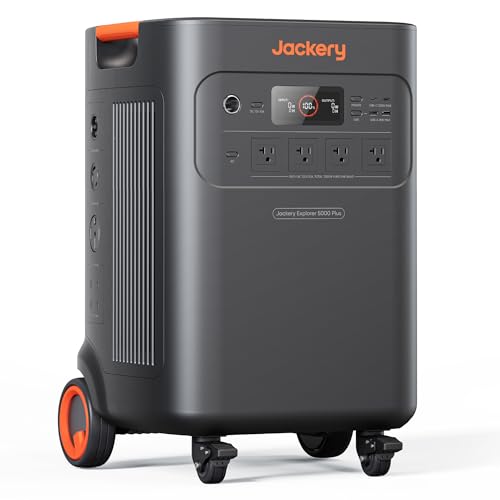 Best for whole-home and high-draw appliancesJackery Explorer 5000 Plus Power StationView on Amazon
Our Top Picks
| Product | Best for | Key feature |
|---|---|---|
| Jackery HomePower 3600 Plus Power Station | Balanced home backup with room to expand | 3584Wh LFP battery, 3600W AC output, expandable to 21kWh |
| Jackery HomePower 3000 Portable Power Station | Mid-size backup loads on a tighter budget | 3072Wh LFP battery, 3600W AC output, 7200W surge rating |
| Jackery Explorer 5000 Plus Power Station | Heavy loads and 120V/240V appliances | 5040Wh LiFePO4 battery, 7200W AC output, 120V/240V output, expandable to 60kWh |
Jackery HomePower 3600 Plus Power Station
Jackery HomePower 3600 Plus Power Station, 3584Wh, 3600W AC Output | LFP Battery, Expandable to 21kWh, Solar Generator, Essential Home Backup for Home Use, Emergencies, RV (Solar Panel Optional)
Best for: Balanced home backup with room to expand
This is the model most households with a refrigerator, lights, a router, a sump pump and a CPAP machine will look at first. Its 3584Wh capacity covers a typical overnight outage for essential circuits when loads are kept modest, and its expandability lets you add capacity later instead of replacing the unit.
Key specs
- Capacity: 3584Wh
- Continuous AC output: 3600W
- Battery chemistry: LFP (lithium iron phosphate)
- Expandable to 21kWh with additional battery modules
Pros
- LFP chemistry is generally associated with a longer cycle life than many older lithium-ion designs.
- Expandability lets you grow runtime without buying a second station.
- Designed for home and emergency use, with a 3600W AC output that handles common household appliances.
Cons
- Full-home runtime during long outages will still require solar input or expansion modules.
- Weight and size make it a fixed-location unit rather than something to carry around.
Bottom line: Pick this if you want one well-rounded unit for essential-circuit backup and plan to expand later.
View on AmazonJackery HomePower 3000 Portable Power Station
Jackery HomePower 3000 Portable Power Station, 3072Wh, 3600W AC Output | 7200W Surge, LFP Battery, Solar Generator, Essential Home Backup for Home Use, Power Outage (Solar Panel Optional)
Best for: Mid-size backup loads
The HomePower 3000 shares the 3600W AC output rating with the 3600 Plus but carries a smaller 3072Wh battery. It suits households whose critical loads are lighter, or who plan to pair it with solar panels and keep runtime expectations realistic.
Key specs
- Capacity: 3072Wh
- Continuous AC output: 3600W
- Surge rating: 7200W
- Battery chemistry: LFP
Pros
- The 7200W surge rating helps with motor startup loads such as well pumps and compressors.
- Smaller capacity than the 3600 Plus can mean a lower weight and easier placement.
- LFP chemistry supports long-term cycle durability.
Cons
- Lower watt-hour capacity means shorter runtime for the same load compared with the 3600 Plus.
- Owners often mention that heavy multi-appliance use drains it faster than they expected.
Bottom line: A solid choice for essential loads and motor startups when your daily backup need sits comfortably under about 3000Wh.
View on AmazonJackery Explorer 5000 Plus Power Station
Jackery Explorer 5000 Plus Power Station, 5040Wh, 7200W AC Output | LiFePO4, 120V/240V Output, Expandable to 60kWh, Essential Home Backup for Power Outages (Solar Panel Optional)
Best for: Heavy loads and 120V/240V appliances
The Explorer 5000 Plus is the largest of the three and the only one that lists 120V/240V output. It fits homes that need to power higher-draw equipment such as electric dryers, well pumps or window air conditioners, and that want a longer runtime without a dozen small batteries.
Key specs
- Capacity: 5040Wh
- Continuous AC output: 7200W
- Battery chemistry: LiFePO4
- Output: 120V/240V
- Expandable to 60kWh
Pros
- Largest watt-hour capacity of the three, giving the longest runtime per charge.
- 240V output supports appliances that the 120V-only units cannot run.
- Expansion to 60kWh is among the highest scalability figures in this product class.
Cons
- Heavier and bulkier, so placement and handling need more planning.
- Typically a higher-end purchase, which may not suit a tight budget.
Bottom line: Choose this if you need 240V output or want the most runtime from a single unit for whole-home essentials.
View on AmazonBuying Guide
Calculate your watt-hour needs
Add up the wattage of each device you plan to run and multiply by the hours you expect to use it. A refrigerator might draw an average of 100 to 150W while running, though its real average depends on the model and how often the compressor cycles. A CPAP machine typically draws far less. Add a 20 percent buffer for conversion losses and unexpected loads. Use the battery capacity in watt-hours as your ceiling. For a deeper walkthrough, see Solar Panel Size Calculator for Portable Power Stations.
Good picks for this: Jackery HomePower 3600 Plus Power Station, Jackery Explorer 5000 Plus Power Station
Check continuous output and surge rating
Continuous output tells you what the station can supply indefinitely. Surge rating covers the brief spike motors need on startup. A well pump or compressor can pull several times its running wattage for a fraction of a second. Confirm the surge figure exceeds the startup draw of your heaviest motor.
Good picks for this: Jackery HomePower 3000 Portable Power Station, Jackery HomePower 3600 Plus Power Station
Consider battery chemistry
LFP and LiFePO4 batteries are widely regarded as more stable and longer-lasting than many older lithium chemistries, which matters for a unit that sits charged for months between outages. Review general guidance in Lithium Battery Safety for Portable Power Stations.
Good picks for this: Jackery Explorer 5000 Plus Power Station, Jackery HomePower 3000 Portable Power Station
Plan for expansion
If you expect your backup needs to grow, expandability can be more cost-effective than buying a second station. Check the maximum supported capacity and whether the expansion batteries are sold separately.
Good picks for this: Jackery HomePower 3600 Plus Power Station, Jackery Explorer 5000 Plus Power Station
Match voltage to your appliances
Most household appliances in the US run on 120V. Some, such as electric dryers, ranges and certain well pumps, use 240V. Confirm the voltage on each appliance label before you buy. The Explorer 5000 Plus lists 120V/240V output, while the other two focus on 120V household outlets.
Good picks for this: Jackery Explorer 5000 Plus Power Station
Think about recharging options
A backup station is only as useful as its ability to recharge. Consider wall charging speed, compatibility with solar panels and whether you can recharge from a vehicle in an emergency. Learn more about vehicle charging in Jackery Car Charger Cable: How to Charge Your Power Station From a Car (2026).
Good picks for this: Jackery HomePower 3600 Plus Power Station, Jackery HomePower 3000 Portable Power Station
Weigh portability against capacity
Higher capacity generally means more weight. If you plan to move the unit between rooms or to a vehicle, a lighter model may be easier to manage. For a broader view of the category, see Best Portable Power Stations.
Good picks for this: Jackery HomePower 3000 Portable Power Station, Jackery HomePower 3600 Plus Power Station
FAQ
Can the Jackery HomePower 3600 Plus run a refrigerator during an outage?
Yes, in most cases. A typical refrigerator averages well under 1000Wh per day, though the exact figure depends on the model, ambient temperature and how often the door opens. The 3584Wh battery can cover an overnight outage for a refrigerator alongside a few small loads. Check your fridge’s nameplate or energy label for its rated consumption.
Is a 3600W AC output enough for a whole house?
For essential circuits, usually yes. Whole-house backup requires more capacity and often a transfer switch installed by a licensed electrician. Consult a professional before connecting any portable station to your home wiring.
What is the difference between continuous and surge output?
Continuous output is the sustained power the unit can deliver. Surge output is a brief peak that motors need when starting. A surge rating of 7200W, as listed on the HomePower 3000, gives more headroom for motor startups than a continuous rating alone.
How long does LFP battery life last?
Manufacturers commonly specify cycle life figures for LFP batteries, and these are generally higher than for many older lithium-ion designs. Actual lifespan depends on temperature, depth of discharge and charging habits. Store the unit in a cool, dry place and avoid leaving it at full charge or fully empty for long periods.
Can I add solar panels to these stations?
Each product listing notes that solar panels are optional. Pairing with panels can extend runtime during multi-day outages. Use the sizing guide linked earlier to estimate panel wattage needed for your daily load.
Which model is best for a CPAP machine?
A CPAP typically draws a modest amount of power, so all three stations can run one. The HomePower 3000 or 3600 Plus is usually sufficient for an overnight session. For more detail, see Best Portable Power Stations for CPAP Machines.
Conclusion
The jackery homepower 3600 plus portable power station is a strong all-around choice for essential-circuit home backup, especially if you want room to expand. The HomePower 3000 suits lighter loads and motor startups at a lower capacity. The Explorer 5000 Plus is the pick for 240V appliances and the longest runtime. Match your choice to your measured daily watt-hour need rather than to the largest number on the spec sheet.
Sources
- Guidance on home energy use, backup power planning and electrical safety basics (energy.gov)
- Consumer safety recalls, warnings and guidance for portable batteries and power equipment (cpsc.gov)
- Standards and safety resources covering lithium battery storage and emergency power (nfpa.org)
About Graham Fisher
Graham Fisher is part of our editorial team and reviews and edits our solar generators for home backup & emergencies guides, checking product details against manufacturer specifications and owner feedback.






