
 By Graham Fisher
Updated November 2026
Shoppers looking at a jackery home power 3600 plus usually want to know one thing: will it keep the essentials running during an outage, and is it the right size for their home? This guide compares three models in the Jackery lineup that share the same general design goal, which is whole-home or near-whole-home backup for emergencies. Our selection criteria were based on manufacturer specifications, the reputation of the brand for battery chemistry and warranty support, and patterns that owners tend to describe in their feedback, such as expandability, output headroom and how the units handle surge loads. None of these products were tested by us; the points below come from published specifications and general owner reports.
Our top picks at a glance
- 1
 TOP CHOICEBest overallJackery HomePower 3600 Plus & 2x200W Solar PanelsView on Amazon
- 2
 Best for whole-home coverageJackery Solar Generator 5000 Plus and 2x200W PanelsView on Amazon
- 3
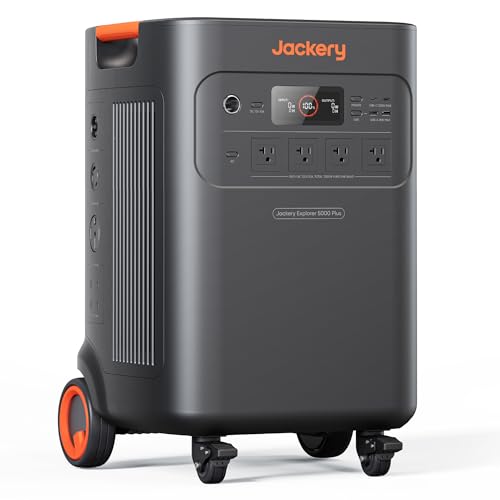 Best for 240V and expandable capacityJackery Explorer 5000 Plus Power StationView on Amazon
Our Top Picks
Quick Comparison
| Product | Best for | Key feature |
|---|---|---|
| Jackery HomePower 3600 Plus & 2x200W Solar Panels | Essential circuits and a solar-ready backup setup | 3,584Wh LFP battery, expandable, 3,600W AC output |
| Jackery Solar Generator 5000 Plus and 2x200W Panels | Larger homes with heavier loads | 5,040Wh LiFePO4 battery, 7,200W AC output |
| Jackery Explorer 5000 Plus Power Station | Homes that need 240V and room to grow | 5,040Wh, 120V/240V output, expandable to 60kWh |
Jackery HomePower 3600 Plus & 2x200W Solar Panels
Jackery HomePower 3600 Plus & 2x200W Solar Panels, 3584Wh, 3600W AC Output | LFP Battery, Expandable to 21kWh, Solar Generator, Essential Home Backup for Home Use, Emergencies, RV
Best for: Best overall for households that want a balance of capacity, output and solar recharging.
This bundle suits homeowners who want to keep a refrigerator, lights, Wi-Fi equipment, a sump pump and perhaps a CPAP running during a multi-hour outage, and who want to recharge from sunlight rather than rely solely on the grid. It is also a sensible fit for people who expect to add capacity later, since the listing describes expandability.
Key specs
- Capacity: 3,584Wh
- AC output: 3,600W
- Battery chemistry: LFP (lithium iron phosphate)
- Solar: two 200W panels included
- Expandable battery capacity (per listing)
Pros
- LFP chemistry is generally associated with longer cycle life than many other lithium formats.
- Included solar panels make it a more complete starting kit.
- The 3,600W rating covers most common household appliances on a single circuit.
Cons
- Capacity is smaller than the 5,040Wh models, so long outages with high loads will drain it faster.
- Full recharge from solar alone can take a full day or more depending on sun conditions.
Bottom line: A strong pick for a typical home that needs reliable essentials-only backup and a solar recharge option.
View on AmazonJackery Solar Generator 5000 Plus and 2x200W Panels
Jackery Solar Generator 5000 Plus and 2x200W Panels, 5040Wh,7200W AC Output | LiFePO4, 10-Year Lifespan, Whole Home Backup for Emergency
Best for: Best for whole-home coverage and heavier, longer outages.
This model fits larger households or homes with electric heating, well pumps or other high-draw equipment. Its higher capacity and output give more margin than the smaller unit, and the battery chemistry is designed for a long service life.
Key specs
- Capacity: 5,040Wh
- AC output: 7,200W
- Battery chemistry: LiFePO4
- Solar: two 200W panels included
- Listing cites a 10-year lifespan
Pros
- Higher capacity extends runtime for essential loads.
- 7,200W output handles larger surge demands better than smaller units.
- Listing cites a 10-year lifespan, which owners often weigh heavily.
Cons
- Heavier and bulkier, so placement and moving it take more planning.
- Costs more to own than the smaller model, and most homes will not need the full capacity.
Bottom line: The right choice when you need more runtime and output for a bigger home and can accommodate the size.
View on AmazonJackery Explorer 5000 Plus Power Station
Jackery Explorer 5000 Plus Power Station, 5040Wh, 7200W AC Output | LiFePO4, 120V/240V Output, Expandable to 60kWh, Essential Home Backup for Power Outages (Solar Panel Optional)
Best for: Best for homes that need 240V output and room to expand.
This station is aimed at users who want a power station rather than a bundled kit, perhaps because they already own panels or plan to build a larger array. The 120V/240V output option matters for homes with 240V appliances such as well pumps or electric dryers, though a licensed electrician should confirm wiring and transfer arrangements.
Key specs
- Capacity: 5,040Wh
- AC output: 7,200W
- Battery chemistry: LiFePO4
- Output: 120V/240V
- Expandable to 60kWh (per listing)
Pros
- 120V/240V output supports a wider range of home appliances.
- Expandability gives a clear upgrade path.
- Solar panels are optional, so you can match the array to your roof and budget.
Cons
- Panels are not included, so the total system cost is higher until you add them.
- 240V connection usually requires professional installation and transfer equipment.
Bottom line: Best for homeowners planning a larger, expandable system who need 240V capability and are comfortable adding panels separately.
View on AmazonBuying Guide
Capacity and Runtime
Watt-hours (Wh) tell you how much energy the battery stores. To estimate runtime, divide the battery’s usable watt-hours by the total load in watts, then adjust for inverter losses, which commonly run around 10 to 15 percent. A refrigerator averaging 150 watts over 24 hours uses roughly 3.6 kWh per day, so a 3,584Wh unit will not carry it for a full day without recharging.
Good picks for this: Jackery Solar Generator 5000 Plus and 2x200W Panels, Jackery HomePower 3600 Plus & 2x200W Solar Panels
Output Power and Surge Handling
Continuous output rating matters, but so does surge capacity. Motors on well pumps, sump pumps and air conditioners can draw several times their running wattage at startup. Check that the continuous rating exceeds the sum of the loads you plan to run together, with margin for those startup spikes.
Good picks for this: Jackery Solar Generator 5000 Plus and 2x200W Panels, Jackery Explorer 5000 Plus Power Station
Voltage Support (120V vs 240V)
Most household outlets are 120V, but some large appliances, such as electric dryers, ranges and certain well pumps, use 240V. If you need 240V, confirm the station supports it and that your electrical panel can accept a transfer setup. This is a job for a licensed electrician.
Good picks for this: Jackery Explorer 5000 Plus Power Station
Battery Chemistry and Lifespan
LFP and LiFePO4 batteries are generally regarded as more stable and longer-lived than many other lithium chemistries, which matters for a unit that sits charged for long periods. Compare the cycle life figures and warranty terms in the specifications rather than relying on marketing claims.
Good picks for this: Jackery HomePower 3600 Plus & 2x200W Solar Panels, Jackery Solar Generator 5000 Plus and 2x200W Panels
Solar Recharging
Consider how you will recharge. Included panels make a kit easier to start with, while a power station with optional panels lets you size the array to your roof. Remember that recharge time depends on panel wattage, sun hours and weather, so plan for slower recharging on cloudy days.
Good picks for this: Jackery HomePower 3600 Plus & 2x200W Solar Panels, Jackery Explorer 5000 Plus Power Station
Size and Portability
Larger stations deliver more runtime but weigh considerably more. Think about where the unit will live, whether it can stay in a garage or basement, and whether you will need to move it. Ventilation and clearance around the unit also matter.
Good picks for this: Jackery HomePower 3600 Plus & 2x200W Solar Panels
Expandability and Future Needs
If your needs may grow, look for a system that supports additional battery modules or larger arrays. Expansion can be more economical than buying a second unit, but confirm compatibility before buying add-ons.
Good picks for this: Jackery Explorer 5000 Plus Power Station, Jackery HomePower 3600 Plus & 2x200W Solar Panels
FAQ
Can a jackery home power 3600 plus run a refrigerator during an outage?
Yes, a modern refrigerator typically draws far less than the unit’s 3,600W output rating. Runtime depends on the fridge’s duty cycle and the battery’s usable energy. Many households can run a fridge for a day or more, though exact results vary.
How long will a CPAP machine run on this kind of power station?
CPAP machines commonly draw somewhere around 30 to 60 watts, so a battery of several thousand watt-hours can run one for many nights. Check your machine’s rated wattage and your battery’s usable capacity to estimate precisely. Consult your sleep physician or medical equipment supplier about backup needs.
Can it power a sump pump?
Many sump pumps run on 120V and can be powered, but startup surge matters. Confirm the pump’s running and locked-rotor amps and make sure the station’s surge rating covers them.
Do I need solar panels to use it?
No. You can recharge from a wall outlet or a vehicle, though the grid may be unavailable during outages. Solar provides a recharge option when the grid is down.
Is it safe to connect to my home’s electrical system?
Connecting a power station to household wiring should be done with a transfer switch installed by a licensed electrician. Improper backfeeding can endanger utility workers and damage equipment.
What is the difference between the 3600 Plus and the 5000 Plus?
The 3600 Plus has smaller capacity and output, while the 5000 Plus offers 5,040Wh and 7,200W. The larger model suits bigger loads and longer outages, but it is heavier and more costly to own.
Conclusion
For most households looking at a jackery home power 3600 plus style system, the HomePower 3600 Plus bundle is the most balanced starting point, especially if you want included solar and essentials-only backup. Choose the Solar Generator 5000 Plus if you need more runtime and output for a larger home. The Explorer 5000 Plus is the better fit if you need 240V support and plan to expand your system with your own panels. Before buying, add up the wattage of the loads you intend to run, confirm surge requirements, and have a licensed electrician review your transfer arrangement.
Sources
- Guidance on home energy use, emergency preparedness and portable generator and battery safety (energy.gov)
- Product safety recalls, warnings and consumer guidance for portable power equipment (cpsc.gov)
- Electrical and fire safety standards that apply to home backup power installations (nfpa.org)
Related reading
- Jackery vs Bluetti vs Anker: Which Home Backup Power Station Fits Your Outages?
- Jackery vs Anker Power Station: Which Fits Your Home Backup Needs?
- Jackery Solar Generator Home Power 3000: 4 Best Options Compared (2026)
- Ecoflow Delta 2 vs Jackery 1000 V2: Which Power Station Fits Home Backup?
- Anker SOLIX C1000 vs Jackery 1000 V2: Which Backup Power Station Fits Your Home?
- 6 Best Jackery Explorer Plus Portable Power Stations (2026): Expert Picks
About Graham Fisher
Graham Fisher is part of our editorial team and reviews and edits our solar generators for home backup & emergencies guides, checking product details against manufacturer specifications and owner feedback.






