
 By Graham Fisher
Updated November 2026
The jackery solar generator 5000 plus is a large, bundled home backup system built around a 5,040Wh LiFePO4 battery, a 7,200W AC output rating and two 200W solar panels. It is aimed at households that want to keep essential circuits running through multi-day outages, not just charge a phone or run a fan for an evening. Buyers who have a regular need for whole-home-scale backup, a roof or yard suited to solar charging, and a budget for a premium system will likely find it a strong fit. Buyers who only need to keep a router, lights and a CPAP running for a night or two, or who lack space for panels, will probably be better served by a smaller unit. Think of this review as a research-based look at what the listing specifies and what owners commonly report, not a record of hands-on testing.

Jackery Solar Generator 5000 Plus and 2x200W Panels, 5040Wh,7200W AC Output | LiFePO4, 10-Year Lifespan, Whole Home Backup for Emergency
Product Overview
The Jackery Solar Generator 5000 Plus is sold as a kit: the power station itself plus two 200W solar panels. Jackery positions it as an essential home backup solution, meaning it is designed to power selected circuits and appliances rather than replace a full-scale standby generator. The name indicates a 5,040Wh battery capacity and a 7,200W AC output rating, both of which put it in the upper tier of portable power stations sold to consumers.
The battery uses lithium iron phosphate (LiFePO4) chemistry. LiFePO4 is generally favored for home backup because it tolerates more charge cycles than standard lithium-ion designs and is considered more stable thermally. The listing describes a 10-year lifespan, which should be read as a manufacturer claim that depends on usage patterns, temperature and how deeply the battery is typically discharged.
It is worth understanding where this model sits within Jackery’s lineup. The brand also sells a Jackery Explorer 5000 Plus, which uses the same battery capacity and output rating but is sold as a power station with optional panels, and the Jackery HomePower 3600 Plus, a smaller 3,584Wh system bundled with two 200W panels. Our article Jackery Solar Generator 5000 Plus Review: Features and Performance covers this model in depth, and the broader comparison is covered in Jackery HomePower 3600 Plus Solar Generator: 5 Best Picks Compared (2026).
Key Features & Specifications
The table below lists the specifications named in the product listing or commonly stated for this model. Confirm final figures on the manufacturer’s specification sheet before purchase, since packaging and firmware can change.
| Specification | Jackery Solar Generator 5000 Plus (as listed) |
|---|---|
| Battery capacity | 5,040Wh |
| Battery chemistry | LiFePO4 (lithium iron phosphate) |
| AC output rating | 7,200W |
| Output configuration | 120V/240V (per Jackery’s 5000 Plus family) |
| Included solar panels | 2 x 200W |
| Stated lifespan | 10 years (manufacturer claim) |
| Expandability | Expansion battery support (check compatible models) |
| Intended use | Essential home backup, emergencies, off-grid and outdoor power |
A few of these points deserve context. A 5,040Wh battery is large enough to run a modern refrigerator for well over a day in many scenarios, but actual runtime depends on the appliance’s average draw rather than its nameplate rating. For a deeper look at this math, see Solar Generator Wattage Calculator: Add Up Your Devices. The 7,200W output rating is a peak figure; continuous output and surge tolerance are different measurements, explained in Surge vs Continuous Power: What Your Solar Generator Can Actually Start.
Pros & Cons
Pros
- Large 5,040Wh LiFePO4 capacity suited to multi-appliance backup.
- High AC output rating supports heavier loads than most portable units.
- Included 2 x 200W panels mean the kit can recharge without a wall outlet, given enough sun.
- LiFePO4 chemistry is generally considered longer-lasting and more thermally stable than other lithium options.
- Stated 10-year lifespan, which owners often cite as a reason for the higher upfront commitment.
- Expansion battery support offers a path to more storage later.
Cons
- Large and heavy compared with consumer power stations; it needs a dedicated spot.
- Solar recharge speed depends heavily on sun, panel placement and weather.
- A premium-tier purchase that may be excessive for small or occasional backup needs.
- Full-capacity use of the 240V side requires correct wiring or a transfer setup; improper connection can be unsafe.
- Panels take up outdoor space and need secure mounting.
Performance Analysis
Performance for a system like this comes down to three questions: how much energy it stores, how fast it can deliver it, and how quickly it can refill. On paper, the 5,040Wh battery and 7,200W output rating cover most household backup scenarios. Owners of similar Jackery systems frequently report that the unit handles a refrigerator, lights, a router, a well or sump pump and a few small devices at once, while larger loads such as electric ranges or central air conditioning are generally outside what a battery-backed system should be asked to run for long periods.
Runtime is the most useful figure to estimate. As a rough method, divide the battery’s usable watt-hours by the average continuous draw of your loads, then account for inverter losses, which commonly reduce efficiency by roughly 10 to 15 percent. A refrigerator averaging around 100 to 150W of actual draw, for example, can run for a day or more on a system of this size, while a 1,500W space heater would drain it in a few hours. Our guides on What Can a 2000W Solar Generator Run? (With Runtime Math) and What Can a 3000W Solar Generator Run? walk through this kind of calculation for different output tiers.
Solar recharging is where owner expectations most often diverge from reality. Two 200W panels can produce a meaningful share of the battery’s capacity on a sunny day, but output drops with clouds, shading, poor angle and seasonal changes. Owners frequently report that real-world daily yield is well below the panels’ rated total, so a practical plan should assume recharging from the grid or a generator as a backup source. If charging seems slower than expected, Why Is My Solar Generator Charging Slowly? Causes and Fixes covers the common causes.
Thermal behavior and longevity are generally positive for LiFePO4 designs, but manufacturers typically recommend keeping the unit in a ventilated space, away from direct sun and extreme heat or cold. If your installation is in a hot garage or enclosed shed, review Solar Generator Overheating: Causes, Warning Signs and Fixes before setup.
Who Should Buy This Product?
This system makes the most sense for homeowners in areas with frequent or long outages, households that depend on medical equipment or a refrigerator with food stored inside, and people who want a roof-free or ground-mounted solar option for backup. It also suits users who plan to expand storage over time, since the expansion path adds runtime without replacing the core unit.
You should probably skip it if your needs are modest. If you mainly want to keep a phone, laptop and a few lights running during short outages, a smaller unit will cost less in space and money and be easier to move. Renters without suitable outdoor panel placement, and anyone who needs to move the system frequently, may also find it impractical. For camping or RV use, a lighter system is usually more convenient; see Solar Generators for RVs: Sizing, Charging and Limits.
Buying Guide
Before buying, start with a load audit. List every device you want to run during an outage, check its wattage on the label, estimate its hours of use per day, and multiply to get daily watt-hours. Add a margin of at least 20 percent for inverter losses and cloudy days. Our walkthrough on Using a Solar Generator During a Power Outage: A Practical Plan shows how to put this plan together.
Next, check the electrical side. Confirm whether you need a 120V or 240V connection, whether your appliances are compatible, and whether you will use a transfer switch for whole-circuit backup. Wiring to a home panel should be handled by a licensed electrician.
Finally, compare alternatives in the same category. Two well-known options are:
- Jackery Explorer 5000 Plus Power Station – shares the 5,040Wh battery and 7,200W output rating but is sold as a power station with optional panels, which suits buyers who already own solar panels or plan to buy them separately.
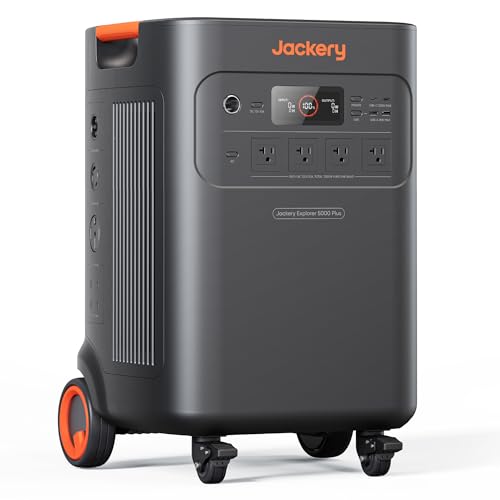
Jackery Explorer 5000 Plus Power Station, 5040Wh, 7200W AC Output | LiFePO4, 120V/240V Output, Expandable to 60kWh, Essential Home Backup for Power Outages (Solar Panel Optional)
- Jackery HomePower 3600 Plus & 2x200W Solar Panels – a smaller 3,584Wh system with a 3,600W output rating, a reasonable step down for households with a tighter load budget.

Jackery HomePower 3600 Plus & 2x200W Solar Panels, 3584Wh, 3600W AC Output | LFP Battery, Expandable to 21kWh, Solar Generator, Essential Home Backup for Home Use, Emergencies, RV
Our comparison guide Jackery Solar Generator for House: 6 Best Picks Compared (2026) and the note on Solar Generator vs Gas Generator: Which Fits Your Needs? can help you decide between solar-first and fuel-based approaches.
FAQ
Can the Jackery Solar Generator 5000 Plus power a whole house?
It can power selected essential circuits, such as a refrigerator, lights, internet equipment and a well pump, but it is not intended to run an entire home at once. Large loads like electric ranges, dryers and central air conditioning draw more power than a battery system should supply for extended periods.
How long will it run a refrigerator?
A typical modern refrigerator averages well below its nameplate rating over a day, so runtime can extend to a day or more on a battery of this size. Exact results depend on the appliance’s efficiency, ambient temperature and how often the door is opened.
Are the included solar panels enough to recharge it fully?
Two 200W panels can contribute meaningfully on sunny days, but full recharge from solar alone typically takes multiple days depending on conditions. Most owners plan to supplement with grid or generator charging.
What is LiFePO4 and why does it matter?
LiFePO4 is a lithium iron phosphate chemistry known for longer cycle life and better thermal stability than many other lithium-based batteries. The manufacturer’s 10-year lifespan claim assumes typical use and care.
Can I add more battery capacity later?
Jackery’s expansion battery system is designed to add storage to compatible power stations. Check the manufacturer’s compatibility list before buying an expansion battery, and review Solar Generator Expansion Batteries: How They Work and What to Check.
Is it safe to use indoors?
Power stations should be operated in a dry, ventilated area and never in enclosed spaces where exhaust-free operation is uncertain. Keep it away from water and out of direct sun. For any connection to your home wiring, consult a licensed electrician.
Can it run a CPAP machine overnight?
Many CPAP units draw modest power, so a battery of this size can often support one through a night. Confirm your device’s rated draw and consult your medical provider or equipment supplier before relying on backup power for medical equipment. See Using a Solar Generator or Power Station for a CPAP Machine for details.
How should I store it between outages?
Keep the battery partially charged, typically in the range manufacturers recommend, in a cool, dry place. Avoid leaving it fully depleted or sitting in extreme heat for long periods.
Final Verdict
The Jackery Solar Generator 5000 Plus is a capable, large-capacity backup system for households that need to keep essential loads running through extended outages and have a suitable location for solar panels. Its 5,040Wh LiFePO4 battery, 7,200W output rating and included panels make it one of the more complete all-in-one options in its class, though its size, cost tier and solar-dependent recharging mean it is not the right choice for everyone. Compare it against the smaller HomePower 3600 Plus and the panel-optional Explorer 5000 Plus before deciding.
View on AmazonAbout Graham Fisher
Graham Fisher is part of our editorial team and reviews and edits our solar generators for home backup & emergencies guides, checking product details against manufacturer specifications and owner feedback.






