
 By Graham Fisher
Updated November 2026
The Jackery Explorer 5000 Plus is a large LiFePO4 portable power station aimed at households that want serious backup capacity for refrigerators, medical equipment, sump pumps and lights during an outage. It is best suited to homeowners who need to run essential circuits for a day or more and want room to expand storage later. It is a poor fit for renters, apartment dwellers, or anyone who only needs to charge phones and a laptop, since its size, weight and price tier are overkill for light use. Buyers who want whole-home coverage without a transfer switch or dedicated electrician work should also look closely before committing.
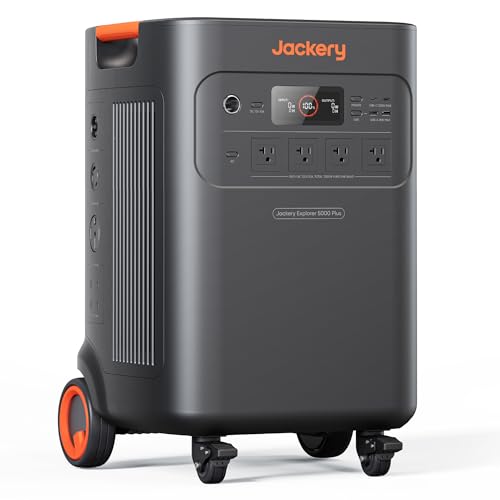
Jackery Explorer 5000 Plus Power Station, 5040Wh, 7200W AC Output | LiFePO4, 120V/240V Output, Expandable to 60kWh, Essential Home Backup for Power Outages (Solar Panel Optional)
Product Overview
The Explorer 5000 Plus sits in Jackery’s upper tier of portable power stations. Its listing describes a 5040Wh battery capacity paired with 7200W of AC output, a LiFePO4 (lithium iron phosphate) chemistry, and both 120V and 240V output options. The listing also states that the unit can be expanded to 60kWh with additional battery modules, and that solar panels are optional rather than included. Together, these details position it as an essential-circuit backup system rather than a casual camping generator.
LiFePO4 is the detail that matters most for long-term ownership. Compared with older lithium-ion chemistries, LiFePO4 cells are generally considered more stable and tolerate a higher number of charge cycles. Manufacturers in this category commonly specify cycle life in the thousands, which is why many buyers treat these units as multi-year equipment rather than disposable gear. If you are comparing this model with other large units on the market, it helps to read our guide on Jackery Explorer 5000 Plus Review: Who Is It For? for a broader look at the audience this unit targets.
The 240V output is significant for homes with electric dryers, well pumps, or 240V well-water systems. Many portable stations only offer 120V outlets, which limits them to lighting, refrigeration and electronics. Owners who want to power higher-draw appliances should confirm the outlet configuration and check whether their particular appliance is compatible before relying on it during an emergency.
Key Features & Specifications
The table below lists the specifications stated in the product name and listing. Where we do not have confident figures, we have left the cell out rather than estimate.
| Feature | Specification |
|---|---|
| Battery capacity | 5040Wh |
| AC output (continuous) | 7200W |
| Battery chemistry | LiFePO4 |
| AC output voltage options | 120V and 240V |
| Expandability | Up to 60kWh with additional battery modules |
| Solar panels | Optional (not included) |
| Primary use | Essential home backup during power outages |
To put the 5040Wh figure in practical terms: a refrigerator often draws somewhere around 100 to 200 watt-hours per day depending on its size, age and ambient temperature, so a full battery could in theory keep a fridge running for many days. Actual runtime always depends on the load. A CPAP machine, a sump pump, a few LED lights and a router will draw far less than a space heater or an electric water heater. Our piece on Jackery Explorer 300d Portable Power Station: What It Runs and How Long walks through the runtime math with a smaller unit, which is useful for scaling the same logic up.
Pros & Cons
Pros
- Large 5040Wh LiFePO4 battery suited to multi-appliance essential-circuit backup.
- 7200W AC output gives headroom for higher-draw appliances than most portable units.
- Both 120V and 240V output options broaden the range of compatible equipment.
- Expandable to 60kWh, so storage can grow as household needs change.
- LiFePO4 chemistry is generally associated with longer cycle life and better thermal stability.
- Solar input is optional, so you can start with grid charging and add panels later.
Cons
- Heavy and bulky compared with compact portable stations, which limits portability.
- Full-capacity backup of a home is still limited; large loads drain the battery quickly.
- Solar panels are not included, so a complete solar setup adds to the total purchase.
- Connecting to a home’s wiring for whole-circuit backup typically requires a compatible transfer switch and, often, a licensed electrician.
- Premium pricing tier puts it out of reach for buyers with only occasional backup needs.
Performance Analysis
Because this review is research-based, the performance discussion draws on the listed specifications and on patterns that owners of large LiFePO4 power stations commonly describe in their feedback. Owners of comparable units often report that real-world runtime lands below the nameplate figure once inverter losses and the standby draw of connected devices are included. Plan for usable energy somewhat under 5040Wh, and treat any runtime estimate as a ceiling rather than a promise.
The 7200W output rating is the figure most buyers focus on, and it is a meaningful one. It means the unit can start and run loads that would trip a smaller station, including many motor-driven appliances. Motor startup surges, however, can be several times the running wattage for a fraction of a second, so it is worth checking the surge rating of any appliance you plan to connect. A sump pump that runs at a few hundred watts can still need a brief surge allowance.
Charging speed is the other variable. Grid charging is typically the fastest route to a full battery, and solar charging depends heavily on panel wattage, sun angle, weather and season. Owners frequently note that solar recharge takes a full day or more under average conditions, so it is wise to think of solar as a supplement for extended outages rather than an instant recharge source. Before buying panels, check the maximum input the unit accepts so you do not overspend on panels the battery cannot use efficiently.
For a second opinion on how this model compares to a related Jackery unit in terms of features and day-to-day behavior, see Jackery Solar Generator 5000 Plus Review: Features and Performance.
Who Should Buy This Product?
The Explorer 5000 Plus makes the most sense for homeowners who have experienced multi-day outages, rely on powered medical equipment, or want to keep a refrigerator, freezer, lighting and communication equipment running without interruption. It also suits buyers who plan to grow into a larger, expandable system and want a platform that will accept additional battery modules.
You should skip this model if your needs are modest. A few phones, a laptop, a fan and some lights during a short storm are well within the capacity of far smaller units, and you will avoid the weight, footprint and cost. Renters who cannot install a transfer switch, and anyone who wants to camp with the unit regularly, may also find it cumbersome. Households that need a true whole-home backup without managing which circuits are powered may need a dedicated whole-house system instead.
Buying Guide
Start by listing the appliances you need during an outage and their wattage, then check the running and surge figures on each label. Multiply running watts by the hours you expect to run them, add the totals, and add a 20 to 30 percent buffer for inverter losses and unexpected use. That number tells you whether 5040Wh is enough for your situation.
Next, decide how you will connect to your home. Plugging appliances directly into the unit’s outlets is the simplest approach and needs no installation. Circuit-level backup requires a transfer switch and, in most jurisdictions, a licensed electrician. Our guides on Jackery Smart Transfer Switch: How to Choose and Set It Up Safely and Jackery Manual Transfer Switch: Step-by-Step Setup for Home Backup explain the options. Always confirm local electrical code and your utility’s rules before any permanent connection.
If you are weighing alternatives, two well-known options in the Jackery family are worth comparing. The first is the bundled setup that pairs a similar battery with two 200W panels, which can suit buyers who want solar from day one:

Jackery Solar Generator 5000 Plus and 2x200W Panels, 5040Wh,7200W AC Output | LiFePO4, 10-Year Lifespan, Whole Home Backup for Emergency
The second is the HomePower 3600 Plus, a slightly smaller system aimed at whole-home and emergency use, which may fit buyers with a more modest budget or lower daily energy needs:

Jackery HomePower 3600 Plus Power Station, 3584Wh, 3600W AC Output | LFP Battery, Expandable to 21kWh, Solar Generator, Essential Home Backup for Home Use, Emergencies, RV (Solar Panel Optional)
For a wider comparison across brands, our article Jackery vs Bluetti vs EcoFlow (2026): Which Is Better for Home Backup? is a useful next step.
FAQ
How long will the Jackery Explorer 5000 Plus run a refrigerator?
Runtime depends on the refrigerator’s efficiency, size and how often its compressor cycles. Many standard refrigerators use roughly 100 to 200 watt-hours per day, so a full 5040Wh battery could theoretically cover several days. Real-world results will be lower once inverter losses are included, so check your fridge’s energy label or power meter reading for a more accurate estimate.
Can it power a CPAP machine overnight?
Most CPAP machines draw a modest amount of power, often well under 100 watts while running, which makes overnight use practical with a large battery. Confirm the wattage on your device’s label and consult your medical provider about backup planning for any health-critical equipment.
Does the Explorer 5000 Plus support 240V appliances?
The listing states 240V output is available. This matters for appliances like electric dryers or some well pumps, but you should verify the specific outlet configuration and confirm the appliance’s compatibility before relying on it.
Are solar panels included?
No. The listing describes solar panels as optional. If you want solar recharging, you will need to purchase compatible panels separately, or consider a bundled Jackery solar generator package.
What does “expandable to 60kWh” mean?
It means the system can accept additional battery modules to increase total storage, up to the stated maximum. Expansion modules are a separate purchase, and you should confirm compatibility and total cost before planning around a larger capacity.
Can I use it as a whole-house backup?
Whole-house backup usually requires a transfer switch and professional installation to connect safely to your home’s panel. Plugging the unit directly into a wall outlet is never a safe substitute. A licensed electrician should assess your setup.
How heavy is the unit?
Units in this capacity class are substantial and typically require two people to lift and move. Check the manufacturer’s stated weight on the product page before deciding where it will be stored.
Is LiFePO4 safer than other lithium batteries?
LiFePO4 is generally regarded as having greater thermal and chemical stability than some other lithium-ion chemistries, which is one reason it is common in home backup products. No battery is risk-free, though, so follow the manufacturer’s guidance on placement, ventilation and charging.
Final Verdict
Is the Jackery Explorer 5000 Plus worth it?
For households that need substantial essential-circuit backup, expandable storage and 240V compatibility, the Explorer 5000 Plus is a strong contender. Its 5040Wh LiFePO4 battery and 7200W output give it real capability for refrigerators, medical devices and well or sump equipment. Buyers with light needs, limited space or no interest in future expansion should choose a smaller or more compact model. Confirm your load math, check transfer switch requirements, and compare the bundled solar option before deciding.
View on AmazonAbout Graham Fisher
Graham Fisher is part of our editorial team and reviews and edits our solar generators for home backup & emergencies guides, checking product details against manufacturer specifications and owner feedback.






