
 By Graham Fisher
Updated November 2026
Choosing a jackery power input/output cable sounds simple until you look at the lineup. Jackery power stations use several different charging ports, and a cable that fits one model may not match another. This guide compares three cables from the current Amazon lineup, judged on compatibility with Jackery units, connector type, cable length and general owner feedback patterns. We reviewed listing specifications and the kinds of comments buyers tend to leave, rather than running any tests of our own.
Our top picks at a glance
- 1
 TOP CHOICEBest overallHoeine 10FT MC4 to DC 8mm Adapter Cable for Jackery Portable Power StationView on Amazon
- 2
 Best for wall charging at homeYEZriler 2M/6.6FT Heavy-Duty Charging Cable for Jackery Power StationView on Amazon
- 3
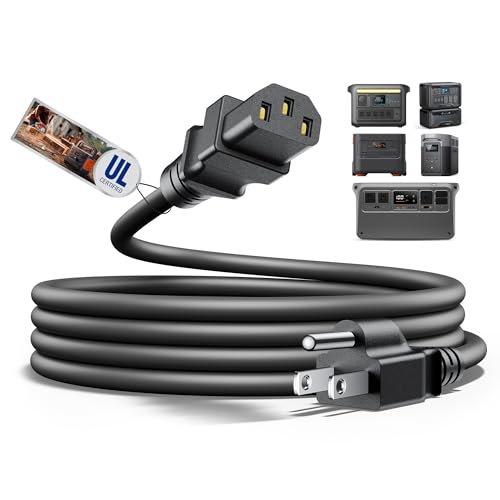 Best for high-draw fast chargingALIENSX UL Listed Heavy-Duty Power Station Fast Charging CableView on Amazon
Our Top Picks
Quick Comparison
| Product | Best for | Key feature |
|---|---|---|
| Hoeine 10FT MC4 to DC 8mm Adapter Cable | Solar panel input to a Jackery DC port | MC4 to DC 8mm adapter in a 10-foot length |
| YEZriler 2M/6.6FT Heavy-Duty Charging Cable | Standard AC wall charging | 15-amp rated cord in a 6.6-foot length |
| ALIENSX UL Listed Heavy-Duty Power Station Fast Charging Cable | Higher-current AC charging with a UL-listed cord | 14 AWG conductors and a UL listing |
Hoeine 10FT MC4 to DC 8mm Adapter Cable for Jackery Portable Power Station
Hoeine 10FT MC4 to DC 8mm Adapter Cable for Jackery Portable Power Station | Universal Solar Panel Connector Cable, DC7909/DC8020 Adapter, Fits BLUETTI, Goal Zero Yeti, Anker, for Camping RV Emergency
Best for: Solar panel input to a Jackery DC port
This cable suits anyone pairing a solar panel that ends in MC4 connectors with a Jackery power station that takes DC input through an 8mm barrel. It is aimed at off-grid and backup setups where the panel sits some distance from the station.
Key specs
- Connector pair: MC4 on the panel side, DC 8mm on the power station side
- Cable length: 10 feet
- Listed as a universal solar connector cable
Pros
- Long enough to place the panel away from the station
- Covers the MC4-to-DC 8mm connection that many solar setups need
- Listed as compatible with several other portable station brands
Cons
- Only useful for DC solar input, not for wall charging
- Owners who run long cable lengths should confirm voltage drop is acceptable for their panel
Bottom line: A good fit for anyone connecting an MC4 solar panel to a Jackery station. Skip it if you only need to charge from a wall outlet.
View on AmazonYEZriler 2M/6.6FT Heavy-Duty Charging Cable for Jackery Power Station Explorer 3000/2000/1500/1000
YEZriler 2M/6.6FT Heavy-Duty Charging Cable for Jackery Power Station Explorer 3000/2000/1500/1000, Ecoflow Delta/River/Series, Bluetti EB3A, Anker 757/767, 125Volt 15Amps AC Power Cord – Orange
Best for: Standard AC wall charging
This is the everyday choice for charging a Jackery station from a household outlet. It is listed for a broad range of portable power stations, so it works as a general-purpose AC cord.
Key specs
- Cable length: 2 meters (6.6 feet)
- Rated 125 volts and 15 amps
- AC power cord with a standard plug on the wall end
Pros
- Length is practical for most outlet placements
- Rated for the 125-volt, 15-amp household circuit most homes use
- Covers several Jackery models and other brands in one listing
Cons
- At 6.6 feet, it may not reach outlets across a room without an extension
- Owners sometimes note the cord is stiff in cold conditions
Bottom line: Best for people who mainly keep their station plugged in at home. Pick a longer cable if your outlets are far from where the station sits.
View on AmazonALIENSX UL Listed Heavy-Duty Power Station Fast Charging Cable
ALIENSX UL Listed Heavy-Duty Power Station Fast Charging Cable | 14AWG 125V 15A Power Cord for Jackery Explorer 3000/2000/1000 Pro, Ecoflow Delta/River, Bluetti EB3A, Anker 757/767, DJI
Best for: Higher-current AC charging with a UL-listed cord
This option fits buyers who want a heavier-gauge cord and a UL listing for peace of mind. It is listed for several Jackery Explorer models along with other brands, so it suits people who already own multiple power stations.
Key specs
- 14 AWG conductors
- Rated 125 volts and 15 amps
- UL listed
Pros
- UL listing and heavier 14 AWG wire give a sturdier build
- Listed for multiple Jackery Explorer models
- Suits faster AC input where the station supports it
Cons
- Heavier and less flexible than lighter-gauge cords
- Charging speed still depends on the station’s own input limit
Bottom line: The pick for buyers who value a UL-listed, heavy-gauge cord. A sensible choice for frequent charging or shared use.
View on AmazonBuying Guide
Connector type and port match
Jackery stations use different input ports depending on the model and whether you are charging from AC, DC or solar. Check your station’s manual for the exact port before buying. A cable with the wrong tip or connector will not seat properly, and forcing it can damage the port.
Good picks for this: Hoeine 10FT MC4 to DC 8mm Adapter Cable, YEZriler 2M/6.6FT Heavy-Duty Charging Cable
Cable gauge and current rating
Wire gauge affects how much current a cable can carry safely. Lower AWG numbers mean thicker wire. Manufacturers typically list a voltage and amperage rating; match it to what your station supports and to the wall circuit you plan to use.
Good picks for this: ALIENSX UL Listed Heavy-Duty Power Station Fast Charging Cable, YEZriler 2M/6.6FT Heavy-Duty Charging Cable
Cable length
Measure the distance between your station and the outlet or solar panel before ordering. A cable that is too short can force the station onto an extension, which adds connections and resistance. Longer cables reduce placement flexibility but can increase voltage drop on low-voltage DC runs.
Good picks for this: Hoeine 10FT MC4 to DC 8mm Adapter Cable, YEZriler 2M/6.6FT Heavy-Duty Charging Cable
Certification and safety listings
Look for a recognized listing such as UL on AC power cords. A listing indicates the product was evaluated against a safety standard, though it does not guarantee performance for every use.
Good picks for this: ALIENSX UL Listed Heavy-Duty Power Station Fast Charging Cable
Intended use: solar, wall or vehicle
Solar cables and AC cords are not interchangeable. Decide whether you will charge from solar panels, a wall outlet or a vehicle before buying. Mixing up the use case is the most common reason a cable goes unused.
Good picks for this: Hoeine 10FT MC4 to DC 8mm Adapter Cable, ALIENSX UL Listed Heavy-Duty Power Station Fast Charging Cable
Durability and flexibility
Heavier cords are often stiffer, which can make them harder to route in tight spaces. Owners in cold climates sometimes mention reduced flexibility. Inspect the jacket and connectors regularly, and replace any cable with cracked insulation or loose plugs.
Good picks for this: ALIENSX UL Listed Heavy-Duty Power Station Fast Charging Cable, YEZriler 2M/6.6FT Heavy-Duty Charging Cable
Care and storage
Coil cables loosely rather than tightly wrapping them around your hand, which can strain the conductors. Keep connectors dry and store cables out of direct sun when possible. Disconnect the cable from the station before moving it.
Good picks for this: YEZriler 2M/6.6FT Heavy-Duty Charging Cable, Hoeine 10FT MC4 to DC 8mm Adapter Cable
For guidance on home electrical wiring or outlets, consult a licensed electrician.
FAQ
Can any cable charge my Jackery power station?
No. Jackery stations use specific ports, and the connector has to match both the port and the input type (AC, DC or solar). Check your model’s manual and the cable listing before buying.
What does “input/output” mean on a cable?
Input refers to power flowing into the station, such as from a wall outlet or solar panel. Output refers to power flowing out to your devices. Many cables are designed for one direction, so confirm which way you need.
Is a UL-listed cable necessary?
It is not strictly required, but a UL listing means the cord was evaluated against a recognized safety standard. Many buyers prefer it for AC charging.
Can I use a longer cable than the one that came with my station?
Often yes for AC cords, but longer lengths can reduce efficiency and increase voltage drop on DC runs. Keep the run as short as practical and check the station’s specifications.
Do I need a special cable to charge from solar?
Usually yes. Solar panels commonly use MC4 connectors, which generally need an adapter or dedicated cable to reach a Jackery DC input.
How do I know if a cable is damaged?
Look for cracked insulation, exposed wire, discoloration, a loose or warm connector, or a plug that feels loose in the outlet. Stop using the cable and replace it if you see any of these signs.
Conclusion
For most people, the Hoeine 10FT MC4 to DC 8mm Adapter Cable is the best overall pick if you are connecting solar panels, since it solves the MC4-to-DC mismatch directly. If you mainly charge from a wall outlet, the YEZriler 2M/6.6FT Heavy-Duty Charging Cable covers the everyday need at a reasonable length. Buyers who want a UL-listed, heavier-gauge AC cord should look at the ALIENSX option. Confirm your station’s input port before ordering any of them.
Sources
- Background on home energy systems, battery storage and safe power use (energy.gov)
- Electrical product safety guidance and recall information for consumers (cpsc.gov)
- Information on UL safety standards and how product listings are evaluated (ul.com)
Before you buy: helpful guides
Related reading
- EcoFlow Power Input Output Cable: 5 Best Picks for 2026
- 3 Best Jackery AC Charging Cables for Power Stations (2026)
About Graham Fisher
Graham Fisher is part of our editorial team and reviews and edits our solar generators for home backup & emergencies guides, checking product details against manufacturer specifications and owner feedback.





