
 By Emily Parker
Updated November 2026
The ecoflow delta pro solar generator, listed on Amazon as the EF ECOFLOW Portable Power Station 3600Wh DELTA Pro, is a large portable power station aimed at households that want to keep essential loads running through an outage or off-grid stay. It pairs a 3600Wh battery with 120V AC output rated at 3600W, and it accepts solar input for recharging. It suits homeowners who need to run a refrigerator, a CPAP machine, a sump pump, or a few lights for a day or more, and who expect to add solar panels over time. It is a poor fit for anyone who only needs to charge phones and a laptop, or for buyers who need whole-home backup on a 240V circuit, since that requires a different class of equipment.

EF ECOFLOW Portable Power Station 3600Wh DELTA Pro, 120V 3600W AC Output | 2.7H Fast Charge Power Station, Expandable up to 25kWh, Solar Generator for Home Use, Power Outage, Camping, RV, Emergencies
Product Overview
The Delta Pro is a floor-standing portable power station built around a lithium iron phosphate (LiFePO4) battery. Manufacturers generally describe this chemistry as favoring long cycle life and stable thermal behavior compared with older lithium-ion designs, which is one reason it has become common in home backup products. The unit is designed to sit in a garage, utility room, or basement and be plugged into household circuits during a power failure.
Its main job is to store energy from a wall outlet or solar array and release it through standard household outlets. The listing emphasizes three things: a 3600Wh capacity, a 120V/3600W AC output, and the ability to expand storage with add-on battery modules. For a buyer, the practical question is whether 3600Wh and 3600W are enough for the loads they care about, and whether the expansion path matters to them. Both are addressed below.
Because the Delta Pro is a stationary-style unit with a sizable frame, it is better thought of as a home backup appliance than a backpack-style power bank. Owners who want a compact camping unit usually look at smaller models instead.
Key Features & Specifications
The table below lists the specifications named in the product listing or commonly published for this model. Confirm any figure against the manufacturer’s current sheet before purchase, as revisions happen.
| Specification | Details |
|---|---|
| Battery capacity | 3600Wh |
| Battery chemistry | LiFePO4 (lithium iron phosphate) |
| AC output | 120V, 3600W continuous |
| Fast charge time | Listed as about 2.7 hours |
| Expandability | Listed as expandable up to 25kWh with add-on batteries |
| Intended uses | Home use, power outages, camping, RV, emergencies |
| Solar input | Accepts solar panels for recharging (check the manual for maximum input wattage and connector type) |
The 3600W continuous rating is the figure that matters most for sizing. It means the unit can supply that much power at once, but it does not mean it can run 3600W indefinitely. Runtime depends on the actual load.
Pros & Cons
Pros
- A 3600Wh battery gives enough capacity to run a standard refrigerator for a day or more, depending on the model and how often the compressor cycles.
- The 120V/3600W output covers most household appliances and tools, including microwaves, space heaters on low settings, and power tools one at a time.
- LiFePO4 chemistry is widely associated with long cycle life, which owners often cite as a reason for choosing it over older battery designs.
- The stated fast-charge time of about 2.7 hours is quick for a battery this size when charging from a wall outlet.
- Expansion with add-on batteries lets buyers start with a smaller investment and grow storage as needs change.
- Solar input allows recharging during extended outages without relying on the grid or a fuel-burning generator.
Cons
- At this capacity, the unit is heavy and not intended for easy portability; plan on a fixed spot.
- Running an electric range, dryer, central air conditioner, or well pump may exhaust the battery quickly or exceed what the 120V circuit can supply.
- Full solar recharging depends on panel wattage, sun hours, and weather; owners often report slower real-world solar charging than the headline numbers suggest.
- Expandability adds cost over time, and battery modules must be bought separately.
- Because it is a larger, more capable unit, it takes more planning around circuits, transfer, and storage than a small power station.
Performance Analysis
Performance for a unit like this comes down to three questions: how long the battery lasts under a given load, how fast it recharges, and how well the output handles surge demands from motors.
Runtime estimates
A useful rough method is to divide usable capacity by the average load. With 3600Wh of stored energy, and allowing for inverter losses and the battery’s usable window, a practical planning figure is roughly 3000Wh of delivered energy. Some examples:
- A modern efficient refrigerator averaging around 100 to 150 watts over a day would consume roughly 1.2 to 1.8kWh per day. Under those assumptions, the Delta Pro could cover it for a day or more.
- A CPAP machine typically draws well under 100 watts. Owners commonly report running one overnight with considerable margin, though the exact draw depends on the device and humidifier setting.
- A sump pump draws a few hundred watts only while running. Its daily energy use depends heavily on how often water rises. Owners often report that a pump can run for many cycles on a full charge, but heavy storm rain changes the math.
- Electric heating, cooking, and central air conditioning consume energy far faster and can deplete the battery in hours.
Treat these as estimates. Measure your actual loads with a plug-in watt meter for a few days before deciding.
Charging and solar
The listed 2.7-hour fast charge refers to recharging from a wall outlet under ideal conditions. Solar recharging takes longer and varies. A panel array producing a few hundred watts in good sun will recharge the battery over a full day or more, not a few hours. Owners planning around solar should size panels to the energy they need to replace each day, not just to the battery’s maximum.
Output behavior
The continuous 3600W rating should handle most single appliances. Motor-driven loads such as well pumps and compressors can draw a startup surge several times their running wattage. Check the surge specification in the manual and avoid running several large motors at once.
Who Should Buy This Product?
This unit makes sense for homeowners who lose power a few times a year and want to keep a refrigerator, medical equipment, internet gear, and some lighting running without a loud gas generator. It also suits people who want an off-grid power base for an RV or cabin and plan to add solar over time.
It is a weaker choice for renters who cannot find a suitable indoor spot, for people who only need to charge small devices, or for anyone who needs to power a full house, including electric heat and central AC. Those buyers should look at whole-home backup systems that connect to the electrical panel.
Anyone running life-critical medical equipment should talk to their equipment supplier and an electrician, and confirm the battery’s runtime with a clinician or the device maker before relying on it.
Buying Guide
Before buying an ecoflow delta pro solar setup, work through a few steps:
- List your critical loads. Write down each device, its wattage from the label or a meter, and how many hours per day it runs.
- Add up daily watt-hours. Multiply watts by hours for each device and total them. This is the energy you need per day.
- Compare to usable capacity. If your daily total is well under 3000Wh, the base unit may be enough. If it is higher, plan for expansion or a larger system.
- Check the surge needs. Confirm that the largest motor on your list can start on 120V output.
- Plan solar input. Determine how many panels you need to replace your daily energy in your typical sun hours. Read the input specifications before buying panels so the voltage and connectors match.
- Plan placement and ventilation. Choose a dry, ventilated indoor location with room for the unit and its cables.
If the Delta Pro is more capacity than you need, or less than you need, these alternatives from the same range are worth comparing:
A larger option for whole-home plans is the EcoFlow Delta Pro Ultra X, which provides a much bigger 12288Wh battery and 12000W output, and is designed for households that want to back up heavier loads.

EF ECOFLOW Power Station 12288Wh Delta Pro Ultra X with AC cable | 12000W Solar Generator for Whole-Home Backup, Expandable to 180kWh, Emergency Power Supply (1x Inverter + 2 x Batteries)
For a second whole-home configuration that includes a smart home panel, the EcoFlow DELTA Pro Ultra X with Smart Home Panel 3 is designed for buyers who want a fuller integrated install.
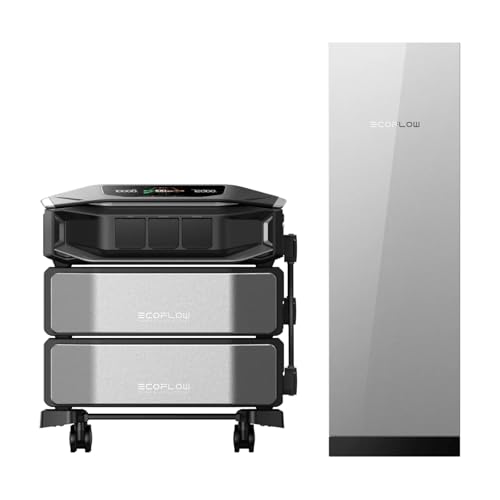
EF ECOFLOW DELTA Pro Ultra X with Smart Home Panel 3, 12288Wh Power Station | Lifepo4 Battery, Expandable to 180kWh, 120/240V 12000W AC Output, Solar Generator for Home Use
For more on sizing and solar wiring, see Solar Panels for EcoFlow Delta Pro: How to Choose and Connect Them (2026) and Ecoflow Delta Pro Ultra Portable Power Station: Sizing for Home Outages (2026). If you are weighing the Delta Pro against its newer sibling, Ecoflow Delta Pro Ultra vs Delta Pro Ultra X (2026): Which Should You Choose? covers the differences.
FAQ
Can the ecoflow delta pro solar run a refrigerator during an outage?
In many cases, yes. A typical efficient refrigerator uses roughly 1 to 2kWh per day, which is within the 3600Wh battery’s capacity. Actual runtime depends on the model, the ambient temperature, and how often the door opens. Measure your refrigerator’s usage with a plug-in meter to get a reliable estimate.
Can it power a CPAP machine overnight?
Owners commonly report running CPAP machines through the night on this class of battery. Check your device’s power draw and the humidifier setting, and confirm the plan with your sleep clinician or equipment provider before relying on it for overnight therapy.
How long does it take to recharge with solar?
Solar recharging is much slower than wall charging and depends on panel wattage, sun hours, and weather. A modest array may take a full day or more to refill the battery from empty. Plan panel size based on the energy you need to replace daily.
Is the unit expandable?
The listing describes expansion up to 25kWh using add-on battery modules. Expansion modules are purchased separately, and you should confirm compatibility with the base unit before buying.
Can it run an electric dryer or central air conditioner?
Generally, no, not for any useful length of time. These appliances draw large amounts of power and will drain a 3600Wh battery quickly. Whole-home backup systems are a better fit for those loads.
Does it need to be kept indoors?
It is best kept in a dry, ventilated indoor area away from direct weather. Follow the manufacturer’s guidance on temperature range and storage, since battery performance changes with heat and cold.
Is it suitable for camping or RV use?
It can be used on the road or at a campsite, but its weight makes it more of a stationary or vehicle-fixed unit than a backpack-style power bank. Smaller models are often a better match for hiking or tent camping.
Final Verdict
The ecoflow delta pro solar generator is a capable, expandable home backup unit with a 3600Wh battery, a 120V/3600W output, and a path to more storage. It suits homeowners who need to keep essential appliances, medical devices, and lighting running through outages, and who plan to add solar over time. It is not the right tool for whole-home loads or for buyers who only need small-device charging. Measure your daily energy use first, then decide whether this capacity fits or whether a larger system is the better buy. View on Amazon
Related reading
- Ecoflow Delta Pro Ultra Solar Input Specs: A Practical Guide (2026)
- Ecoflow Delta Pro 400w Portable Solar Panel: How to Size and Connect It (2026)
- Ecoflow Delta Pro 3 Solar Input Specs: A Practical Guide (2026)
About Emily Parker
Emily Parker is part of our editorial team and reviews and edits our solar generators for home backup & emergencies guides, checking product details against manufacturer specifications and owner feedback.



